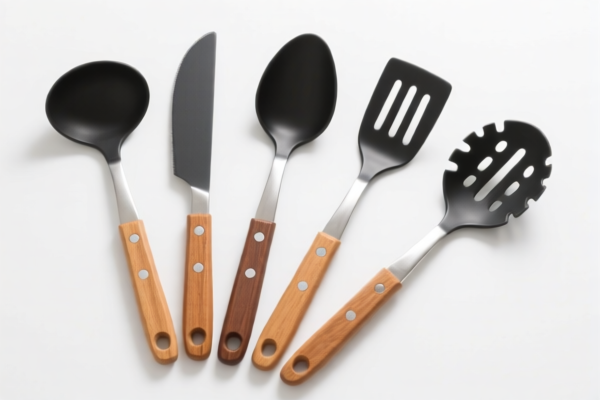
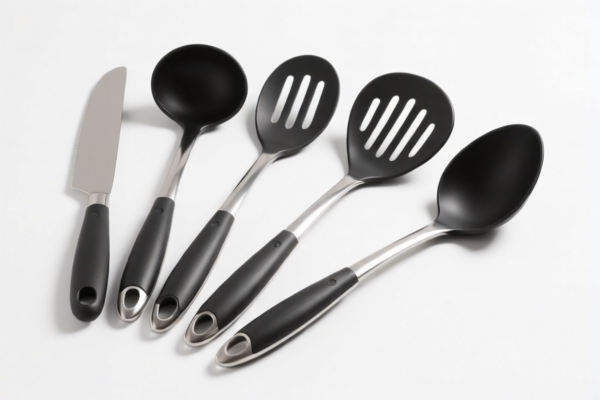
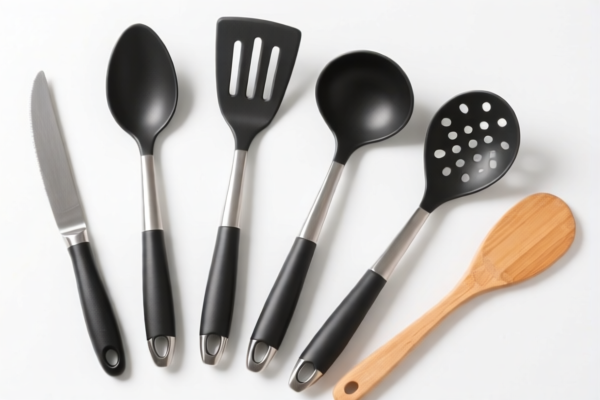
kitchen utensil sets
CN → US| HS编码 | 关税税率 | 原产国 | 目的国 | 文档 |
|---|---|---|---|---|
| 8215200000 | 0.0% | CN | US | 官方文档 |
| 3924102000 | 24.0% | CN | US | 官方文档 |
| 6911103510 | 43.5% | CN | US | 官方文档 |
| 3924104000 | 13.4% | CN | US | 官方文档 |
| 9503000073 | 10.0% | CN | US | 官方文档 |
商品图片

AI分析
🍽️ Kitchen Utensil Sets: The Ultimate HS Code & Tax Strategy Guide
🌐 HS Code Classification & Customs Clearance Strategy | 2026 Tariff Analysis | Pro-Level Import Guide
📌 Part 1: Product Definition & Classification Nuances
Kitchen Utensil Sets (厨房用具套装) are a broad category encompassing tools used for food preparation, cooking, and serving. However, in international trade, "Material" and "Usage" dictate the HS Code. A "set" is not a single commodity; it is classified based on the essential character of its components.
⚠️ Critical Distinction:
- Metal vs. Plastic vs. Ceramic: The material determines the chapter (73, 39, or 69).
- Toy vs. Functional: If marketed as a "Play Kitchen" for children, it falls under Toys (9503), drastically reducing duty.
- "Set" Definition: Must be put up in packs/packs for retail sale. Loose components are classified individually.
📦 Part 2: HS Code Classification Matrix (2026 Latest Tariff)
| HS Code | Material/Type | Summary Description | Key Classification Criteria |
|---|---|---|---|
8215.20.00.00 |
Base Metal (Stainless Steel, etc.) | Sets of table or kitchen utensils of base metal | Essential character is metal; includes spatulas, spoons, tongs, etc. |
3924.10.20.00 |
Plastic/Synthetic | Kitchen sets containing tableware/kitchenware | Plastic items (bowls, cutlery) designated for kitchen use. |
6911.10.35.10 |
Porcelain/Ceramic | Kitchen sets of porcelain or ceramic | High-value ceramic cookware/dinnerware sets. |
3924.10.40.00 |
Other Plastic | Other plastic kitchen sets (Catch-all) | Plastic sets not meeting specific "tableware" criteria. |
9503.00.00.73 |
Toy | Toy kitchen sets (Dolls/Plastic Toys) | Intended for play, not actual cooking/food prep. |
🔍 Key Insight:
- Metal Sets (8215.20) often face the highest total duties due to Section 301 tariffs.
- Toy Sets (9503.00) offer the lowest duty burden if correctly classified as toys.
- Ceramic Sets (6911.10) carry high base rates but are less impacted by some metal-specific surcharges.
💰 Part 3: 2026 Tariff Rate Breakdown (US Market)
✅ Applicable Country: United States (US)
✅ Origin: China (CN)
✅ Effective Date: 2025-11-10 onwards
🎯 1. 8215.20.00.00 —— Base Metal Kitchen Sets
The most common but most expensive category for steel utensils.
| Item | Detail |
|---|---|
| Base Duty | Applicable rate for the specific article in the set (e.g., 5-10%) |
| Section 301 Surcharge | 25.0% (Trade Act of 1974, Section 301) |
| Section 122 Tariff | 10.0% (Specific provision for certain Chinese goods) |
| Total Effective Rate | ~35.0% (Base + 25% + 10%) |
| De Minimis Exemption | ❌ Denied (deny_de_minimis) |
| Legal Path | Section 301:8215.20.00 → Section 122:10% |
📌 Explanation:
- Metal kitchenware is heavily targeted by US trade policy.
- The 25% Section 301 tariff is the primary cost driver.
- The 10% Section 122 tariff adds further burden.
- Total Load: ~35%. High risk for margins.
🎯 2. 3924.10.20.00 —— Plastic Kitchen Sets (Tableware)
Common for affordable, lightweight kitchen bundles.
| Item | Detail |
|---|---|
| Base Duty | 6.5% |
| Section 301 Surcharge | 7.5% (Reduced rate for some plastics) |
| Section 122 Tariff | 10.0% |
| Total Effective Rate | 24.0% |
| De Minimis Exemption | ❌ Denied (deny_de_minimis) |
| Legal Path | Section 301:3924.10.20 → Section 122:10% |
📌 Explanation:
- Lower base duty than metal.
- Section 301 rate is lower (7.5% vs 25%) for certain plastic products.
- Total Load: 24%. More manageable than metal, but still significant.
🎯 3. 6911.10.35.10 —— Porcelain/Ceramic Kitchen Sets
Premium dinnerware or ceramic cookware sets.
| Item | Detail |
|---|---|
| Base Duty | 26.0% |
| Section 301 Surcharge | 7.5% |
| Section 122 Tariff | 10.0% |
| Total Effective Rate | 43.5% |
| De Minimis Exemption | ❌ Denied (deny_de_minimis) |
| Legal Path | Section 301:6911.10.35 → Section 122:10% |
📌 Explanation:
- Highest Total Tax (43.5%) due to high base duty (26%).
- Ceramic goods have high base tariffs globally.
- Strategy: Avoid if possible, or absorb cost in premium pricing.
🎯 4. 3924.10.40.00 —— Other Plastic Kitchen Sets
Plastic sets not classified as "tableware" (e.g., storage organizers, non-eating utensils).
| Item | Detail |
|---|---|
| Base Duty | 3.4% |
| Section 301 Surcharge | 0.0% (Exempt/Non-applicable) |
| Section 122 Tariff | 10.0% |
| Total Effective Rate | 13.4% |
| De Minimis Exemption | ❌ Denied (deny_de_minimis) |
| Legal Path | Section 122:10% (No Section 301) |
📌 Explanation:
- Lowest Total Rate for Plastic (13.4%).
- Key: Must not be classified as "tableware" (3924.10.20).
- Example: Plastic spatulas, whisks, or storage containers that don't fit "tableware" definition.
🎯 5. 9503.00.00.73 —— Toy Kitchen Sets
Play kitchens, plastic chef sets for children.
| Item | Detail |
|---|---|
| Base Duty | 0.0% |
| Section 301 Surcharge | 0.0% |
| Section 122 Tariff | 10.0% |
| Total Effective Rate | 10.0% |
| De Minimis Exemption | ❌ Denied (deny_de_minimis) |
| Legal Path | Section 122:10% (No Section 301) |
📌 Explanation:
- Lowest Absolute Tax (10%).
- Warning: Must be clearly marketed and described as TOYS.
- Misclassifying real kitchen tools as toys leads to fraud penalties and back duties.
🛠️ Part 4: Customs Clearance Best Practices
✅ 1. Documentation Checklist
| Document | Requirement | Purpose |
|---|---|---|
| Commercial Invoice | Detailed itemization, HS Code, Country of Origin (China) | Basis for duty calculation |
| Product Photos | Clear images of the entire set and individual items | Prove classification (Toy vs. Tool vs. Material) |
| Material Declaration | Explicit statement: "100% Stainless Steel", "Food-Grade Plastic", "Porcelain" | Prevents misclassification disputes |
| Usage Description | "For cooking", "For display", "For children's play" | Crucial for Toy vs. Kitchen distinction |
| Packing List | Weight, dimensions, number of pieces | Verifies "Set" composition |
✅ 2. Strategic Classification Tips
🔥 Golden Rule: "Classify by Function, Not Just Material!"
| Scenario | Recommended HS Code | Why? |
|---|---|---|
| Stainless Steel Spoons/Knives | 8215.20.00.00 |
Metal utensils for eating/cooking. High tax (35%). |
| Plastic Spoons for Kids | 9503.00.00.73 |
If designed for play → Toy (10% tax). |
| Real Plastic Spoons for Home | 3924.10.20.00 |
Kitchen tableware (24% tax). |
| Plastic Whisk/Spreader (Non-Eating) | 3924.10.40.00 |
Not "tableware" → Lower tax (13.4%). |
| Ceramic Bowl Set | 6911.10.35.10 |
Porcelain kitchenware (43.5% tax). |
⚠️ Risk Alert:
- Do NOT label real metal knives as "Toys" to save tax. CBP will detect this via material density and marketing.
- Do NOT label "Tableware" as "Other Plastic" if it’s clearly for eating. CBP uses visual AI to detect plates/cups.
✅ 3. Special Cases & Workarounds
| Case | Strategy |
|---|---|
| Mixed Material Sets (e.g., Plastic Handle + Metal Blade) | Classified by Essential Character. If metal is dominant → 8215.20.00.00. |
| Gift Sets (Utensils + Apron + Towel) | If utensils are the main value → 8215.20.00.00. |
| Sample Kits | If sold as "promotional samples" with no retail packaging, may qualify for different treatment, but still subject to duty. |
| Pre-Cut/Pre-Assembled | Ensure "Set" is packaged together. Splitting shipment may trigger individual classification. |
🌍 Part 5: Global Comparison & Duty Optimization
| Market | HS Code Focus | Duty Estimate | Note |
|---|---|---|---|
| 🇺🇸 USA | 8215.20.00.00 (35%) / 9503.00.00.73 (10%) |
High for Metal, Low for Toys | Section 301 & 122 are critical. |
| 🇨🇳 China (Export) | Same HS Codes | 0-10% | Export duty low, but import duty in US is high. |
| 🇪🇺 EU | 8215.10 / 3924.10 |
0-5% + VAT | No Section 301. EU is cheaper for metal sets. |
| 🇨🇦 Canada | 8215.10.00 |
0-5% | CUSMA may apply if manufactured in North America. |
📌 Conclusion:
- USA is the most expensive market for kitchen utensils due to trade tariffs.
- Toy Classification is the best legal way to reduce duty.
- Material Switching (Metal → Plastic) can save ~20% in duty.
📌 Part 6: Common Pitfalls & Avoidance Guide
❌ Pitfall 1: Calling a Stainless Steel Set a "Toy"
👉 Result: Customs seizes goods, imposes penalties, and charges back duties + interest.
✅ Fix: Only use 9503 if the product is explicitly for children's play.
❌ Pitfall 2: Misclassifying Plastic Tableware as "Other Plastic" (3924.10.40)
👉 Result: CBP reclassifies to 3924.10.20 (24% vs 13.4%). Back taxes applied.
✅ Fix: If it’s a plate, bowl, or eating utensil → Use 3924.10.20.
❌ Pitfall 3: Ignoring Section 122 Tariff
👉 Result: Underpaying duties. Section 122 applies to all these categories (10%).
✅ Fix: Always include 10% in your cost model.
🎯 Part 7: Final Checklist for Importers
- Determine Material: Metal, Plastic, or Ceramic?
- Determine Use: Eating, Cooking, or Playing?
- Select HS Code:
- Metal + Eating/Cooking →
8215.20.00.00(35% Tax) - Plastic + Eating/Cooking →
3924.10.20.00(24% Tax) - Plastic + Non-Eating →
3924.10.40.00(13.4% Tax) - Toy →
9503.00.00.73(10% Tax) - Ceramic →
6911.10.35.10(43.5% Tax) - Calculate Landed Cost: CIF Value × Total Tax Rate.
- Prepare Documentation: Invoice, Photo, Material Declaration.
🚀 Pro Tip:
For high-volume imports, consider reclassifying plastic items as "kitchen organizers" (3924.10.40) if they are not used for eating. This can save 10.6% in duty compared to standard plastic tableware.
✨ Stay Compliant. Stay Competitive.
💼 Precise Classification = Maximum Profit.
用户评价
关于 HS 编码归类
协调制度(HS)是由世界海关组织(WCO)制定的国际贸易商品分类标准。全球 200 多个国家采用 HS 系统作为海关关税、贸易统计和进出口监管的基础。
每个 HS 编码遵循以下层级结构:
- 章(2 位)——商品大类(例如:第 84 章:机器和机械设备)
- 品目(4 位)——章内的更具体分类
- 子目(6 位)——国际通用细分,所有 WCO 成员国统一使用
- 本国细分(8-10 位)——各国自行扩展的细分编码,如美国 HTSUS 10 位编码
正确的 HS 编码归类对于顺利通关、准确缴纳关税和遵守贸易法规至关重要。错误归类可能导致海关延误、多缴关税或罚款。
从CN进口到US时,适用的关税税率可能包括:
- 最惠国(MFN)税率——适用于 WTO 成员国的标准关税税率
- 普通税率——适用于无贸易协定国家
- 贸易救济关税——附加关税,如 301 条款(反倾销)、232 条款(国家安全)或反补贴税
本页内容仅供参考。如需正式归类,请咨询当地海关或持牌报关代理。