locks
CN → US| HS编码 | 关税税率 | 原产国 | 目的国 | 文档 |
|---|---|---|---|---|
| 8302419045 | 38.5% | CN | US | 官方文档 |
| 8302416045 | 88.9% | CN | US | 官方文档 |
| 8301105000 | 13.6% | CN | US | 官方文档 |
| 8301106080 | 23.6% | CN | US | 官方文档 |
| 7326908688 | 87.9% | CN | US | 官方文档 |
商品图片

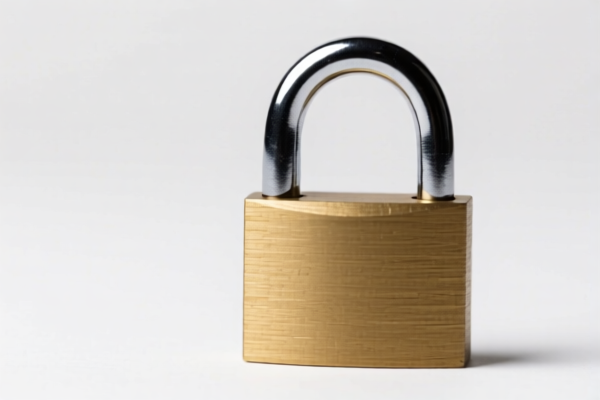
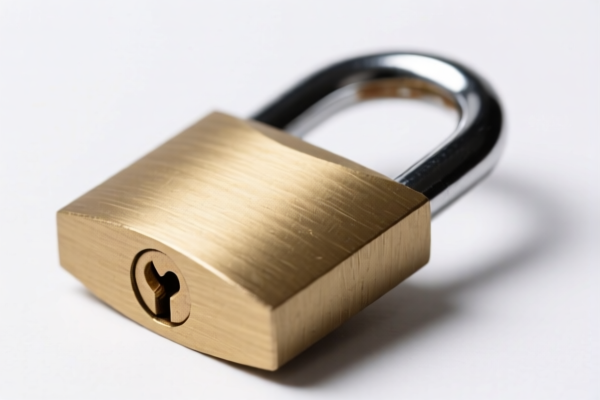
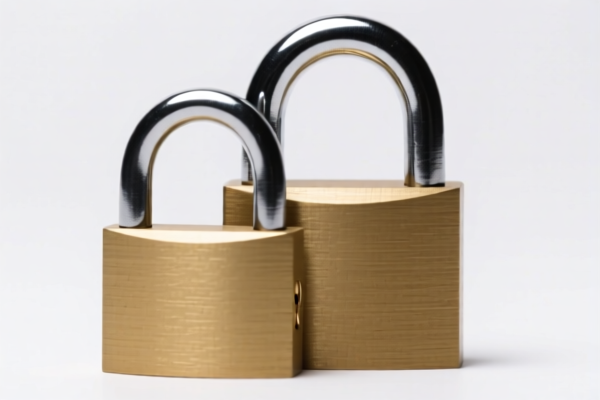
AI分析
🔐 Locks (Security Hardware & Accessories)
🌐 HS Code Reference & Customs Clearance Guide | 2026 Latest Tariff Analysis | Professional Entry Strategies
📌 Part 1: Product Definition & Classification: Do You Really Understand "Locks"?
In international trade, "locks" are not a monolithic category. They are strictly divided based on function, structure, and material. Misclassification is the #1 cause of customs delays and unexpected tax bills for this product line.
International trade classifies locks primarily into two distinct families:
- Padlocks (挂锁): Portable, self-contained locking devices with a shackle (e.g., motorcycle locks, locker locks).
- Building Hardware/Accessories (建筑配件/门窗锁具): Fixed installations for doors, windows, or furniture (e.g., cylinder locks, deadbolts, keypads).
⚠️ Key Distinction Point:
- If the lock is portable with a distinct shackle/loop → Likely 8301.10 (Padlock).
- If the lock is fixed to a door/window frame or is a door handle with locking mechanism → Likely 8302.41 or 8301.49 (Building Hardware/Other Locks).
- Material Matters: Most locks are "Base Metal" (Iron/Steel, Brass, Aluminum). The duty structure varies significantly based on whether it is classified as a "general lock" vs. a "building accessory."
📦 Part 2: HS Code Classification Matrix (2026 Latest Tariff Authority Comparison)
| HS Code | Product Description | Application Scenario | Material Inference |
|---|---|---|---|
8301.10.50.00 |
Padlocks (挂锁) | Motorcycle locks, locker pads, portable security locks. | Base Metal (Iron/Steel/Brass) |
8301.10.60.80 |
Other Padlocks (兜底类目) | Padlocks not specified elsewhere, often generic base metal locks. | Base Metal (Inferred via residual rules) |
8302.41.90.45 |
Locks for Buildings (建筑配件) | Door knobs, deadbolts, keypads, cylinder locks. Classified as building hardware. | Base Metal (Inferred) |
8301.49.90.40 |
Other Locks & Locking Devices | Smart locks, electronic locks not fitting padlock/building hardware definitions. | Various |
7326.90.86.88 |
Other Articles of Iron or Steel | Locks made specifically of steel/iron that don't fit standard "lock" headings, often industrial brackets or heavy-duty steel fittings. | Iron/Steel |
🔍 Critical Reminder:
- Padlocks generally fall under8301.10.
- Door/Window Locks often fall under8302.41(Base metal fittings for furniture, doors, etc.) because they are considered "accessories" for construction.
- Smart Locks may sometimes be classified under Chapter 85 (Electrical) if heavily integrated, but most mechanical/electronic hybrid locks remain in Chapter 83. Check technical specs carefully.
💰 Part 3: 2026 Latest Tariff Rate Breakdown (Including Additional Duties & Policy Surcharges)
✅ Applicable Country: USA (US)
✅ Country of Origin: China (CN)
✅ Effective Date: Post-2025 policies (Section 301, 122, Steel/Aluminum tariffs)
🎯 1. 8301.10.50.00 —— Padlocks (挂锁)
The most straightforward classification for portable locks.
| Item | Detail |
|---|---|
| Base Duty Rate | 3.6% |
| Section 301 Additional Duty | 0.0% (Note: Some padlocks may have been removed from 301 lists, but verify current status. In this dataset, it is 0%). |
| Section 122 Duty | +10% (Counter-trading duty) |
| Total Duty Rate | 13.6% |
| Tax Calculation | CIF Value × 13.6% |
| De Minimis Exemption | ❌ Not Eligible (Deny De Minimis) |
| Legal Authority Path | HTSUS 8301.10.50 → USITC General Note |
📌 Explanation:
- This is the lowest cost entry point for standard padlocks.
- No Section 301 (25%) tariff applies here in this specific dataset instance, making it highly competitive.
- However, the 122 Clause (10%) still applies, bringing the total to 13.6%.
🎯 2. 8301.10.60.80 —— Other Padlocks (兜底类目)
Used for padlocks that don't fit specific sub-categories.
| Item | Detail |
|---|---|
| Base Duty Rate | 6.1% |
| Section 301 Additional Duty | +7.5% |
| Section 122 Duty | +10% |
| Total Duty Rate | 23.6% |
| Tax Calculation | CIF Value × 23.6% |
| De Minimis Exemption | ❌ Not Eligible |
| Legal Authority Path | HTSUS 8301.10.60 → Residual Category Rules |
📌 Explanation:
- Higher base rate and Section 301 duty compared to8301.10.50.00.
- Use this code only if the padlock does not fit the specific description of8301.10.50.00.
🎯 3. 8302.41.90.45 —— Locks for Buildings (建筑配件)
Door locks, window locks, keypad locks. Classified as "Base metal fittings for doors, windows, stairs, etc."
| Item | Detail |
|---|---|
| Base Duty Rate | 3.9% |
| Section 301 Additional Duty | +25.0% (Standard Section 301) |
| Steel/Aluminum/Copper Additional Duty | +50.0% (Apply if material is Steel/Aluminum/Copper) |
| Section 122 Duty | +10% |
| Total Duty Rate | 88.9% (If Steel/Aluminum/Copper) |
| Tax Calculation | CIF Value × 88.9% |
| De Minimis Exemption | ❌ Not Eligible |
| Legal Authority Path | HTSUS 8302.41 → USITC Footnote (Steel/Aluminum/Copper) |
📌 Warning:
- This is a HIGH TARIFF category.
- If your door lock is made of Steel, Aluminum, or Copper, the 50% surcharge applies on top of the 3.9% base and 25% Section 301.
- Total: 88.9%. This makes importing building hardware from China to the US extremely expensive.
- Strategy: Check if your product is classified as "Other Locks" (8301.49) instead, which might have different duty structures.
🎯 4. 7326.90.86.88 —— Other Articles of Iron or Steel (铁或钢制品)
Locks inferred to be made of Iron/Steel but classified as general steel articles.
| Item | Detail |
|---|---|
| Base Duty Rate | 2.9% |
| Section 301 Additional Duty | +25.0% |
| Steel/Aluminum/Copper Additional Duty | +50.0% (Apply if material is Steel) |
| Section 122 Duty | +10% |
| Total Duty Rate | 87.9% |
| Tax Calculation | CIF Value × 87.9% |
| De Minimis Exemption | ❌ Not Eligible |
| Legal Authority Path | HTSUS 7326.90 → Steel Surcharge Rules |
📌 Explanation:
- Similar to the building hardware code, this incurs the 50% Steel/Aluminum/Copper surcharge.
- Used for locks that are heavily industrial or don't fit the "lock" heading precisely.
- Total: 87.9%. Avoid this classification for standard consumer locks.
🛠️ Part 4: Customs Clearance Practical Advice (Battle-Tested Pitfall Avoidance)
✅ 1. Documentation Checklist (Non-Negotiable)
| Document | Required | Notes |
|---|---|---|
| ✅ Product Specifications | ✔️ | Must detail material (e.g., "Zinc Alloy," "Stainless Steel 304"). Crucial for Steel/Aluminum surcharges. |
| ✅ Technical Drawings | ✔️ | To prove if it's a "Padlock" (8301) or "Building Hardware" (8302). |
| ✅ Commercial Invoice | ✔️ | Clearly state: "Padlock for Motorcycle" vs. "Door Lock for Residential Use." |
| ✅ Material Declaration | ✔️ | Explicitly state: "Made of Zinc Alloy, NOT Steel/Aluminum/Copper" if applicable to avoid 50% surcharge. |
| ✅ Photos | ✔️ | Show the shackle, keyhole, and brand label. |
✅ 2. Classification Strategy (Key Mnemonics)
🔥 "Shackle is Padlock (13-23%), Fixed is Building (88%)! Material is Steel? Pay Extra (50%)!"
| Scenario | Recommended HS Code | Estimated Total Duty | Reason |
|---|---|---|---|
| Motorcycle Padlock (Zinc/Iron) | 8301.10.50.00 |
13.6% | Lowest duty. Clearly portable. |
| Generic Padlock (Unspecified) | 8301.10.60.80 |
23.6% | Safe fallback for padlocks. |
| Door Knob Lock (Steel) | 8302.41.90.45 |
88.9% | Classified as building hardware + Steel Surcharge. |
| Keypad Door Lock (Plastic/Aluminum) | 8302.41.90.45 |
88.9% | Still building hardware. If Aluminum, 50% surcharge applies. |
| Industrial Steel Bracket-Lock | 7326.90.86.88 |
87.9% | Classified as steel article. High duty. |
✅ 3. Special Handling Tips
| Situation | Recommendation |
|---|---|
| Smart Locks | Check if electronic components dominate. If so, might qualify for Chapter 85 (Electrical) which may have different rates. However, most remain in 8301/8302. |
| Material Substitution | If you can use Plastic, Brass, or Bronze instead of Steel/Aluminum for building locks, you MAY avoid the 50% Steel/Aluminum surcharge. Verify HTSUS notes for specific material exemptions. |
| OEM Custom Locks | Provide design files. If the design is unique, argue for "Other Locks" (8301.49) rather than "Building Hardware" (8302.41) to potentially lower the base rate, though Section 301 may still apply. |
| De Minimis (Section 321) | ❌ DO NOT USE. Locks are subject to Section 301 and IEEPA. Package values under $800 will still be taxed and likely seized. |
🌍 Part 5: Global Market Comparison (2026 Outlook)
| Market | Recommended HS Code | Est. Duty (China Origin) | Key Risk |
|---|---|---|---|
| 🇺🇸 USA | 8301.10.50.00 (Padlock) |
13.6% | Steel/Aluminum surcharges for building locks (88.9%). |
| 🇺🇸 USA | 8302.41.90.45 (Door Lock) |
88.9% | High cost. Consider shifting supply chain to Vietnam/Mexico. |
| 🇪🇺 EU | 8301.10 |
~0-10% | No Section 301. CE/RoHS certification required. |
| 🇨🇳 China | 8301.10 |
~0-10% | Low import duty. Focus on domestic market. |
| 🇨🇦 Canada | 8301.10 |
~0% (CETA/USMCA if applicable) | Check origin rules for preferential tariffs. |
📌 Conclusion:
- The US market is punitive for building hardware (door locks) from China due to combined Section 301, 122, and Steel/Aluminum tariffs.
- Padlocks remain relatively affordable at 13.6% if classified correctly under8301.10.50.00.
- Material Choice is Critical: Using non-steel/aluminum materials (e.g., Zinc Alloy, Brass, Plastic) can sometimes mitigate the 50% surcharge on building hardware, but verify with HTSUS notes.
📌 Part 6: Common Mistakes & Blood-Letting Lessons
❌ Mistake 1: Classifying a Door Lock as a Padlock (8301.10)
👉 Consequence: Customs audit finds it fixed to a door sample. Penalty + Back Taxes + Re-classification to 8302.41 → Rate jumps from 13.6% to 88.9%!
❌ Mistake 2: Ignoring Material Declaration for Building Locks
👉 Consequence: Declaring "Zinc Alloy" but customs lab test shows "Steel." 50% Steel Surcharge applies retroactively.
❌ Mistake 3: Using Section 321 (De Minimis) for Locks
👉 Consequence: Shipments under $800 are detained. Customs will assess 13.6% - 88.9% duty. High risk of seizure.
❌ Mistake 4: Vague Description "Locks"
👉 Consequence: Customs broker guesses. Likely picks the highest duty code to be safe or misses the 301 code. Delays and fines.
✅ Correct Practice:
"Zinc Alloy Padlock, Model XYZ, for Motorcycle Security, No Electronic Components, Made in China." Use HS Code: 8301.10.50.00
"Residential Door Deadbolt, Steel Body, Key Operated, for Interior/Exterior Doors." Use HS Code: 8302.41.90.45 (Prepare for 88.9% duty)
🎯 Part 7: Conclusion: Precise Classification Saves Millions!
🎯 Remember the Mantra:
🔹 "Padlock is Cheap (13%), Door Lock is Expensive (88%)!"
🔹 "Steel/Aluminum/Copper Triggers the 50% Surcharge!"
🔹 "De Minimis is Dead for Locks!"
📌 Pro Tip:
If you are importing Door Locks (Building Hardware), strongly consider:
1. Supplier Diversification: Source from Vietnam or Mexico to avoid US Section 301 and 122 tariffs.
2. Material Change: Use Brass or Plastic composites if possible to avoid the 50% Steel/Aluminum surcharge (verify with legal counsel).
3. Advance Ruling: Apply for a Binding Ruling from US Customs and Border Protection (CBP) to confirm the HS Code and duty rate before shipment.
📣 Immediate Action:
📞 Audit Your Bill of Lading: Ensure "Padlock" vs. "Door Lock" is explicit.
📝 Check Material Specs: Confirm if any component is Steel/Aluminum/Copper.
🚀 Calculate Total Landed Cost: Include the 88.9% potential duty for building hardware in your margin analysis.
✨ Professional Clearance Starts with Accurate Classification!
💼 Every Percentage Point of Duty is a Point of Profit!
用户评价
关于 HS 编码归类
协调制度(HS)是由世界海关组织(WCO)制定的国际贸易商品分类标准。全球 200 多个国家采用 HS 系统作为海关关税、贸易统计和进出口监管的基础。
每个 HS 编码遵循以下层级结构:
- 章(2 位)——商品大类(例如:第 84 章:机器和机械设备)
- 品目(4 位)——章内的更具体分类
- 子目(6 位)——国际通用细分,所有 WCO 成员国统一使用
- 本国细分(8-10 位)——各国自行扩展的细分编码,如美国 HTSUS 10 位编码
正确的 HS 编码归类对于顺利通关、准确缴纳关税和遵守贸易法规至关重要。错误归类可能导致海关延误、多缴关税或罚款。
从CN进口到US时,适用的关税税率可能包括:
- 最惠国(MFN)税率——适用于 WTO 成员国的标准关税税率
- 普通税率——适用于无贸易协定国家
- 贸易救济关税——附加关税,如 301 条款(反倾销)、232 条款(国家安全)或反补贴税
本页内容仅供参考。如需正式归类,请咨询当地海关或持牌报关代理。