locks
CN → US| HS Code | Tariff Rate | Origin | Destination | Doc |
|---|---|---|---|---|
| 8302419045 | 38.5% | CN | US | Official Doc |
| 8302416045 | 88.9% | CN | US | Official Doc |
| 8301105000 | 13.6% | CN | US | Official Doc |
| 8301106080 | 23.6% | CN | US | Official Doc |
| 7326908688 | 87.9% | CN | US | Official Doc |
Product Images

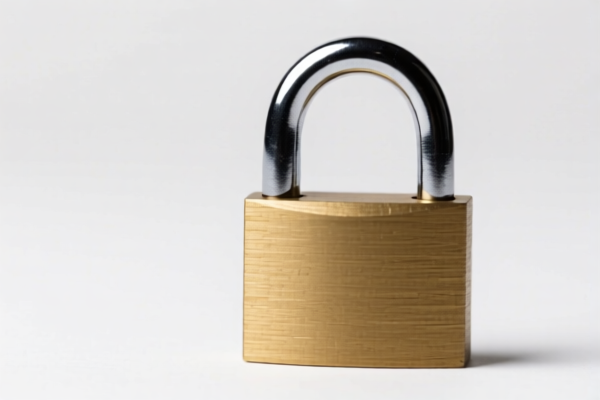
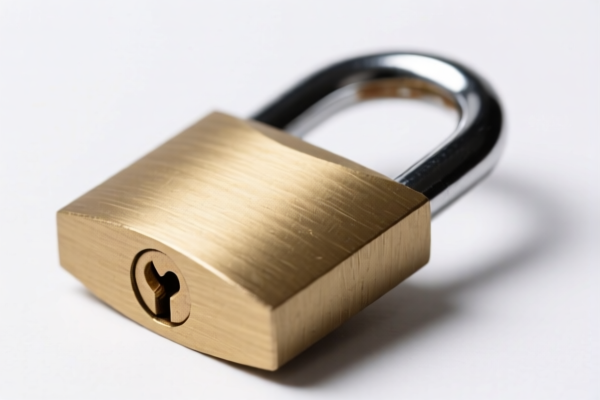

AI Analysis
🔐 Locks (Security Hardware & Accessories)
🌐 HS Code Reference & Customs Clearance Guide | 2026 Latest Tariff Analysis | Professional Entry Strategies
📌 Part 1: Product Definition & Classification: Do You Really Understand "Locks"?
In international trade, "locks" are not a monolithic category. They are strictly divided based on function, structure, and material. Misclassification is the #1 cause of customs delays and unexpected tax bills for this product line.
International trade classifies locks primarily into two distinct families:
- Padlocks (挂锁): Portable, self-contained locking devices with a shackle (e.g., motorcycle locks, locker locks).
- Building Hardware/Accessories (建筑配件/门窗锁具): Fixed installations for doors, windows, or furniture (e.g., cylinder locks, deadbolts, keypads).
⚠️ Key Distinction Point:
- If the lock is portable with a distinct shackle/loop → Likely 8301.10 (Padlock).
- If the lock is fixed to a door/window frame or is a door handle with locking mechanism → Likely 8302.41 or 8301.49 (Building Hardware/Other Locks).
- Material Matters: Most locks are "Base Metal" (Iron/Steel, Brass, Aluminum). The duty structure varies significantly based on whether it is classified as a "general lock" vs. a "building accessory."
📦 Part 2: HS Code Classification Matrix (2026 Latest Tariff Authority Comparison)
| HS Code | Product Description | Application Scenario | Material Inference |
|---|---|---|---|
8301.10.50.00 |
Padlocks (挂锁) | Motorcycle locks, locker pads, portable security locks. | Base Metal (Iron/Steel/Brass) |
8301.10.60.80 |
Other Padlocks (兜底类目) | Padlocks not specified elsewhere, often generic base metal locks. | Base Metal (Inferred via residual rules) |
8302.41.90.45 |
Locks for Buildings (建筑配件) | Door knobs, deadbolts, keypads, cylinder locks. Classified as building hardware. | Base Metal (Inferred) |
8301.49.90.40 |
Other Locks & Locking Devices | Smart locks, electronic locks not fitting padlock/building hardware definitions. | Various |
7326.90.86.88 |
Other Articles of Iron or Steel | Locks made specifically of steel/iron that don't fit standard "lock" headings, often industrial brackets or heavy-duty steel fittings. | Iron/Steel |
🔍 Critical Reminder:
- Padlocks generally fall under8301.10.
- Door/Window Locks often fall under8302.41(Base metal fittings for furniture, doors, etc.) because they are considered "accessories" for construction.
- Smart Locks may sometimes be classified under Chapter 85 (Electrical) if heavily integrated, but most mechanical/electronic hybrid locks remain in Chapter 83. Check technical specs carefully.
💰 Part 3: 2026 Latest Tariff Rate Breakdown (Including Additional Duties & Policy Surcharges)
✅ Applicable Country: USA (US)
✅ Country of Origin: China (CN)
✅ Effective Date: Post-2025 policies (Section 301, 122, Steel/Aluminum tariffs)
🎯 1. 8301.10.50.00 —— Padlocks (挂锁)
The most straightforward classification for portable locks.
| Item | Detail |
|---|---|
| Base Duty Rate | 3.6% |
| Section 301 Additional Duty | 0.0% (Note: Some padlocks may have been removed from 301 lists, but verify current status. In this dataset, it is 0%). |
| Section 122 Duty | +10% (Counter-trading duty) |
| Total Duty Rate | 13.6% |
| Tax Calculation | CIF Value × 13.6% |
| De Minimis Exemption | ❌ Not Eligible (Deny De Minimis) |
| Legal Authority Path | HTSUS 8301.10.50 → USITC General Note |
📌 Explanation:
- This is the lowest cost entry point for standard padlocks.
- No Section 301 (25%) tariff applies here in this specific dataset instance, making it highly competitive.
- However, the 122 Clause (10%) still applies, bringing the total to 13.6%.
🎯 2. 8301.10.60.80 —— Other Padlocks (兜底类目)
Used for padlocks that don't fit specific sub-categories.
| Item | Detail |
|---|---|
| Base Duty Rate | 6.1% |
| Section 301 Additional Duty | +7.5% |
| Section 122 Duty | +10% |
| Total Duty Rate | 23.6% |
| Tax Calculation | CIF Value × 23.6% |
| De Minimis Exemption | ❌ Not Eligible |
| Legal Authority Path | HTSUS 8301.10.60 → Residual Category Rules |
📌 Explanation:
- Higher base rate and Section 301 duty compared to8301.10.50.00.
- Use this code only if the padlock does not fit the specific description of8301.10.50.00.
🎯 3. 8302.41.90.45 —— Locks for Buildings (建筑配件)
Door locks, window locks, keypad locks. Classified as "Base metal fittings for doors, windows, stairs, etc."
| Item | Detail |
|---|---|
| Base Duty Rate | 3.9% |
| Section 301 Additional Duty | +25.0% (Standard Section 301) |
| Steel/Aluminum/Copper Additional Duty | +50.0% (Apply if material is Steel/Aluminum/Copper) |
| Section 122 Duty | +10% |
| Total Duty Rate | 88.9% (If Steel/Aluminum/Copper) |
| Tax Calculation | CIF Value × 88.9% |
| De Minimis Exemption | ❌ Not Eligible |
| Legal Authority Path | HTSUS 8302.41 → USITC Footnote (Steel/Aluminum/Copper) |
📌 Warning:
- This is a HIGH TARIFF category.
- If your door lock is made of Steel, Aluminum, or Copper, the 50% surcharge applies on top of the 3.9% base and 25% Section 301.
- Total: 88.9%. This makes importing building hardware from China to the US extremely expensive.
- Strategy: Check if your product is classified as "Other Locks" (8301.49) instead, which might have different duty structures.
🎯 4. 7326.90.86.88 —— Other Articles of Iron or Steel (铁或钢制品)
Locks inferred to be made of Iron/Steel but classified as general steel articles.
| Item | Detail |
|---|---|
| Base Duty Rate | 2.9% |
| Section 301 Additional Duty | +25.0% |
| Steel/Aluminum/Copper Additional Duty | +50.0% (Apply if material is Steel) |
| Section 122 Duty | +10% |
| Total Duty Rate | 87.9% |
| Tax Calculation | CIF Value × 87.9% |
| De Minimis Exemption | ❌ Not Eligible |
| Legal Authority Path | HTSUS 7326.90 → Steel Surcharge Rules |
📌 Explanation:
- Similar to the building hardware code, this incurs the 50% Steel/Aluminum/Copper surcharge.
- Used for locks that are heavily industrial or don't fit the "lock" heading precisely.
- Total: 87.9%. Avoid this classification for standard consumer locks.
🛠️ Part 4: Customs Clearance Practical Advice (Battle-Tested Pitfall Avoidance)
✅ 1. Documentation Checklist (Non-Negotiable)
| Document | Required | Notes |
|---|---|---|
| ✅ Product Specifications | ✔️ | Must detail material (e.g., "Zinc Alloy," "Stainless Steel 304"). Crucial for Steel/Aluminum surcharges. |
| ✅ Technical Drawings | ✔️ | To prove if it's a "Padlock" (8301) or "Building Hardware" (8302). |
| ✅ Commercial Invoice | ✔️ | Clearly state: "Padlock for Motorcycle" vs. "Door Lock for Residential Use." |
| ✅ Material Declaration | ✔️ | Explicitly state: "Made of Zinc Alloy, NOT Steel/Aluminum/Copper" if applicable to avoid 50% surcharge. |
| ✅ Photos | ✔️ | Show the shackle, keyhole, and brand label. |
✅ 2. Classification Strategy (Key Mnemonics)
🔥 "Shackle is Padlock (13-23%), Fixed is Building (88%)! Material is Steel? Pay Extra (50%)!"
| Scenario | Recommended HS Code | Estimated Total Duty | Reason |
|---|---|---|---|
| Motorcycle Padlock (Zinc/Iron) | 8301.10.50.00 |
13.6% | Lowest duty. Clearly portable. |
| Generic Padlock (Unspecified) | 8301.10.60.80 |
23.6% | Safe fallback for padlocks. |
| Door Knob Lock (Steel) | 8302.41.90.45 |
88.9% | Classified as building hardware + Steel Surcharge. |
| Keypad Door Lock (Plastic/Aluminum) | 8302.41.90.45 |
88.9% | Still building hardware. If Aluminum, 50% surcharge applies. |
| Industrial Steel Bracket-Lock | 7326.90.86.88 |
87.9% | Classified as steel article. High duty. |
✅ 3. Special Handling Tips
| Situation | Recommendation |
|---|---|
| Smart Locks | Check if electronic components dominate. If so, might qualify for Chapter 85 (Electrical) which may have different rates. However, most remain in 8301/8302. |
| Material Substitution | If you can use Plastic, Brass, or Bronze instead of Steel/Aluminum for building locks, you MAY avoid the 50% Steel/Aluminum surcharge. Verify HTSUS notes for specific material exemptions. |
| OEM Custom Locks | Provide design files. If the design is unique, argue for "Other Locks" (8301.49) rather than "Building Hardware" (8302.41) to potentially lower the base rate, though Section 301 may still apply. |
| De Minimis (Section 321) | ❌ DO NOT USE. Locks are subject to Section 301 and IEEPA. Package values under $800 will still be taxed and likely seized. |
🌍 Part 5: Global Market Comparison (2026 Outlook)
| Market | Recommended HS Code | Est. Duty (China Origin) | Key Risk |
|---|---|---|---|
| 🇺🇸 USA | 8301.10.50.00 (Padlock) |
13.6% | Steel/Aluminum surcharges for building locks (88.9%). |
| 🇺🇸 USA | 8302.41.90.45 (Door Lock) |
88.9% | High cost. Consider shifting supply chain to Vietnam/Mexico. |
| 🇪🇺 EU | 8301.10 |
~0-10% | No Section 301. CE/RoHS certification required. |
| 🇨🇳 China | 8301.10 |
~0-10% | Low import duty. Focus on domestic market. |
| 🇨🇦 Canada | 8301.10 |
~0% (CETA/USMCA if applicable) | Check origin rules for preferential tariffs. |
📌 Conclusion:
- The US market is punitive for building hardware (door locks) from China due to combined Section 301, 122, and Steel/Aluminum tariffs.
- Padlocks remain relatively affordable at 13.6% if classified correctly under8301.10.50.00.
- Material Choice is Critical: Using non-steel/aluminum materials (e.g., Zinc Alloy, Brass, Plastic) can sometimes mitigate the 50% surcharge on building hardware, but verify with HTSUS notes.
📌 Part 6: Common Mistakes & Blood-Letting Lessons
❌ Mistake 1: Classifying a Door Lock as a Padlock (8301.10)
👉 Consequence: Customs audit finds it fixed to a door sample. Penalty + Back Taxes + Re-classification to 8302.41 → Rate jumps from 13.6% to 88.9%!
❌ Mistake 2: Ignoring Material Declaration for Building Locks
👉 Consequence: Declaring "Zinc Alloy" but customs lab test shows "Steel." 50% Steel Surcharge applies retroactively.
❌ Mistake 3: Using Section 321 (De Minimis) for Locks
👉 Consequence: Shipments under $800 are detained. Customs will assess 13.6% - 88.9% duty. High risk of seizure.
❌ Mistake 4: Vague Description "Locks"
👉 Consequence: Customs broker guesses. Likely picks the highest duty code to be safe or misses the 301 code. Delays and fines.
✅ Correct Practice:
"Zinc Alloy Padlock, Model XYZ, for Motorcycle Security, No Electronic Components, Made in China." Use HS Code: 8301.10.50.00
"Residential Door Deadbolt, Steel Body, Key Operated, for Interior/Exterior Doors." Use HS Code: 8302.41.90.45 (Prepare for 88.9% duty)
🎯 Part 7: Conclusion: Precise Classification Saves Millions!
🎯 Remember the Mantra:
🔹 "Padlock is Cheap (13%), Door Lock is Expensive (88%)!"
🔹 "Steel/Aluminum/Copper Triggers the 50% Surcharge!"
🔹 "De Minimis is Dead for Locks!"
📌 Pro Tip:
If you are importing Door Locks (Building Hardware), strongly consider:
1. Supplier Diversification: Source from Vietnam or Mexico to avoid US Section 301 and 122 tariffs.
2. Material Change: Use Brass or Plastic composites if possible to avoid the 50% Steel/Aluminum surcharge (verify with legal counsel).
3. Advance Ruling: Apply for a Binding Ruling from US Customs and Border Protection (CBP) to confirm the HS Code and duty rate before shipment.
📣 Immediate Action:
📞 Audit Your Bill of Lading: Ensure "Padlock" vs. "Door Lock" is explicit.
📝 Check Material Specs: Confirm if any component is Steel/Aluminum/Copper.
🚀 Calculate Total Landed Cost: Include the 88.9% potential duty for building hardware in your margin analysis.
✨ Professional Clearance Starts with Accurate Classification!
💼 Every Percentage Point of Duty is a Point of Profit!
Customer Reviews
About HS Code Classification
The Harmonized System (HS) is an internationally standardized nomenclature developed by the World Customs Organization (WCO) to classify traded products. Over 200 countries use the HS system as the basis for customs tariffs, trade statistics, and import/export regulations.
Each HS code follows a hierarchical structure:
- Chapter (2 digits) — Broad category of goods (e.g., Chapter 84: Machinery and Mechanical Appliances)
- Heading (4 digits) — More specific grouping within the chapter
- Subheading (6 digits) — Internationally standardized breakdown, used by all WCO member countries
- National subdivisions (8-10 digits) — Country-specific extensions for further classification, such as US HTSUS 10-digit codes
Correct HS code classification is essential for smooth customs clearance, accurate duty payment, and compliance with trade regulations. Misclassification can lead to customs delays, overpayment of duties, or penalties.
When importing from CN to US, the applicable tariff rates may include:
- Most-Favored-Nation (MFN) rate — The standard duty rate applied to WTO members
- General rate — Applied to countries without trade agreements
- Trade remedy duties — Additional tariffs such as Section 301 (anti-dumping), Section 232 (national security), or countervailing duties
The information provided on this page is for reference purposes only. For official classification, please consult with your local customs authority or a licensed customs broker.