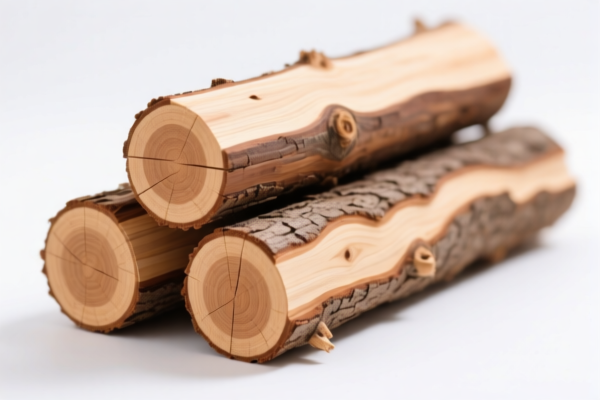
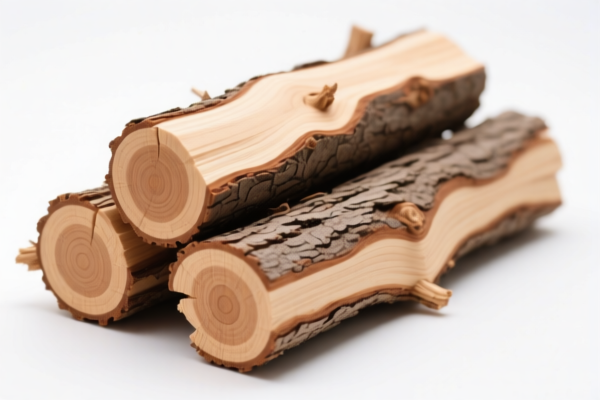
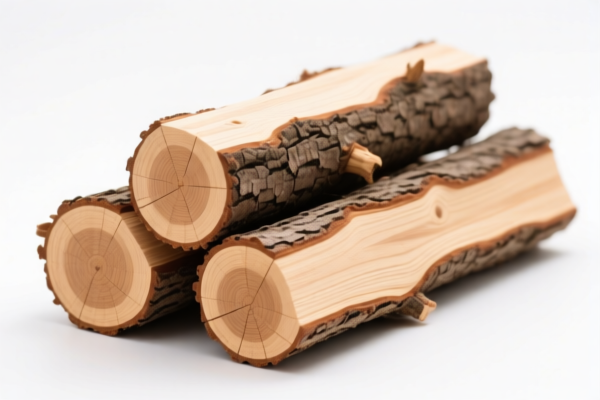
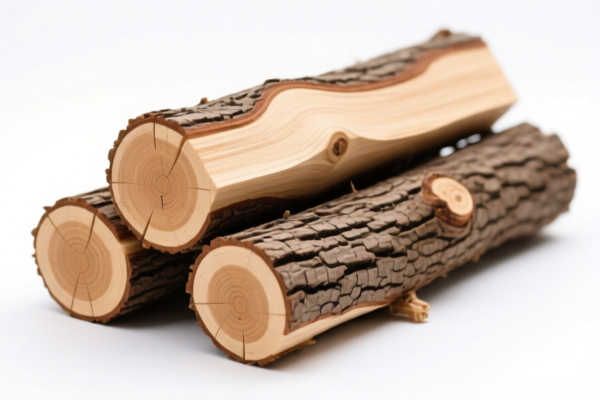
maple logs roughly processed
CN → US| HS编码 | 关税税率 | 原产国 | 目的国 | 文档 |
|---|---|---|---|---|
| 4403990160 | 35.0% | CN | US | 官方文档 |
| 4407930020 | 35.0% | CN | US | 官方文档 |
| 4409292630 | 35.0% | CN | US | 官方文档 |
| 4401120000 | 35.0% | CN | US | 官方文档 |
| 4403990160 | 35.0% | CN | US | 官方文档 |
商品图片
AI分析
🌲 Maple Logs: Roughly Processed Wood (Hardwood Timber)
🌐 HS Code Reference & Customs Clearance Guide | 2026 Latest Tariff Analysis | Professional Compliance Strategy
📌 I. Product Definition & Classification: What is "Roughly Processed Maple"?
Maple logs that have been "roughly processed" fall under the category of non-coniferous wood products. In international trade, the term "roughly processed" (or "sawn/treated") refers to timber that has undergone basic shaping but has not yet reached the final consumer product stage (like flooring or furniture).
Key Characteristics: * Material: Hardwood (Maple/Syrup family). * Processing Level: Roughly processed. This includes: * Raw Logs (4403): Debarked, roughly squared, or roughly trimmed at both ends. * Rough Sawing (4407): Sawn or chipped lengthwise, with a thickness exceeding 6 mm. * Exclusions: It does not include planed, tongued, grooved, or shaped wood ready for immediate assembly (which falls under Chapter 4409 or 4420).
⚠️ Critical Distinction:
- If the wood is fuel grade (chips, small pieces, or logs primarily for burning) → Consider 4401.12.00.00.
- If the wood is structural/construction grade (sawed, roughly squared, >6mm thick) → Consider 4403.99.01.60 or 4407.93.00.20.
- If the wood is finished flooring (tongued/grooved/planed) → Consider 4409.29.26.30.
📦 II. HS Code Classification Details (2026 Official Tariff Reference)
Based on your input data, here are the specific HS Codes for different states of "roughly processed" maple:
| HS Code | Product Description | Processing State | Application Scenario |
|---|---|---|---|
4403.99.01.60 |
Maple logs, roughly processed | Roughly squared/trimmed | Construction beams, structural timber, raw material for further processing |
4407.93.00.20 |
Maple wood, sawn/chipped | Lengthwise sawn, >6mm thick | Planks, boards, rough lumber for furniture or carpentry |
4409.29.26.30 |
Maple floorboards | Planed/Tongued/Grooved | Finished flooring, decking, parquet |
4401.12.00.00 |
Maple logs, fuel wood | Raw/Bulk | Biomass fuel, firewood, low-grade timber for energy |
🔍 Key Note:
- 4403.99.01.60 is the standard code for "Roughly processed maple logs" intended for industrial/construction use.
- 4407.93.00.20 applies if the wood has been sawn into boards/planks but not yet planed or shaped.
- 4409.29.26.30 is for finished maple flooring, which is a more processed state than "roughly processed."
- 4401.12.00.00 is specifically for fuel wood, which is a distinct commercial purpose.
💰 III. 2026 Latest Tariff Rate Breakdown (Including Surcharges)
✅ Applicable Market: United States (US)
✅ Origin: China (CN)
✅ Effective Date: November 10, 2025 (and onwards)
🎯 1. 4403.99.01.60 & 4407.93.00.20 & 4409.29.26.30
Products: Roughly Processed Logs, Sawn Timber, Maple Flooring
| Item | Details |
|---|---|
| Base Tariff Rate | 0.0% (Ad Valorem, Standard MFN) |
| Section 301 Surcharge | +25.0% (Additional Duty under USITC Footnote 9903.88.01) |
| Section 122 Tariff | +10.0% (Specific tariff on certain wood products under Section 122) |
| Total Effective Rate | 35.0% |
| Tax Calculation | CIF Value × 35% |
| De Minimis Exemption | ❌ Not Available (deny_de_minimis) |
| Legal Basis Path | USITC:4403.99.01.60 / 4407.93.00.20 → FOOTNOTE:9903.88.01 → Section 122 Statute |
📌 Explanation:
- The 0% base rate is standard for wood products under MFN.
- The 25% Section 301 tariff is the primary trade barrier for Chinese-origin wood products.
- The 10% Section 122 tariff is an additional layer specifically targeting certain wood imports.
- Total 35% is a significant cost factor that must be included in pricing strategies.
🎯 2. 4401.12.00.00
Product: Maple Logs for Fuel
| Item | Details |
|---|---|
| Base Tariff Rate | 0.0% |
| Section 301 Surcharge | +25.0% |
| Section 122 Tariff | +10.0% |
| Total Effective Rate | 35.0% |
| Tax Calculation | CIF Value × 35% |
| De Minimis Exemption | ❌ Not Available |
📌 Note:
- Even though it's "fuel wood," it is still subject to the same trade remedies (Section 301 & 122) as construction timber.
- Ensure the description explicitly states "Fuel Wood" to avoid misclassification with higher-value timber.
🛠️ IV. Customs Clearance Practical Advice (Avoid Pitfalls)
✅ 1. Documentation Checklist (Essential)
| Document | Required | Purpose |
|---|---|---|
| Commercial Invoice | ✔️ | Must clearly state "Maple Wood," HS Code, and CIF value |
| Packing List | ✔️ | Detail dimensions, weight, and number of pieces |
| Bill of Lading/Air Waybill | ✔️ | Proof of shipment |
| Phytosanitary Certificate | ✔️ | Mandatory for wood products to prove freedom from pests |
| Fumigation Certificate | ✔️ | Required if wood is not heat-treated (HT) or methyl bromide treated (MB) |
| ISPM 15 Mark | ✔️ | If packaged in wood pallets/crates, they must be marked |
| Country of Origin Certificate | ✔️ | Confirm Chinese origin for accurate tariff application |
⚠️ Critical Warning:
- Phytosanitary certificates are non-negotiable. Failure to provide them will result in quarantine delays, re-export, or destruction.
- Ensure the wood is dry (moisture content <20%) to prevent mold claims and weight disputes.
✅ 2. Classification Strategy (Key Mnemonics)
🔥 "Rough Logs = 4403, Sawed Boards = 4407, Finished Floor = 4409, Fuel = 4401. All carry 35%!"
| Scenario | Correct HS Code | Common Mistake |
|---|---|---|
| Roughly squared logs for construction | 4403.99.01.60 |
Misclassifying as fuel (4401) |
| Sawn planks >6mm thick | 4407.93.00.20 |
Misclassifying as flooring (4409) |
| Tongued/grooved floorboards | 4409.29.26.30 |
Misclassifying as rough sawn (4407) |
| Small chips/bark/firewood | 4401.12.00.00 |
Misclassifying as structural timber |
✅ 3. Special Handling Tips
| Situation | Recommendation |
|---|---|
| Mixed Shipments | Clearly separate "Fuel Wood" from "Construction Timber" on invoices. |
| Wood Packaging | Ensure pallets are ISPM 15 compliant. If not, the entire shipment may be rejected. |
| Value Declaration | Declare CIF value accurately. Under-declaration leads to heavy fines. |
| Pre-Arrival Processing | Submit advance data via ACE/ABI to speed up customs release. |
🌍 V. Global Market Comparison (2026 Update)
| Market | Recommended HS Code | Total Tariff (China Origin) | Notes |
|---|---|---|---|
| 🇺🇸 USA | 4403.99.01.60 etc. |
35.0% | High due to Section 301 + Section 122 |
| 🇨🇳 China (Export) | Varies | 0% (Export Duty) | China does not tax wood exports; focus is on importers' duties |
| 🇪🇺 EU | 4403/4407 |
~0-5% | No Section 301 equivalent, but strict Phytosanitary rules |
| 🇨🇦 Canada | 4403/4407 |
~0% | USMCA may apply if originating in North America, but CN origin pays most-favored-nation rates |
📌 Conclusion:
- The US market is the most challenging due to the 35% combined tariff.
- EU and other markets do not have these specific surcharges, but have strict environmental and phytosanitary standards.
📌 VI. Common Errors & Pitfalls (Lessons Learned)
❌ Error 1: Misclassifying "Rough Logs" as "Fuel Wood" to avoid higher scrutiny
👉 Consequence: Customs audit, penalty for misclassification, potential seizure.
❌ Error 2: Missing Phytosanitary Certificate
👉 Consequence: Shipment held at port, fumigation costs, delay fees, possible destruction.
❌ Error 3: Not declaring Section 301/122 impact in pricing
👉 Consequence: Profit margin erosion. Importers must budget for the 35% total duty.
❌ Error 4: Confusing "Sawn" (4407) with "Flooring" (4409)
👉 Consequence: If the wood is planed/tongued, it must be 4409. Misclassification can lead to valuation disputes.
✅ Best Practice:
"Maple Logs, Roughly Processed, Non-Coniferous, Heat-Treated, ISPM 15 Compliant, Origin: China"
🎯 VII. Conclusion: Strategic Compliance for Profitability
🎯 Remember the Rule:
🔹 "Rough Wood = 35% Total Duty in the US."
🔹 "No Phytosanitary Cert = No Entry."
🔹 "Accurate Description = Smooth Clearance."
📌 Pro Tip:
- For large volumes, consider negotiating DDP (Delivered Duty Paid) terms with suppliers if possible, though the 35% duty remains the buyer's responsibility in most cases.
- Pre-shipment Inspection is recommended to ensure wood quality and documentation accuracy.
📣 Immediate Action:
📞 Engage a Licensed Customs Broker to verify the exact HS Code for your specific shipment.
📄 Ensure Phytosanitary Certificates are issued by the national plant protection organization (NPPO) of the exporting country.
🚀 Plan for the 35% Duty in your cost structure to maintain competitive pricing.
✨ Professional Clearance, Starts with Precise Classification!
💼 Every percentage point counts in global trade!
用户评价
关于 HS 编码归类
协调制度(HS)是由世界海关组织(WCO)制定的国际贸易商品分类标准。全球 200 多个国家采用 HS 系统作为海关关税、贸易统计和进出口监管的基础。
每个 HS 编码遵循以下层级结构:
- 章(2 位)——商品大类(例如:第 84 章:机器和机械设备)
- 品目(4 位)——章内的更具体分类
- 子目(6 位)——国际通用细分,所有 WCO 成员国统一使用
- 本国细分(8-10 位)——各国自行扩展的细分编码,如美国 HTSUS 10 位编码
正确的 HS 编码归类对于顺利通关、准确缴纳关税和遵守贸易法规至关重要。错误归类可能导致海关延误、多缴关税或罚款。
从CN进口到US时,适用的关税税率可能包括:
- 最惠国(MFN)税率——适用于 WTO 成员国的标准关税税率
- 普通税率——适用于无贸易协定国家
- 贸易救济关税——附加关税,如 301 条款(反倾销)、232 条款(国家安全)或反补贴税
本页内容仅供参考。如需正式归类,请咨询当地海关或持牌报关代理。