maple logs roughly processed
CN → US| HS Code | Tariff Rate | Origin | Destination | Doc |
|---|---|---|---|---|
| 4403990160 | 35.0% | CN | US | Official Doc |
| 4407930020 | 35.0% | CN | US | Official Doc |
| 4409292630 | 35.0% | CN | US | Official Doc |
| 4401120000 | 35.0% | CN | US | Official Doc |
| 4403990160 | 35.0% | CN | US | Official Doc |
Product Images
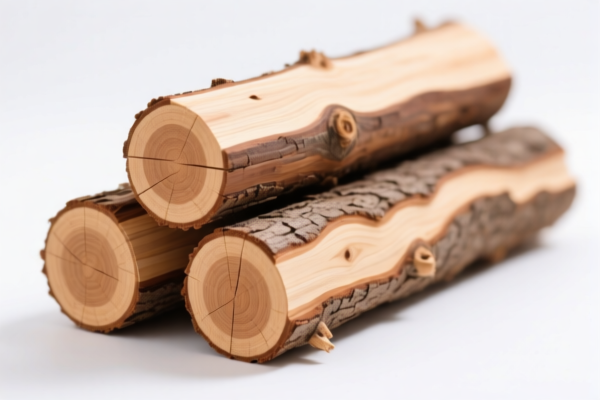
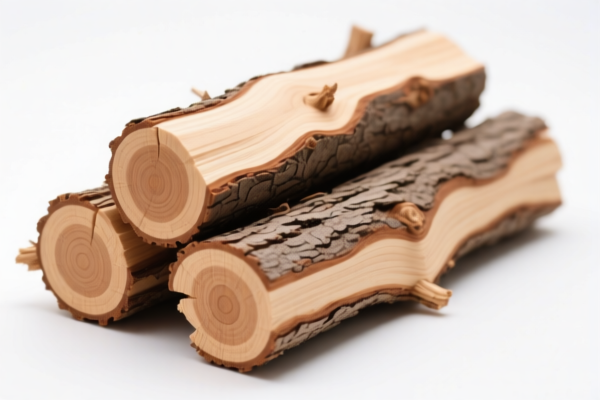
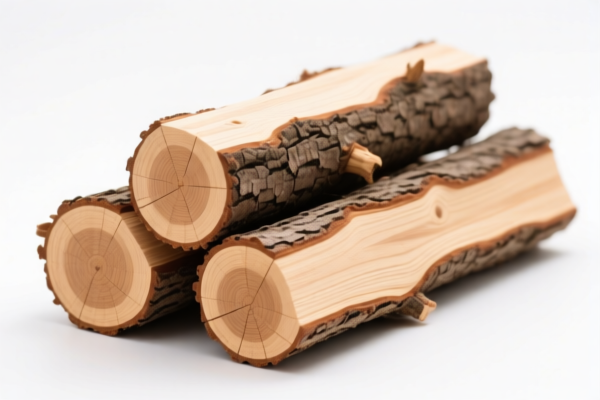
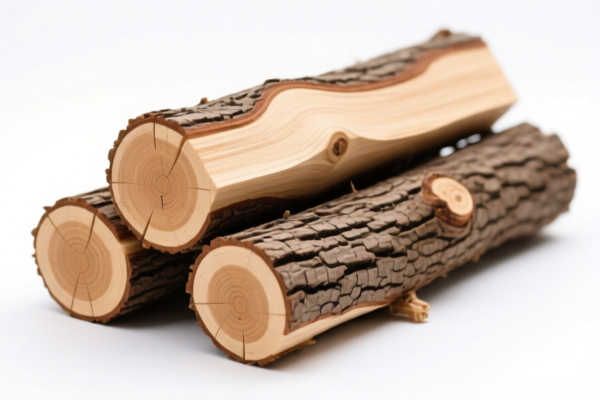
AI Analysis
🌲 Maple Logs: Roughly Processed Wood (Hardwood Timber)
🌐 HS Code Reference & Customs Clearance Guide | 2026 Latest Tariff Analysis | Professional Compliance Strategy
📌 I. Product Definition & Classification: What is "Roughly Processed Maple"?
Maple logs that have been "roughly processed" fall under the category of non-coniferous wood products. In international trade, the term "roughly processed" (or "sawn/treated") refers to timber that has undergone basic shaping but has not yet reached the final consumer product stage (like flooring or furniture).
Key Characteristics: * Material: Hardwood (Maple/Syrup family). * Processing Level: Roughly processed. This includes: * Raw Logs (4403): Debarked, roughly squared, or roughly trimmed at both ends. * Rough Sawing (4407): Sawn or chipped lengthwise, with a thickness exceeding 6 mm. * Exclusions: It does not include planed, tongued, grooved, or shaped wood ready for immediate assembly (which falls under Chapter 4409 or 4420).
⚠️ Critical Distinction:
- If the wood is fuel grade (chips, small pieces, or logs primarily for burning) → Consider 4401.12.00.00.
- If the wood is structural/construction grade (sawed, roughly squared, >6mm thick) → Consider 4403.99.01.60 or 4407.93.00.20.
- If the wood is finished flooring (tongued/grooved/planed) → Consider 4409.29.26.30.
📦 II. HS Code Classification Details (2026 Official Tariff Reference)
Based on your input data, here are the specific HS Codes for different states of "roughly processed" maple:
| HS Code | Product Description | Processing State | Application Scenario |
|---|---|---|---|
4403.99.01.60 |
Maple logs, roughly processed | Roughly squared/trimmed | Construction beams, structural timber, raw material for further processing |
4407.93.00.20 |
Maple wood, sawn/chipped | Lengthwise sawn, >6mm thick | Planks, boards, rough lumber for furniture or carpentry |
4409.29.26.30 |
Maple floorboards | Planed/Tongued/Grooved | Finished flooring, decking, parquet |
4401.12.00.00 |
Maple logs, fuel wood | Raw/Bulk | Biomass fuel, firewood, low-grade timber for energy |
🔍 Key Note:
- 4403.99.01.60 is the standard code for "Roughly processed maple logs" intended for industrial/construction use.
- 4407.93.00.20 applies if the wood has been sawn into boards/planks but not yet planed or shaped.
- 4409.29.26.30 is for finished maple flooring, which is a more processed state than "roughly processed."
- 4401.12.00.00 is specifically for fuel wood, which is a distinct commercial purpose.
💰 III. 2026 Latest Tariff Rate Breakdown (Including Surcharges)
✅ Applicable Market: United States (US)
✅ Origin: China (CN)
✅ Effective Date: November 10, 2025 (and onwards)
🎯 1. 4403.99.01.60 & 4407.93.00.20 & 4409.29.26.30
Products: Roughly Processed Logs, Sawn Timber, Maple Flooring
| Item | Details |
|---|---|
| Base Tariff Rate | 0.0% (Ad Valorem, Standard MFN) |
| Section 301 Surcharge | +25.0% (Additional Duty under USITC Footnote 9903.88.01) |
| Section 122 Tariff | +10.0% (Specific tariff on certain wood products under Section 122) |
| Total Effective Rate | 35.0% |
| Tax Calculation | CIF Value × 35% |
| De Minimis Exemption | ❌ Not Available (deny_de_minimis) |
| Legal Basis Path | USITC:4403.99.01.60 / 4407.93.00.20 → FOOTNOTE:9903.88.01 → Section 122 Statute |
📌 Explanation:
- The 0% base rate is standard for wood products under MFN.
- The 25% Section 301 tariff is the primary trade barrier for Chinese-origin wood products.
- The 10% Section 122 tariff is an additional layer specifically targeting certain wood imports.
- Total 35% is a significant cost factor that must be included in pricing strategies.
🎯 2. 4401.12.00.00
Product: Maple Logs for Fuel
| Item | Details |
|---|---|
| Base Tariff Rate | 0.0% |
| Section 301 Surcharge | +25.0% |
| Section 122 Tariff | +10.0% |
| Total Effective Rate | 35.0% |
| Tax Calculation | CIF Value × 35% |
| De Minimis Exemption | ❌ Not Available |
📌 Note:
- Even though it's "fuel wood," it is still subject to the same trade remedies (Section 301 & 122) as construction timber.
- Ensure the description explicitly states "Fuel Wood" to avoid misclassification with higher-value timber.
🛠️ IV. Customs Clearance Practical Advice (Avoid Pitfalls)
✅ 1. Documentation Checklist (Essential)
| Document | Required | Purpose |
|---|---|---|
| Commercial Invoice | ✔️ | Must clearly state "Maple Wood," HS Code, and CIF value |
| Packing List | ✔️ | Detail dimensions, weight, and number of pieces |
| Bill of Lading/Air Waybill | ✔️ | Proof of shipment |
| Phytosanitary Certificate | ✔️ | Mandatory for wood products to prove freedom from pests |
| Fumigation Certificate | ✔️ | Required if wood is not heat-treated (HT) or methyl bromide treated (MB) |
| ISPM 15 Mark | ✔️ | If packaged in wood pallets/crates, they must be marked |
| Country of Origin Certificate | ✔️ | Confirm Chinese origin for accurate tariff application |
⚠️ Critical Warning:
- Phytosanitary certificates are non-negotiable. Failure to provide them will result in quarantine delays, re-export, or destruction.
- Ensure the wood is dry (moisture content <20%) to prevent mold claims and weight disputes.
✅ 2. Classification Strategy (Key Mnemonics)
🔥 "Rough Logs = 4403, Sawed Boards = 4407, Finished Floor = 4409, Fuel = 4401. All carry 35%!"
| Scenario | Correct HS Code | Common Mistake |
|---|---|---|
| Roughly squared logs for construction | 4403.99.01.60 |
Misclassifying as fuel (4401) |
| Sawn planks >6mm thick | 4407.93.00.20 |
Misclassifying as flooring (4409) |
| Tongued/grooved floorboards | 4409.29.26.30 |
Misclassifying as rough sawn (4407) |
| Small chips/bark/firewood | 4401.12.00.00 |
Misclassifying as structural timber |
✅ 3. Special Handling Tips
| Situation | Recommendation |
|---|---|
| Mixed Shipments | Clearly separate "Fuel Wood" from "Construction Timber" on invoices. |
| Wood Packaging | Ensure pallets are ISPM 15 compliant. If not, the entire shipment may be rejected. |
| Value Declaration | Declare CIF value accurately. Under-declaration leads to heavy fines. |
| Pre-Arrival Processing | Submit advance data via ACE/ABI to speed up customs release. |
🌍 V. Global Market Comparison (2026 Update)
| Market | Recommended HS Code | Total Tariff (China Origin) | Notes |
|---|---|---|---|
| 🇺🇸 USA | 4403.99.01.60 etc. |
35.0% | High due to Section 301 + Section 122 |
| 🇨🇳 China (Export) | Varies | 0% (Export Duty) | China does not tax wood exports; focus is on importers' duties |
| 🇪🇺 EU | 4403/4407 |
~0-5% | No Section 301 equivalent, but strict Phytosanitary rules |
| 🇨🇦 Canada | 4403/4407 |
~0% | USMCA may apply if originating in North America, but CN origin pays most-favored-nation rates |
📌 Conclusion:
- The US market is the most challenging due to the 35% combined tariff.
- EU and other markets do not have these specific surcharges, but have strict environmental and phytosanitary standards.
📌 VI. Common Errors & Pitfalls (Lessons Learned)
❌ Error 1: Misclassifying "Rough Logs" as "Fuel Wood" to avoid higher scrutiny
👉 Consequence: Customs audit, penalty for misclassification, potential seizure.
❌ Error 2: Missing Phytosanitary Certificate
👉 Consequence: Shipment held at port, fumigation costs, delay fees, possible destruction.
❌ Error 3: Not declaring Section 301/122 impact in pricing
👉 Consequence: Profit margin erosion. Importers must budget for the 35% total duty.
❌ Error 4: Confusing "Sawn" (4407) with "Flooring" (4409)
👉 Consequence: If the wood is planed/tongued, it must be 4409. Misclassification can lead to valuation disputes.
✅ Best Practice:
"Maple Logs, Roughly Processed, Non-Coniferous, Heat-Treated, ISPM 15 Compliant, Origin: China"
🎯 VII. Conclusion: Strategic Compliance for Profitability
🎯 Remember the Rule:
🔹 "Rough Wood = 35% Total Duty in the US."
🔹 "No Phytosanitary Cert = No Entry."
🔹 "Accurate Description = Smooth Clearance."
📌 Pro Tip:
- For large volumes, consider negotiating DDP (Delivered Duty Paid) terms with suppliers if possible, though the 35% duty remains the buyer's responsibility in most cases.
- Pre-shipment Inspection is recommended to ensure wood quality and documentation accuracy.
📣 Immediate Action:
📞 Engage a Licensed Customs Broker to verify the exact HS Code for your specific shipment.
📄 Ensure Phytosanitary Certificates are issued by the national plant protection organization (NPPO) of the exporting country.
🚀 Plan for the 35% Duty in your cost structure to maintain competitive pricing.
✨ Professional Clearance, Starts with Precise Classification!
💼 Every percentage point counts in global trade!
Customer Reviews
About HS Code Classification
The Harmonized System (HS) is an internationally standardized nomenclature developed by the World Customs Organization (WCO) to classify traded products. Over 200 countries use the HS system as the basis for customs tariffs, trade statistics, and import/export regulations.
Each HS code follows a hierarchical structure:
- Chapter (2 digits) — Broad category of goods (e.g., Chapter 84: Machinery and Mechanical Appliances)
- Heading (4 digits) — More specific grouping within the chapter
- Subheading (6 digits) — Internationally standardized breakdown, used by all WCO member countries
- National subdivisions (8-10 digits) — Country-specific extensions for further classification, such as US HTSUS 10-digit codes
Correct HS code classification is essential for smooth customs clearance, accurate duty payment, and compliance with trade regulations. Misclassification can lead to customs delays, overpayment of duties, or penalties.
When importing from CN to US, the applicable tariff rates may include:
- Most-Favored-Nation (MFN) rate — The standard duty rate applied to WTO members
- General rate — Applied to countries without trade agreements
- Trade remedy duties — Additional tariffs such as Section 301 (anti-dumping), Section 232 (national security), or countervailing duties
The information provided on this page is for reference purposes only. For official classification, please consult with your local customs authority or a licensed customs broker.