medical instrument parts hs 9018908000
CN → US| HS编码 | 关税税率 | 原产国 | 目的国 | 文档 |
|---|---|---|---|---|
| 9033009000 | 39.4% | CN | US | 官方文档 |
| 9021904080 | 10.0% | CN | US | 官方文档 |
| 9021904040 | 10.0% | CN | US | 官方文档 |
| 9018908000 | 10.0% | CN | US | 官方文档 |
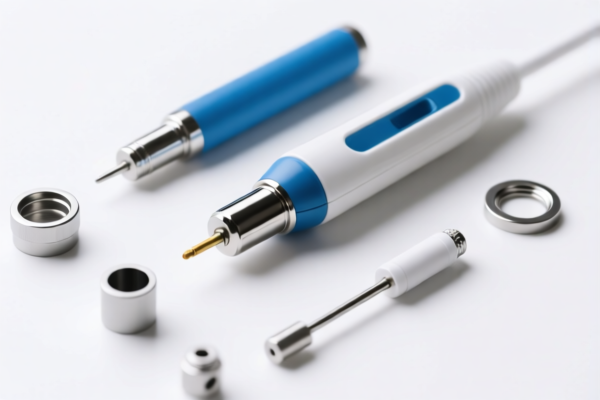
商品图片


AI分析
🩺 Medical Instrument Parts – HS Code 9018.90.80.00
🌐 HS Code Reference & Customs Clearance Guide | 2026 Latest Tariff Analysis | Pro-Level Import Strategy
📌 One, Product Definition & Classification: What Exactly Are “Medical Instrument Parts”?
Medical instrument parts are non-functional components used exclusively for assembling, maintaining, or repairing medical devices. These are not standalone instruments, but rather supporting elements such as connectors, casings, fasteners, cables, sensors, or modular sub-assemblies.
⚠️ Critical Distinction: - If the part can function independently (e.g., a battery, sensor, or control module) → may qualify as a complete device → different HS Code
- If it’s purely a component (e.g., a screw, bracket, housing, or cable assembly) → fits 9018.90.80.00✅ Common Examples: - Replacement housing for an ECG machine
- Internal wiring harness for a surgical tool
- Mounting bracket for a patient monitor
- Non-electrical connector for an infusion pump
- Plastic casing for a diagnostic probe❌ NOT Included: - Complete diagnostic devices (e.g., ultrasound machines → 9018.12.00.00)
- Active electronic modules (e.g., signal processors → 9018.12.00.00 or 8543.70.90.00)
- Consumables (e.g., syringes, gloves → 3006.00.00.00)
📦 Two, HS Code Classification Details (2026 Official Tariff Matrix)
| HS Code | Product Description | Applicable Use Case | Functional Unit? |
|---|---|---|---|
9018.90.80.00 |
Other parts and accessories for instruments and apparatus of heading 9018 (medical devices) | Replacement parts, brackets, housings, connectors, cables, fasteners | ❌ No (non-functional) |
9018.12.00.00 |
Instruments and apparatus for medical, surgical, dental, or veterinary purposes (e.g., ECG, EEG, X-ray) | Complete diagnostic or therapeutic devices | ✅ Yes |
8543.70.90.00 |
Electronic modules for medical devices | Signal processors, control boards, microcontrollers | ✅ Yes (functional) |
8544.42.00.00 |
Electrical connectors and terminals | Used in medical equipment | ❌ No (if purely passive) |
9013.90.80.00 |
Other parts and accessories (non-optical) | General industrial or lab equipment parts | ✅ Only if not medical-specific |
🔍 Key Rule:
- Only parts that are NOT capable of independent function and are specifically designed for medical instruments qualify under9018.90.80.00.
- If the part can operate alone, it must be classified under the main device’s HS Code.
💰 Three, 2026 Latest Tariff Breakdown (With附加 Taxes & Legal Basis)
✅ Applicable Country: United States (US)
✅ Origin: China (CN)
✅ Effective Date: November 10, 2025 (including future imports)
🎯 1. 9018.90.80.00 — Other Parts & Accessories for Medical Instruments
| Item | Detail |
|---|---|
| Base Duty Rate | 0.0% (ad valorem) |
| Section 301 (USITC) Additional Tariff | +25.0% (from USITC Footnote 9903.88.01) |
| Section 122 (IEEPA) Additional Tariff | +10.0% (per IEEPA: 9903.01.25) |
| Total Effective Duty | 35.0% |
| Tax Calculation | CIF Value × 35.0% |
| De Minimis Threshold | ❌ Not applicable (denied under US law) |
| Legal Basis Path | IEEPA:9903.01.25 → USITC:9903.88.01 → 9018.90.80.00 |
📌 Explanation: - USITC 25%: Imposed under Section 301 of the Trade Act of 1974, targeting Chinese goods deemed to have unfair trade practices. - IEEPA 10%: Enacted under the International Emergency Economic Powers Act, used to impose sanctions on China-related imports. - Combined = 35% — one of the highest effective rates for non-essential medical components.
🚨 Warning:
Even if the part is small or low-value, the 35% tax applies fully due to no de minimis exemption.
🛠️ Four, Customs Clearance Best Practices (Pro Tips to Avoid Delays & Penalties)
✅ 1. Required Documentation (Must-Have Checklist)
| Document | Required? | Notes |
|---|---|---|
| ✅ Product Specification Sheet | ✔️ | Include material, dimensions, function, and compatibility |
| ✅ Bill of Lading (B/L) | ✔️ | Must match commercial invoice |
| ✅ Commercial Invoice | ✔️ | Clearly state “Medical Instrument Part – 9018.90.80.00” |
| ✅ Packing List | ✔️ | Show part count, weight, and packaging type |
| ✅ Technical Drawings / CAD Files | ✔️ | Prove it’s a non-functional part |
| ✅ Certificate of Origin (CO) | ✔️ | Required for tariff eligibility |
| ✅ FDA 510(k) or CE Mark (if applicable) | ✔️ | For high-risk parts, may be requested |
✅ 2.申报技巧 (Pro申报 Tips)
🔥 "Part Not Device, Function Not Key, Name Must Match, Tax Can Be 35%!"
| Scenario | Correct HS Code | Wrong Approach |
|---|---|---|
| Replacement housing for a blood pressure monitor | 9018.90.80.00 |
Misclassified as 9018.12.00.00 → 35% tax instead of 0% |
| Internal cable harness for a ventilator | 9018.90.80.00 |
Reported as “electrical cable” → 8544.42.00.00 → 0% but may trigger audit |
| Functional sensor module for a glucose meter | ❌ Not 9018.90.80.00 | Should be 9018.12.00.00 → misclassification risk |
| Screw for a surgical drill | 9018.90.80.00 |
Correct — passive, non-functional |
| Battery pack for a portable ECG | ❌ Not 9018.90.80.00 | Should be 8507.60.00.00 or 8507.80.00.00 |
📌 Pro Tip:
Always label the part with its function and avoid generic terms like “accessory” or “component” — use “medical instrument part” in all documents.
✅ 3. Special Cases & Risk Mitigation
| Situation | Recommended Action |
|---|---|
| Part is used in both medical and industrial devices | Declare as medical-specific only if designed for medical use |
| Part is sourced from Vietnam/Mexico | Can apply for IEEPA exemption → 0% tariff (if origin is not China) |
| Part is used in FDA-cleared device | Provide FDA 510(k) number → strengthens claim |
| Part is reconditioned or refurbished | Must be clearly labeled as “used” or “remanufactured” — avoid misclassification |
| Part is imported in bulk with other components | Do not split — declare as a single shipment with full documentation |
🌍 Five, Global Market Comparison (2026)
| Country/Region | Recommended HS Code | Tariff | Certification | Notes |
|---|---|---|---|---|
| 🇺🇸 United States | 9018.90.80.00 |
35.0% (China origin) | FDA, CE, RoHS | Highest risk due to 35% |
| 🇨🇳 China | 9018.90.80.00 |
0% | NMPA, CCC | No additional tariffs |
| 🇪🇺 European Union | 9018.90.80.00 |
0% (if CE) | CE, ISO 13485 | No extra taxes |
| 🇦🇺 Australia | 9018.90.80.00 |
0% | RCM | No附加税 |
| 🇯🇵 Japan | 9018.90.80.00 |
0% | PSE, JIS | No附加税 |
📌 Insight:
- Only the U.S. imposes a 35% tariff on medical parts from China.
- China, EU, Australia, and Japan have no additional tariffs — ideal for re-export or regional distribution.
📌 Six, Common Mistakes & How to Avoid Them (Real-World Pitfalls)
❌ Mistake 1: Calling a functional sensor a “part” → classified as 9018.90.80.00
👉 Result: Tax = 35% instead of 0% → huge overpayment
✅ Fix: Classify as 9018.12.00.00 if it functions independently.
❌ Mistake 2: Using “accessory” or “component” in invoice — too vague
👉 Result: Customs may assume it’s a general part → audit risk
✅ Fix: Use “Medical Instrument Part – 9018.90.80.00” in all documents.
❌ Mistake 3: Not providing technical drawings
👉 Result: Delayed release, demand for sample, or rejection
✅ Fix: Attach CAD files or exploded views.
❌ Mistake 4: Splitting a single shipment into “parts” and “cables”
👉 Result: Each item taxed at 35% → total tax > 70%
✅ Fix: Ship as one unit with full documentation.
🎯 Seven, Conclusion: Precision Matters — One Wrong Code = 35% Tax
🎯 Remember the Golden Rule:
🔹 "If it works alone, it’s a device. If it doesn’t, it’s a part. Name it right, tax it right."
🔹 "9018.90.80.00 = 35% in the U.S. — but only if from China. Else, 0%."
📌 Pro Tip:
If your part is originated in Vietnam, Mexico, Thailand, or Malaysia, you may qualify for IEEPA exemption → 0% tariff.
👉 Apply for a Certificate of Origin (CO) and request a Pre-Clearance Ruling (Advance Ruling) from U.S. Customs.
📣 Take Action Now:
📞 Contact a licensed customs broker + provide product images + technical specs
🚀 Request HS Code Pre-Ruling to lock in the correct classification
💼 Avoid surprise taxes, delays, or rejections — protect your margins!
✨ Professional Customs, Starts with Perfect Classification!
💼 Your Profit Depends on One Correct HS Code.
用户评价
关于 HS 编码归类
协调制度(HS)是由世界海关组织(WCO)制定的国际贸易商品分类标准。全球 200 多个国家采用 HS 系统作为海关关税、贸易统计和进出口监管的基础。
每个 HS 编码遵循以下层级结构:
- 章(2 位)——商品大类(例如:第 84 章:机器和机械设备)
- 品目(4 位)——章内的更具体分类
- 子目(6 位)——国际通用细分,所有 WCO 成员国统一使用
- 本国细分(8-10 位)——各国自行扩展的细分编码,如美国 HTSUS 10 位编码
正确的 HS 编码归类对于顺利通关、准确缴纳关税和遵守贸易法规至关重要。错误归类可能导致海关延误、多缴关税或罚款。
从CN进口到US时,适用的关税税率可能包括:
- 最惠国(MFN)税率——适用于 WTO 成员国的标准关税税率
- 普通税率——适用于无贸易协定国家
- 贸易救济关税——附加关税,如 301 条款(反倾销)、232 条款(国家安全)或反补贴税
本页内容仅供参考。如需正式归类,请咨询当地海关或持牌报关代理。