medical instrument parts hs 9018908000
CN → US| HS Code | Tariff Rate | Origin | Destination | Doc |
|---|---|---|---|---|
| 9033009000 | 39.4% | CN | US | Official Doc |
| 9021904080 | 10.0% | CN | US | Official Doc |
| 9021904040 | 10.0% | CN | US | Official Doc |
| 9018908000 | 10.0% | CN | US | Official Doc |
Product Images


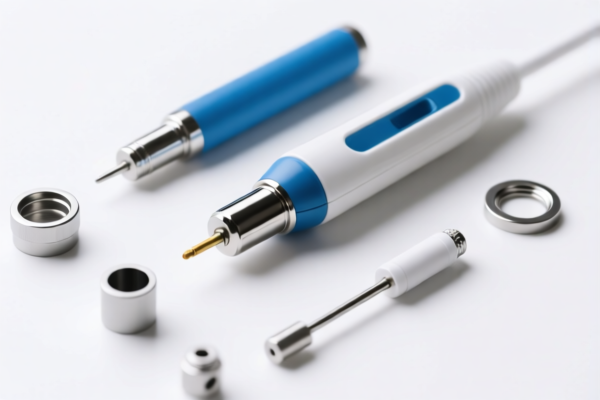
AI Analysis
🩺 Medical Instrument Parts – HS Code 9018.90.80.00
🌐 HS Code Reference & Customs Clearance Guide | 2026 Latest Tariff Analysis | Pro-Level Import Strategy
📌 One, Product Definition & Classification: What Exactly Are “Medical Instrument Parts”?
Medical instrument parts are non-functional components used exclusively for assembling, maintaining, or repairing medical devices. These are not standalone instruments, but rather supporting elements such as connectors, casings, fasteners, cables, sensors, or modular sub-assemblies.
⚠️ Critical Distinction: - If the part can function independently (e.g., a battery, sensor, or control module) → may qualify as a complete device → different HS Code
- If it’s purely a component (e.g., a screw, bracket, housing, or cable assembly) → fits 9018.90.80.00✅ Common Examples: - Replacement housing for an ECG machine
- Internal wiring harness for a surgical tool
- Mounting bracket for a patient monitor
- Non-electrical connector for an infusion pump
- Plastic casing for a diagnostic probe❌ NOT Included: - Complete diagnostic devices (e.g., ultrasound machines → 9018.12.00.00)
- Active electronic modules (e.g., signal processors → 9018.12.00.00 or 8543.70.90.00)
- Consumables (e.g., syringes, gloves → 3006.00.00.00)
📦 Two, HS Code Classification Details (2026 Official Tariff Matrix)
| HS Code | Product Description | Applicable Use Case | Functional Unit? |
|---|---|---|---|
9018.90.80.00 |
Other parts and accessories for instruments and apparatus of heading 9018 (medical devices) | Replacement parts, brackets, housings, connectors, cables, fasteners | ❌ No (non-functional) |
9018.12.00.00 |
Instruments and apparatus for medical, surgical, dental, or veterinary purposes (e.g., ECG, EEG, X-ray) | Complete diagnostic or therapeutic devices | ✅ Yes |
8543.70.90.00 |
Electronic modules for medical devices | Signal processors, control boards, microcontrollers | ✅ Yes (functional) |
8544.42.00.00 |
Electrical connectors and terminals | Used in medical equipment | ❌ No (if purely passive) |
9013.90.80.00 |
Other parts and accessories (non-optical) | General industrial or lab equipment parts | ✅ Only if not medical-specific |
🔍 Key Rule:
- Only parts that are NOT capable of independent function and are specifically designed for medical instruments qualify under9018.90.80.00.
- If the part can operate alone, it must be classified under the main device’s HS Code.
💰 Three, 2026 Latest Tariff Breakdown (With附加 Taxes & Legal Basis)
✅ Applicable Country: United States (US)
✅ Origin: China (CN)
✅ Effective Date: November 10, 2025 (including future imports)
🎯 1. 9018.90.80.00 — Other Parts & Accessories for Medical Instruments
| Item | Detail |
|---|---|
| Base Duty Rate | 0.0% (ad valorem) |
| Section 301 (USITC) Additional Tariff | +25.0% (from USITC Footnote 9903.88.01) |
| Section 122 (IEEPA) Additional Tariff | +10.0% (per IEEPA: 9903.01.25) |
| Total Effective Duty | 35.0% |
| Tax Calculation | CIF Value × 35.0% |
| De Minimis Threshold | ❌ Not applicable (denied under US law) |
| Legal Basis Path | IEEPA:9903.01.25 → USITC:9903.88.01 → 9018.90.80.00 |
📌 Explanation: - USITC 25%: Imposed under Section 301 of the Trade Act of 1974, targeting Chinese goods deemed to have unfair trade practices. - IEEPA 10%: Enacted under the International Emergency Economic Powers Act, used to impose sanctions on China-related imports. - Combined = 35% — one of the highest effective rates for non-essential medical components.
🚨 Warning:
Even if the part is small or low-value, the 35% tax applies fully due to no de minimis exemption.
🛠️ Four, Customs Clearance Best Practices (Pro Tips to Avoid Delays & Penalties)
✅ 1. Required Documentation (Must-Have Checklist)
| Document | Required? | Notes |
|---|---|---|
| ✅ Product Specification Sheet | ✔️ | Include material, dimensions, function, and compatibility |
| ✅ Bill of Lading (B/L) | ✔️ | Must match commercial invoice |
| ✅ Commercial Invoice | ✔️ | Clearly state “Medical Instrument Part – 9018.90.80.00” |
| ✅ Packing List | ✔️ | Show part count, weight, and packaging type |
| ✅ Technical Drawings / CAD Files | ✔️ | Prove it’s a non-functional part |
| ✅ Certificate of Origin (CO) | ✔️ | Required for tariff eligibility |
| ✅ FDA 510(k) or CE Mark (if applicable) | ✔️ | For high-risk parts, may be requested |
✅ 2.申报技巧 (Pro申报 Tips)
🔥 "Part Not Device, Function Not Key, Name Must Match, Tax Can Be 35%!"
| Scenario | Correct HS Code | Wrong Approach |
|---|---|---|
| Replacement housing for a blood pressure monitor | 9018.90.80.00 |
Misclassified as 9018.12.00.00 → 35% tax instead of 0% |
| Internal cable harness for a ventilator | 9018.90.80.00 |
Reported as “electrical cable” → 8544.42.00.00 → 0% but may trigger audit |
| Functional sensor module for a glucose meter | ❌ Not 9018.90.80.00 | Should be 9018.12.00.00 → misclassification risk |
| Screw for a surgical drill | 9018.90.80.00 |
Correct — passive, non-functional |
| Battery pack for a portable ECG | ❌ Not 9018.90.80.00 | Should be 8507.60.00.00 or 8507.80.00.00 |
📌 Pro Tip:
Always label the part with its function and avoid generic terms like “accessory” or “component” — use “medical instrument part” in all documents.
✅ 3. Special Cases & Risk Mitigation
| Situation | Recommended Action |
|---|---|
| Part is used in both medical and industrial devices | Declare as medical-specific only if designed for medical use |
| Part is sourced from Vietnam/Mexico | Can apply for IEEPA exemption → 0% tariff (if origin is not China) |
| Part is used in FDA-cleared device | Provide FDA 510(k) number → strengthens claim |
| Part is reconditioned or refurbished | Must be clearly labeled as “used” or “remanufactured” — avoid misclassification |
| Part is imported in bulk with other components | Do not split — declare as a single shipment with full documentation |
🌍 Five, Global Market Comparison (2026)
| Country/Region | Recommended HS Code | Tariff | Certification | Notes |
|---|---|---|---|---|
| 🇺🇸 United States | 9018.90.80.00 |
35.0% (China origin) | FDA, CE, RoHS | Highest risk due to 35% |
| 🇨🇳 China | 9018.90.80.00 |
0% | NMPA, CCC | No additional tariffs |
| 🇪🇺 European Union | 9018.90.80.00 |
0% (if CE) | CE, ISO 13485 | No extra taxes |
| 🇦🇺 Australia | 9018.90.80.00 |
0% | RCM | No附加税 |
| 🇯🇵 Japan | 9018.90.80.00 |
0% | PSE, JIS | No附加税 |
📌 Insight:
- Only the U.S. imposes a 35% tariff on medical parts from China.
- China, EU, Australia, and Japan have no additional tariffs — ideal for re-export or regional distribution.
📌 Six, Common Mistakes & How to Avoid Them (Real-World Pitfalls)
❌ Mistake 1: Calling a functional sensor a “part” → classified as 9018.90.80.00
👉 Result: Tax = 35% instead of 0% → huge overpayment
✅ Fix: Classify as 9018.12.00.00 if it functions independently.
❌ Mistake 2: Using “accessory” or “component” in invoice — too vague
👉 Result: Customs may assume it’s a general part → audit risk
✅ Fix: Use “Medical Instrument Part – 9018.90.80.00” in all documents.
❌ Mistake 3: Not providing technical drawings
👉 Result: Delayed release, demand for sample, or rejection
✅ Fix: Attach CAD files or exploded views.
❌ Mistake 4: Splitting a single shipment into “parts” and “cables”
👉 Result: Each item taxed at 35% → total tax > 70%
✅ Fix: Ship as one unit with full documentation.
🎯 Seven, Conclusion: Precision Matters — One Wrong Code = 35% Tax
🎯 Remember the Golden Rule:
🔹 "If it works alone, it’s a device. If it doesn’t, it’s a part. Name it right, tax it right."
🔹 "9018.90.80.00 = 35% in the U.S. — but only if from China. Else, 0%."
📌 Pro Tip:
If your part is originated in Vietnam, Mexico, Thailand, or Malaysia, you may qualify for IEEPA exemption → 0% tariff.
👉 Apply for a Certificate of Origin (CO) and request a Pre-Clearance Ruling (Advance Ruling) from U.S. Customs.
📣 Take Action Now:
📞 Contact a licensed customs broker + provide product images + technical specs
🚀 Request HS Code Pre-Ruling to lock in the correct classification
💼 Avoid surprise taxes, delays, or rejections — protect your margins!
✨ Professional Customs, Starts with Perfect Classification!
💼 Your Profit Depends on One Correct HS Code.
Customer Reviews
About HS Code Classification
The Harmonized System (HS) is an internationally standardized nomenclature developed by the World Customs Organization (WCO) to classify traded products. Over 200 countries use the HS system as the basis for customs tariffs, trade statistics, and import/export regulations.
Each HS code follows a hierarchical structure:
- Chapter (2 digits) — Broad category of goods (e.g., Chapter 84: Machinery and Mechanical Appliances)
- Heading (4 digits) — More specific grouping within the chapter
- Subheading (6 digits) — Internationally standardized breakdown, used by all WCO member countries
- National subdivisions (8-10 digits) — Country-specific extensions for further classification, such as US HTSUS 10-digit codes
Correct HS code classification is essential for smooth customs clearance, accurate duty payment, and compliance with trade regulations. Misclassification can lead to customs delays, overpayment of duties, or penalties.
When importing from CN to US, the applicable tariff rates may include:
- Most-Favored-Nation (MFN) rate — The standard duty rate applied to WTO members
- General rate — Applied to countries without trade agreements
- Trade remedy duties — Additional tariffs such as Section 301 (anti-dumping), Section 232 (national security), or countervailing duties
The information provided on this page is for reference purposes only. For official classification, please consult with your local customs authority or a licensed customs broker.