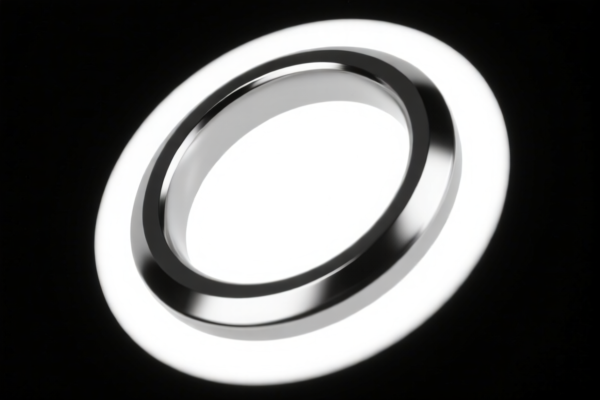
mounting ring
CN → US| HS编码 | 关税税率 | 原产国 | 目的国 | 文档 |
|---|---|---|---|---|
| 8487900040 | 38.9% | CN | US | 官方文档 |
| 7326908675 | 87.9% | CN | US | 官方文档 |
| 8538908180 | 38.5% | CN | US | 官方文档 |
| 8538908160 | 38.5% | CN | US | 官方文档 |
| 8487900080 | 88.9% | CN | US | 官方文档 |
商品图片



AI分析
🔩 Mounting Ring: The Unsung Hero of Industrial Assembly
🌐 HS Code Reference & Customs Clearance Guide | 2026 Latest Tariff Analysis | Professional Strategy
📌 I. Product Definition & Classification: What Exactly is a "Mounting Ring"?
A Mounting Ring is a critical mechanical component used to secure, align, or support other parts within machinery, electrical equipment, or structural assemblies. Unlike finished products, it is classified as a "Part" or "Accessory."
In international trade, the critical challenge is that "Mounting Ring" is a functional description, not a material specification. Without explicit material declaration (e.g., Steel, Aluminum, Plastic), customs authorities must rely on "Default Classification Rules for Parts."
⚠️ Key Distinction:
- If the ring is generic/mechanical (no specific electrical function) → Tends toward Chapter 84 or Chapter 73.
- If the ring is part of an electrical switch/control system → Tends toward Chapter 85.
- Material matters most: The lack of material data triggers higher "general" or "mixed material" tariff buckets, often attracting heavier supplementary duties.
📦 II. HS Code Classification Details (2026 Latest Tariff Alignment)
Based on the provided data, four potential HS Codes are identified. Each reflects a different interpretation of the ring's mechanical or electrical context.
| HS Code | Product Description | Application Context | Tariff Logic |
|---|---|---|---|
8487.90.00.40 |
Other mechanical parts & accessories | Generic mechanical assembly, industrial machinery frames | Default "Mechanical Part" classification. |
7326.90.86.75 |
Articles of iron/steel (Other) | Metal (Steel/Aluminum/Copper) constructional accessories | High Risk: Triggered if metal material is inferred. Includes 50% surcharge. |
8538.90.81.80 |
Parts suitable for use solely or principally with apparatus of heading 85.37/85.38 | Electrical switchboards, control panels, distribution boards | Classified as an electrical part. |
8538.90.81.60 |
Other parts of apparatus of heading 85.37/85.38 | Specific electrical control components, likely plastic or metal | Classified as an electrical part with specific sub-heading nuance. |
🔍 Critical Analysis:
-8487.90.00.40vs7326.90.86.75: The primary conflict is Mechanical vs. Material. If it’s just a mechanical fixture,8487applies. If it’s made of metal and viewed as a fabricated steel article,7326applies.
-8538.90.81.xx: These apply only if the ring is specifically designed for electrical control gear (e.g., mounting a breaker or contactor). If it’s for a pump or motor frame, these codes are incorrect.
💰 III. 2026 Latest Tariff Rate Breakdown (Including Surcharges & Policy Add-ons)
✅ Applicable Country: United States (US)
✅ Origin: China (CN)
✅ Effective Date: 2025 onwards (Includes Section 301 & IEEPA tariffs)
🎯 1. 8487.90.00.40 —— Mechanical Parts (Default General)
| Item | Details |
|---|---|
| Base Rate | 3.9% (Ad Valorem) |
| Section 301 Surcharge | +25.0% (Standard China Tariff) |
| Section 122 IEEPA Surcharge | +10.0% (Specific to China imports) |
| Total Effective Rate | 38.9% |
| Tax Calculation | CIF Value × 38.9% |
| De Minimis Exemption? | ❌ No |
📌 Explanation:
- This is the "Safe Harbor" for generic mechanical parts.
- The base rate is low (3.9%), but the 35% combined surcharge (25% + 10%) makes it expensive.
- No metal-specific surcharge applies here because it’s not classified under steel/aluminum headings.
🎯 2. 7326.90.86.75 —— Iron/Steel Articles (Material-Specific)
| Item | Details |
|---|---|
| Base Rate | 2.9% (Ad Valorem) |
| Section 301 Surcharge | +25.0% |
| Section 122 IEEPA Surcharge | +10.0% |
| Steel/Aluminum/Copper Surcharge | +50.0% (Critical Addition!) |
| Total Effective Rate | 87.9% |
| Tax Calculation | CIF Value × 87.9% |
| De Minimis Exemption? | ❌ No |
📌 Explanation:
- This is the most expensive option.
- The +50% steel/aluminum surcharge is applied because the classification assumes a metallic composition (iron/steel).
- Why does this happen? If customs suspects the "Mounting Ring" is a fabricated metal article (Chapter 73) rather than a machine part (Chapter 84), this penalty kicks in.
- Risk: High. Avoid this classification unless explicitly declared as a generic steel article with no machine-specific function.
🎯 3. 8538.90.81.80 —— Electrical Parts (General)
| Item | Details |
|---|---|
| Base Rate | 3.5% (Ad Valorem) |
| Section 301 Surcharge | +25.0% |
| Section 122 IEEPA Surcharge | +10.0% |
| Total Effective Rate | 38.5% |
| Tax Calculation | CIF Value × 38.5% |
| De Minimis Exemption? | ❌ No |
📌 Explanation:
- Slightly cheaper than8487due to a lower base rate (3.5% vs 3.9%).
- Only applicable if the ring is used in electrical control equipment (e.g., holding a relay or switch).
- If the ring is for a hydraulic pump or motor, this code is incorrect and risks customs audit.
🎯 4. 8538.90.81.60 —— Electrical Parts (Specific)
| Item | Details |
|---|---|
| Base Rate | 3.5% (Ad Valorem) |
| Section 301 Surcharge | +25.0% |
| Section 122 IEEPA Surcharge | +10.0% |
| Total Effective Rate | 38.5% |
| Tax Calculation | CIF Value × 38.5% |
| De Minimis Exemption? | ❌ No |
📌 Explanation:
- Identical tax rate to8538.90.81.80.
- The distinction is often based on specific sub-heading nuances in the HTSUS.
- Like8538.90.81.80, it requires the part to be principally used with electrical apparatus.
🛠️ IV. Customs Clearance Practical Advice (Avoiding Pitfalls)
✅ 1. Preparation Checklist (Non-Negotiable)
| Document | Required | Purpose |
|---|---|---|
| ✅ Product Specifications | ✔️ | Must state: Material (Steel? Plastic? Aluminum?), Dimensions, Weight. |
| ✅ Function Description | ✔️ | Is it for a Machine (Pump/Motor)? Or Electrical Gear (Switchboard)? This dictates Chapter 84 vs 85. |
| ✅ Photos (Clear & Labeled) | ✔️ | Show the ring installed on its intended equipment. |
| ✅ Bill of Lading / Invoice | ✔️ | Must match HS Code. Do not write "General Parts" if it’s clearly electrical. |
| ✅ Material Certificate | ✔️ | Proves if it’s plastic, steel, or copper. Crucial to avoid the 50% steel surcharge if it’s not steel. |
✅ 2. Declaration Strategy (Key Mantras)
🔥 “Function Dictates Chapter, Material Dictates Surcharge, Precision Saves Money!”
| Scenario | Correct HS Code | Incorrect HS Code | Consequence |
|---|---|---|---|
| Generic Mechanical Ring (e.g., for a motor flange) | 8487.90.00.40 (38.9%) |
7326.90.86.75 (87.9%) |
Overpayment of 49% taxes! |
| Electrical Control Ring (e.g., for a breaker panel) | 8538.90.81.80/60 (38.5%) |
8487.90.00.40 (38.9%) |
Minor difference, but wrong code risks audit. |
| Plastic Mounting Ring | 8487.90.00.40 (Likely) |
7326.90.86.75 (87.9%) |
CATASTROPHIC ERROR: If you declare plastic as steel, you pay 50% extra. |
📌 Key Insight:
- If the ring is Plastic or Non-Metallic, you MUST avoid7326. Use8487(Mechanical Parts).
- If the ring is Metal, you must prove it is a "Part of a Machine" (Chapter 84) to avoid the "Steel Article" (Chapter 73) classification and its punitive 50% surcharge.
✅ 3. Special Handling Tips
| Situation | Recommendation |
|---|---|
| Ambiguous Material | Declare it as "Plastic" or "Composite" if possible, to avoid the 50% metal surcharge. Provide test reports. |
| OEM Custom Rings | Provide design drawings showing it is exclusive to a specific machine (e.g., "Ring for Model X Pump"). This supports Chapter 84 classification. |
| Bulk Imports | Ensure the Invoice clearly states "Mounting Ring for [Machine Type]." Vague descriptions invite customs scrutiny and random material testing. |
🌍 V. Global Market Comparison (2026)
| Region | Recommended HS Code | Est. Total Rate (China Origin) | Key Requirement |
|---|---|---|---|
| 🇺🇸 USA | 8487.90.00.40 or 8538.90.81.80 |
38.5% - 38.9% | Avoid 7326 to save 49%. |
| 🇪🇺 EU | 8487.90.80 (Varies) |
~0-3% (Base) | CE Marking if electrical. |
| 🇨🇳 China | 8487.90.00.40 |
~3.9% | No extra surcharges. |
| 🇬🇧 UK | 8487.90.80 |
~3.9% | Post-Brexit rules apply. |
📌 Conclusion:
- The USA is the most complex due to Section 301 (25%) and IEEPA (10%) tariffs.
- The biggest risk in the US is misclassifying a mechanical part as a steel article, leading to 87.9% tax.
- Strategy: Always aim for Chapter 84 (Mechanical Parts) unless it’s strictly electrical. Never let it fall into Chapter 73 (General Steel Articles) unless unavoidable.
📌 VI. Common Mistakes & Pitfalls (Lessons Learned)
❌ Mistake 1: Declaring a Steel mechanical ring as 7326.90.86.75
👉 Result: You pay 87.9% instead of 38.9%. Loss of ~49% in pure profit.
👉 Fix: Prove it is a "part of a machine" (Chapter 84), not a generic steel article.
❌ Mistake 2: Not specifying the Material in the description
👉 Result: Customs may assume it’s steel (worst-case scenario for surcharges).
👉 Fix: Explicitly state "Plastic Mounting Ring" or "Stainless Steel Mounting Ring for Motor X."
❌ Mistake 3: Using 8538 for a Mechanical part
👉 Result: Customs audit for "Misdeclaration of Electrical Parts."
👉 Fix: If it’s not holding a wire or switch, don’t use Chapter 85.
🎯 VII. Conclusion: Precision is Profit
🎯 Remember the Golden Rule:
🔹 "Mechanical Parts (84) vs. Steel Articles (73): The 50% Surcharge is the Killer."
🔹 "Electrical Parts (85) Only for Control Gear: Don't Force It."
🔹 "Always Declare Material: Plastic is Your Friend to Avoid Metal Penalties."
📌 Pro Tip:
If your mounting ring is made of Plastic or Composite, emphasize this in the commercial invoice. This helps justify Chapter 84 (Mechanical Parts) and avoids the Steel/Aluminum 50% surcharge entirely.
📣 Immediate Action:
📞 Contact your customs broker with the following:
1. Photo of the ring.
2. Material Test Report (Plastic vs. Steel).
3. Intended Use (Which machine/equipment does it attach to?).
🚀 Optimize your HS Code, save nearly 50% in taxes, and clear customs smoothly!
✨ Professional Customs Clearance Starts with Accurate Classification!
💼 Your margin depends on the fine print!
用户评价
关于 HS 编码归类
协调制度(HS)是由世界海关组织(WCO)制定的国际贸易商品分类标准。全球 200 多个国家采用 HS 系统作为海关关税、贸易统计和进出口监管的基础。
每个 HS 编码遵循以下层级结构:
- 章(2 位)——商品大类(例如:第 84 章:机器和机械设备)
- 品目(4 位)——章内的更具体分类
- 子目(6 位)——国际通用细分,所有 WCO 成员国统一使用
- 本国细分(8-10 位)——各国自行扩展的细分编码,如美国 HTSUS 10 位编码
正确的 HS 编码归类对于顺利通关、准确缴纳关税和遵守贸易法规至关重要。错误归类可能导致海关延误、多缴关税或罚款。
从CN进口到US时,适用的关税税率可能包括:
- 最惠国(MFN)税率——适用于 WTO 成员国的标准关税税率
- 普通税率——适用于无贸易协定国家
- 贸易救济关税——附加关税,如 301 条款(反倾销)、232 条款(国家安全)或反补贴税
本页内容仅供参考。如需正式归类,请咨询当地海关或持牌报关代理。