mounting ring
CN → US| HS Code | Tariff Rate | Origin | Destination | Doc |
|---|---|---|---|---|
| 8487900040 | 38.9% | CN | US | Official Doc |
| 7326908675 | 87.9% | CN | US | Official Doc |
| 8538908180 | 38.5% | CN | US | Official Doc |
| 8538908160 | 38.5% | CN | US | Official Doc |
| 8487900080 | 88.9% | CN | US | Official Doc |
Product Images
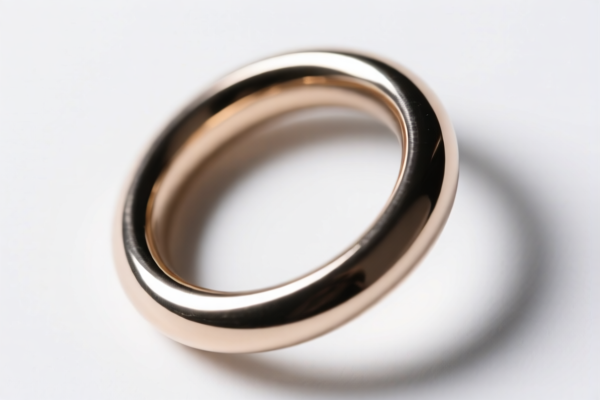


AI Analysis
🔩 Mounting Ring: The Unsung Hero of Industrial Assembly
🌐 HS Code Reference & Customs Clearance Guide | 2026 Latest Tariff Analysis | Professional Strategy
📌 I. Product Definition & Classification: What Exactly is a "Mounting Ring"?
A Mounting Ring is a critical mechanical component used to secure, align, or support other parts within machinery, electrical equipment, or structural assemblies. Unlike finished products, it is classified as a "Part" or "Accessory."
In international trade, the critical challenge is that "Mounting Ring" is a functional description, not a material specification. Without explicit material declaration (e.g., Steel, Aluminum, Plastic), customs authorities must rely on "Default Classification Rules for Parts."
⚠️ Key Distinction:
- If the ring is generic/mechanical (no specific electrical function) → Tends toward Chapter 84 or Chapter 73.
- If the ring is part of an electrical switch/control system → Tends toward Chapter 85.
- Material matters most: The lack of material data triggers higher "general" or "mixed material" tariff buckets, often attracting heavier supplementary duties.
📦 II. HS Code Classification Details (2026 Latest Tariff Alignment)
Based on the provided data, four potential HS Codes are identified. Each reflects a different interpretation of the ring's mechanical or electrical context.
| HS Code | Product Description | Application Context | Tariff Logic |
|---|---|---|---|
8487.90.00.40 |
Other mechanical parts & accessories | Generic mechanical assembly, industrial machinery frames | Default "Mechanical Part" classification. |
7326.90.86.75 |
Articles of iron/steel (Other) | Metal (Steel/Aluminum/Copper) constructional accessories | High Risk: Triggered if metal material is inferred. Includes 50% surcharge. |
8538.90.81.80 |
Parts suitable for use solely or principally with apparatus of heading 85.37/85.38 | Electrical switchboards, control panels, distribution boards | Classified as an electrical part. |
8538.90.81.60 |
Other parts of apparatus of heading 85.37/85.38 | Specific electrical control components, likely plastic or metal | Classified as an electrical part with specific sub-heading nuance. |
🔍 Critical Analysis:
-8487.90.00.40vs7326.90.86.75: The primary conflict is Mechanical vs. Material. If it’s just a mechanical fixture,8487applies. If it’s made of metal and viewed as a fabricated steel article,7326applies.
-8538.90.81.xx: These apply only if the ring is specifically designed for electrical control gear (e.g., mounting a breaker or contactor). If it’s for a pump or motor frame, these codes are incorrect.
💰 III. 2026 Latest Tariff Rate Breakdown (Including Surcharges & Policy Add-ons)
✅ Applicable Country: United States (US)
✅ Origin: China (CN)
✅ Effective Date: 2025 onwards (Includes Section 301 & IEEPA tariffs)
🎯 1. 8487.90.00.40 —— Mechanical Parts (Default General)
| Item | Details |
|---|---|
| Base Rate | 3.9% (Ad Valorem) |
| Section 301 Surcharge | +25.0% (Standard China Tariff) |
| Section 122 IEEPA Surcharge | +10.0% (Specific to China imports) |
| Total Effective Rate | 38.9% |
| Tax Calculation | CIF Value × 38.9% |
| De Minimis Exemption? | ❌ No |
📌 Explanation:
- This is the "Safe Harbor" for generic mechanical parts.
- The base rate is low (3.9%), but the 35% combined surcharge (25% + 10%) makes it expensive.
- No metal-specific surcharge applies here because it’s not classified under steel/aluminum headings.
🎯 2. 7326.90.86.75 —— Iron/Steel Articles (Material-Specific)
| Item | Details |
|---|---|
| Base Rate | 2.9% (Ad Valorem) |
| Section 301 Surcharge | +25.0% |
| Section 122 IEEPA Surcharge | +10.0% |
| Steel/Aluminum/Copper Surcharge | +50.0% (Critical Addition!) |
| Total Effective Rate | 87.9% |
| Tax Calculation | CIF Value × 87.9% |
| De Minimis Exemption? | ❌ No |
📌 Explanation:
- This is the most expensive option.
- The +50% steel/aluminum surcharge is applied because the classification assumes a metallic composition (iron/steel).
- Why does this happen? If customs suspects the "Mounting Ring" is a fabricated metal article (Chapter 73) rather than a machine part (Chapter 84), this penalty kicks in.
- Risk: High. Avoid this classification unless explicitly declared as a generic steel article with no machine-specific function.
🎯 3. 8538.90.81.80 —— Electrical Parts (General)
| Item | Details |
|---|---|
| Base Rate | 3.5% (Ad Valorem) |
| Section 301 Surcharge | +25.0% |
| Section 122 IEEPA Surcharge | +10.0% |
| Total Effective Rate | 38.5% |
| Tax Calculation | CIF Value × 38.5% |
| De Minimis Exemption? | ❌ No |
📌 Explanation:
- Slightly cheaper than8487due to a lower base rate (3.5% vs 3.9%).
- Only applicable if the ring is used in electrical control equipment (e.g., holding a relay or switch).
- If the ring is for a hydraulic pump or motor, this code is incorrect and risks customs audit.
🎯 4. 8538.90.81.60 —— Electrical Parts (Specific)
| Item | Details |
|---|---|
| Base Rate | 3.5% (Ad Valorem) |
| Section 301 Surcharge | +25.0% |
| Section 122 IEEPA Surcharge | +10.0% |
| Total Effective Rate | 38.5% |
| Tax Calculation | CIF Value × 38.5% |
| De Minimis Exemption? | ❌ No |
📌 Explanation:
- Identical tax rate to8538.90.81.80.
- The distinction is often based on specific sub-heading nuances in the HTSUS.
- Like8538.90.81.80, it requires the part to be principally used with electrical apparatus.
🛠️ IV. Customs Clearance Practical Advice (Avoiding Pitfalls)
✅ 1. Preparation Checklist (Non-Negotiable)
| Document | Required | Purpose |
|---|---|---|
| ✅ Product Specifications | ✔️ | Must state: Material (Steel? Plastic? Aluminum?), Dimensions, Weight. |
| ✅ Function Description | ✔️ | Is it for a Machine (Pump/Motor)? Or Electrical Gear (Switchboard)? This dictates Chapter 84 vs 85. |
| ✅ Photos (Clear & Labeled) | ✔️ | Show the ring installed on its intended equipment. |
| ✅ Bill of Lading / Invoice | ✔️ | Must match HS Code. Do not write "General Parts" if it’s clearly electrical. |
| ✅ Material Certificate | ✔️ | Proves if it’s plastic, steel, or copper. Crucial to avoid the 50% steel surcharge if it’s not steel. |
✅ 2. Declaration Strategy (Key Mantras)
🔥 “Function Dictates Chapter, Material Dictates Surcharge, Precision Saves Money!”
| Scenario | Correct HS Code | Incorrect HS Code | Consequence |
|---|---|---|---|
| Generic Mechanical Ring (e.g., for a motor flange) | 8487.90.00.40 (38.9%) |
7326.90.86.75 (87.9%) |
Overpayment of 49% taxes! |
| Electrical Control Ring (e.g., for a breaker panel) | 8538.90.81.80/60 (38.5%) |
8487.90.00.40 (38.9%) |
Minor difference, but wrong code risks audit. |
| Plastic Mounting Ring | 8487.90.00.40 (Likely) |
7326.90.86.75 (87.9%) |
CATASTROPHIC ERROR: If you declare plastic as steel, you pay 50% extra. |
📌 Key Insight:
- If the ring is Plastic or Non-Metallic, you MUST avoid7326. Use8487(Mechanical Parts).
- If the ring is Metal, you must prove it is a "Part of a Machine" (Chapter 84) to avoid the "Steel Article" (Chapter 73) classification and its punitive 50% surcharge.
✅ 3. Special Handling Tips
| Situation | Recommendation |
|---|---|
| Ambiguous Material | Declare it as "Plastic" or "Composite" if possible, to avoid the 50% metal surcharge. Provide test reports. |
| OEM Custom Rings | Provide design drawings showing it is exclusive to a specific machine (e.g., "Ring for Model X Pump"). This supports Chapter 84 classification. |
| Bulk Imports | Ensure the Invoice clearly states "Mounting Ring for [Machine Type]." Vague descriptions invite customs scrutiny and random material testing. |
🌍 V. Global Market Comparison (2026)
| Region | Recommended HS Code | Est. Total Rate (China Origin) | Key Requirement |
|---|---|---|---|
| 🇺🇸 USA | 8487.90.00.40 or 8538.90.81.80 |
38.5% - 38.9% | Avoid 7326 to save 49%. |
| 🇪🇺 EU | 8487.90.80 (Varies) |
~0-3% (Base) | CE Marking if electrical. |
| 🇨🇳 China | 8487.90.00.40 |
~3.9% | No extra surcharges. |
| 🇬🇧 UK | 8487.90.80 |
~3.9% | Post-Brexit rules apply. |
📌 Conclusion:
- The USA is the most complex due to Section 301 (25%) and IEEPA (10%) tariffs.
- The biggest risk in the US is misclassifying a mechanical part as a steel article, leading to 87.9% tax.
- Strategy: Always aim for Chapter 84 (Mechanical Parts) unless it’s strictly electrical. Never let it fall into Chapter 73 (General Steel Articles) unless unavoidable.
📌 VI. Common Mistakes & Pitfalls (Lessons Learned)
❌ Mistake 1: Declaring a Steel mechanical ring as 7326.90.86.75
👉 Result: You pay 87.9% instead of 38.9%. Loss of ~49% in pure profit.
👉 Fix: Prove it is a "part of a machine" (Chapter 84), not a generic steel article.
❌ Mistake 2: Not specifying the Material in the description
👉 Result: Customs may assume it’s steel (worst-case scenario for surcharges).
👉 Fix: Explicitly state "Plastic Mounting Ring" or "Stainless Steel Mounting Ring for Motor X."
❌ Mistake 3: Using 8538 for a Mechanical part
👉 Result: Customs audit for "Misdeclaration of Electrical Parts."
👉 Fix: If it’s not holding a wire or switch, don’t use Chapter 85.
🎯 VII. Conclusion: Precision is Profit
🎯 Remember the Golden Rule:
🔹 "Mechanical Parts (84) vs. Steel Articles (73): The 50% Surcharge is the Killer."
🔹 "Electrical Parts (85) Only for Control Gear: Don't Force It."
🔹 "Always Declare Material: Plastic is Your Friend to Avoid Metal Penalties."
📌 Pro Tip:
If your mounting ring is made of Plastic or Composite, emphasize this in the commercial invoice. This helps justify Chapter 84 (Mechanical Parts) and avoids the Steel/Aluminum 50% surcharge entirely.
📣 Immediate Action:
📞 Contact your customs broker with the following:
1. Photo of the ring.
2. Material Test Report (Plastic vs. Steel).
3. Intended Use (Which machine/equipment does it attach to?).
🚀 Optimize your HS Code, save nearly 50% in taxes, and clear customs smoothly!
✨ Professional Customs Clearance Starts with Accurate Classification!
💼 Your margin depends on the fine print!
Customer Reviews
About HS Code Classification
The Harmonized System (HS) is an internationally standardized nomenclature developed by the World Customs Organization (WCO) to classify traded products. Over 200 countries use the HS system as the basis for customs tariffs, trade statistics, and import/export regulations.
Each HS code follows a hierarchical structure:
- Chapter (2 digits) — Broad category of goods (e.g., Chapter 84: Machinery and Mechanical Appliances)
- Heading (4 digits) — More specific grouping within the chapter
- Subheading (6 digits) — Internationally standardized breakdown, used by all WCO member countries
- National subdivisions (8-10 digits) — Country-specific extensions for further classification, such as US HTSUS 10-digit codes
Correct HS code classification is essential for smooth customs clearance, accurate duty payment, and compliance with trade regulations. Misclassification can lead to customs delays, overpayment of duties, or penalties.
When importing from CN to US, the applicable tariff rates may include:
- Most-Favored-Nation (MFN) rate — The standard duty rate applied to WTO members
- General rate — Applied to countries without trade agreements
- Trade remedy duties — Additional tariffs such as Section 301 (anti-dumping), Section 232 (national security), or countervailing duties
The information provided on this page is for reference purposes only. For official classification, please consult with your local customs authority or a licensed customs broker.