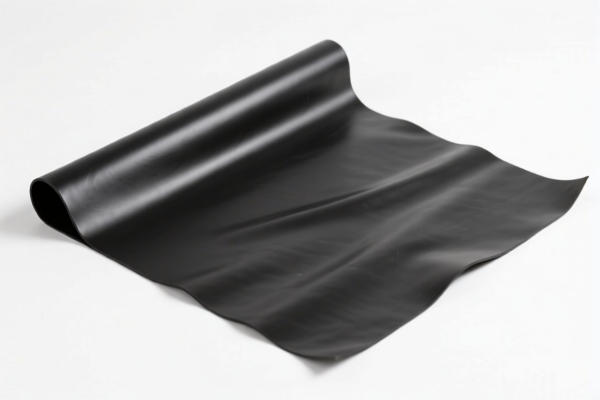
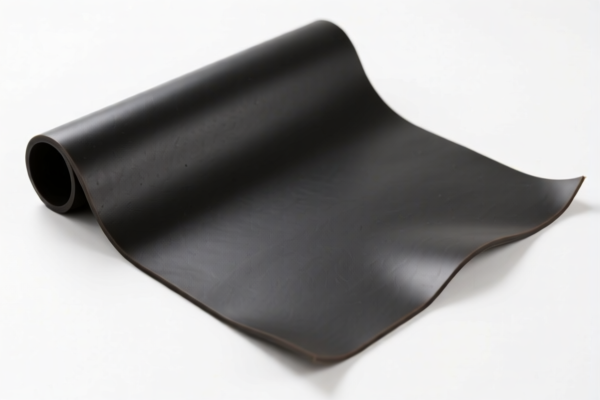
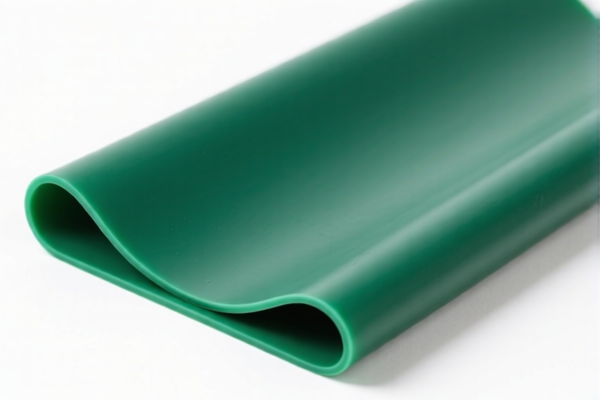
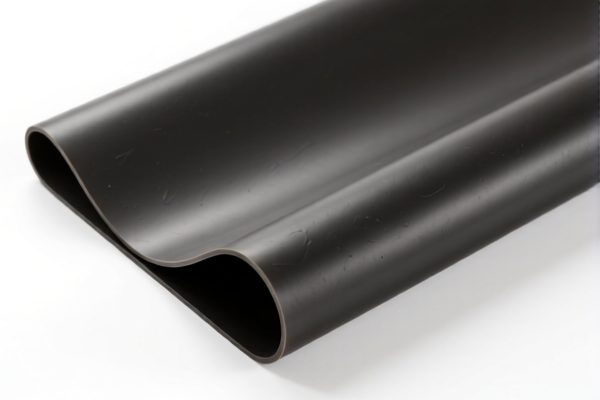
natural rubber foam rubber sheet
CN → US| HS编码 | 关税税率 | 原产国 | 目的国 | 文档 |
|---|---|---|---|---|
| 4008115000 | 38.3% | CN | US | 官方文档 |
| 4008111000 | 35.0% | CN | US | 官方文档 |
| 4005990000 | 35.0% | CN | US | 官方文档 |
| 4005910000 | 35.0% | CN | US | 官方文档 |
商品图片
AI分析
🌿 Natural Rubber Foam Rubber Sheet
🌐 HS Code Reference & Customs Clearance Guide | 2026 Latest Tariff Analysis | Professional Clearance Strategy
📌 Part 1: Product Definition & Classification: What Exactly Is "Natural Rubber Foam"?
Natural Rubber Foam Rubber Sheet refers to a processed material made from natural rubber latex, expanded into a porous, spongy structure. In international trade, the critical distinction lies in whether the rubber is vulcanized (cured) and its physical form.
Key Distinction Points: * Foamed/Spongy Structure: If the product has a cellular, sponge-like texture, it generally falls under Chapter 4008 (Plates, sheets, strip, rods and profile shapes, of vulcanized rubber other than hard rubber). * Unvulcanized/Processing State: If the rubber is in a raw, unprocessed, or semi-processed state (like raw latex sheets or compounded rubber without the final foam structure), it falls under Chapter 4005 (Blends, uncompounded). * Material Composition: Must be Natural Rubber (not synthetic like SBR or EPDM) to qualify for these specific natural rubber headings.
⚠️ Critical Note:
- If it is a finished foam sheet (vulcanized, open/closed cell) → Go to 4008.
- If it is raw compounded rubber intended for foaming later, or a non-foam sheet → Go to 4005.
- Do not misclassify finished foam as raw material to avoid customs audits.
📦 Part 2: HS Code Classification Details (2026 Authoritative Mapping)
Based on the provided data, here are the precise HS Codes for Natural Rubber Foam Sheets, categorized by their specific state and material logic.
| HS Code | Product Description | Applicability & Logic | Tax Rate (Total) |
|---|---|---|---|
4008.11.50.00 |
Natural Rubber Foamed Material Form: Foam Rubber Sheets |
Matches Material (Natural Rubber) + Form (Foamed/Sponge). This is the most accurate code for finished foam sheets. ✅ Summary: Natural rubber foam material, form is foam rubber, matches material and form logic. |
38.3% |
4008.11.10.00 |
Natural Rubber Foamed Material Form: Foamed Material |
Also fits the definition of "Foam Rubber" under natural rubber plates/sheets. ✅ Summary: Natural rubber foamed material, form belongs to foamed material (corresponding to foam rubber), fits definition. |
35.0% |
4005.99.00.00 |
Unvulcanized Compound Rubber Form: Intermediate Processing State |
Applies if the "sheet" is not yet foamed or is a compounded rubber blend not yet vulcanized into foam. ✅ Summary: Natural rubber material, belongs to unvulcanized compounded rubber, form is rubber processing intermediate state. |
35.0% |
4005.91.00.00 |
Unvulcanized/Composite Rubber Form: Primary Shape (Sheet/Strip) |
Applies if the product is a plain rubber sheet (non-foamed) made of natural rubber or natural rubber blends. ✅ Summary: Natural rubber belongs to unvulcanized/composite rubber, form is primary shape like plates, sheets, or strips. |
35.0% |
🔍 Detailed Explanation of Codes: 1.
4008.11Series: Specifically covers Plates, sheets, strip, rods and profile shapes of natural rubber, whether or not hardened. Since it is foamed, it falls under subheading 11. *4008.11.50.00: Often used for specific foamed products or when the exact sub-subheading for "foam" is defined here. *4008.11.10.00: A broader category for natural rubber plates/sheets, including foamed types. 2.4005Series: Covers Blends of rubber. *4005.91: Unvulcanized rubber blends in primary forms (sheets, blocks). *4005.99: Other unvulcanized rubber blends (intermediate states). * Use this only if the foam structure is NOT present or the product is a raw compound.
💰 Part 3: 2026 Latest Tariff Rate Breakdown (Including Additional Taxes)
✅ Applicable Country: United States (US)
✅ Country of Origin: China (CN)
✅ Effective Date: Ongoing (Section 301 & IEEPA)
🎯 1. 4008.11.50.00 —— Natural Rubber Foam Rubber Sheet (Foamed)
| Item | Content |
|---|---|
| Base Tariff | 3.3% (ad valorem) |
| Section 301 Tariff (Additional) | +25.0% |
| 122 Clause Tariff (IEEPA) | +10.0% |
| Total Tax Rate | 38.3% |
| Tax Calculation | CIF Value × 38.3% |
| De Minimis Eligibility | ❌ No (Deny De Minimis for Chinese goods under this classification) |
| Legal Basis Path | HTSUS:4008.11.50.00 → USITC Footnote → Section 301: 8411.84.01/4008.11.50.00 → IEEPA 122 Clause |
📌 Explanation:
- The 3.3% is the standard MFN (Most Favored Nation) tariff for natural rubber products.
- The +25% is the Section 301 tariff applied to many rubber products from China.
- The +10% is the "122 Clause" tariff (Section 122 of the Consolidated Appropriations Act), which applies to certain imports from China regardless of Section 301 status.
- Total 38.3% is a significant cost factor. Plan your pricing accordingly!
🎯 2. 4008.11.10.00 —— Natural Rubber Foamed Material (Foamed Sheet)
| Item | Content |
|---|---|
| Base Tariff | 0.0% |
| Section 301 Tariff (Additional) | +25.0% |
| 122 Clause Tariff (IEEPA) | +10.0% |
| Total Tax Rate | 35.0% |
| Tax Calculation | CIF Value × 35.0% |
| De Minimis Eligibility | ❌ No |
| Legal Basis Path | HTSUS:4008.11.10.00 → USITC Footnote → Section 301 → IEEPA 122 Clause |
📌 Note:
- This code has a 0% base tariff, making it slightly cheaper than4008.11.50.00(3.3% base).
- However, the additional taxes (+35%) are identical.
- Strategic Tip: If customs accepts4008.11.10.00for your foam sheet, it saves 3.3% compared to4008.11.50.00. Ensure your product description clearly supports "Foamed Material" under this heading.
🎯 3. 4005.99.00.00 & 4005.91.00.00 —— Unvulcanized Rubber (Non-Foam / Intermediate)
| Item | Content |
|---|---|
| Base Tariff | 0.0% |
| Section 301 Tariff (Additional) | +25.0% |
| 122 Clause Tariff (IEEPA) | +10.0% |
| Total Tax Rate | 35.0% |
| Tax Calculation | CIF Value × 35.0% |
| De Minimis Eligibility | ❌ No |
📌 Warning:
- Do NOT use these codes for finished foam sheets.
- If you ship a foamed sheet but declare it as4005(unvulcanized/intermediate), customs will likely:
1. Reclassify it to4008(potentially4008.11.50.00with 3.3% base, raising your total cost).
2. Impose penalties for misdeclaration.
3. Delay clearance for investigation.
- Only use4005if you are shipping raw rubber compounds or sheets that have NOT been foamed yet.
🛠️ Part 4: Customs Clearance Practical Advice (Real-World Pitfall Guide)
✅ 1. Documentation Checklist (Must-Have)
| Document | Required? | Explanation |
|---|---|---|
| ✅ Product Specification Sheet | ✔️ | Must explicitly state: "Natural Rubber," "Foamed/Spongy Structure," "Vulcanized/Cured." |
| ✅ Commercial Invoice | ✔️ | Clear description: "Natural Rubber Foam Rubber Sheet, Part No. XYZ, Vulc." |
| ✅ Packing List | ✔️ | Weight and dimensions to match HS Code valuation. |
| ✅ Certificate of Origin (CO) | ✔️ | Proves Chinese origin (triggers Section 301 & IEEPA). |
| ✅ Lab Test Report (Optional but Recommended) | ✔️ | Confirms rubber type (Natural vs. Synthetic) and vulcanization status. |
| ✅ Photos of Product | ✔️ | Show the cellular/foam structure clearly to distinguish from solid rubber sheets. |
✅ 2. Declaration Tips (Key Mantras)
🔥 "Foam Structure Visible, Natural Rubber Stated, HS 4008 Chosen, Avoid 4005 Trap!"
| Scenario | Correct Declaration | Wrong Declaration |
|---|---|---|
| Finished Foam Sheet | 4008.11.50.00 or 4008.11.10.00Description: "Natural Rubber Foam Sheet, Vulc." |
4005.99.00.00 (Misclassification risk) |
| Raw Rubber Compound Sheet | 4005.91.00.00 or 4005.99.00.00Description: "Unvulcanized Natural Rubber Compound, Sheet." |
4008 (Incorrect, as it's not foam/vulcanized sheet) |
| Synthetic Rubber Foam | Not covered in this dataset (Likely 4008.90 series) | Using Natural Rubber codes |
✅ 3. Special Cases & Handling
| Scenario | Handling Advice |
|---|---|
| Mixed Material (Natural + Synthetic) | If >50% natural rubber, it may still qualify for 4008.11. Verify with lab report. |
| Customs Audit Trigger | If declared as 4005 but product is foam, expect reclassification to 4008.11.50.00 and penalty. |
| Section 122 Clause (10%) | This is mandatory for Chinese-origin rubber goods. Cannot be avoided via third-country transshipment without changing origin rules. |
| De Minimis ($800) | NOT ELIGIBLE. All shipments under 800 USD from China for this HS code will still incur taxes and require entry filing. |
🌍 Part 5: Global Market Comparison (2026 Latest)
| Country/Region | Recommended HS Code | Tariff (China Origin) | Certification Required | Notes |
|---|---|---|---|---|
| 🇺🇸 USA | 4008.11.50.00 / 4008.11.10.00 |
35.0% - 38.3% | None specific | High tariff environment. Plan costs carefully. |
| 🇨🇳 China | 4008.11.50.00 |
~5-8% | CCC (if applicable) | Lower internal tax. |
| 🇪🇺 EU | 4008.11.00 |
0% - 3% | REACH, RoHS | No Section 301/IEEPA equivalent. |
| 🇯🇵 Japan | 4008.11.00 |
0% - 3.2% | JIS | Free Trade Agreement (RCEP/EPA) may apply. |
| 🇦🇺 Australia | 4008.11.00 |
0% - 5% | AS/NZS Standards | CHAFTA (China-Australia FTA) may reduce duty. |
📌 Conclusion:
- USA is the highest-cost market for Natural Rubber Foam due to Section 301 + IEEPA 122 Clause.
- EU/Japan/Australia are much more favorable for tariffs.
- If shipping to the US, consider value engineering or pricing strategies to absorb the 35-38% cost.
📌 Part 6: Common Errors & Pitfalls (Lessons Learned)
❌ Error 1: Declaring Foam Sheet as 4005 (Unvulcanized) to save taxes.
👉 Consequence: Customs reclassifies to 4008.11.50.00, adds 3.3% base tax, and issues a penalty for misdeclaration.
❌ Error 2: Not specifying "Natural Rubber" in the description.
👉 Consequence: Customs may assume synthetic rubber, leading to incorrect HS Code assignment (e.g., 4008.90), causing delays and re-inspection.
❌ Error 3: Ignoring the 122 Clause (10%).
👉 Consequence: Underpayment of taxes. The 122 Clause applies regardless of Section 301 status. You must pay the full 35-38.3%.
✅ Correct Practice:
"Natural Rubber Foam Rubber Sheet, Vulcanized, Open-Cell, Thickness 10mm, Model X, HS 4008.11.50.00"
🎯 Part 7: Conclusion: Professional Declaration, Cost Control, Smooth Customs!
🎯 Remember the Mantra:
🔹 "Foam = 4008, Not 4005."
🔹 "Natural Rubber = 3.3% Base, Plus 35% Additional Taxes."
🔹 "Total Cost = CIF × 38.3% (Max)."
🔹 "Declare Accurately, Avoid Penalties, Protect Margins."
📌 Pro Tip:
If your product is high-value, consider applying for a Binding Tariff Ruling (BTR) from US Customs and Border Protection (CBP) to confirm the HS Code and avoid post-clearance audits.
For large volumes, negotiate with suppliers to absorb part of the tariff or explore supply chain shifts to non-China origins if feasible.
📣 Immediate Action:
📞 Contact your customs broker with the exact product specs.
📄 Prepare your Commercial Invoice with the correct HS Code (4008.11.50.00or4008.11.10.00).
🚀 Calculate your landed cost including the 35-38.3% tax before finalizing the sale!
✨ Professional Customs Clearance Starts with Accurate Classification!
💼 Every Dollar Saved is a Dollar Earned in High-Tariff Environments!
用户评价
关于 HS 编码归类
协调制度(HS)是由世界海关组织(WCO)制定的国际贸易商品分类标准。全球 200 多个国家采用 HS 系统作为海关关税、贸易统计和进出口监管的基础。
每个 HS 编码遵循以下层级结构:
- 章(2 位)——商品大类(例如:第 84 章:机器和机械设备)
- 品目(4 位)——章内的更具体分类
- 子目(6 位)——国际通用细分,所有 WCO 成员国统一使用
- 本国细分(8-10 位)——各国自行扩展的细分编码,如美国 HTSUS 10 位编码
正确的 HS 编码归类对于顺利通关、准确缴纳关税和遵守贸易法规至关重要。错误归类可能导致海关延误、多缴关税或罚款。
从CN进口到US时,适用的关税税率可能包括:
- 最惠国(MFN)税率——适用于 WTO 成员国的标准关税税率
- 普通税率——适用于无贸易协定国家
- 贸易救济关税——附加关税,如 301 条款(反倾销)、232 条款(国家安全)或反补贴税
本页内容仅供参考。如需正式归类,请咨询当地海关或持牌报关代理。