natural rubber foam rubber sheet
CN → US| HS Code | Tariff Rate | Origin | Destination | Doc |
|---|---|---|---|---|
| 4008115000 | 38.3% | CN | US | Official Doc |
| 4008111000 | 35.0% | CN | US | Official Doc |
| 4005990000 | 35.0% | CN | US | Official Doc |
| 4005910000 | 35.0% | CN | US | Official Doc |
Product Images
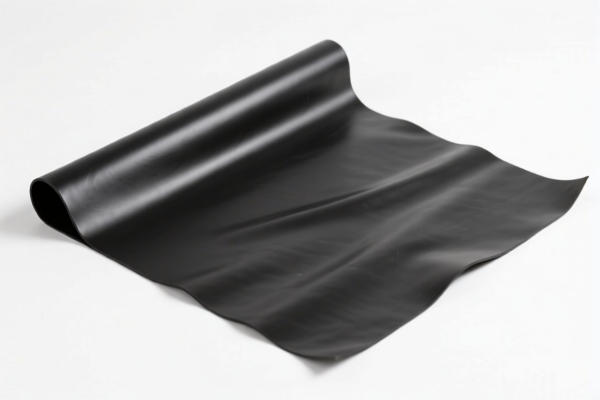
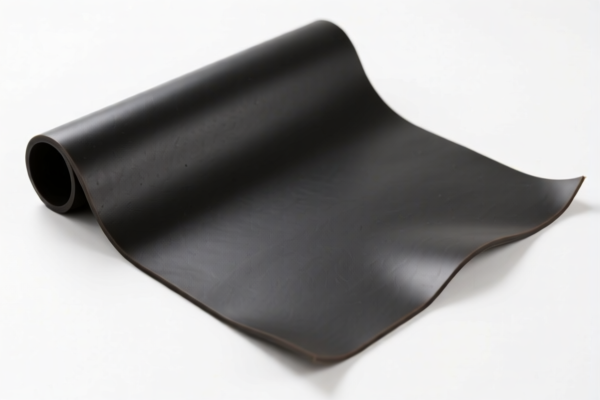
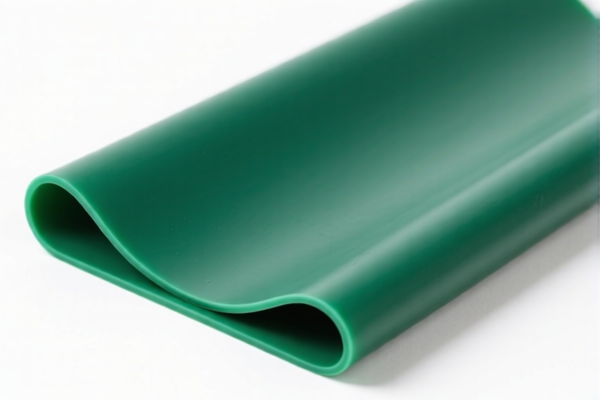
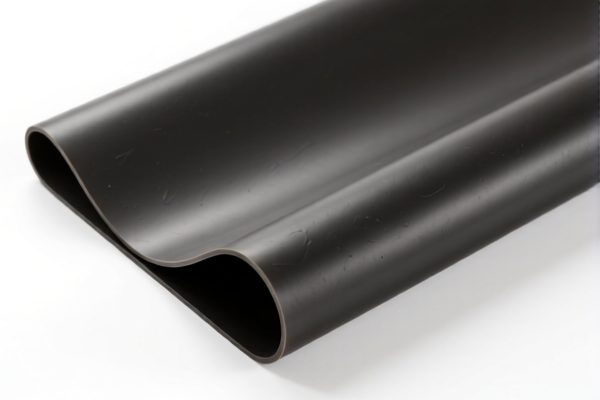
AI Analysis
🌿 Natural Rubber Foam Rubber Sheet
🌐 HS Code Reference & Customs Clearance Guide | 2026 Latest Tariff Analysis | Professional Clearance Strategy
📌 Part 1: Product Definition & Classification: What Exactly Is "Natural Rubber Foam"?
Natural Rubber Foam Rubber Sheet refers to a processed material made from natural rubber latex, expanded into a porous, spongy structure. In international trade, the critical distinction lies in whether the rubber is vulcanized (cured) and its physical form.
Key Distinction Points: * Foamed/Spongy Structure: If the product has a cellular, sponge-like texture, it generally falls under Chapter 4008 (Plates, sheets, strip, rods and profile shapes, of vulcanized rubber other than hard rubber). * Unvulcanized/Processing State: If the rubber is in a raw, unprocessed, or semi-processed state (like raw latex sheets or compounded rubber without the final foam structure), it falls under Chapter 4005 (Blends, uncompounded). * Material Composition: Must be Natural Rubber (not synthetic like SBR or EPDM) to qualify for these specific natural rubber headings.
⚠️ Critical Note:
- If it is a finished foam sheet (vulcanized, open/closed cell) → Go to 4008.
- If it is raw compounded rubber intended for foaming later, or a non-foam sheet → Go to 4005.
- Do not misclassify finished foam as raw material to avoid customs audits.
📦 Part 2: HS Code Classification Details (2026 Authoritative Mapping)
Based on the provided data, here are the precise HS Codes for Natural Rubber Foam Sheets, categorized by their specific state and material logic.
| HS Code | Product Description | Applicability & Logic | Tax Rate (Total) |
|---|---|---|---|
4008.11.50.00 |
Natural Rubber Foamed Material Form: Foam Rubber Sheets |
Matches Material (Natural Rubber) + Form (Foamed/Sponge). This is the most accurate code for finished foam sheets. ✅ Summary: Natural rubber foam material, form is foam rubber, matches material and form logic. |
38.3% |
4008.11.10.00 |
Natural Rubber Foamed Material Form: Foamed Material |
Also fits the definition of "Foam Rubber" under natural rubber plates/sheets. ✅ Summary: Natural rubber foamed material, form belongs to foamed material (corresponding to foam rubber), fits definition. |
35.0% |
4005.99.00.00 |
Unvulcanized Compound Rubber Form: Intermediate Processing State |
Applies if the "sheet" is not yet foamed or is a compounded rubber blend not yet vulcanized into foam. ✅ Summary: Natural rubber material, belongs to unvulcanized compounded rubber, form is rubber processing intermediate state. |
35.0% |
4005.91.00.00 |
Unvulcanized/Composite Rubber Form: Primary Shape (Sheet/Strip) |
Applies if the product is a plain rubber sheet (non-foamed) made of natural rubber or natural rubber blends. ✅ Summary: Natural rubber belongs to unvulcanized/composite rubber, form is primary shape like plates, sheets, or strips. |
35.0% |
🔍 Detailed Explanation of Codes: 1.
4008.11Series: Specifically covers Plates, sheets, strip, rods and profile shapes of natural rubber, whether or not hardened. Since it is foamed, it falls under subheading 11. *4008.11.50.00: Often used for specific foamed products or when the exact sub-subheading for "foam" is defined here. *4008.11.10.00: A broader category for natural rubber plates/sheets, including foamed types. 2.4005Series: Covers Blends of rubber. *4005.91: Unvulcanized rubber blends in primary forms (sheets, blocks). *4005.99: Other unvulcanized rubber blends (intermediate states). * Use this only if the foam structure is NOT present or the product is a raw compound.
💰 Part 3: 2026 Latest Tariff Rate Breakdown (Including Additional Taxes)
✅ Applicable Country: United States (US)
✅ Country of Origin: China (CN)
✅ Effective Date: Ongoing (Section 301 & IEEPA)
🎯 1. 4008.11.50.00 —— Natural Rubber Foam Rubber Sheet (Foamed)
| Item | Content |
|---|---|
| Base Tariff | 3.3% (ad valorem) |
| Section 301 Tariff (Additional) | +25.0% |
| 122 Clause Tariff (IEEPA) | +10.0% |
| Total Tax Rate | 38.3% |
| Tax Calculation | CIF Value × 38.3% |
| De Minimis Eligibility | ❌ No (Deny De Minimis for Chinese goods under this classification) |
| Legal Basis Path | HTSUS:4008.11.50.00 → USITC Footnote → Section 301: 8411.84.01/4008.11.50.00 → IEEPA 122 Clause |
📌 Explanation:
- The 3.3% is the standard MFN (Most Favored Nation) tariff for natural rubber products.
- The +25% is the Section 301 tariff applied to many rubber products from China.
- The +10% is the "122 Clause" tariff (Section 122 of the Consolidated Appropriations Act), which applies to certain imports from China regardless of Section 301 status.
- Total 38.3% is a significant cost factor. Plan your pricing accordingly!
🎯 2. 4008.11.10.00 —— Natural Rubber Foamed Material (Foamed Sheet)
| Item | Content |
|---|---|
| Base Tariff | 0.0% |
| Section 301 Tariff (Additional) | +25.0% |
| 122 Clause Tariff (IEEPA) | +10.0% |
| Total Tax Rate | 35.0% |
| Tax Calculation | CIF Value × 35.0% |
| De Minimis Eligibility | ❌ No |
| Legal Basis Path | HTSUS:4008.11.10.00 → USITC Footnote → Section 301 → IEEPA 122 Clause |
📌 Note:
- This code has a 0% base tariff, making it slightly cheaper than4008.11.50.00(3.3% base).
- However, the additional taxes (+35%) are identical.
- Strategic Tip: If customs accepts4008.11.10.00for your foam sheet, it saves 3.3% compared to4008.11.50.00. Ensure your product description clearly supports "Foamed Material" under this heading.
🎯 3. 4005.99.00.00 & 4005.91.00.00 —— Unvulcanized Rubber (Non-Foam / Intermediate)
| Item | Content |
|---|---|
| Base Tariff | 0.0% |
| Section 301 Tariff (Additional) | +25.0% |
| 122 Clause Tariff (IEEPA) | +10.0% |
| Total Tax Rate | 35.0% |
| Tax Calculation | CIF Value × 35.0% |
| De Minimis Eligibility | ❌ No |
📌 Warning:
- Do NOT use these codes for finished foam sheets.
- If you ship a foamed sheet but declare it as4005(unvulcanized/intermediate), customs will likely:
1. Reclassify it to4008(potentially4008.11.50.00with 3.3% base, raising your total cost).
2. Impose penalties for misdeclaration.
3. Delay clearance for investigation.
- Only use4005if you are shipping raw rubber compounds or sheets that have NOT been foamed yet.
🛠️ Part 4: Customs Clearance Practical Advice (Real-World Pitfall Guide)
✅ 1. Documentation Checklist (Must-Have)
| Document | Required? | Explanation |
|---|---|---|
| ✅ Product Specification Sheet | ✔️ | Must explicitly state: "Natural Rubber," "Foamed/Spongy Structure," "Vulcanized/Cured." |
| ✅ Commercial Invoice | ✔️ | Clear description: "Natural Rubber Foam Rubber Sheet, Part No. XYZ, Vulc." |
| ✅ Packing List | ✔️ | Weight and dimensions to match HS Code valuation. |
| ✅ Certificate of Origin (CO) | ✔️ | Proves Chinese origin (triggers Section 301 & IEEPA). |
| ✅ Lab Test Report (Optional but Recommended) | ✔️ | Confirms rubber type (Natural vs. Synthetic) and vulcanization status. |
| ✅ Photos of Product | ✔️ | Show the cellular/foam structure clearly to distinguish from solid rubber sheets. |
✅ 2. Declaration Tips (Key Mantras)
🔥 "Foam Structure Visible, Natural Rubber Stated, HS 4008 Chosen, Avoid 4005 Trap!"
| Scenario | Correct Declaration | Wrong Declaration |
|---|---|---|
| Finished Foam Sheet | 4008.11.50.00 or 4008.11.10.00Description: "Natural Rubber Foam Sheet, Vulc." |
4005.99.00.00 (Misclassification risk) |
| Raw Rubber Compound Sheet | 4005.91.00.00 or 4005.99.00.00Description: "Unvulcanized Natural Rubber Compound, Sheet." |
4008 (Incorrect, as it's not foam/vulcanized sheet) |
| Synthetic Rubber Foam | Not covered in this dataset (Likely 4008.90 series) | Using Natural Rubber codes |
✅ 3. Special Cases & Handling
| Scenario | Handling Advice |
|---|---|
| Mixed Material (Natural + Synthetic) | If >50% natural rubber, it may still qualify for 4008.11. Verify with lab report. |
| Customs Audit Trigger | If declared as 4005 but product is foam, expect reclassification to 4008.11.50.00 and penalty. |
| Section 122 Clause (10%) | This is mandatory for Chinese-origin rubber goods. Cannot be avoided via third-country transshipment without changing origin rules. |
| De Minimis ($800) | NOT ELIGIBLE. All shipments under 800 USD from China for this HS code will still incur taxes and require entry filing. |
🌍 Part 5: Global Market Comparison (2026 Latest)
| Country/Region | Recommended HS Code | Tariff (China Origin) | Certification Required | Notes |
|---|---|---|---|---|
| 🇺🇸 USA | 4008.11.50.00 / 4008.11.10.00 |
35.0% - 38.3% | None specific | High tariff environment. Plan costs carefully. |
| 🇨🇳 China | 4008.11.50.00 |
~5-8% | CCC (if applicable) | Lower internal tax. |
| 🇪🇺 EU | 4008.11.00 |
0% - 3% | REACH, RoHS | No Section 301/IEEPA equivalent. |
| 🇯🇵 Japan | 4008.11.00 |
0% - 3.2% | JIS | Free Trade Agreement (RCEP/EPA) may apply. |
| 🇦🇺 Australia | 4008.11.00 |
0% - 5% | AS/NZS Standards | CHAFTA (China-Australia FTA) may reduce duty. |
📌 Conclusion:
- USA is the highest-cost market for Natural Rubber Foam due to Section 301 + IEEPA 122 Clause.
- EU/Japan/Australia are much more favorable for tariffs.
- If shipping to the US, consider value engineering or pricing strategies to absorb the 35-38% cost.
📌 Part 6: Common Errors & Pitfalls (Lessons Learned)
❌ Error 1: Declaring Foam Sheet as 4005 (Unvulcanized) to save taxes.
👉 Consequence: Customs reclassifies to 4008.11.50.00, adds 3.3% base tax, and issues a penalty for misdeclaration.
❌ Error 2: Not specifying "Natural Rubber" in the description.
👉 Consequence: Customs may assume synthetic rubber, leading to incorrect HS Code assignment (e.g., 4008.90), causing delays and re-inspection.
❌ Error 3: Ignoring the 122 Clause (10%).
👉 Consequence: Underpayment of taxes. The 122 Clause applies regardless of Section 301 status. You must pay the full 35-38.3%.
✅ Correct Practice:
"Natural Rubber Foam Rubber Sheet, Vulcanized, Open-Cell, Thickness 10mm, Model X, HS 4008.11.50.00"
🎯 Part 7: Conclusion: Professional Declaration, Cost Control, Smooth Customs!
🎯 Remember the Mantra:
🔹 "Foam = 4008, Not 4005."
🔹 "Natural Rubber = 3.3% Base, Plus 35% Additional Taxes."
🔹 "Total Cost = CIF × 38.3% (Max)."
🔹 "Declare Accurately, Avoid Penalties, Protect Margins."
📌 Pro Tip:
If your product is high-value, consider applying for a Binding Tariff Ruling (BTR) from US Customs and Border Protection (CBP) to confirm the HS Code and avoid post-clearance audits.
For large volumes, negotiate with suppliers to absorb part of the tariff or explore supply chain shifts to non-China origins if feasible.
📣 Immediate Action:
📞 Contact your customs broker with the exact product specs.
📄 Prepare your Commercial Invoice with the correct HS Code (4008.11.50.00or4008.11.10.00).
🚀 Calculate your landed cost including the 35-38.3% tax before finalizing the sale!
✨ Professional Customs Clearance Starts with Accurate Classification!
💼 Every Dollar Saved is a Dollar Earned in High-Tariff Environments!
Customer Reviews
About HS Code Classification
The Harmonized System (HS) is an internationally standardized nomenclature developed by the World Customs Organization (WCO) to classify traded products. Over 200 countries use the HS system as the basis for customs tariffs, trade statistics, and import/export regulations.
Each HS code follows a hierarchical structure:
- Chapter (2 digits) — Broad category of goods (e.g., Chapter 84: Machinery and Mechanical Appliances)
- Heading (4 digits) — More specific grouping within the chapter
- Subheading (6 digits) — Internationally standardized breakdown, used by all WCO member countries
- National subdivisions (8-10 digits) — Country-specific extensions for further classification, such as US HTSUS 10-digit codes
Correct HS code classification is essential for smooth customs clearance, accurate duty payment, and compliance with trade regulations. Misclassification can lead to customs delays, overpayment of duties, or penalties.
When importing from CN to US, the applicable tariff rates may include:
- Most-Favored-Nation (MFN) rate — The standard duty rate applied to WTO members
- General rate — Applied to countries without trade agreements
- Trade remedy duties — Additional tariffs such as Section 301 (anti-dumping), Section 232 (national security), or countervailing duties
The information provided on this page is for reference purposes only. For official classification, please consult with your local customs authority or a licensed customs broker.