non plasticized cellulose acetate cigarette filter tow
CN → US| HS编码 | 关税税率 | 原产国 | 目的国 | 文档 |
|---|---|---|---|---|
| 3912120000 | 40.6% | CN | US | 官方文档 |
| 5607504000 | 38.6% | CN | US | 官方文档 |
| 5607909000 | 41.3% | CN | US | 官方文档 |
| 5505200000 | 35.0% | CN | US | 官方文档 |
| 5505100060 | 35.0% | CN | US | 官方文档 |
商品图片
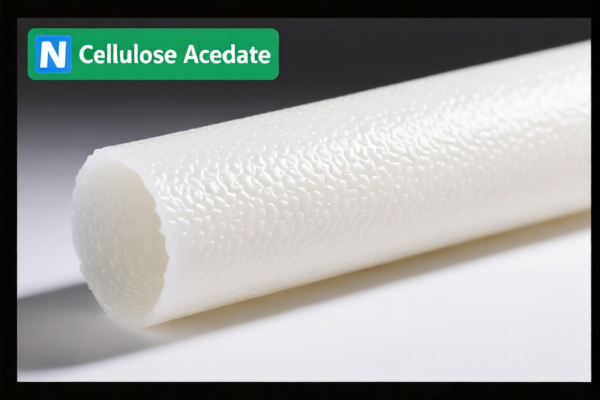

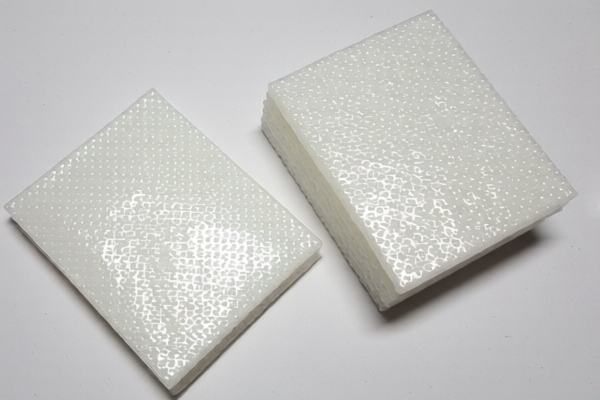
AI分析
🚬 Non-Plasticized Cellulose Acetate Cigarette Filter Tow
🌐 HS Code Reference & Customs Clearance Guide | 2026 Latest Tariff Analysis | Professional Classification Strategy
📌 I. Product Definition: What is "Non-Plasticized Cellulose Acetate Tow"?
Cellulose acetate tow is the primary raw material for cigarette filters. It consists of long, continuous filaments of cellulose acetate. The term "Non-Plasticized" is the critical differentiator here: * Non-Plasticized: Refers to the raw filament bundle before it is treated with plasticizers (like triacetin) to give it shape and strength. It is in its "raw" fibrous state. * State: Typically appears as a loose, airy mass of filaments (tow), not yet formed into final filter rods.
In international trade, the classification hinges on whether the product is considered a raw material for plastics (Chapter 39) or a textile fiber/rope material (Chapter 55/56).
📦 II. HS Code Classification Details (Based on Provided Data)
The following classifications are derived strictly from the provided <DATA> set. The choice depends on the specific physical form and intended regulatory interpretation by customs authorities.
| HS Code | Product Description | Matching Logic (Summary) |
|---|---|---|
3912.12.00.00 |
Plasticized Cellulose Acetate, in primary forms | Material Match: Material is cellulose acetate. Form Match: Although labeled "non-plasticized," customs may classify raw acetate filaments under Chapter 39 if viewed as the primary form of the polymer before textile processing. Key Logic: The summary explicitly states it matches the "material attribute of plasticized cellulose acetate" in the code description. |
5607.50.40.00 |
Twine, Cordage, Ropes, and Cables... | Material Match: Cellulose acetate (synthetic fiber category). Form Match: Tow fits the "fibrous form" characteristics of ropes/cordage materials. Key Logic: Classified under synthetic fiber cords due to its fibrous nature. |
5607.90.90.00 |
Other Twine, Cordage, Ropes... | Material Match: Cellulose-based material. Form Match: Described as "fine rope-like tow." Key Logic: Fits the "other" category under ropes/cordage for cellulose materials. |
5505.20.00.00 |
Waste, Scrap, and Gouging of Man-Made Fibers | Material Match: Man-made fiber. Form Match: Tow is considered a form of fiber waste/shavings in this context. Key Logic: Falls under the logical category of "fiber waste/shavings" for man-made fibers. |
5505.10.00.60 |
Waste, Scrap, and Gouging of Synthetic Staple Fibers | Material Match: Cellulose-based (synthetic fiber scope). Form Match: Tow is classified as synthetic fiber waste. Key Logic: Matches the material attribute of synthetic fiber waste. |
🔍 Critical Distinction: * Chapter 39 (
3912.12.00.00) treats the product as a polymer/plastic material. * Chapter 55/56 (5505...or5607...) treats the product as a textile/fiber material. * Note: While "non-plasticized" suggests a raw polymer state, customs often classify continuous filament tow used for textiles/filters under textile chapters if it is processed into filament form, or under plastics if it is the base resin form. The provided data offers conflicting interpretations, necessitating careful documentation.
💰 III. 2026 Latest Tariff Rate Breakdown (Detailed Tax Clauses)
✅ Applicable Country: United States (US) ✅ Origin: China (CN) ✅ Effective Time: 2025 Nov 10 onwards (including subsequent imports)
The tax structure for all provided HS Codes includes a Base Tariff, Section 301 Add-on Tariff, and IEEPA 122-Clause Tariff.
🎯 1. 3912.12.00.00 —— Cellulose Acetate in Primary Forms
| Item | Content |
|---|---|
| Base Tariff | 5.6% (ad valorem) |
| Section 301 Tariff | +25.0% (USITC Footnote related to 301 list) |
| 122-Clause Tariff | +10.0% (IEEPA provision targeting specific Chinese imports) |
| Total Tariff | 40.6% |
| Tax Calculation | CIF Value × 40.6% |
| De Minimis Eligibility | ❌ Not Eligible (Due to high combined tariff rate) |
| Legal Basis Path | IEEPA:9903.01.25 (122 Clause) → USITC:3912.12.00.00 → FOOTNOTE:301_LIST |
📌 Interpretation: * This code attracts the highest base rate among the options. * The 122-Clause is critical: It targets items that might otherwise be misclassified to avoid higher tariffs. If customs deems this product as "plasticized" or "processed fiber," they may invoke this clause. * Total Cost Impact: Nearly 41% added to the cost base.
🎯 2. 5607.50.40.00 —— Synthetic Fiber Twine/Cordage
| Item | Content |
|---|---|
| Base Tariff | 3.6% (ad valorem) |
| Section 301 Tariff | +25.0% |
| 122-Clause Tariff | +10.0% |
| Total Tariff | 38.6% |
| Tax Calculation | CIF Value × 38.6% |
| De Minimis Eligibility | ❌ Not Eligible |
| Legal Basis Path | IEEPA:9903.01.24 → USITC:5607.50.40.00 → FOOTNOTE:301_LIST |
📌 Interpretation: * Lower base rate (3.6%) compared to Chapter 39. * Still subject to full punitive tariffs. * Justification: "Fits the fiber morphology of ropes/cordage."
🎯 3. 5607.90.90.00 —— Other Twine/Cordage (Cellulose-based)
| Item | Content |
|---|---|
| Base Tariff | 6.3% (ad valorem) |
| Section 301 Tariff | +25.0% |
| 122-Clause Tariff | +10.0% |
| Total Tariff | 41.3% |
| Tax Calculation | CIF Value × 41.3% |
| De Minimis Eligibility | ❌ Not Eligible |
| Legal Basis Path | IEEPA:9903.01.25 → USITC:5607.90.90.00 → FOOTNOTE:301_LIST |
📌 Interpretation: * Highest Total Tariff (41.3%). * The "Other" category often lacks specific duty preferences, resulting in a higher base rate. * Use this only if the product is strictly deemed "fine rope-like" and not fit for other specific codes.
🎯 4. 5505.20.00.00 —— Waste/Scrap of Man-Made Fibers
| Item | Content |
|---|---|
| Base Tariff | 0.0% (ad valorem) |
| Section 301 Tariff | +25.0% |
| 122-Clause Tariff | +10.0% |
| Total Tariff | 35.0% |
| Tax Calculation | CIF Value × 35.0% |
| De Minimis Eligibility | ❌ Not Eligible |
| Legal Basis Path | IEEPA:9903.01.24 → USITC:5505.20.00.00 → FOOTNOTE:301_LIST |
📌 Interpretation: * Lowest Total Tariff (35.0%) among the options. * High Risk: Declaring new tow as "waste/scrap" is risky. If customs determines the tow is usable for production (which it is), this declaration could lead to allegations of fraud, misclassification, and penalties. * Caution: Only use if the tow is genuinely defective or scrap material.
🎯 5. 5505.10.00.60 —— Waste/Scrap of Synthetic Staple Fibers
| Item | Content |
|---|---|
| Base Tariff | 0.0% (ad valorem) |
| Section 301 Tariff | +25.0% |
| 122-Clause Tariff | +10.0% |
| Total Tariff | 35.0% |
| Tax Calculation | CIF Value × 35.0% |
| De Minimis Eligibility | ❌ Not Eligible |
| Legal Basis Path | IEEPA:9903.01.24 → USITC:5505.10.00.60 → FOOTNOTE:301_LIST |
📌 Interpretation: * Same tax rate as
5505.20.00.00. * Classification Error Risk: Cigarette tow is continuous filament, not "staple fiber" (short cut fibers). Misclassifying continuous tow as staple fiber waste is a common technical error that customs will catch during inspection.
🛠️ IV. Customs Clearance Practical Advice (Battle-Tested Pitfall Avoidance)
✅ 1. Document Preparation Checklist (Mandatory)
| Document | Mandatory? | Explanation |
|---|---|---|
| ✅ Product Specification Sheet | ✔️ | Must clearly state: "Non-Plasticized," filament denier, length, and that it is Tow (not staple, not yarn). |
| ✅ Chemical Composition Report | ✔️ | Proof of "Cellulose Acetate" content. Must confirm no plasticizers (triacetin, etc.) are present. |
| ✅ Product Photos (Raw State) | ✔️ | Show the loose, airy fiber mass. Must NOT look like finished filter rods. |
| ✅ Commercial Invoice | ✔️ | Description must be precise: "Non-Plasticized Cellulose Acetate Tow, for Filter Manufacturing." Do not use vague terms like "Filter Material." |
| ✅ Packing List | ✔️ | Detail the net/gross weight and packaging type (e.g., bulk bales vs. bags). |
| ✅ Proof of Origin (if applicable) | ✔️ | To determine if any exemptions apply (though unlikely for CN origin). |
✅ 2. Declaration Strategy (Key Mantras)
🔥 "Non-Plasticized is Key, Tow is Not Waste, Don't Call it Rope!"
| Scenario | Correct Declaration | Wrong Declaration | Consequence |
|---|---|---|---|
| Raw Tow (Unplasticized) | 3912.12.00.00 (Best Legal Fit for Material) OR 5607... if textile view is accepted. |
5505... (Waste) |
High Risk: If declared as waste, customs may reject if tow is usable. Penalty for misclassification. |
| Tow vs. Rope | Declare as "Tow" or "Filament Bundle". | Declare as "Cordage" or "Rope". | Rejection: Tow is not "cordage" in the functional sense. Misleading description. |
| Plasticized vs. Non-Plasticized | Clearly state "Non-Plasticized". | Omit "Non-Plasticized". | Delay: Customs may assume it's plasticized (finished filter material) and apply different rates or inspection requirements. |
✅ 3. Special Handling Instructions
| Situation | Recommendation |
|---|---|
| OEM for Tobacco Brands | Provide a "Not for Personal Use" statement. Tobacco materials are sensitive. Ensure no brand names are on the packaging. |
| Customs Inspection Request | Be prepared for a physical inspection to verify the absence of plasticizers. Have a lab test result ready. |
| Dispute on "Plasticized" Status | If customs argues it is "plasticized" (Chapter 39), cite the chemical test proving 0% plasticizer content. If they argue it is "textile" (Chapter 56), provide evidence of its use in filter rod manufacturing. |
| 122-Clause Vulnerability | The 122-Clause (10%) applies to specific Chinese imports. Ensure the product is not on a specific "excluded" list. If it is, provide proof of exclusion. |
🌍 V. Global Market Clearance Comparison (2026 Update)
| Country/Region | Recommended HS Code | Tariff (China Origin) | Certification/Notes |
|---|---|---|---|
| 🇺🇸 USA | 3912.12.00.00 or 5607.50.40.00 |
35% - 41.3% | High scrutiny on "Plasticized" status. IEEPA 122 Clause applies. |
| 🇨🇳 China | 3912.12.00.00 |
~5-7% | Import of cellulose acetate is controlled. May require specific licenses. |
| 🇪🇺 EU | 3912.12.00.00 |
0% (Most FTA partners) | CE marking not required for raw material. REACH compliance for chemicals. |
| 🇬🇧 UK | 3912.12.00.00 |
0% (Post-Brexit deals) | Check UK Global Tariff. |
📌 Conclusion: * The USA is the most expensive and complex market due to the叠加 (stacking) of 301 and 122 tariffs. * EU/UK are more favorable if origin rules are met. * China (importing) has lower base rates but strict regulatory controls on chemical materials.
📌 VI. Common Mistakes & Pitfalls (Lessons Learned)
❌ Mistake 1: Declaring "Non-Plasticized Tow" as "Filter Rods" or "Finished Filters" 👉 Result: Completely wrong HS Code. Tariffs may differ significantly. Plus, finished tobacco products face additional excise taxes and health warnings requirements.
❌ Mistake 2: Using "Cigarette Filter" as the product name 👉 Result: Customs may suspect it is a finished consumer product. Use "Cellulose Acetate Tow" instead.
❌ Mistake 3: Classifying as "Waste" (5505...) to save taxes
👉 Result: If the tow is usable (which it is), this is fraud. Customs can issue fines, seize cargo, and blacklist the importer.
❌ Mistake 4: Ignoring the "Non-Plasticized" specification 👉 Result: If plasticizers are detected, it may be classified under different sub-headings or subject to additional chemical regulations.
✅ Correct Practice:
"Non-Plasticized Cellulose Acetate Tow, Continuous Filament, Denier XXX, 100% Cellulose Acetate, For Cigarette Filter Manufacturing, No Plasticizers Added"
🎯 VII. Conclusion: Precision is Profit
🎯 Remember the Mantra:
🔹 "Non-Plasticized = Polymer/Textile Bridge, Tow ≠ Rope, Tow ≠ Waste." 🔹 "Tax Rate Gap: 35% to 41.3%, One Word Change = Huge Savings." 🔹 "122-Clause is Always on the Table for Chinese Origins."
📌 Pro Tip:
If you are importing to the US, consider applying for a Pre-Ruling (Customs Ruling) from CBP. Specifically ask for classification under 3912.12.00.00 vs 5607.50.40.00. A binding ruling protects you from future penalties and clarifies the exact tax rate.
📣 Immediate Action:
📞 Consult with a licensed customs broker + Provide Chemical Test Report + Request CBP Pre-Ruling. 🚀 Ensure your Non-Plasticized status is documented and verifiable.
✨ Professional Clearance, Starting with Accurate Classification! 💼 Every Percentage Point Matters in Global Trade!
用户评价
关于 HS 编码归类
协调制度(HS)是由世界海关组织(WCO)制定的国际贸易商品分类标准。全球 200 多个国家采用 HS 系统作为海关关税、贸易统计和进出口监管的基础。
每个 HS 编码遵循以下层级结构:
- 章(2 位)——商品大类(例如:第 84 章:机器和机械设备)
- 品目(4 位)——章内的更具体分类
- 子目(6 位)——国际通用细分,所有 WCO 成员国统一使用
- 本国细分(8-10 位)——各国自行扩展的细分编码,如美国 HTSUS 10 位编码
正确的 HS 编码归类对于顺利通关、准确缴纳关税和遵守贸易法规至关重要。错误归类可能导致海关延误、多缴关税或罚款。
从CN进口到US时,适用的关税税率可能包括:
- 最惠国(MFN)税率——适用于 WTO 成员国的标准关税税率
- 普通税率——适用于无贸易协定国家
- 贸易救济关税——附加关税,如 301 条款(反倾销)、232 条款(国家安全)或反补贴税
本页内容仅供参考。如需正式归类,请咨询当地海关或持牌报关代理。