non plasticized cellulose acetate cigarette filter tow
CN → US| HS Code | Tariff Rate | Origin | Destination | Doc |
|---|---|---|---|---|
| 3912120000 | 40.6% | CN | US | Official Doc |
| 5607504000 | 38.6% | CN | US | Official Doc |
| 5607909000 | 41.3% | CN | US | Official Doc |
| 5505200000 | 35.0% | CN | US | Official Doc |
| 5505100060 | 35.0% | CN | US | Official Doc |
Product Images
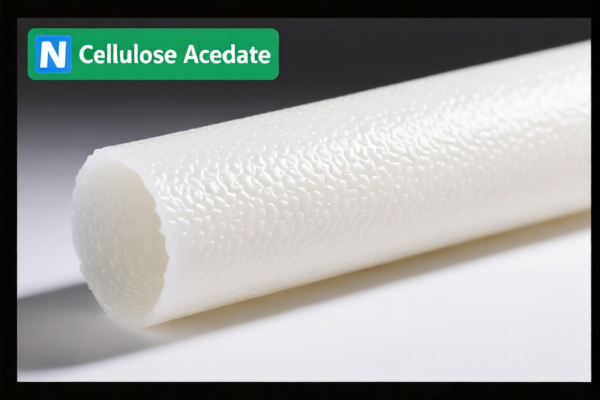

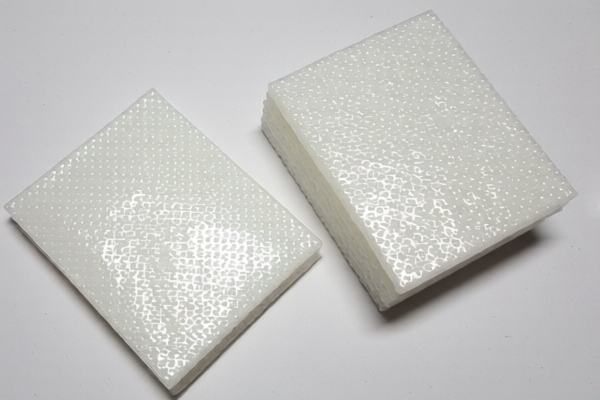
AI Analysis
🚬 Non-Plasticized Cellulose Acetate Cigarette Filter Tow
🌐 HS Code Reference & Customs Clearance Guide | 2026 Latest Tariff Analysis | Professional Classification Strategy
📌 I. Product Definition: What is "Non-Plasticized Cellulose Acetate Tow"?
Cellulose acetate tow is the primary raw material for cigarette filters. It consists of long, continuous filaments of cellulose acetate. The term "Non-Plasticized" is the critical differentiator here: * Non-Plasticized: Refers to the raw filament bundle before it is treated with plasticizers (like triacetin) to give it shape and strength. It is in its "raw" fibrous state. * State: Typically appears as a loose, airy mass of filaments (tow), not yet formed into final filter rods.
In international trade, the classification hinges on whether the product is considered a raw material for plastics (Chapter 39) or a textile fiber/rope material (Chapter 55/56).
📦 II. HS Code Classification Details (Based on Provided Data)
The following classifications are derived strictly from the provided <DATA> set. The choice depends on the specific physical form and intended regulatory interpretation by customs authorities.
| HS Code | Product Description | Matching Logic (Summary) |
|---|---|---|
3912.12.00.00 |
Plasticized Cellulose Acetate, in primary forms | Material Match: Material is cellulose acetate. Form Match: Although labeled "non-plasticized," customs may classify raw acetate filaments under Chapter 39 if viewed as the primary form of the polymer before textile processing. Key Logic: The summary explicitly states it matches the "material attribute of plasticized cellulose acetate" in the code description. |
5607.50.40.00 |
Twine, Cordage, Ropes, and Cables... | Material Match: Cellulose acetate (synthetic fiber category). Form Match: Tow fits the "fibrous form" characteristics of ropes/cordage materials. Key Logic: Classified under synthetic fiber cords due to its fibrous nature. |
5607.90.90.00 |
Other Twine, Cordage, Ropes... | Material Match: Cellulose-based material. Form Match: Described as "fine rope-like tow." Key Logic: Fits the "other" category under ropes/cordage for cellulose materials. |
5505.20.00.00 |
Waste, Scrap, and Gouging of Man-Made Fibers | Material Match: Man-made fiber. Form Match: Tow is considered a form of fiber waste/shavings in this context. Key Logic: Falls under the logical category of "fiber waste/shavings" for man-made fibers. |
5505.10.00.60 |
Waste, Scrap, and Gouging of Synthetic Staple Fibers | Material Match: Cellulose-based (synthetic fiber scope). Form Match: Tow is classified as synthetic fiber waste. Key Logic: Matches the material attribute of synthetic fiber waste. |
🔍 Critical Distinction: * Chapter 39 (
3912.12.00.00) treats the product as a polymer/plastic material. * Chapter 55/56 (5505...or5607...) treats the product as a textile/fiber material. * Note: While "non-plasticized" suggests a raw polymer state, customs often classify continuous filament tow used for textiles/filters under textile chapters if it is processed into filament form, or under plastics if it is the base resin form. The provided data offers conflicting interpretations, necessitating careful documentation.
💰 III. 2026 Latest Tariff Rate Breakdown (Detailed Tax Clauses)
✅ Applicable Country: United States (US) ✅ Origin: China (CN) ✅ Effective Time: 2025 Nov 10 onwards (including subsequent imports)
The tax structure for all provided HS Codes includes a Base Tariff, Section 301 Add-on Tariff, and IEEPA 122-Clause Tariff.
🎯 1. 3912.12.00.00 —— Cellulose Acetate in Primary Forms
| Item | Content |
|---|---|
| Base Tariff | 5.6% (ad valorem) |
| Section 301 Tariff | +25.0% (USITC Footnote related to 301 list) |
| 122-Clause Tariff | +10.0% (IEEPA provision targeting specific Chinese imports) |
| Total Tariff | 40.6% |
| Tax Calculation | CIF Value × 40.6% |
| De Minimis Eligibility | ❌ Not Eligible (Due to high combined tariff rate) |
| Legal Basis Path | IEEPA:9903.01.25 (122 Clause) → USITC:3912.12.00.00 → FOOTNOTE:301_LIST |
📌 Interpretation: * This code attracts the highest base rate among the options. * The 122-Clause is critical: It targets items that might otherwise be misclassified to avoid higher tariffs. If customs deems this product as "plasticized" or "processed fiber," they may invoke this clause. * Total Cost Impact: Nearly 41% added to the cost base.
🎯 2. 5607.50.40.00 —— Synthetic Fiber Twine/Cordage
| Item | Content |
|---|---|
| Base Tariff | 3.6% (ad valorem) |
| Section 301 Tariff | +25.0% |
| 122-Clause Tariff | +10.0% |
| Total Tariff | 38.6% |
| Tax Calculation | CIF Value × 38.6% |
| De Minimis Eligibility | ❌ Not Eligible |
| Legal Basis Path | IEEPA:9903.01.24 → USITC:5607.50.40.00 → FOOTNOTE:301_LIST |
📌 Interpretation: * Lower base rate (3.6%) compared to Chapter 39. * Still subject to full punitive tariffs. * Justification: "Fits the fiber morphology of ropes/cordage."
🎯 3. 5607.90.90.00 —— Other Twine/Cordage (Cellulose-based)
| Item | Content |
|---|---|
| Base Tariff | 6.3% (ad valorem) |
| Section 301 Tariff | +25.0% |
| 122-Clause Tariff | +10.0% |
| Total Tariff | 41.3% |
| Tax Calculation | CIF Value × 41.3% |
| De Minimis Eligibility | ❌ Not Eligible |
| Legal Basis Path | IEEPA:9903.01.25 → USITC:5607.90.90.00 → FOOTNOTE:301_LIST |
📌 Interpretation: * Highest Total Tariff (41.3%). * The "Other" category often lacks specific duty preferences, resulting in a higher base rate. * Use this only if the product is strictly deemed "fine rope-like" and not fit for other specific codes.
🎯 4. 5505.20.00.00 —— Waste/Scrap of Man-Made Fibers
| Item | Content |
|---|---|
| Base Tariff | 0.0% (ad valorem) |
| Section 301 Tariff | +25.0% |
| 122-Clause Tariff | +10.0% |
| Total Tariff | 35.0% |
| Tax Calculation | CIF Value × 35.0% |
| De Minimis Eligibility | ❌ Not Eligible |
| Legal Basis Path | IEEPA:9903.01.24 → USITC:5505.20.00.00 → FOOTNOTE:301_LIST |
📌 Interpretation: * Lowest Total Tariff (35.0%) among the options. * High Risk: Declaring new tow as "waste/scrap" is risky. If customs determines the tow is usable for production (which it is), this declaration could lead to allegations of fraud, misclassification, and penalties. * Caution: Only use if the tow is genuinely defective or scrap material.
🎯 5. 5505.10.00.60 —— Waste/Scrap of Synthetic Staple Fibers
| Item | Content |
|---|---|
| Base Tariff | 0.0% (ad valorem) |
| Section 301 Tariff | +25.0% |
| 122-Clause Tariff | +10.0% |
| Total Tariff | 35.0% |
| Tax Calculation | CIF Value × 35.0% |
| De Minimis Eligibility | ❌ Not Eligible |
| Legal Basis Path | IEEPA:9903.01.24 → USITC:5505.10.00.60 → FOOTNOTE:301_LIST |
📌 Interpretation: * Same tax rate as
5505.20.00.00. * Classification Error Risk: Cigarette tow is continuous filament, not "staple fiber" (short cut fibers). Misclassifying continuous tow as staple fiber waste is a common technical error that customs will catch during inspection.
🛠️ IV. Customs Clearance Practical Advice (Battle-Tested Pitfall Avoidance)
✅ 1. Document Preparation Checklist (Mandatory)
| Document | Mandatory? | Explanation |
|---|---|---|
| ✅ Product Specification Sheet | ✔️ | Must clearly state: "Non-Plasticized," filament denier, length, and that it is Tow (not staple, not yarn). |
| ✅ Chemical Composition Report | ✔️ | Proof of "Cellulose Acetate" content. Must confirm no plasticizers (triacetin, etc.) are present. |
| ✅ Product Photos (Raw State) | ✔️ | Show the loose, airy fiber mass. Must NOT look like finished filter rods. |
| ✅ Commercial Invoice | ✔️ | Description must be precise: "Non-Plasticized Cellulose Acetate Tow, for Filter Manufacturing." Do not use vague terms like "Filter Material." |
| ✅ Packing List | ✔️ | Detail the net/gross weight and packaging type (e.g., bulk bales vs. bags). |
| ✅ Proof of Origin (if applicable) | ✔️ | To determine if any exemptions apply (though unlikely for CN origin). |
✅ 2. Declaration Strategy (Key Mantras)
🔥 "Non-Plasticized is Key, Tow is Not Waste, Don't Call it Rope!"
| Scenario | Correct Declaration | Wrong Declaration | Consequence |
|---|---|---|---|
| Raw Tow (Unplasticized) | 3912.12.00.00 (Best Legal Fit for Material) OR 5607... if textile view is accepted. |
5505... (Waste) |
High Risk: If declared as waste, customs may reject if tow is usable. Penalty for misclassification. |
| Tow vs. Rope | Declare as "Tow" or "Filament Bundle". | Declare as "Cordage" or "Rope". | Rejection: Tow is not "cordage" in the functional sense. Misleading description. |
| Plasticized vs. Non-Plasticized | Clearly state "Non-Plasticized". | Omit "Non-Plasticized". | Delay: Customs may assume it's plasticized (finished filter material) and apply different rates or inspection requirements. |
✅ 3. Special Handling Instructions
| Situation | Recommendation |
|---|---|
| OEM for Tobacco Brands | Provide a "Not for Personal Use" statement. Tobacco materials are sensitive. Ensure no brand names are on the packaging. |
| Customs Inspection Request | Be prepared for a physical inspection to verify the absence of plasticizers. Have a lab test result ready. |
| Dispute on "Plasticized" Status | If customs argues it is "plasticized" (Chapter 39), cite the chemical test proving 0% plasticizer content. If they argue it is "textile" (Chapter 56), provide evidence of its use in filter rod manufacturing. |
| 122-Clause Vulnerability | The 122-Clause (10%) applies to specific Chinese imports. Ensure the product is not on a specific "excluded" list. If it is, provide proof of exclusion. |
🌍 V. Global Market Clearance Comparison (2026 Update)
| Country/Region | Recommended HS Code | Tariff (China Origin) | Certification/Notes |
|---|---|---|---|
| 🇺🇸 USA | 3912.12.00.00 or 5607.50.40.00 |
35% - 41.3% | High scrutiny on "Plasticized" status. IEEPA 122 Clause applies. |
| 🇨🇳 China | 3912.12.00.00 |
~5-7% | Import of cellulose acetate is controlled. May require specific licenses. |
| 🇪🇺 EU | 3912.12.00.00 |
0% (Most FTA partners) | CE marking not required for raw material. REACH compliance for chemicals. |
| 🇬🇧 UK | 3912.12.00.00 |
0% (Post-Brexit deals) | Check UK Global Tariff. |
📌 Conclusion: * The USA is the most expensive and complex market due to the叠加 (stacking) of 301 and 122 tariffs. * EU/UK are more favorable if origin rules are met. * China (importing) has lower base rates but strict regulatory controls on chemical materials.
📌 VI. Common Mistakes & Pitfalls (Lessons Learned)
❌ Mistake 1: Declaring "Non-Plasticized Tow" as "Filter Rods" or "Finished Filters" 👉 Result: Completely wrong HS Code. Tariffs may differ significantly. Plus, finished tobacco products face additional excise taxes and health warnings requirements.
❌ Mistake 2: Using "Cigarette Filter" as the product name 👉 Result: Customs may suspect it is a finished consumer product. Use "Cellulose Acetate Tow" instead.
❌ Mistake 3: Classifying as "Waste" (5505...) to save taxes
👉 Result: If the tow is usable (which it is), this is fraud. Customs can issue fines, seize cargo, and blacklist the importer.
❌ Mistake 4: Ignoring the "Non-Plasticized" specification 👉 Result: If plasticizers are detected, it may be classified under different sub-headings or subject to additional chemical regulations.
✅ Correct Practice:
"Non-Plasticized Cellulose Acetate Tow, Continuous Filament, Denier XXX, 100% Cellulose Acetate, For Cigarette Filter Manufacturing, No Plasticizers Added"
🎯 VII. Conclusion: Precision is Profit
🎯 Remember the Mantra:
🔹 "Non-Plasticized = Polymer/Textile Bridge, Tow ≠ Rope, Tow ≠ Waste." 🔹 "Tax Rate Gap: 35% to 41.3%, One Word Change = Huge Savings." 🔹 "122-Clause is Always on the Table for Chinese Origins."
📌 Pro Tip:
If you are importing to the US, consider applying for a Pre-Ruling (Customs Ruling) from CBP. Specifically ask for classification under 3912.12.00.00 vs 5607.50.40.00. A binding ruling protects you from future penalties and clarifies the exact tax rate.
📣 Immediate Action:
📞 Consult with a licensed customs broker + Provide Chemical Test Report + Request CBP Pre-Ruling. 🚀 Ensure your Non-Plasticized status is documented and verifiable.
✨ Professional Clearance, Starting with Accurate Classification! 💼 Every Percentage Point Matters in Global Trade!
Customer Reviews
About HS Code Classification
The Harmonized System (HS) is an internationally standardized nomenclature developed by the World Customs Organization (WCO) to classify traded products. Over 200 countries use the HS system as the basis for customs tariffs, trade statistics, and import/export regulations.
Each HS code follows a hierarchical structure:
- Chapter (2 digits) — Broad category of goods (e.g., Chapter 84: Machinery and Mechanical Appliances)
- Heading (4 digits) — More specific grouping within the chapter
- Subheading (6 digits) — Internationally standardized breakdown, used by all WCO member countries
- National subdivisions (8-10 digits) — Country-specific extensions for further classification, such as US HTSUS 10-digit codes
Correct HS code classification is essential for smooth customs clearance, accurate duty payment, and compliance with trade regulations. Misclassification can lead to customs delays, overpayment of duties, or penalties.
When importing from CN to US, the applicable tariff rates may include:
- Most-Favored-Nation (MFN) rate — The standard duty rate applied to WTO members
- General rate — Applied to countries without trade agreements
- Trade remedy duties — Additional tariffs such as Section 301 (anti-dumping), Section 232 (national security), or countervailing duties
The information provided on this page is for reference purposes only. For official classification, please consult with your local customs authority or a licensed customs broker.