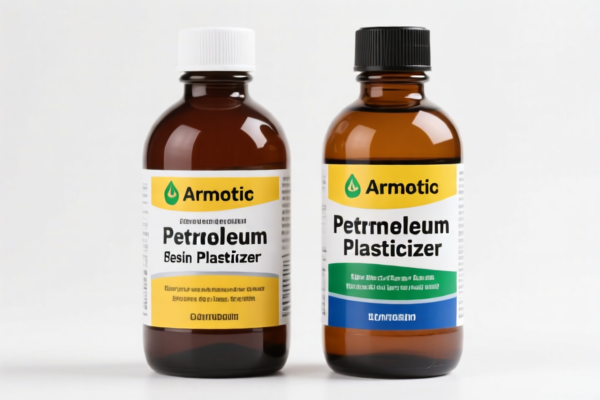
petroleum resin elastomer plasticizer
CN → US| HS编码 | 关税税率 | 原产国 | 目的国 | 文档 |
|---|---|---|---|---|
| 3909501000 | 35.0% | CN | US | 官方文档 |
| 3911200000 | 41.5% | CN | US | 官方文档 |
| 3911901000 | 35.0% | CN | US | 官方文档 |
| 3909390000 | 41.5% | CN | US | 官方文档 |
| 3824994900 | 41.5% | CN | US | 官方文档 |
商品图片


AI分析
🧪 Petroleum Resin Elastomer Plasticizer
🌐 HS Code Reference & Customs Clearance Guide | 2026 Latest Tariff Analysis | Professional Clearance Strategy
📌 I. Product Definition & Classification: What is "Petroleum Resin Elastomer Plasticizer"?
This product is a complex chemical mixture used primarily in polymer processing, adhesives, and rubber manufacturing. It combines three key functional components: * Petroleum Resin (石油树脂): A carbonaceous thermoplastic resin derived from petrochemical by-products (like C5 or C9 fractions). It acts as a tackifier and softener. * Elastomer (弹性体): Rubbery polymers that provide elasticity and flexibility to the final compound. * Plasticizer (增塑剂): A substance added to materials to increase their plasticity or fluidity, typically by reducing intermolecular forces between polymer chains.
⚠️ Key Classification Challenge:
The classification depends heavily on whether the product is defined as a resin (Chapter 39), a chemical preparation (Chapter 38), or a specific type of resin like polyurethane/amino resins (Chapter 39 subheadings). Since it contains multiple functional chemical components, it often falls under "Other" or "Preparations" rather than a pure raw resin.
📦 II. HS Code Classification Details (2026 Latest Tariff Authority Comparison)
Based on the provided data, here are the four most likely HS Codes and their logical deductions:
| HS Code | Product Description | Applicability Scenario | Classification Logic |
|---|---|---|---|
3909.50.10.00 |
Polyurethanes in primary forms | If the elastomer/resin blend is chemically structured as a polyurethane derivative | Matches "Elastomer" form & "Resin" composition. Inferred as PU/resin primary form. |
3911.20.00.00 |
Unsaturated polyesters in primary forms / Specific Petroleum Resins | Direct Match: Explicitly named "Petroleum Resin" in primary/raw form | The name "Petroleum Resin" directly corresponds to this core material. Covers specific petroleum resin products in raw form. |
3911.90.10.00 |
Other polyethers, epoxy resins, polyurethanes, etc. | If it’s a composite resin with elastomer properties but not unsaturated polyester | Explicitly contains "Petroleum Resin" material & "Elastomer" attribute. Fits the material/category requirements for "Other" resins. |
3824.99.49.00 |
Prepared binders for foundry molds / Other chemical preparations | If the product is viewed as a "Preparation" rather than a raw material | "Petroleum" = Hydrocarbon basis; "Plasticizer" = Chemical industrial preparation. Fits "Hydrocarbon-based chemical preparations." |
3909.39.00.00 |
Other amino resins in primary forms | Fallback/兜底: If no other specific resin type fits perfectly | "Petroleum Resin" is resinous; "Plasticizer" is a chemical additive. Classified under "Other Amino Resins" if no material conflict (metal/organic) exists. |
🔍 Key Distinction:
- Chapter 39 (Plastics/Resins): Focuses on the primary form and chemical nature of the resin (e.g.,3911.20for petroleum resins).
- Chapter 38 (Chemical Preparations): Focuses on the functional preparation aspect, especially if it includes plasticizers as additives (3824.99.49).
- Critical Note: If the product is a simple blend of raw petroleum resin and plasticizer,3911.20.00.00or3824.99.49.00are the strongest contenders. If it’s a specialized elastomeric resin,3909.50or3911.90may apply.
💰 III. 2026 Latest Tariff Rate Breakdown (Including Surtaxes & Policy Add-ons)
✅ Applicable Country: United States (US)
✅ Country of Origin: China (CN)
✅ Effective Date: From November 10, 2025 (and subsequent imports)
🎯 1. 3909.50.10.00 & 3911.90.10.00 — Polyurethanes / Other Resins
| Item | Content |
|---|---|
| Base Tariff | 0.0% (ad valorem) |
| USITC Surtax | +25.0% (Under Section 301) |
| IEEPA Surtax | +10.0% (China/HK specific, effective Nov 10, 2025) |
| Total Tariff | 35.0% |
| Calculation Method | CIF Value × 35% |
| De Minimis Exemption | ❌ Not Applicable (deny_de_minimis) |
| Legal Basis Path | IEEPA:9903.01.25 → USITC:3909.50.10.00 / USITC:3911.90.10.00 → FOOTNOTE:9903.88.01 |
📌 Explanation:
- The 25% USITC surtax is part of the Section 301 trade measures.
- The 10% IEEPA surtax is an additional penalty on Chinese-origin goods under the International Emergency Economic Powers Act.
- Total: 35%. This is a high tariff burden. Cost planning must account for this.
🎯 2. 3911.20.00.00 — Petroleum Resins (Primary Forms)
| Item | Content |
|---|---|
| Base Tariff | 6.5% |
| USITC Surtax | +25.0% |
| IEEPA Surtax | +10.0% |
| Total Tariff | 41.5% |
| Calculation Method | CIF Value × 41.5% |
| De Minimis Exemption | ❌ Not Applicable (deny_de_minimis) |
| Legal Basis Path | IEEPA:9903.01.25 → USITC:3911.20.00.00 → FOOTNOTE:9903.88.01 |
📌 Note:
- This code has a higher base rate (6.5%) compared to the 0% rate of3909.50and3911.90.
- Even with the same surtaxes, the total is 41.5%, making it more expensive than the 35% options.
- Risk: Misclassification as a "primary petroleum resin" instead of a "preparation" or "polyurethane" could increase costs by 6.5%.
🎯 3. 3909.39.00.00 & 3824.99.49.00 — Other Amino Resins / Chemical Preparations
| Item | Content |
|---|---|
| Base Tariff | 6.5% |
| USITC Surtax | +25.0% |
| IEEPA Surtax | +10.0% |
| Total Tariff | 41.5% |
| Calculation Method | CIF Value × 41.5% |
| De Minimis Exemption | ❌ Not Applicable (deny_de_minimis) |
| Legal Basis Path | IEEPA:9903.01.25 → USITC:3909.39.00.00 / USITC:3824.99.49.00 → FOOTNOTE:9903.88.01 |
📌 Explanation:
-3824.99.49.00is a "catch-all" for chemical preparations. If customs argues that "Petroleum Resin + Plasticizer" is a preparation rather than a raw resin, this code may apply.
-3909.39.00.00is a fallback for amino resins. If the chemical structure doesn't fit other categories, this may be used.
- Same high cost (41.5%) as the petroleum resin code.
🛠️ IV. Customs Clearance Practical Advice (Battle-Tested Pitfall Guide)
✅ 1. Required Documentation List (Non-Negotiable)
| Document | Required | Purpose |
|---|---|---|
| ✅ Product Specification Sheet | ✔️ | Must detail chemical composition: % of Petroleum Resin, % of Elastomer, % of Plasticizer. |
| ✅ MSDS / SDS (Material Safety Data Sheet) | ✔️ | Critical for chemical products. Shows hazards, composition, and handling. |
| ✅ Technical Data Sheet (TDS) | ✔️ | Explains functional properties (e.g., tackiness, flexibility) to justify "Elastomer/Plasticizer" use. |
| ✅ Product Photos (Label & Bulk) | ✔️ | Shows packaging, labeling, and physical form (powder, pellet, liquid). |
| ✅ Commercial Invoice | ✔️ | Must clearly state: "Petroleum Resin Elastomer Plasticizer" – Do not just say "Resin" or "Chemical." |
| ✅ Certificate of Origin (CO) | ✔️ | To prove Chinese origin for surtax calculation. |
| ✅ Bill of Lading | ✔️ | Standard shipping document. |
✅ 2. Declaration Strategy (Key Mantra)
🔥 "Chemical Name First, Function Second, Form Third!"
| Scenario | Correct Declaration | Wrong Practice | Consequence |
|---|---|---|---|
| Raw Petroleum Resin + Plasticizer Blend | 3911.20.00.00 or 3824.99.49.00 |
Vague: "Chemical Mix" | High risk of audit, delay, or reclassification to higher tariff. |
| Polyurethane-based Elastomer Resin | 3909.50.10.00 |
Vague: "Plasticizer" | Misclassification → 35% vs 41.5% difference. |
| Generic "Resin" | 3911.90.10.00 |
Vague: "Elastomer" | Ambiguous → Customs may choose the highest applicable surtax. |
| Finders Binder / Adhesive | 3824.99.49.00 |
Vague: "Petroleum Product" | Must prove it’s a "prepared chemical" not a raw resin. |
💡 Pro Tip:
- Be Specific: Use the exact chemical name from the SDS.
- Highlight "Primary Form": If it’s raw resin, emphasize "Primary Form" to support3911.20or3909.xx.
- Avoid "Generic" Terms: Never declare as "Plastic" or "Rubber" without specifying the chemical base.
✅ 3. Special Situation Handling
| Situation | Handling Advice |
|---|---|
| Is it a "Preparation" or "Raw Material"? | If the plasticizer is mixed after resin production, it may be a preparation (3824). If the resin is the plasticizing agent, it’s a resin (3911). Provide chemical synthesis diagram. |
| OEM Custom Blend | Provide client contract + formulation sheet. Prove it’s not a standard commodity. |
| Small Sample Shipments | No De Minimis Exemption! Even small samples are subject to 35-41.5% tariff. Don’t try to sneak in under $800. |
| Mixed Containers | If mixed with other goods, ensure clear segregation. Mixed chemical declarations are heavily scrutinized. |
🌍 V. Global Market Comparison (2026 Latest)
| Country/Region | Recommended HS Code | Tariff (China Origin) | Certification Requirements | Remarks |
|---|---|---|---|---|
| 🇺🇸 USA | 3911.20.00.00 or 3909.50.10.00 |
35% - 41.5% | None specific, but SDS mandatory | Highest cost market due to 35-41.5% total tariff. |
| 🇨🇳 China | 3911.20.00.00 |
6.5% | None | No surtaxes. Domestic consumption friendly. |
| 🇪🇺 EU | 3911.20.00 |
6.5% | REACH Registration | No US-style surtaxes, but REACH compliance is costly. |
| 🇦🇺 Australia | 3911.20.00 |
5% | None | Low tariff, but strict chemical import controls. |
| 🇯🇵 Japan | 3911.20.00 |
5% | CSCL Compliance | Moderate tariff, chemical safety focus. |
📌 Conclusion:
- USA is the most expensive market for this product due to layered surtaxes (35-41.5%).
- EU/Asia markets are significantly cheaper (5-6.5%), but require chemical registrations (REACH/CSCL).
- Strategy: If targeting the US, ensure accurate classification to avoid paying 41.5% when 35% might apply.
📌 VI. Common Mistakes & Pitfall Guide (Lessons Learned)
❌ Mistake 1: Declaring as "Plasticizer" only
👉 Result: Customs may classify as 3824.99.49.00 (41.5%) instead of 3909.50 (35%) if resin content is high. Overpay 6.5%.
❌ Mistake 2: Omitting "Petroleum Resin" in description
👉 Result: Customs cannot verify if it’s a raw resin (3911) or preparation (3824). Delay + Audit.
❌ Mistake 3: Assuming De Minimis Applies
👉 Result: Chemical products from China are excluded from de minimis. Even $100 sample ships in, $45 tariff is due. Unexpected cost.
❌ Mistake 4: Using vague terms like "Chemical Mix"
👉 Result: Customs assigns the highest possible tariff code. Maximum penalty.
✅ Correct Approach:
"Petroleum Resin Elastomer Plasticizer, Primary Form, Contains C5/C9 Resin, Plasticizer, CAS No. XXXXX-XX-X, MSDS Attached"
🎯 VII. Conclusion: Precision Classification Saves Money!
🎯 Remember the Mantra:
🔹 "Resin vs. Prep, Choose Right or Lose Light!"
🔹 "35% vs 41.5%, 6.5% is a big deal, classify well, save your wallet!"
🔹 "No De Minimis for Chemicals, even small shipments pay toll!"
📌 Pro Tip:
If your product is originated from Vietnam, Mexico, or Thailand, you may avoid IEEPA/301 surtaxes, reducing tariff to 0-6.5%.
Recommend Advance Ruling from US CBP if the formulation is unique.
📣 Immediate Action:
📞 Contact a professional customs broker + Provide SDS + Apply for HS Code Advance Ruling
🚀 Ensure your Petroleum Resin Elastomer Plasticizer clears US customs smoothly, efficiently, and cost-effectively!
✨ Professional Clearance Starts with Accurate Classification!
💼 Every penny of cost deserves precise calculation!
用户评价
关于 HS 编码归类
协调制度(HS)是由世界海关组织(WCO)制定的国际贸易商品分类标准。全球 200 多个国家采用 HS 系统作为海关关税、贸易统计和进出口监管的基础。
每个 HS 编码遵循以下层级结构:
- 章(2 位)——商品大类(例如:第 84 章:机器和机械设备)
- 品目(4 位)——章内的更具体分类
- 子目(6 位)——国际通用细分,所有 WCO 成员国统一使用
- 本国细分(8-10 位)——各国自行扩展的细分编码,如美国 HTSUS 10 位编码
正确的 HS 编码归类对于顺利通关、准确缴纳关税和遵守贸易法规至关重要。错误归类可能导致海关延误、多缴关税或罚款。
从CN进口到US时,适用的关税税率可能包括:
- 最惠国(MFN)税率——适用于 WTO 成员国的标准关税税率
- 普通税率——适用于无贸易协定国家
- 贸易救济关税——附加关税,如 301 条款(反倾销)、232 条款(国家安全)或反补贴税
本页内容仅供参考。如需正式归类,请咨询当地海关或持牌报关代理。