petroleum resin elastomer plasticizer
CN → US| HS Code | Tariff Rate | Origin | Destination | Doc |
|---|---|---|---|---|
| 3909501000 | 35.0% | CN | US | Official Doc |
| 3911200000 | 41.5% | CN | US | Official Doc |
| 3911901000 | 35.0% | CN | US | Official Doc |
| 3909390000 | 41.5% | CN | US | Official Doc |
| 3824994900 | 41.5% | CN | US | Official Doc |
Product Images
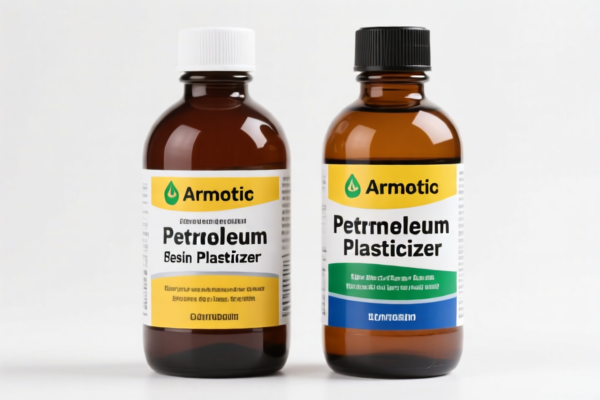


AI Analysis
🧪 Petroleum Resin Elastomer Plasticizer
🌐 HS Code Reference & Customs Clearance Guide | 2026 Latest Tariff Analysis | Professional Clearance Strategy
📌 I. Product Definition & Classification: What is "Petroleum Resin Elastomer Plasticizer"?
This product is a complex chemical mixture used primarily in polymer processing, adhesives, and rubber manufacturing. It combines three key functional components: * Petroleum Resin (石油树脂): A carbonaceous thermoplastic resin derived from petrochemical by-products (like C5 or C9 fractions). It acts as a tackifier and softener. * Elastomer (弹性体): Rubbery polymers that provide elasticity and flexibility to the final compound. * Plasticizer (增塑剂): A substance added to materials to increase their plasticity or fluidity, typically by reducing intermolecular forces between polymer chains.
⚠️ Key Classification Challenge:
The classification depends heavily on whether the product is defined as a resin (Chapter 39), a chemical preparation (Chapter 38), or a specific type of resin like polyurethane/amino resins (Chapter 39 subheadings). Since it contains multiple functional chemical components, it often falls under "Other" or "Preparations" rather than a pure raw resin.
📦 II. HS Code Classification Details (2026 Latest Tariff Authority Comparison)
Based on the provided data, here are the four most likely HS Codes and their logical deductions:
| HS Code | Product Description | Applicability Scenario | Classification Logic |
|---|---|---|---|
3909.50.10.00 |
Polyurethanes in primary forms | If the elastomer/resin blend is chemically structured as a polyurethane derivative | Matches "Elastomer" form & "Resin" composition. Inferred as PU/resin primary form. |
3911.20.00.00 |
Unsaturated polyesters in primary forms / Specific Petroleum Resins | Direct Match: Explicitly named "Petroleum Resin" in primary/raw form | The name "Petroleum Resin" directly corresponds to this core material. Covers specific petroleum resin products in raw form. |
3911.90.10.00 |
Other polyethers, epoxy resins, polyurethanes, etc. | If it’s a composite resin with elastomer properties but not unsaturated polyester | Explicitly contains "Petroleum Resin" material & "Elastomer" attribute. Fits the material/category requirements for "Other" resins. |
3824.99.49.00 |
Prepared binders for foundry molds / Other chemical preparations | If the product is viewed as a "Preparation" rather than a raw material | "Petroleum" = Hydrocarbon basis; "Plasticizer" = Chemical industrial preparation. Fits "Hydrocarbon-based chemical preparations." |
3909.39.00.00 |
Other amino resins in primary forms | Fallback/兜底: If no other specific resin type fits perfectly | "Petroleum Resin" is resinous; "Plasticizer" is a chemical additive. Classified under "Other Amino Resins" if no material conflict (metal/organic) exists. |
🔍 Key Distinction:
- Chapter 39 (Plastics/Resins): Focuses on the primary form and chemical nature of the resin (e.g.,3911.20for petroleum resins).
- Chapter 38 (Chemical Preparations): Focuses on the functional preparation aspect, especially if it includes plasticizers as additives (3824.99.49).
- Critical Note: If the product is a simple blend of raw petroleum resin and plasticizer,3911.20.00.00or3824.99.49.00are the strongest contenders. If it’s a specialized elastomeric resin,3909.50or3911.90may apply.
💰 III. 2026 Latest Tariff Rate Breakdown (Including Surtaxes & Policy Add-ons)
✅ Applicable Country: United States (US)
✅ Country of Origin: China (CN)
✅ Effective Date: From November 10, 2025 (and subsequent imports)
🎯 1. 3909.50.10.00 & 3911.90.10.00 — Polyurethanes / Other Resins
| Item | Content |
|---|---|
| Base Tariff | 0.0% (ad valorem) |
| USITC Surtax | +25.0% (Under Section 301) |
| IEEPA Surtax | +10.0% (China/HK specific, effective Nov 10, 2025) |
| Total Tariff | 35.0% |
| Calculation Method | CIF Value × 35% |
| De Minimis Exemption | ❌ Not Applicable (deny_de_minimis) |
| Legal Basis Path | IEEPA:9903.01.25 → USITC:3909.50.10.00 / USITC:3911.90.10.00 → FOOTNOTE:9903.88.01 |
📌 Explanation:
- The 25% USITC surtax is part of the Section 301 trade measures.
- The 10% IEEPA surtax is an additional penalty on Chinese-origin goods under the International Emergency Economic Powers Act.
- Total: 35%. This is a high tariff burden. Cost planning must account for this.
🎯 2. 3911.20.00.00 — Petroleum Resins (Primary Forms)
| Item | Content |
|---|---|
| Base Tariff | 6.5% |
| USITC Surtax | +25.0% |
| IEEPA Surtax | +10.0% |
| Total Tariff | 41.5% |
| Calculation Method | CIF Value × 41.5% |
| De Minimis Exemption | ❌ Not Applicable (deny_de_minimis) |
| Legal Basis Path | IEEPA:9903.01.25 → USITC:3911.20.00.00 → FOOTNOTE:9903.88.01 |
📌 Note:
- This code has a higher base rate (6.5%) compared to the 0% rate of3909.50and3911.90.
- Even with the same surtaxes, the total is 41.5%, making it more expensive than the 35% options.
- Risk: Misclassification as a "primary petroleum resin" instead of a "preparation" or "polyurethane" could increase costs by 6.5%.
🎯 3. 3909.39.00.00 & 3824.99.49.00 — Other Amino Resins / Chemical Preparations
| Item | Content |
|---|---|
| Base Tariff | 6.5% |
| USITC Surtax | +25.0% |
| IEEPA Surtax | +10.0% |
| Total Tariff | 41.5% |
| Calculation Method | CIF Value × 41.5% |
| De Minimis Exemption | ❌ Not Applicable (deny_de_minimis) |
| Legal Basis Path | IEEPA:9903.01.25 → USITC:3909.39.00.00 / USITC:3824.99.49.00 → FOOTNOTE:9903.88.01 |
📌 Explanation:
-3824.99.49.00is a "catch-all" for chemical preparations. If customs argues that "Petroleum Resin + Plasticizer" is a preparation rather than a raw resin, this code may apply.
-3909.39.00.00is a fallback for amino resins. If the chemical structure doesn't fit other categories, this may be used.
- Same high cost (41.5%) as the petroleum resin code.
🛠️ IV. Customs Clearance Practical Advice (Battle-Tested Pitfall Guide)
✅ 1. Required Documentation List (Non-Negotiable)
| Document | Required | Purpose |
|---|---|---|
| ✅ Product Specification Sheet | ✔️ | Must detail chemical composition: % of Petroleum Resin, % of Elastomer, % of Plasticizer. |
| ✅ MSDS / SDS (Material Safety Data Sheet) | ✔️ | Critical for chemical products. Shows hazards, composition, and handling. |
| ✅ Technical Data Sheet (TDS) | ✔️ | Explains functional properties (e.g., tackiness, flexibility) to justify "Elastomer/Plasticizer" use. |
| ✅ Product Photos (Label & Bulk) | ✔️ | Shows packaging, labeling, and physical form (powder, pellet, liquid). |
| ✅ Commercial Invoice | ✔️ | Must clearly state: "Petroleum Resin Elastomer Plasticizer" – Do not just say "Resin" or "Chemical." |
| ✅ Certificate of Origin (CO) | ✔️ | To prove Chinese origin for surtax calculation. |
| ✅ Bill of Lading | ✔️ | Standard shipping document. |
✅ 2. Declaration Strategy (Key Mantra)
🔥 "Chemical Name First, Function Second, Form Third!"
| Scenario | Correct Declaration | Wrong Practice | Consequence |
|---|---|---|---|
| Raw Petroleum Resin + Plasticizer Blend | 3911.20.00.00 or 3824.99.49.00 |
Vague: "Chemical Mix" | High risk of audit, delay, or reclassification to higher tariff. |
| Polyurethane-based Elastomer Resin | 3909.50.10.00 |
Vague: "Plasticizer" | Misclassification → 35% vs 41.5% difference. |
| Generic "Resin" | 3911.90.10.00 |
Vague: "Elastomer" | Ambiguous → Customs may choose the highest applicable surtax. |
| Finders Binder / Adhesive | 3824.99.49.00 |
Vague: "Petroleum Product" | Must prove it’s a "prepared chemical" not a raw resin. |
💡 Pro Tip:
- Be Specific: Use the exact chemical name from the SDS.
- Highlight "Primary Form": If it’s raw resin, emphasize "Primary Form" to support3911.20or3909.xx.
- Avoid "Generic" Terms: Never declare as "Plastic" or "Rubber" without specifying the chemical base.
✅ 3. Special Situation Handling
| Situation | Handling Advice |
|---|---|
| Is it a "Preparation" or "Raw Material"? | If the plasticizer is mixed after resin production, it may be a preparation (3824). If the resin is the plasticizing agent, it’s a resin (3911). Provide chemical synthesis diagram. |
| OEM Custom Blend | Provide client contract + formulation sheet. Prove it’s not a standard commodity. |
| Small Sample Shipments | No De Minimis Exemption! Even small samples are subject to 35-41.5% tariff. Don’t try to sneak in under $800. |
| Mixed Containers | If mixed with other goods, ensure clear segregation. Mixed chemical declarations are heavily scrutinized. |
🌍 V. Global Market Comparison (2026 Latest)
| Country/Region | Recommended HS Code | Tariff (China Origin) | Certification Requirements | Remarks |
|---|---|---|---|---|
| 🇺🇸 USA | 3911.20.00.00 or 3909.50.10.00 |
35% - 41.5% | None specific, but SDS mandatory | Highest cost market due to 35-41.5% total tariff. |
| 🇨🇳 China | 3911.20.00.00 |
6.5% | None | No surtaxes. Domestic consumption friendly. |
| 🇪🇺 EU | 3911.20.00 |
6.5% | REACH Registration | No US-style surtaxes, but REACH compliance is costly. |
| 🇦🇺 Australia | 3911.20.00 |
5% | None | Low tariff, but strict chemical import controls. |
| 🇯🇵 Japan | 3911.20.00 |
5% | CSCL Compliance | Moderate tariff, chemical safety focus. |
📌 Conclusion:
- USA is the most expensive market for this product due to layered surtaxes (35-41.5%).
- EU/Asia markets are significantly cheaper (5-6.5%), but require chemical registrations (REACH/CSCL).
- Strategy: If targeting the US, ensure accurate classification to avoid paying 41.5% when 35% might apply.
📌 VI. Common Mistakes & Pitfall Guide (Lessons Learned)
❌ Mistake 1: Declaring as "Plasticizer" only
👉 Result: Customs may classify as 3824.99.49.00 (41.5%) instead of 3909.50 (35%) if resin content is high. Overpay 6.5%.
❌ Mistake 2: Omitting "Petroleum Resin" in description
👉 Result: Customs cannot verify if it’s a raw resin (3911) or preparation (3824). Delay + Audit.
❌ Mistake 3: Assuming De Minimis Applies
👉 Result: Chemical products from China are excluded from de minimis. Even $100 sample ships in, $45 tariff is due. Unexpected cost.
❌ Mistake 4: Using vague terms like "Chemical Mix"
👉 Result: Customs assigns the highest possible tariff code. Maximum penalty.
✅ Correct Approach:
"Petroleum Resin Elastomer Plasticizer, Primary Form, Contains C5/C9 Resin, Plasticizer, CAS No. XXXXX-XX-X, MSDS Attached"
🎯 VII. Conclusion: Precision Classification Saves Money!
🎯 Remember the Mantra:
🔹 "Resin vs. Prep, Choose Right or Lose Light!"
🔹 "35% vs 41.5%, 6.5% is a big deal, classify well, save your wallet!"
🔹 "No De Minimis for Chemicals, even small shipments pay toll!"
📌 Pro Tip:
If your product is originated from Vietnam, Mexico, or Thailand, you may avoid IEEPA/301 surtaxes, reducing tariff to 0-6.5%.
Recommend Advance Ruling from US CBP if the formulation is unique.
📣 Immediate Action:
📞 Contact a professional customs broker + Provide SDS + Apply for HS Code Advance Ruling
🚀 Ensure your Petroleum Resin Elastomer Plasticizer clears US customs smoothly, efficiently, and cost-effectively!
✨ Professional Clearance Starts with Accurate Classification!
💼 Every penny of cost deserves precise calculation!
Customer Reviews
About HS Code Classification
The Harmonized System (HS) is an internationally standardized nomenclature developed by the World Customs Organization (WCO) to classify traded products. Over 200 countries use the HS system as the basis for customs tariffs, trade statistics, and import/export regulations.
Each HS code follows a hierarchical structure:
- Chapter (2 digits) — Broad category of goods (e.g., Chapter 84: Machinery and Mechanical Appliances)
- Heading (4 digits) — More specific grouping within the chapter
- Subheading (6 digits) — Internationally standardized breakdown, used by all WCO member countries
- National subdivisions (8-10 digits) — Country-specific extensions for further classification, such as US HTSUS 10-digit codes
Correct HS code classification is essential for smooth customs clearance, accurate duty payment, and compliance with trade regulations. Misclassification can lead to customs delays, overpayment of duties, or penalties.
When importing from CN to US, the applicable tariff rates may include:
- Most-Favored-Nation (MFN) rate — The standard duty rate applied to WTO members
- General rate — Applied to countries without trade agreements
- Trade remedy duties — Additional tariffs such as Section 301 (anti-dumping), Section 232 (national security), or countervailing duties
The information provided on this page is for reference purposes only. For official classification, please consult with your local customs authority or a licensed customs broker.