pharmaceutical packaging sheets area over 1 square meter
CN → US| HS编码 | 关税税率 | 原产国 | 目的国 | 文档 |
|---|---|---|---|---|
| 3923900080 | 38.0% | CN | US | 官方文档 |
| 3923109000 | 38.0% | CN | US | 官方文档 |
商品图片
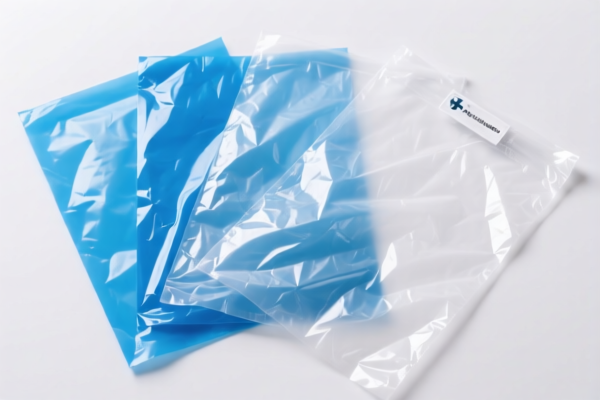
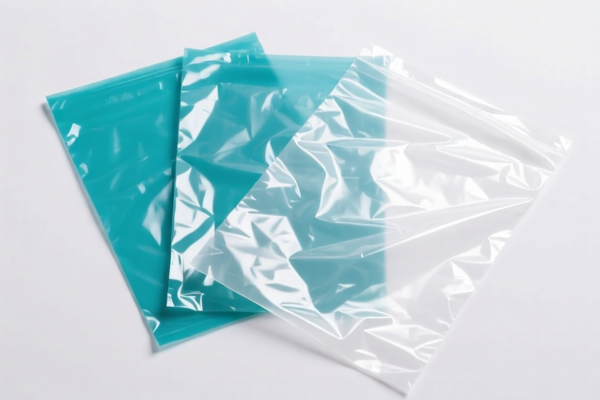
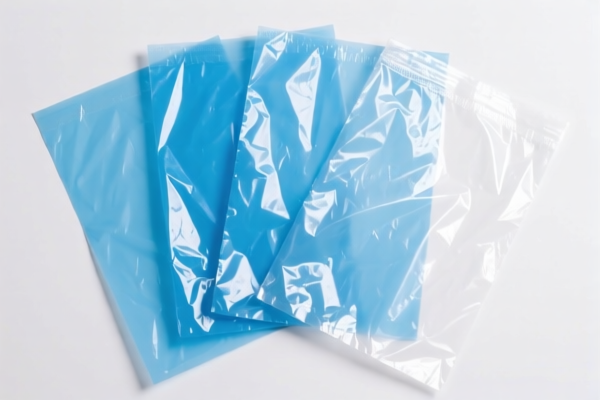
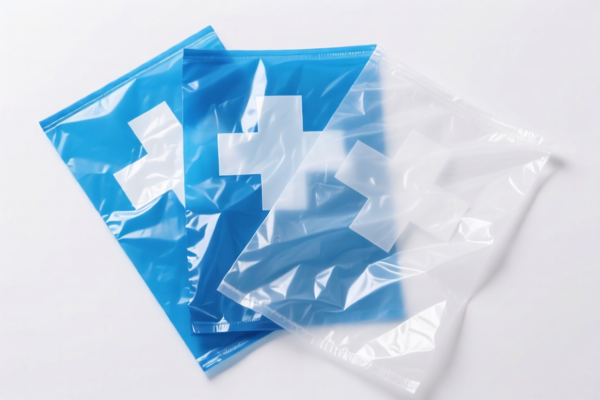
AI分析
📦 Pharmaceutical Packaging Sheets (Area > 1 sq meter)
🌐 HS Code Reference & Customs Clearance Guide | 2026 Latest Tariff Analysis | Professional Compliance Strategy
📌 I. Product Definition and Classification: Do You Really Understand "Pharmaceutical Packaging Sheets"?
Pharmaceutical packaging sheets, particularly those with an area exceeding 1 square meter, are typically rigid or semi-rigid plastic containers used for bulk storage, transit, or industrial-scale pharmaceutical packaging. In international trade, the classification depends heavily on the material, specific function, and form factor.
Key Distinction:
- If the item is a box, case, crate, or similar article made of plastics, it generally falls under Heading 3923.10.
- If the item is a general article for conveyance or packing that doesn’t fit the specific "box/crate" definition, it may fall under Heading 3923.90.
⚠️ Critical Classification Point:
- Large sheets (>1 sq meter) often qualify as "articles for conveyance or packing" but must be evaluated against the specific subheading for "Boxes, cases, crates."
- If the sheet is folded or assembled into a container structure, it is more likely classified as a Box/Crate (3923.10).
- If it is a loose sheet, blister pack backing, or general packaging material not forming a rigid box, it may fall under Other (3923.90).
- Note: The provided<DATA>specifically lists two codes under 3923.90 and 3923.10 with identical tax rates, suggesting the distinction is technical but the fiscal impact is currently uniform under the specified trade conditions.
📦 II. HS Code Classification Details (2026 Latest Tariff Authority Comparison)
| HS Code | Product Description | Applicable Scenario | Structure/Form |
|---|---|---|---|
3923.90.00.80 |
Articles for the conveyance or packing of goods, of plastics; stoppers, lids, caps and other closures, of plastics: Other | General plastic packaging sheets, blister pack backs, non-rigid packaging components not classified as boxes | ✅ General Article |
3923.10.90.00 |
Articles for the conveyance or packing of goods, of plastics; Boxes, cases, crates and similar articles: Other | Large plastic crates, tubs, or box-like structures formed from sheets >1 sq meter | ✅ Box/Crate Structure |
🔍 Key Reminder:
- The primary difference lies in whether the product is considered a "Box/Crate" (3923.10) or a "General Article" (3923.90).
- For sheets >1 sq meter, if they are pre-formed into containers (e.g., large tubs, crates), 3923.10.90.00 is preferred.
- If they are flat sheets, rolls, or blister packs used as packaging material, 3923.90.00.80 is more appropriate.
💰 III. 2026 Latest Tariff Rate Details (Including Additional Taxes & Policy Add-ons)
✅ Applicable Country: USA (US)
✅ Origin: China (CN)
✅ Effective Date: 2025-11-10 onwards (including subsequent imports)
🎯 1. 3923.90.00.80 – Articles for Conveyance or Packing of Goods (Plastics): Other
| Item | Content |
|---|---|
| Base Tariff Rate | 3.0% (ad valorem) |
| Additional Tariff (Section 301) | +25.0% (from USITC Footnote) |
| Total Tax Rate | 28.0% |
| Tax Calculation | CIF Value × 28% |
| De Minimis Exemption | ❌ Not Eligible (for Section 301 goods) |
| Legal Basis Path | USITC:3923.90.00.80 → FOOTNOTE:301 |
📌 Explanation:
- "Base Tariff 3%" is the standard MFN (Most Favored Nation) rate for plastic packing articles.
- "Additional Tariff 25%" is the Section 301 tariff applied to Chinese-origin goods in this category.
- Total 28% is significant. For large-volume shipments, this cost must be factored into pricing strategies.
🎯 2. 3923.10.90.00 – Boxes, Cases, Crates (Plastics): Other
| Item | Content |
|---|---|
| Base Tariff Rate | 3.0% (ad valorem) |
| Additional Tariff (Section 301) | +25.0% |
| Total Tax Rate | 28.0% |
| Tax Calculation | CIF Value × 28% |
| De Minimis Exemption | ❌ Not Eligible |
| Legal Basis Path | USITC:3923.10.90.00 → FOOTNOTE:301 |
📌 Note:
- Identical tax structure to the above.
- Whether classified as "Boxes" or "Other," the fiscal burden is the same under current US-China trade rules.
- Classification accuracy is still critical for compliance, audit risks, and potential future rate changes.
🛠️ IV. Customs Clearance Practical Advice (Actionable Pitfall Avoidance Guide)
✅ 1. Required Documentation Checklist (Mandatory)
| Document | Required? | Explanation |
|---|---|---|
| ✅ Product Specification Sheet | ✔️ | Must detail dimensions, material (e.g., PP, PET, PE), and whether it forms a box or sheet |
| ✅ Commercial Invoice | ✔️ | Clearly state: "Plastic Pharmaceutical Packaging Sheets/Crates" |
| ✅ Packing List | ✔️ | Specify quantity, gross/net weight, and package dimensions |
| ✅ Certificate of Origin (CO) | ✔️ | Required for origin verification (China-origin goods face 28% tax) |
| ✅ FDA/Pharmaceutical Compliance Doc | ✔️ | If intended for direct drug contact, prove compliance with FDA 21 CFR Part 211 |
| ✅ Material Safety Data Sheet (MSDS) | ✔️ | If plastics are considered hazardous or have specific handling requirements |
✅ 2. Declaration Tips (Key Mnemonics)
🔥 “Material Matters, Structure Defines, Origin Dictates Tax!”
| Scenario | Correct Declaration | Incorrect Practice |
|---|---|---|
| Large plastic tubs/crates for pharma bulk storage | 3923.10.90.00 (Boxes/Crates) |
Misdeclare as "Other" → Audit risk |
| Flat blister pack sheets or backing cards | 3923.90.00.80 (Other Articles) |
Misdeclare as "Boxes" → Classification error |
| Rolls of plastic film for packaging | Check Heading 3920/3921 (not in provided data) | Do not force into 3923 if it’s film |
| Used or recycled plastic containers | May require additional phytosanitary/compliance docs | Assume same as new |
✅ 3. Special Case Handling
| Scenario | Handling Advice |
|---|---|
| Direct Drug Contact | Ensure materials are pharmaceutical-grade (e.g., USP Class VI). Provide FDA compliance statement. |
| Custom-Shape Sheets | If cut into specific shapes but not assembled into boxes, classify under 3923.90.00.80. |
| Mixed Packaging | If shipped with boxes and sheets, declare separately if possible to avoid misclassification. |
| Re-Export | If transiting through a third country, ensure Certificate of Origin remains valid for China-origin goods. |
🌍 V. Global Main Market Clearance Comparison (2026 Latest)
| Country/Region | Recommended HS Code | Tariff (China-Origin) | Certification Requirements | Notes |
|---|---|---|---|---|
| 🇺🇸 USA | 3923.10.90.00 or 3923.90.00.80 |
28% (3% base + 25% Section 301) | FDA Compliance (if direct contact) | Highest tariff burden |
| 🇪🇺 EU | 3923.90 or 3923.10 |
0% - 3% (depends on exact subheading) | REACH, FDA equivalent | No Section 301 |
| 🇨🇳 China | 3923.90 or 3923.10 |
0% - 3% (varies) | None for export | Low tariff |
| 🇯🇵 Japan | 3923.90 or 3923.10 |
0% - 3% | PMDA compliance | Moderate cost |
| 🇬🇧 UK | 3923.90 or 3923.10 |
0% - 3% | UKCA marking | Post-Brexit rules apply |
📌 Conclusion:
- USA imposes the highest effective tariff (28%) on Chinese-origin plastic packaging under current Section 301 rules.
- EU, Japan, and UK have significantly lower or zero tariffs for similar goods.
- Cost Optimization: Consider supply chain diversification (e.g., sourcing from Vietnam or Thailand) to avoid Section 301 tariffs if targeting the US market.
📌 VI. Common Errors & Pitfall Avoidance Guide (Lessons Learned)
❌ Error 1: Misclassifying blister packs as "boxes"
👉 Consequence: Audit risk, potential back taxes. Blister packs are generally "other articles" (3923.90).
❌ Error 2: Ignoring Section 301 tariffs
👉 Consequence: Unexpected 25% additional tax → Profit margin erosion.
❌ Error 3: Failing to declare pharmaceutical compliance
👉 Consequence: FDA hold, shipment delay, or destruction if materials are not food/drug-grade.
❌ Error 4: Using vague descriptions like "plastic sheets"
👉 Consequence: Customs may classify under a higher duty rate or request additional documentation.
✅ Correct Approach:
"Pharmaceutical Grade Plastic Blister Pack Sheets, PET Material, Non-Box Form, FDA Compliant, Origin China"
🎯 VII. Conclusion: Precise Classification Saves Money and Time!
🎯 Key Takeaways:
🔹 "Structure Defines HS Code: Boxes vs. Other."
🔹 "China Origin + Plastic Packing = 28% Total Tax in USA."
🔹 "Pharma Grade Compliance is Non-Negotiable."
📌 Pro Tip:
If you are exporting large plastic packaging sheets (>1 sq meter) to the USA, calculate the 28% tax burden in your pricing model.
For long-term supply chain stability, consider pre-clearance rulings or supply chain restructuring to mitigate Section 301 risks.
📣 Immediate Action:
📞 Consult with a licensed customs broker to verify HS Code classification.
📄 Ensure all FDA compliance documents are ready for inspection.
🚀 Optimize your supply chain to avoid tariff shocks!
✨ Professional Clearance, Starting with Accurate Classification!
💼 Every Percent of Tax Saved is Pure Profit!
用户评价
关于 HS 编码归类
协调制度(HS)是由世界海关组织(WCO)制定的国际贸易商品分类标准。全球 200 多个国家采用 HS 系统作为海关关税、贸易统计和进出口监管的基础。
每个 HS 编码遵循以下层级结构:
- 章(2 位)——商品大类(例如:第 84 章:机器和机械设备)
- 品目(4 位)——章内的更具体分类
- 子目(6 位)——国际通用细分,所有 WCO 成员国统一使用
- 本国细分(8-10 位)——各国自行扩展的细分编码,如美国 HTSUS 10 位编码
正确的 HS 编码归类对于顺利通关、准确缴纳关税和遵守贸易法规至关重要。错误归类可能导致海关延误、多缴关税或罚款。
从CN进口到US时,适用的关税税率可能包括:
- 最惠国(MFN)税率——适用于 WTO 成员国的标准关税税率
- 普通税率——适用于无贸易协定国家
- 贸易救济关税——附加关税,如 301 条款(反倾销)、232 条款(国家安全)或反补贴税
本页内容仅供参考。如需正式归类,请咨询当地海关或持牌报关代理。