pharmaceutical packaging sheets area over 1 square meter
CN → US| HS Code | Tariff Rate | Origin | Destination | Doc |
|---|---|---|---|---|
| 3923900080 | 38.0% | CN | US | Official Doc |
| 3923109000 | 38.0% | CN | US | Official Doc |
Product Images

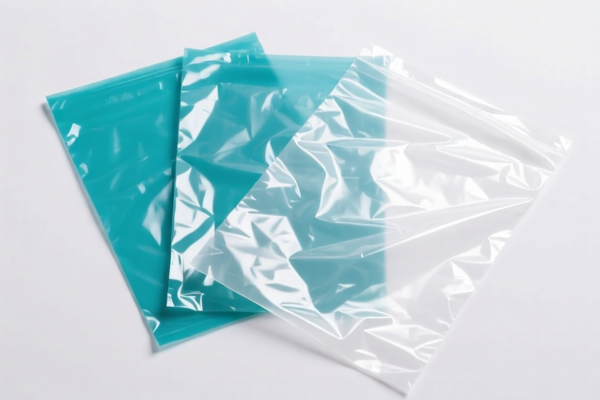
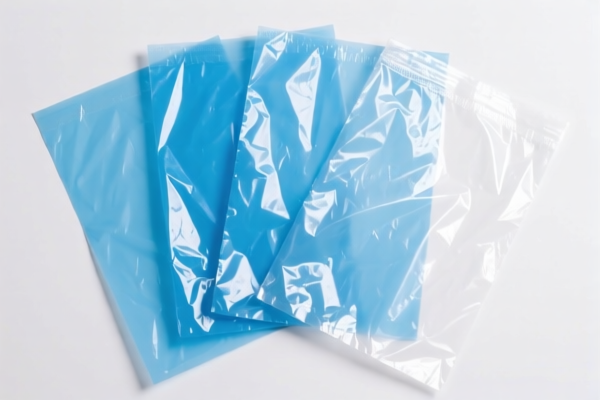
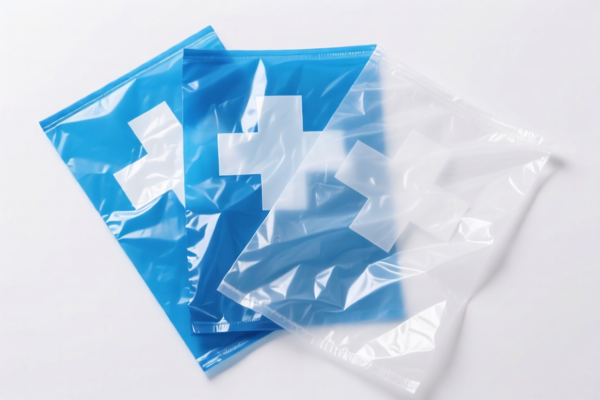
AI Analysis
📦 Pharmaceutical Packaging Sheets (Area > 1 sq meter)
🌐 HS Code Reference & Customs Clearance Guide | 2026 Latest Tariff Analysis | Professional Compliance Strategy
📌 I. Product Definition and Classification: Do You Really Understand "Pharmaceutical Packaging Sheets"?
Pharmaceutical packaging sheets, particularly those with an area exceeding 1 square meter, are typically rigid or semi-rigid plastic containers used for bulk storage, transit, or industrial-scale pharmaceutical packaging. In international trade, the classification depends heavily on the material, specific function, and form factor.
Key Distinction:
- If the item is a box, case, crate, or similar article made of plastics, it generally falls under Heading 3923.10.
- If the item is a general article for conveyance or packing that doesn’t fit the specific "box/crate" definition, it may fall under Heading 3923.90.
⚠️ Critical Classification Point:
- Large sheets (>1 sq meter) often qualify as "articles for conveyance or packing" but must be evaluated against the specific subheading for "Boxes, cases, crates."
- If the sheet is folded or assembled into a container structure, it is more likely classified as a Box/Crate (3923.10).
- If it is a loose sheet, blister pack backing, or general packaging material not forming a rigid box, it may fall under Other (3923.90).
- Note: The provided<DATA>specifically lists two codes under 3923.90 and 3923.10 with identical tax rates, suggesting the distinction is technical but the fiscal impact is currently uniform under the specified trade conditions.
📦 II. HS Code Classification Details (2026 Latest Tariff Authority Comparison)
| HS Code | Product Description | Applicable Scenario | Structure/Form |
|---|---|---|---|
3923.90.00.80 |
Articles for the conveyance or packing of goods, of plastics; stoppers, lids, caps and other closures, of plastics: Other | General plastic packaging sheets, blister pack backs, non-rigid packaging components not classified as boxes | ✅ General Article |
3923.10.90.00 |
Articles for the conveyance or packing of goods, of plastics; Boxes, cases, crates and similar articles: Other | Large plastic crates, tubs, or box-like structures formed from sheets >1 sq meter | ✅ Box/Crate Structure |
🔍 Key Reminder:
- The primary difference lies in whether the product is considered a "Box/Crate" (3923.10) or a "General Article" (3923.90).
- For sheets >1 sq meter, if they are pre-formed into containers (e.g., large tubs, crates), 3923.10.90.00 is preferred.
- If they are flat sheets, rolls, or blister packs used as packaging material, 3923.90.00.80 is more appropriate.
💰 III. 2026 Latest Tariff Rate Details (Including Additional Taxes & Policy Add-ons)
✅ Applicable Country: USA (US)
✅ Origin: China (CN)
✅ Effective Date: 2025-11-10 onwards (including subsequent imports)
🎯 1. 3923.90.00.80 – Articles for Conveyance or Packing of Goods (Plastics): Other
| Item | Content |
|---|---|
| Base Tariff Rate | 3.0% (ad valorem) |
| Additional Tariff (Section 301) | +25.0% (from USITC Footnote) |
| Total Tax Rate | 28.0% |
| Tax Calculation | CIF Value × 28% |
| De Minimis Exemption | ❌ Not Eligible (for Section 301 goods) |
| Legal Basis Path | USITC:3923.90.00.80 → FOOTNOTE:301 |
📌 Explanation:
- "Base Tariff 3%" is the standard MFN (Most Favored Nation) rate for plastic packing articles.
- "Additional Tariff 25%" is the Section 301 tariff applied to Chinese-origin goods in this category.
- Total 28% is significant. For large-volume shipments, this cost must be factored into pricing strategies.
🎯 2. 3923.10.90.00 – Boxes, Cases, Crates (Plastics): Other
| Item | Content |
|---|---|
| Base Tariff Rate | 3.0% (ad valorem) |
| Additional Tariff (Section 301) | +25.0% |
| Total Tax Rate | 28.0% |
| Tax Calculation | CIF Value × 28% |
| De Minimis Exemption | ❌ Not Eligible |
| Legal Basis Path | USITC:3923.10.90.00 → FOOTNOTE:301 |
📌 Note:
- Identical tax structure to the above.
- Whether classified as "Boxes" or "Other," the fiscal burden is the same under current US-China trade rules.
- Classification accuracy is still critical for compliance, audit risks, and potential future rate changes.
🛠️ IV. Customs Clearance Practical Advice (Actionable Pitfall Avoidance Guide)
✅ 1. Required Documentation Checklist (Mandatory)
| Document | Required? | Explanation |
|---|---|---|
| ✅ Product Specification Sheet | ✔️ | Must detail dimensions, material (e.g., PP, PET, PE), and whether it forms a box or sheet |
| ✅ Commercial Invoice | ✔️ | Clearly state: "Plastic Pharmaceutical Packaging Sheets/Crates" |
| ✅ Packing List | ✔️ | Specify quantity, gross/net weight, and package dimensions |
| ✅ Certificate of Origin (CO) | ✔️ | Required for origin verification (China-origin goods face 28% tax) |
| ✅ FDA/Pharmaceutical Compliance Doc | ✔️ | If intended for direct drug contact, prove compliance with FDA 21 CFR Part 211 |
| ✅ Material Safety Data Sheet (MSDS) | ✔️ | If plastics are considered hazardous or have specific handling requirements |
✅ 2. Declaration Tips (Key Mnemonics)
🔥 “Material Matters, Structure Defines, Origin Dictates Tax!”
| Scenario | Correct Declaration | Incorrect Practice |
|---|---|---|
| Large plastic tubs/crates for pharma bulk storage | 3923.10.90.00 (Boxes/Crates) |
Misdeclare as "Other" → Audit risk |
| Flat blister pack sheets or backing cards | 3923.90.00.80 (Other Articles) |
Misdeclare as "Boxes" → Classification error |
| Rolls of plastic film for packaging | Check Heading 3920/3921 (not in provided data) | Do not force into 3923 if it’s film |
| Used or recycled plastic containers | May require additional phytosanitary/compliance docs | Assume same as new |
✅ 3. Special Case Handling
| Scenario | Handling Advice |
|---|---|
| Direct Drug Contact | Ensure materials are pharmaceutical-grade (e.g., USP Class VI). Provide FDA compliance statement. |
| Custom-Shape Sheets | If cut into specific shapes but not assembled into boxes, classify under 3923.90.00.80. |
| Mixed Packaging | If shipped with boxes and sheets, declare separately if possible to avoid misclassification. |
| Re-Export | If transiting through a third country, ensure Certificate of Origin remains valid for China-origin goods. |
🌍 V. Global Main Market Clearance Comparison (2026 Latest)
| Country/Region | Recommended HS Code | Tariff (China-Origin) | Certification Requirements | Notes |
|---|---|---|---|---|
| 🇺🇸 USA | 3923.10.90.00 or 3923.90.00.80 |
28% (3% base + 25% Section 301) | FDA Compliance (if direct contact) | Highest tariff burden |
| 🇪🇺 EU | 3923.90 or 3923.10 |
0% - 3% (depends on exact subheading) | REACH, FDA equivalent | No Section 301 |
| 🇨🇳 China | 3923.90 or 3923.10 |
0% - 3% (varies) | None for export | Low tariff |
| 🇯🇵 Japan | 3923.90 or 3923.10 |
0% - 3% | PMDA compliance | Moderate cost |
| 🇬🇧 UK | 3923.90 or 3923.10 |
0% - 3% | UKCA marking | Post-Brexit rules apply |
📌 Conclusion:
- USA imposes the highest effective tariff (28%) on Chinese-origin plastic packaging under current Section 301 rules.
- EU, Japan, and UK have significantly lower or zero tariffs for similar goods.
- Cost Optimization: Consider supply chain diversification (e.g., sourcing from Vietnam or Thailand) to avoid Section 301 tariffs if targeting the US market.
📌 VI. Common Errors & Pitfall Avoidance Guide (Lessons Learned)
❌ Error 1: Misclassifying blister packs as "boxes"
👉 Consequence: Audit risk, potential back taxes. Blister packs are generally "other articles" (3923.90).
❌ Error 2: Ignoring Section 301 tariffs
👉 Consequence: Unexpected 25% additional tax → Profit margin erosion.
❌ Error 3: Failing to declare pharmaceutical compliance
👉 Consequence: FDA hold, shipment delay, or destruction if materials are not food/drug-grade.
❌ Error 4: Using vague descriptions like "plastic sheets"
👉 Consequence: Customs may classify under a higher duty rate or request additional documentation.
✅ Correct Approach:
"Pharmaceutical Grade Plastic Blister Pack Sheets, PET Material, Non-Box Form, FDA Compliant, Origin China"
🎯 VII. Conclusion: Precise Classification Saves Money and Time!
🎯 Key Takeaways:
🔹 "Structure Defines HS Code: Boxes vs. Other."
🔹 "China Origin + Plastic Packing = 28% Total Tax in USA."
🔹 "Pharma Grade Compliance is Non-Negotiable."
📌 Pro Tip:
If you are exporting large plastic packaging sheets (>1 sq meter) to the USA, calculate the 28% tax burden in your pricing model.
For long-term supply chain stability, consider pre-clearance rulings or supply chain restructuring to mitigate Section 301 risks.
📣 Immediate Action:
📞 Consult with a licensed customs broker to verify HS Code classification.
📄 Ensure all FDA compliance documents are ready for inspection.
🚀 Optimize your supply chain to avoid tariff shocks!
✨ Professional Clearance, Starting with Accurate Classification!
💼 Every Percent of Tax Saved is Pure Profit!
Customer Reviews
About HS Code Classification
The Harmonized System (HS) is an internationally standardized nomenclature developed by the World Customs Organization (WCO) to classify traded products. Over 200 countries use the HS system as the basis for customs tariffs, trade statistics, and import/export regulations.
Each HS code follows a hierarchical structure:
- Chapter (2 digits) — Broad category of goods (e.g., Chapter 84: Machinery and Mechanical Appliances)
- Heading (4 digits) — More specific grouping within the chapter
- Subheading (6 digits) — Internationally standardized breakdown, used by all WCO member countries
- National subdivisions (8-10 digits) — Country-specific extensions for further classification, such as US HTSUS 10-digit codes
Correct HS code classification is essential for smooth customs clearance, accurate duty payment, and compliance with trade regulations. Misclassification can lead to customs delays, overpayment of duties, or penalties.
When importing from CN to US, the applicable tariff rates may include:
- Most-Favored-Nation (MFN) rate — The standard duty rate applied to WTO members
- General rate — Applied to countries without trade agreements
- Trade remedy duties — Additional tariffs such as Section 301 (anti-dumping), Section 232 (national security), or countervailing duties
The information provided on this page is for reference purposes only. For official classification, please consult with your local customs authority or a licensed customs broker.