phosphate ester premix for casting
CN → US| HS编码 | 关税税率 | 原产国 | 目的国 | 文档 |
|---|---|---|---|---|
| 3824999361 | 40.0% | CN | US | 官方文档 |
| 3824999397 | 40.0% | CN | US | 官方文档 |
| 2505900000 | 35.0% | CN | US | 官方文档 |
| 3824100000 | 41.0% | CN | US | 官方文档 |
| 3824999361 | 40.0% | CN | US | 官方文档 |
商品图片


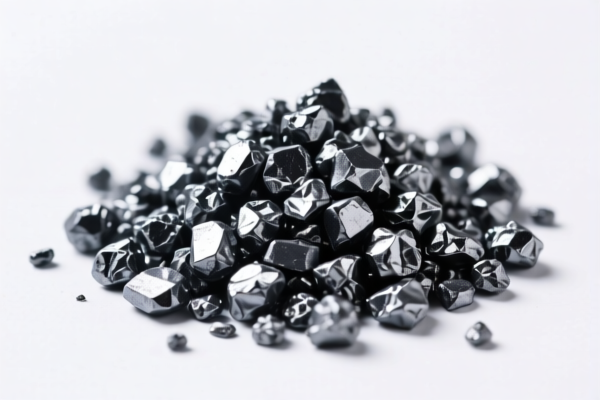
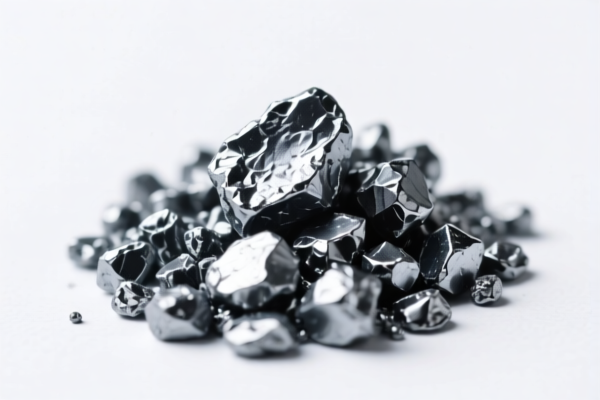
AI分析
🏭 Phosphate Ester Premix for Casting (Metallurgical Chemicals)
🌐 HS Code Reference & Customs Clearance Guide | 2026 Latest Tariff Analysis | Professional通关 Strategy
📌 I. Product Definition & Classification: What Exactly is "Phosphate Ester Premix"?
Phosphate Ester Premix is a specialized chemical formulation used in metal casting processes, primarily as a binding agent or additive in foundry sands. It contains phosphorus atoms and serves as a core part of the "chemical products and preparations" category. In international trade, its classification depends heavily on its physical form, chemical composition, and specific application within the casting process.
⚠️ Key Distinction Point:
- If the product is a chemically synthesized phosphate ester mixture intended as a binder/adhesive → Classified under Chapter 38 (Chemical Products).
- If the product is primarily natural sand mixed with binders → Can sometimes be misclassified or debated, but strict chemical formulations fall under Ch. 38.
- Critical Note: The presence of "Phosphate Ester" strongly points to chemical preparation, NOT raw mineral sand.
📦 II. HS Code Classification Details (2026 Latest Tariff Authority Comparison)
| HS Code | Product Description | Application Scenario | Material Conflict? |
|---|---|---|---|
3824.99.93.61 |
Phosphate Ester Premix for Casting, containing P atoms. Belongs to chemical products/preparations. Matches "Catch-all" category for chemicals. | Core binder in metal casting; highly specific chemical mix. | ❌ No conflict. |
3824.99.93.97 |
Metal Casting Phosphate Ester Premix. Belongs to chemical preparations. Fits the form of chemical products/preparations with no obvious material conflict. | General chemical binder for foundry sands. | ❌ No conflict. |
2505.90.00.00 |
Casting Premixed Sand. Fits natural sand material attributes. Belongs to "Other Natural Sand" catch-all category. | Risk: If declared as simple sand, but contains significant chemical ester. | ⚠️ Potential Conflict if chemical content is high. |
3824.10.00.00 |
Casting Premixed Sand. Fits "Modifying Binding Agents / Molding Sands" use. Premixed sand contains binding agent components. | Foundry sands pre-mixed with binders. | ✅ Yes, if it's a binder mixture. |
🔍 Key Reminder:
- "Phosphate Ester" implies a chemical synthesis. Therefore, Chapter 38 (Miscellaneous Chemical Products) is the most accurate classification.
- Chapter 25 (Salt; Sulphur; Earths and Stone) is generally for raw, unprocessed minerals. If your product is a "Premix" containing esters, it is a preparation, not raw sand.
- Avoid Classifying under 2505 unless it is strictly natural sand without significant chemical processing. The presence of "Ester" makes this risky.
💰 III. 2026 Latest Tariff Rate Breakdown (Including Surcharges, Policy Add-ons)
✅ Applicable Country: United States (US)
✅ Origin: China (CN)
✅ Effective Date: 2025 November 10 onwards (including subsequent imports)
🎯 1. 3824.99.93.61 —— Phosphate Ester Premix (Chemical Preparation)
| Item | Content |
|---|---|
| Base Tariff | 5.0% (Ad Valorem) |
| Section 301 Surcharge | +25.0% (Under US Trade Law Section 301) |
| 122 Clause Surcharge | +10.0% (Specific provision for certain chemical products) |
| Total Tariff Rate | 40.0% |
| Tax Calculation | CIF Value × 40% |
| De Minimis Exemption | ❌ Not Eligible (High value chemical imports usually exceed thresholds or are excluded) |
| Legal Basis Path | HTSUS:3824.99.93.61 → Section 301: Footnote 9903.88.01 → 122 Clause: Specific Chemical Provision |
📌 Explanation:
- "Base Tariff 5%": Standard duty for miscellaneous chemical preparations.
- "+25% Section 301": Major trade war tariff on Chinese chemical inputs.
- "+10% 122 Clause": Additional duty targeting specific industrial chemical additives.
- Total 40%: This is a high-cost item. Precise declaration of "Phosphate Ester" is crucial to avoid being classified under a higher, unspecified code.
🎯 2. 3824.99.93.97 —— Other Chemical Preparations for Casting
| Item | Content |
|---|---|
| Base Tariff | 5.0% |
| Section 301 Surcharge | +25.0% |
| 122 Clause Surcharge | +10.0% |
| Total Tariff Rate | 40.0% |
| Tax Calculation | CIF Value × 40% |
| De Minimis Exemption | ❌ Not Eligible |
| Legal Basis Path | HTSUS:3824.99.93.97 → Section 301 → 122 Clause |
📌 Note:
- This is the "catch-all" for chemical preparations not elsewhere specified.
- If your product doesn't fit the specific "Phosphate Ester" definition of 3824.99.93.61, this is the fallback.
- Same 40% rate. The distinction between 61 and 97 is technical and depends on the exact chemical formula submitted to customs.
🎯 3. 3824.10.00.00 —— Molding Sands / Binding Agents
| Item | Content |
|---|---|
| Base Tariff | 6.0% |
| Section 301 Surcharge | +25.0% |
| 122 Clause Surcharge | +10.0% |
| Total Tariff Rate | 41.0% |
| Tax Calculation | CIF Value × 41% |
| De Minimis Exemption | ❌ Not Eligible |
| Legal Basis Path | HTSUS:3824.10.00.00 → Section 301 → 122 Clause |
📌 Warning:
- If declared as "Premixed Sand for Casting" focusing on the sand/binder mixture aspect rather than the pure chemical ester, it may fall here.
- Higher Base Rate (6% vs 5%) makes this slightly more expensive than the pure chemical premix.
- Risk: Customs may challenge this if the product is >50% chemical by weight, forcing a reclassification to 3824.99.93.x.
🎯 4. 2505.90.00.00 —— Other Natural Sand (Risky Classification)
| Item | Content |
|---|---|
| Base Tariff | 0.0% |
| Section 301 Surcharge | +25.0% |
| 122 Clause Surcharge | +10.0% |
| Total Tariff Rate | 35.0% |
| Tax Calculation | CIF Value × 35% |
| De Minimis Exemption | ❌ Not Eligible (Generally, chemical mixtures are excluded from raw mineral duties) |
| Legal Basis Path | HTSUS:2505.90.00.00 → Section 301 → 122 Clause |
📌 Critical Analysis:
- Lowest Total Rate (35%).
- High Risk: Classifying a Phosphate Ester Premix as "Natural Sand" is likely incorrect because esters are chemically synthesized, not naturally occurring.
- Consequence: If audited, customs may reassess to Chapter 38 (40-41%), leading to back taxes, penalties, and interest.
- Recommendation: Only use this if the product is >95% natural sand with negligible chemical additives. For "Premix" chemicals, stick to Chapter 38.
🛠️ IV. Customs Clearance Practical Advice (Avoid Pitfalls)
✅ 1. Required Documentation Checklist (All Mandatory)
| Document | Must Provide | Description |
|---|---|---|
| ✅ MSDS (Safety Data Sheet) | ✔️ | Critical. Must clearly list "Phosphate Ester" and chemical composition. Proves it's a chemical, not raw sand. |
| ✅ Technical Data Sheet | ✔️ | Details the mixing ratio, application in casting, and function as a binder. |
| ✅ Product Photo | ✔️ | Show packaging, label, and substance appearance (liquid/paste vs granular sand). |
| ✅ Commercial Invoice | ✔️ | Clearly state "Phosphate Ester Premix for Metal Casting", NOT just "Sand" or "Chemical". |
| ✅ Certificate of Origin (CO) | ✔️ | Required for China origin verification. |
| ✅ Packing List | ✔️ | Detail net/gross weight. |
✅ 2. Declaration Tips (Key Mantra)
🔥 "Declare as Chemical, Not Sand; Ester Content Defines the Code!"
| Situation | Correct Declaration | Wrong Practice |
|---|---|---|
| Product is a liquid/paste binder | 3824.99.93.61 (Phosphate Ester Premix) |
Calling it "Sand" → Risk of 2505 classification error |
| Product is pre-mixed with sand | 3824.10.00.00 (Molding Sand Binder) |
Claiming it's "Raw Natural Sand" → Audit risk |
| High Phosphorus Content | Emphasize "P-Atom" in description | Vague "Casting Additive" → Delays |
| Low Chemical Content (<5%) | Consider 2505.90.00.00 with caution |
Over-declaring chemical content if not present |
✅ 3. Special Case Handling
| Scenario | Advice |
|---|---|
| OEM Custom Mix | Provide supplier's chemical formula. If it contains phosphoric acid derivatives, it's Chapter 38. |
| Solid Granules vs Liquid | Liquid/Paste: Strongly Chapter 38. Granules: Ensure they are chemically treated, not just natural grains. |
| Dispute with CBP | If CBP insists on 2505, provide MSDS proving the presence of synthesized esters. Argue under GRI 3(b) for mixtures of essential character. |
| Voluntary Disclosure | If previously misclassified as 2505, consider voluntary disclosure to mitigate penalties, shifting to 3824 with 40% rate. |
🌍 V. Global Main Market Customs Comparison (2026 Latest)
| Country/Region | Recommended HS Code | Tariff Rate (China Origin) | Certification Required | Note |
|---|---|---|---|---|
| 🇺🇸 USA | 3824.99.93.61 |
40% | TSCA (Toxic Substances Control Act) | High tariff, strict chemical compliance. |
| 🇨🇳 China | 3824.99.93.61 |
~5-10% | N/A | Lower import duty, but export controls may apply. |
| 🇪🇺 EU | 3824.99.93.61 |
~5.0% | REACH Registration | REACH compliance is critical for phosphates. |
| 🇲🇽 Mexico | 3824.99.93.61 |
~0-5% | N/A | USMCA may offer duty-free if rules of origin met. |
| 🇻🇳 Vietnam | 3824.99.93.61 |
~5-10% | N/A | Potential for lower tariffs if re-exported. |
📌 Conclusion:
- USA has the highest burden due to Section 301 (25%) + 122 Clause (10%).
- EU requires REACH registration for phosphates, which is a significant non-tariff barrier.
- Avoid Classifying as Natural Sand (2505) in the US to prevent severe penalties.
📌 VI. Common Errors & Pitfalls Guide (Lessons Learned)
❌ Error 1: Declaring "Phosphate Ester Premix" as "Natural Sand" to save 5%
👉 Consequence: Customs audit → Reclassification to 3824 → Back taxes + 10-20% penalty.
👉 Reality: You save 5% initially but risk 40%+ in penalties. Not worth it.
❌ Error 2: Omitting "Phosphate" from the description
👉 Consequence: Ambiguity → CBP asks for more info → Shipment delayed at port.
👉 Fix: Always include chemical family name in commercial invoice.
❌ Error 3: Ignoring REACH (EU) or TSCA (US) compliance
👉 Consequence: Goods seized or destroyed if not registered.
👉 Fix: Ensure supplier has compliance certificates before shipping.
✅ Correct Declaration Example:
"Phosphate Ester Premix for Metal Casting, Liquid Form, Chemical Binder, Contains Phosphorus Atoms, Model XYZ, MSDS Attached, US TSCA Compliant"
🎯 VII. Conclusion: Professional Declaration Saves Money!
🎯 Remember the Mantra:
🔹 "Chemical Nature, Chemical Code; Sand Code is a Trap!"
🔹 "40% is High, But 40% + Penalty is Higher!"
📌 Pro Tip:
If your company imports large volumes, consider applying for a Binding Tariff Information (BTI) or US CBP Advance Ruling. This legally binds the customs authority to your classification, protecting you from future audits.
📣 Immediate Action:
📞 Contact your freight forwarder with the MSDS and Technical Data Sheet.
🚀 Declare as 3824.99.93.61 to ensure compliance and avoid reclassification risks.
✨ Professional Customs Clearance Starts with Accurate Classification!
💼 Every percentage point matters in the chemical trade!
用户评价
关于 HS 编码归类
协调制度(HS)是由世界海关组织(WCO)制定的国际贸易商品分类标准。全球 200 多个国家采用 HS 系统作为海关关税、贸易统计和进出口监管的基础。
每个 HS 编码遵循以下层级结构:
- 章(2 位)——商品大类(例如:第 84 章:机器和机械设备)
- 品目(4 位)——章内的更具体分类
- 子目(6 位)——国际通用细分,所有 WCO 成员国统一使用
- 本国细分(8-10 位)——各国自行扩展的细分编码,如美国 HTSUS 10 位编码
正确的 HS 编码归类对于顺利通关、准确缴纳关税和遵守贸易法规至关重要。错误归类可能导致海关延误、多缴关税或罚款。
从CN进口到US时,适用的关税税率可能包括:
- 最惠国(MFN)税率——适用于 WTO 成员国的标准关税税率
- 普通税率——适用于无贸易协定国家
- 贸易救济关税——附加关税,如 301 条款(反倾销)、232 条款(国家安全)或反补贴税
本页内容仅供参考。如需正式归类,请咨询当地海关或持牌报关代理。