plastic baby food container
CN → US商品图片
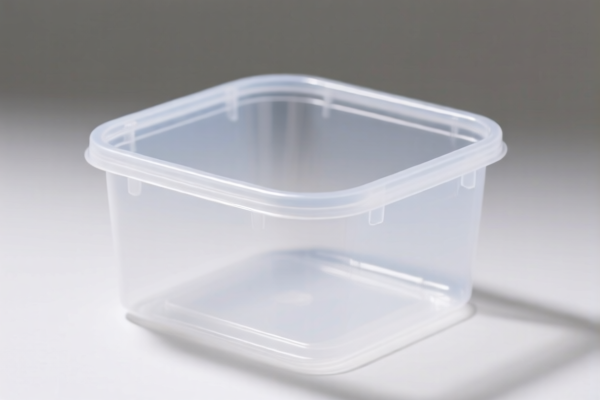
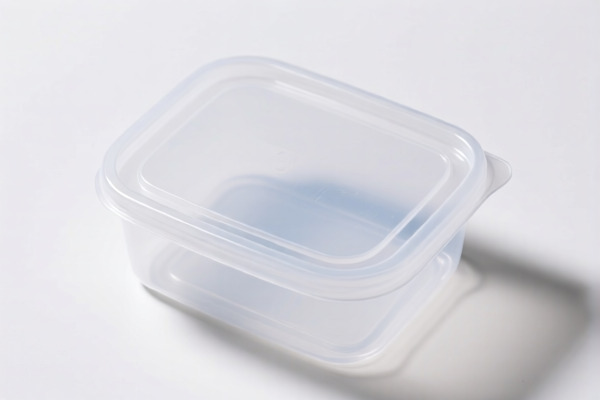
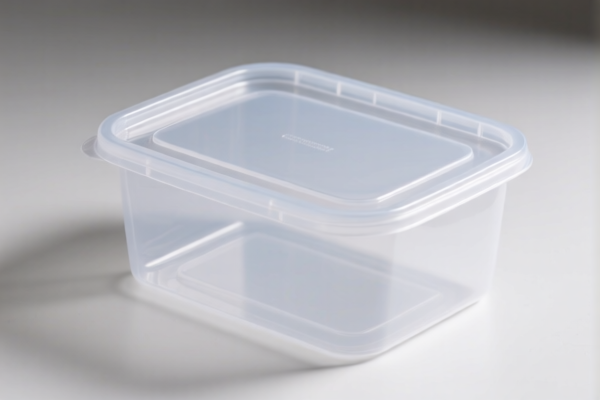
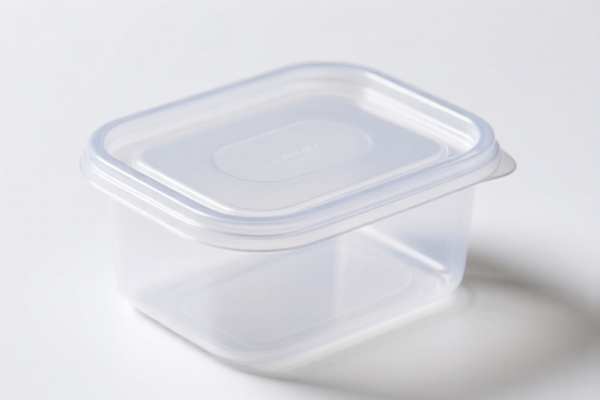
AI分析
🍼 Plastic Baby Food Container (Storage & Feeding Solutions)
🌐 HS Code Reference & Clearance Guide | 2026 Latest Tariff Analysis | Professional Customs Strategy
📌 I. Product Definition & Classification: Are You Sure It’s Just “Plastic”?
Plastic Baby Food Containers are ubiquitous in global infant care. However, in international trade, they are strictly differentiated based on their primary function and design:
- Food Storage Containers (Plastic): Rigid or semi-rigid containers used for storing prepared food. These are treated as general plastic articles.
- Bottles & Teats (Plastic): Specifically designed for feeding infants (bottles with nipples/teats). These fall under a completely different HS chapter.
⚠️ Critical Distinction Point:
- If the item is a container with a lid (no nipple/teat) for storing food → Chapter 39
- If the item is a bottle with a nipple/teat for feeding → Chapter 40 or Chapter 90 (if specialized) or Chapter 39 (if plastic bottle only)
- Note: Pure plastic feeding bottles (without rubber nipples) often fall under 3924, while bottles with rubber teats may fall under 4010 or 9018 depending on material composition and specific country rules. We will focus on the most common "Plastic Container" interpretation (Storage) and the "Plastic Feeding Bottle" interpretation.
📦 II. HS Code Classification Details (2026 Latest Tariff Authority Comparison)
| HS Code | Product Description | Application Scenario | Key Feature |
|---|---|---|---|
3924.10.00.00 |
Tableware & Kitchenware, of Plastics: Plates, Cups, etc. | Plastic Storage Containers with lids (no feeding nozzle) | ✅ Storage only |
3924.90.00.00 |
Other Tableware & Kitchenware, of Plastics | Non-standard shaped containers, silicone-plastic hybrids | ✅ General Kitchenware |
3926.90.98.00 |
Other Articles of Plastics | Loose lids, separate nipples (not attached), or complex molded parts | ✅ Parts/Accessories |
4010.39.00.00 |
Vulcanized Rubber Nipples (if separate) | Rubber/latex teats sold separately | ✅ Rubber Component |
9018.90.90.00 |
Instruments & Appliances for Medical Purposes | Specialized Medical feeding bottles for premature infants (with specific certifications) | ✅ Medical Device |
🔍 Key Reminder:
- Most common consumer plastic baby food containers (with lids, for storage) are classified under3924.10.00.00or3924.90.00.00.
- If the product includes a rubber nipple as an integral part, some countries may classify it under4010or9018, but plastic bottles with silicone nipples often stay in3924if the plastic body is the primary component. Check local customs rulings.
- Never misclassify as "Food Processing Machinery" (Chapter 84) – this is a common and costly error.
💰 III. 2026 Latest Tariff Rate Breakdown (Including Additional Duties & Policy Add-ons)
✅ Applicable Country: United States (US)
✅ Origin: China (CN)
✅ Effective Date: November 10, 2025 onwards (including subsequent imports)
🎯 1. 3924.10.00.00 – Tableware & Kitchenware, of Plastics: Plates, Cups, etc. (Most Common for Storage Containers)
| Item | Content |
|---|---|
| Base Rate | 3.4% (ad valorem) |
| USITC Additional Duty | +25% (from USITC Footnote 9903.88.01) |
| IEEPA Additional Duty | +10% (Targeting China/HK products, effective Nov 10, 2025) |
| Total Rate | 38.4% |
| Tax Calculation | CIF Value × 38.4% |
| De Minimis Eligibility | ❌ Denied (deny_de_minimis) |
| Legal Basis Path | IEEPA:9903.01.25 → IEEPA:9903.01.24 → USITC:3924.10.00.00 → FOOTNOTE:9903.88.01 |
📌 Explanation:
- "USITC Additional Duty 25%" comes from Section 301 of the Trade Act;
- "IEEPA 10%" is the new surcharge under the International Emergency Economic Powers Act for Chinese-origin goods;
- Total 38.4% is a very high tariff, making cost control critical!
🎯 2. 3924.90.00.00 – Other Tableware & Kitchenware, of Plastics (For Non-Standard Containers)
| Item | Content |
|---|---|
| Base Rate | 3.4% |
| USITC Additional Duty | +25% |
| IEEPA Additional Duty | +10% |
| Total Rate | 38.4% |
| Tax Calculation | CIF × 38.4% |
| De Minimis Eligibility | ❌ Denied |
| Legal Basis Path | IEEPA:9901.25 → IEEPA:9903.01.24 → USITC:3924.90.00.00 → FOOTNOTE:9903.88.01 |
📌 Note:
- Same tax rate as above; applies to silicone-plastic hybrids, unique shapes, or non-standard baby food storage.
- Even if marketed as "BPA-Free," "Eco-Friendly," or "Premium," the material composition (plastic) dictates the HS code, not the marketing claims.
🛠️ IV. Clearance Practical Advice (实战避坑指南)
✅ 1. Required Documentation Checklist (All Are Mandatory)
| Document | Mandatory? | Description |
|---|---|---|
| ✅ Product Specification Sheet | ✔️ | Material type (PP, PE, Silicone, etc.), BPA-free certification, FDA compliance statement |
| ✅ Material Safety Report | ✔️ | Proof of compliance with FDA 21 CFR 177.1520 (for plastics in contact with food) |
| ✅ Product Photos (With Labels) | ✔️ | Clear images showing the container, lid, and any safety warnings |
| ✅ Commercial Invoice | ✔️ | Must explicitly state "Plastic Baby Food Storage Container, BPA-Free" |
| ✅ Certificate of Origin (CO) | ✔️ | Essential for verifying origin; if from Vietnam/Mexico, may qualify for IEEPA exemption |
| ✅ Packing List | ✔️ | Detail quantity, weight, and packaging type |
✅ 2. Declaration Tips (Key Mnemonics)
🔥 "Material Defines Code, Lids Don’t Split, Name It Right, Tax Won’t Bite!"
| Situation | Correct Declaration | Wrong Practice |
|---|---|---|
| Plastic container with lid (for storage) | 3924.10.00.00 |
Misclassify as "Toys" → 0% but risk of seizure & penalty |
| Plastic container + Rubber Nipple (integrated) | Check local ruling; often 3924.90.00.00 or 4010.39.00.00 |
Declare as "Toy Bottle" → High risk |
| Silicone lid for glass jar | 3926.90.98.00 |
Declare as "Container" → Classification error |
| Bulk plastic pellets for manufacturing | 3902.10.00.00 |
Declare as "Finished Container" → Wrong chapter |
✅ 3. Special Cases Handling
| Situation | Handling Advice |
|---|---|
| OEM Custom Containers | Provide design files + customer order to prove custom nature; avoid being labeled "Standard Toy" |
| Containers with Silicone Parts | If silicone is >50% of weight, may fall under 4016.99 (Other Vulcanized Rubber Articles); check weight ratio |
| Medical-Grade Feeding Bottles | If intended for premature infants, provide FDA Class II exemption documentation; may qualify for 9018 |
| Export to EU/Canada | EU requires LFGB/Germany BfR compliance; Canada requires CFIA approval; ensure labels match destination requirements |
🌍 V. Global Major Market Clearance Comparison (2026 Latest)
| Country/Region | Recommended HS Code | Tariff (China Origin) | Certification Requirements | Notes |
|---|---|---|---|---|
| 🇺🇸 US | 3924.10.00.00 |
38.4% (3.4% base + 25% + 10%) | FDA + CPSIA (if toy-like) | High tariff due to Section 301 & IEEPA |
| 🇨🇳 China | 3924.10.00.00 |
5% | GB 4806 (Food Contact Material) | No additional duties |
| 🇪🇺 EU | 3924.10.00.00 |
0% | LFGB / REACH / FDA (if claiming US standard) | No additional duties |
| 🇨🇦 Canada | 3924.10.00.00 |
0% (under CUSMA) | CFIA Approval | Preferential if originating in NAFTA region |
| 🇦🇺 Australia | 3924.10.00.00 |
5% | SAA / FDA | No additional duties |
📌 Conclusion:
- USA is the only major market imposing significant additional tariffs on plastic baby food containers from China;
- EU and Canada offer zero-tariff access, making them more attractive for high-volume exports;
- Cost-Benefit Analysis: For US-bound shipments, consider transshipment via Vietnam/Mexico (if eligible for IEEPA exemption) to reduce tariffs to 0–5%.
📌 VI. Common Mistakes & Pitfalls (Blood & Tears Lessons)
❌ Mistake 1: Declaring plastic baby food containers as "Toys" (9503.00)
👉 Consequence: Customs suspects fraud; goods held for investigation; potential penalty + back taxes!
❌ Mistake 2: Ignoring FDA 21 CFR 177.1520 compliance
👉 Consequence: Shipment rejected at US border; destruction or return at exporter’s cost.
❌ Mistake 3: Splitting "Container" and "Lid" in declaration
👉 Consequence: Each item taxed separately; total tariff may exceed 50%; administrative delays.
❌ Mistake 4: Using "BPA-Free" as HS Code basis
👉 Consequence: HS Code is material-based, not feature-based; "BPA-Free" is a marketing claim, not a classification rule.
✅ Correct Practice:
"Plastic Baby Food Storage Container, BPA-Free, PP Material, with Silicone Lid, FDA Compliant, Model XYZ, Packaged in Retail Box"
🎯 VII. Conclusion: Precise Declaration, Save Time, Reduce Costs!
🎯 Remember Mnemonic:
🔹 "Plastic + Lid = 3924, No Split, FDA Proof is Key, 38.4% is the Fee!"
🔹 "HS Code Saves Money, Misclassification Costs Big, Clear Labels Avoid Stress!"
📌 Pro Tip:
If your plastic baby food containers are originating from Vietnam, Mexico, or Thailand, you may qualify for IEEPA Exemption, reducing tariffs to 0–5%.
Recommend applying for an Advance Ruling before shipment to avoid customs disputes.
📣 Immediate Action:
📞 Contact a Professional Customs Broker + Provide Product Images + Apply for HS Code Advance Ruling
🚀 Let Your Baby Food Containers, Clear Customs Smoothly, Export Efficiently, Profit Maximally!
✨ Professional Clearance Starts with Accurate Classification!
💼 Every Cent of Cost Deserves Precise Calculation!
用户评价
关于 HS 编码归类
协调制度(HS)是由世界海关组织(WCO)制定的国际贸易商品分类标准。全球 200 多个国家采用 HS 系统作为海关关税、贸易统计和进出口监管的基础。
每个 HS 编码遵循以下层级结构:
- 章(2 位)——商品大类(例如:第 84 章:机器和机械设备)
- 品目(4 位)——章内的更具体分类
- 子目(6 位)——国际通用细分,所有 WCO 成员国统一使用
- 本国细分(8-10 位)——各国自行扩展的细分编码,如美国 HTSUS 10 位编码
正确的 HS 编码归类对于顺利通关、准确缴纳关税和遵守贸易法规至关重要。错误归类可能导致海关延误、多缴关税或罚款。
从CN进口到US时,适用的关税税率可能包括:
- 最惠国(MFN)税率——适用于 WTO 成员国的标准关税税率
- 普通税率——适用于无贸易协定国家
- 贸易救济关税——附加关税,如 301 条款(反倾销)、232 条款(国家安全)或反补贴税
本页内容仅供参考。如需正式归类,请咨询当地海关或持牌报关代理。