plastic baby food container
CN → USProduct Images
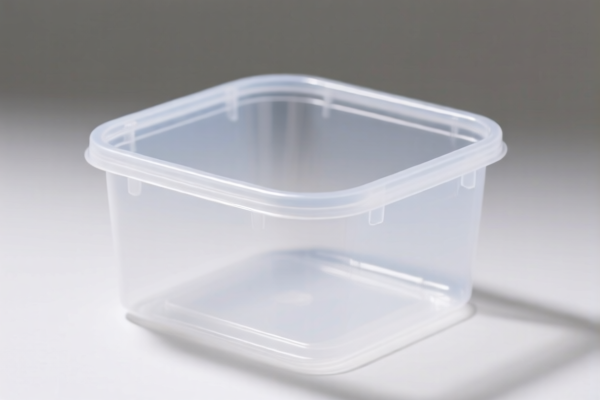
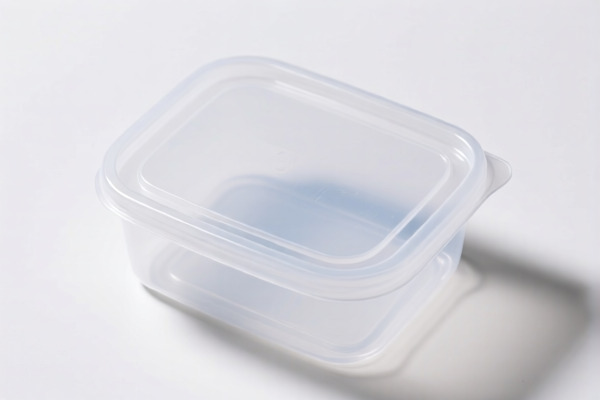
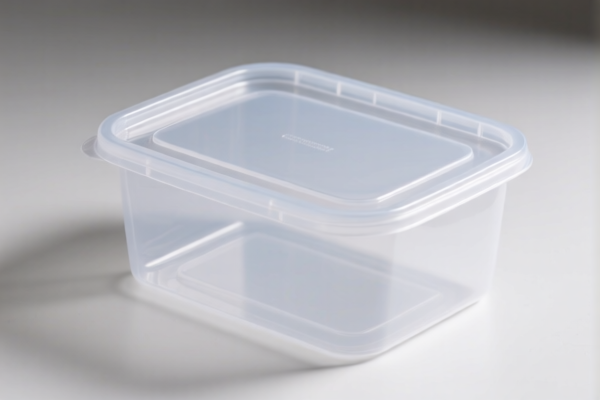
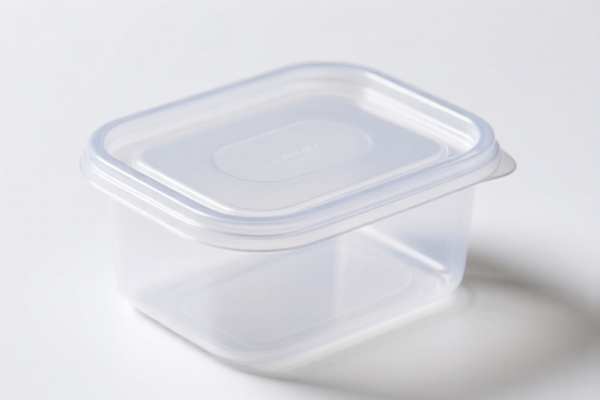
AI Analysis
🍼 Plastic Baby Food Container (Storage & Feeding Solutions)
🌐 HS Code Reference & Clearance Guide | 2026 Latest Tariff Analysis | Professional Customs Strategy
📌 I. Product Definition & Classification: Are You Sure It’s Just “Plastic”?
Plastic Baby Food Containers are ubiquitous in global infant care. However, in international trade, they are strictly differentiated based on their primary function and design:
- Food Storage Containers (Plastic): Rigid or semi-rigid containers used for storing prepared food. These are treated as general plastic articles.
- Bottles & Teats (Plastic): Specifically designed for feeding infants (bottles with nipples/teats). These fall under a completely different HS chapter.
⚠️ Critical Distinction Point:
- If the item is a container with a lid (no nipple/teat) for storing food → Chapter 39
- If the item is a bottle with a nipple/teat for feeding → Chapter 40 or Chapter 90 (if specialized) or Chapter 39 (if plastic bottle only)
- Note: Pure plastic feeding bottles (without rubber nipples) often fall under 3924, while bottles with rubber teats may fall under 4010 or 9018 depending on material composition and specific country rules. We will focus on the most common "Plastic Container" interpretation (Storage) and the "Plastic Feeding Bottle" interpretation.
📦 II. HS Code Classification Details (2026 Latest Tariff Authority Comparison)
| HS Code | Product Description | Application Scenario | Key Feature |
|---|---|---|---|
3924.10.00.00 |
Tableware & Kitchenware, of Plastics: Plates, Cups, etc. | Plastic Storage Containers with lids (no feeding nozzle) | ✅ Storage only |
3924.90.00.00 |
Other Tableware & Kitchenware, of Plastics | Non-standard shaped containers, silicone-plastic hybrids | ✅ General Kitchenware |
3926.90.98.00 |
Other Articles of Plastics | Loose lids, separate nipples (not attached), or complex molded parts | ✅ Parts/Accessories |
4010.39.00.00 |
Vulcanized Rubber Nipples (if separate) | Rubber/latex teats sold separately | ✅ Rubber Component |
9018.90.90.00 |
Instruments & Appliances for Medical Purposes | Specialized Medical feeding bottles for premature infants (with specific certifications) | ✅ Medical Device |
🔍 Key Reminder:
- Most common consumer plastic baby food containers (with lids, for storage) are classified under3924.10.00.00or3924.90.00.00.
- If the product includes a rubber nipple as an integral part, some countries may classify it under4010or9018, but plastic bottles with silicone nipples often stay in3924if the plastic body is the primary component. Check local customs rulings.
- Never misclassify as "Food Processing Machinery" (Chapter 84) – this is a common and costly error.
💰 III. 2026 Latest Tariff Rate Breakdown (Including Additional Duties & Policy Add-ons)
✅ Applicable Country: United States (US)
✅ Origin: China (CN)
✅ Effective Date: November 10, 2025 onwards (including subsequent imports)
🎯 1. 3924.10.00.00 – Tableware & Kitchenware, of Plastics: Plates, Cups, etc. (Most Common for Storage Containers)
| Item | Content |
|---|---|
| Base Rate | 3.4% (ad valorem) |
| USITC Additional Duty | +25% (from USITC Footnote 9903.88.01) |
| IEEPA Additional Duty | +10% (Targeting China/HK products, effective Nov 10, 2025) |
| Total Rate | 38.4% |
| Tax Calculation | CIF Value × 38.4% |
| De Minimis Eligibility | ❌ Denied (deny_de_minimis) |
| Legal Basis Path | IEEPA:9903.01.25 → IEEPA:9903.01.24 → USITC:3924.10.00.00 → FOOTNOTE:9903.88.01 |
📌 Explanation:
- "USITC Additional Duty 25%" comes from Section 301 of the Trade Act;
- "IEEPA 10%" is the new surcharge under the International Emergency Economic Powers Act for Chinese-origin goods;
- Total 38.4% is a very high tariff, making cost control critical!
🎯 2. 3924.90.00.00 – Other Tableware & Kitchenware, of Plastics (For Non-Standard Containers)
| Item | Content |
|---|---|
| Base Rate | 3.4% |
| USITC Additional Duty | +25% |
| IEEPA Additional Duty | +10% |
| Total Rate | 38.4% |
| Tax Calculation | CIF × 38.4% |
| De Minimis Eligibility | ❌ Denied |
| Legal Basis Path | IEEPA:9901.25 → IEEPA:9903.01.24 → USITC:3924.90.00.00 → FOOTNOTE:9903.88.01 |
📌 Note:
- Same tax rate as above; applies to silicone-plastic hybrids, unique shapes, or non-standard baby food storage.
- Even if marketed as "BPA-Free," "Eco-Friendly," or "Premium," the material composition (plastic) dictates the HS code, not the marketing claims.
🛠️ IV. Clearance Practical Advice (实战避坑指南)
✅ 1. Required Documentation Checklist (All Are Mandatory)
| Document | Mandatory? | Description |
|---|---|---|
| ✅ Product Specification Sheet | ✔️ | Material type (PP, PE, Silicone, etc.), BPA-free certification, FDA compliance statement |
| ✅ Material Safety Report | ✔️ | Proof of compliance with FDA 21 CFR 177.1520 (for plastics in contact with food) |
| ✅ Product Photos (With Labels) | ✔️ | Clear images showing the container, lid, and any safety warnings |
| ✅ Commercial Invoice | ✔️ | Must explicitly state "Plastic Baby Food Storage Container, BPA-Free" |
| ✅ Certificate of Origin (CO) | ✔️ | Essential for verifying origin; if from Vietnam/Mexico, may qualify for IEEPA exemption |
| ✅ Packing List | ✔️ | Detail quantity, weight, and packaging type |
✅ 2. Declaration Tips (Key Mnemonics)
🔥 "Material Defines Code, Lids Don’t Split, Name It Right, Tax Won’t Bite!"
| Situation | Correct Declaration | Wrong Practice |
|---|---|---|
| Plastic container with lid (for storage) | 3924.10.00.00 |
Misclassify as "Toys" → 0% but risk of seizure & penalty |
| Plastic container + Rubber Nipple (integrated) | Check local ruling; often 3924.90.00.00 or 4010.39.00.00 |
Declare as "Toy Bottle" → High risk |
| Silicone lid for glass jar | 3926.90.98.00 |
Declare as "Container" → Classification error |
| Bulk plastic pellets for manufacturing | 3902.10.00.00 |
Declare as "Finished Container" → Wrong chapter |
✅ 3. Special Cases Handling
| Situation | Handling Advice |
|---|---|
| OEM Custom Containers | Provide design files + customer order to prove custom nature; avoid being labeled "Standard Toy" |
| Containers with Silicone Parts | If silicone is >50% of weight, may fall under 4016.99 (Other Vulcanized Rubber Articles); check weight ratio |
| Medical-Grade Feeding Bottles | If intended for premature infants, provide FDA Class II exemption documentation; may qualify for 9018 |
| Export to EU/Canada | EU requires LFGB/Germany BfR compliance; Canada requires CFIA approval; ensure labels match destination requirements |
🌍 V. Global Major Market Clearance Comparison (2026 Latest)
| Country/Region | Recommended HS Code | Tariff (China Origin) | Certification Requirements | Notes |
|---|---|---|---|---|
| 🇺🇸 US | 3924.10.00.00 |
38.4% (3.4% base + 25% + 10%) | FDA + CPSIA (if toy-like) | High tariff due to Section 301 & IEEPA |
| 🇨🇳 China | 3924.10.00.00 |
5% | GB 4806 (Food Contact Material) | No additional duties |
| 🇪🇺 EU | 3924.10.00.00 |
0% | LFGB / REACH / FDA (if claiming US standard) | No additional duties |
| 🇨🇦 Canada | 3924.10.00.00 |
0% (under CUSMA) | CFIA Approval | Preferential if originating in NAFTA region |
| 🇦🇺 Australia | 3924.10.00.00 |
5% | SAA / FDA | No additional duties |
📌 Conclusion:
- USA is the only major market imposing significant additional tariffs on plastic baby food containers from China;
- EU and Canada offer zero-tariff access, making them more attractive for high-volume exports;
- Cost-Benefit Analysis: For US-bound shipments, consider transshipment via Vietnam/Mexico (if eligible for IEEPA exemption) to reduce tariffs to 0–5%.
📌 VI. Common Mistakes & Pitfalls (Blood & Tears Lessons)
❌ Mistake 1: Declaring plastic baby food containers as "Toys" (9503.00)
👉 Consequence: Customs suspects fraud; goods held for investigation; potential penalty + back taxes!
❌ Mistake 2: Ignoring FDA 21 CFR 177.1520 compliance
👉 Consequence: Shipment rejected at US border; destruction or return at exporter’s cost.
❌ Mistake 3: Splitting "Container" and "Lid" in declaration
👉 Consequence: Each item taxed separately; total tariff may exceed 50%; administrative delays.
❌ Mistake 4: Using "BPA-Free" as HS Code basis
👉 Consequence: HS Code is material-based, not feature-based; "BPA-Free" is a marketing claim, not a classification rule.
✅ Correct Practice:
"Plastic Baby Food Storage Container, BPA-Free, PP Material, with Silicone Lid, FDA Compliant, Model XYZ, Packaged in Retail Box"
🎯 VII. Conclusion: Precise Declaration, Save Time, Reduce Costs!
🎯 Remember Mnemonic:
🔹 "Plastic + Lid = 3924, No Split, FDA Proof is Key, 38.4% is the Fee!"
🔹 "HS Code Saves Money, Misclassification Costs Big, Clear Labels Avoid Stress!"
📌 Pro Tip:
If your plastic baby food containers are originating from Vietnam, Mexico, or Thailand, you may qualify for IEEPA Exemption, reducing tariffs to 0–5%.
Recommend applying for an Advance Ruling before shipment to avoid customs disputes.
📣 Immediate Action:
📞 Contact a Professional Customs Broker + Provide Product Images + Apply for HS Code Advance Ruling
🚀 Let Your Baby Food Containers, Clear Customs Smoothly, Export Efficiently, Profit Maximally!
✨ Professional Clearance Starts with Accurate Classification!
💼 Every Cent of Cost Deserves Precise Calculation!
Customer Reviews
About HS Code Classification
The Harmonized System (HS) is an internationally standardized nomenclature developed by the World Customs Organization (WCO) to classify traded products. Over 200 countries use the HS system as the basis for customs tariffs, trade statistics, and import/export regulations.
Each HS code follows a hierarchical structure:
- Chapter (2 digits) — Broad category of goods (e.g., Chapter 84: Machinery and Mechanical Appliances)
- Heading (4 digits) — More specific grouping within the chapter
- Subheading (6 digits) — Internationally standardized breakdown, used by all WCO member countries
- National subdivisions (8-10 digits) — Country-specific extensions for further classification, such as US HTSUS 10-digit codes
Correct HS code classification is essential for smooth customs clearance, accurate duty payment, and compliance with trade regulations. Misclassification can lead to customs delays, overpayment of duties, or penalties.
When importing from CN to US, the applicable tariff rates may include:
- Most-Favored-Nation (MFN) rate — The standard duty rate applied to WTO members
- General rate — Applied to countries without trade agreements
- Trade remedy duties — Additional tariffs such as Section 301 (anti-dumping), Section 232 (national security), or countervailing duties
The information provided on this page is for reference purposes only. For official classification, please consult with your local customs authority or a licensed customs broker.