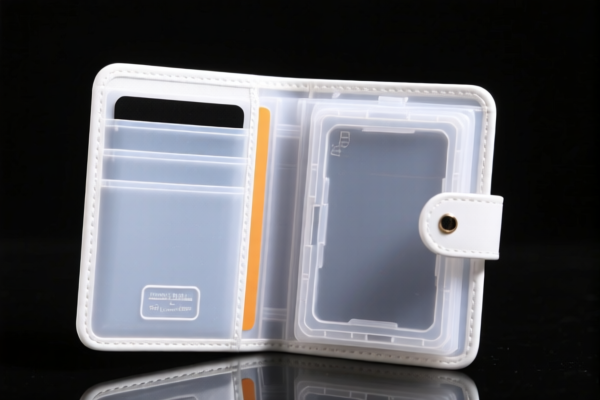
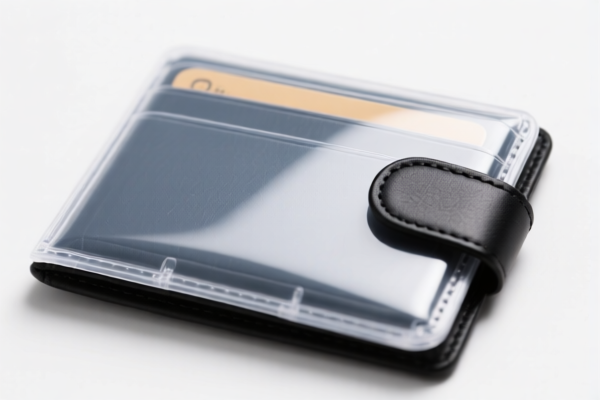
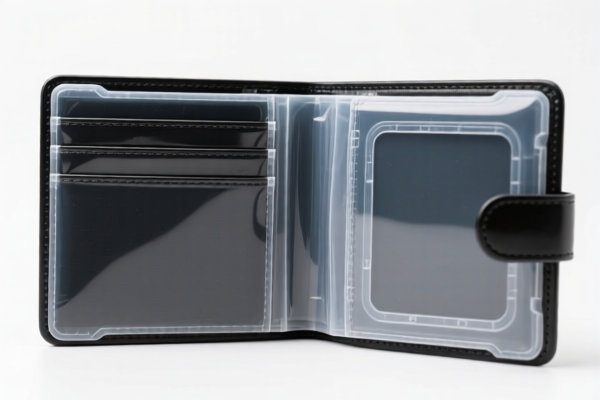
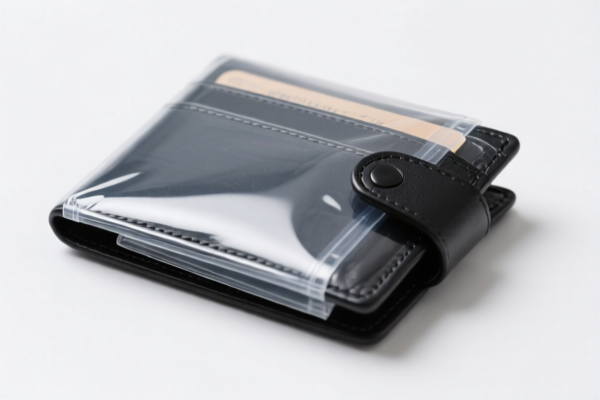
plastic outer surface multifunctional wallet
CN → US| HS编码 | 关税税率 | 原产国 | 目的国 | 文档 |
|---|---|---|---|---|
| 3923900080 | 38.0% | CN | US | 官方文档 |
| 3923109000 | 38.0% | CN | US | 官方文档 |
| 4202322000 | 55.0% | CN | US | 官方文档 |
| 4202321000 | 0.0% | CN | US | 官方文档 |
商品图片
AI分析
👛 Plastic Outer Surface Multifunctional Wallet: HS Code & Tax Breakdown
🌐 HS Code Reference & Customs Clearance Guide | 2026 Latest Tariff Analysis | Professional Compliance Strategy 📌 I. Product Definition & Classification: Is It a "Container" or a "Luggage Item"?
A Plastic Outer Surface Multifunctional Wallet is a versatile accessory used for storing currency, cards, and small personal items. In international trade, its classification hinges on two critical factors: 1. Primary Function: Is it primarily for packaging/storage (e.g., coin pouches, document sleeves) or for personal carriage/wear (e.g., handbags, purses)? 2. Surface Material: The prompt explicitly states "Plastic Outer Surface," which triggers specific subheadings under Chapter 42 or Chapter 39 depending on the structural intent.
⚠️ Key Distinction: - If it serves as a protective packaging or storage container (not primarily for daily carry of valuables like a purse) → Chapter 39 (Plastics). - If it is designed as a personal accessory (like a handbag or clutch) with a plastic exterior → Chapter 42 (Articles of Leather; Related Articles).
📦 II. HS Code Classification Details (2026 Latest Tariff Authority Match)
Based on the provided <DATA>, here are the four possible HS Codes, their descriptions, and the specific tax implications.
| HS Code | Product Description (Summary) | Primary Classification Logic | Total Tax Rate |
|---|---|---|---|
3923.90.00.80 |
Plastic material wallet, classified as other packaging supplies | Treated as a plastic container/package, not a personal good. | 38.0% |
3923.10.90.00 |
Plastic material wallet, belongs to other packaging or carrying articles | Similar to above; focuses on the "packaging/carrying" aspect of plastic goods. | 38.0% |
4202.32.20.00 |
Wallet with an outer surface made of plastic sheets | Classified as an article of leather/plastic-like material for personal use (e.g., clutch/purse). | 55.0% |
4202.32.10.00 |
Reinforced or laminated plastic material portable wallet | Specific sub-category for laminated/rigid plastic wallets in Chapter 42. | 12.1¢/kg + 4.6% + 35.0% |
🔍 Critical Insight: - Chapter 39 (Codes ...90) implies the item is seen as packaging. This is often cheaper if the product is simple plastic pouches. - Chapter 42 (Codes ...32) implies the item is a personal accessory (like a handbag). This usually incurs higher duties due to the "luxury/accessory" nature, especially with trade wars. -
4202.32.10.00is unique because it uses a mixed tax model (Specific + Ad Valorem), which can be complex to calculate but may result in a lower effective rate for heavy items.
💰 III. 2026 Latest Tariff Rate Breakdown (Including Surcharges & Policy Add-ons)
✅ Applicable Country: United States (US)
✅ Origin: China (CN)
✅ Effective Time: Ongoing (including post-Nov 10, 2025 importations)
🎯 1. 3923.90.00.80 & 3923.10.90.00 —— Plastic Packaging/Carrying Articles
| Item | Content |
|---|---|
| Base Tariff | 3.0% (Ad Valorem) |
| Section 301 Surcharge | +25.0% (Against China) |
| Section 122 Surcharge | +10.0% (De Minimis/Small Parcel measure) |
| Total Tax Rate | 38.0% |
| Tax Calculation | CIF Value × 38% |
| De Minimis Eligibility | ❌ Not Eligible (Due to Section 122 & 301) |
| Legal Basis Path | USITC:3923.10.90.00 → Section 301: Footnote 9903.88.01 → Section 122 |
📌 Explanation: - These codes treat the wallet as a plastic product. - The 25% is the standard Section 301 tariff for Chinese plastic goods. - The 10% is the Section 122 surcharge, often applied to small shipments to prevent duty evasion. - Total 38% is a flat ad valorem rate, easy to calculate.
🎯 2. 4202.32.20.00 —— Wallet with Plastic Sheet Outer Surface
| Item | Content |
|---|---|
| Base Tariff | 20.0% (Ad Valorem) |
| Section 301 Surcharge | +25.0% (Against China) |
| Section 122 Surcharge | +10.0% (De Minimis/Small Parcel measure) |
| Total Tax Rate | 55.0% |
| Tax Calculation | CIF Value × 55% |
| De Minimis Eligibility | ❌ Not Eligible |
| Legal Basis Path | USITC:4202.32.20.00 → Section 301: Footnote 9903.88.01 → Section 122 |
📌 Warning: - This is the most expensive flat-rate option. - Chapter 42 articles are often viewed as "finished consumer goods" rather than raw materials or packaging, leading to a higher Base Tariff (20%). - Add 25% + 10% = 55% Total. This significantly impacts profit margins.
🎯 3. 4202.32.10.00 —— Reinforced/Laminated Plastic Wallet
| Item | Content |
|---|---|
| Base Tariff | 12.1¢/kg + 4.6% (Mixed Rate) |
| Section 301 Surcharge | +25.0% (Against China) |
| Section 122 Surcharge | +10.0% (De Minimis/Small Parcel measure) |
| Total Tax Structure | Specific Duty + Ad Valorem Total |
| Tax Calculation | (Weight in kg × $0.121) + (CIF Value × 4.6%) + (CIF Value × 25%) + (CIF Value × 10%) |
| De Minimis Eligibility | ❌ Not Eligible |
| Legal Basis Path | USITC:4202.32.10.00 → Section 301 → Section 122 |
📌 Complex Calculation Example: - Assume CIF Value = $100, Weight = 0.5 kg. - Specific Duty: 0.5 kg × $0.121 = $0.06 - Base Ad Valorem: $100 × 4.6% = $4.60 - Section 301: $100 × 25% = $25.00 - Section 122: $100 × 10% = $10.00 - Total Tax: $0.06 + $4.60 + $25.00 + $10.00 = $39.66 - Effective Rate: ~39.66% (Lower than 55%, but higher than 38%).
🛠️ IV. Customs Clearance Practical Advice (Battle-Tested Pitfall Guide)
✅ 1. Document Checklist (Non-Negotiable)
| Document | Required | Explanation |
|---|---|---|
| ✅ Product Specifications | ✔️ | Detail material composition: Is it "laminated," "reinforced," or just "plastic sheets"? This determines 4202.32.10 vs 4202.32.20. |
| ✅ Material Composition Statement | ✔️ | Must state: "Outer surface: Plastic." Inner lining material also matters. |
| ✅ Product Photos | ✔️ | Show the wallet from all angles. If it looks like a handbag, it goes to Ch 42. If it looks like a pouch, it might go to Ch 39. |
| ✅ Commercial Invoice | ✔️ | Must clearly describe the item. Avoid vague terms like "Bag." Use "Plastic Wallet." |
| ✅ Packing List | ✔️ | Include net weight (critical for 4202.32.10.00 calculation). |
✅ 2. Declaration Tips (Key Mantras)
🔥 “Define Surface, Define Use, Pick Code Wisely!”
| Scenario | Correct Declaration | Wrong Action |
|---|---|---|
| Simple plastic pouch for coins | Use 3923.90.00.80 (Packaging) |
Declaring as "Wallet" → Higher risk of Ch 42 classification |
| Fashionable plastic clutch/purse | Use 4202.32.20.00 (Accessory) |
Declaring as "Packaging" → Fraud risk if clearly a purse |
| Rigid, laminated, high-end plastic wallet | Use 4202.32.10.00 (Laminated) |
Not declaring weight → Incorrect tax calculation |
| Mixed materials (e.g., Plastic + Metal Zipper) | Use 4202.32.20.00 (Plastic Surface) |
Ignoring zipper material → Minor, but plastic dominates classification |
✅ 3. Special Considerations
| Situation | Handling Advice |
|---|---|
| De Minimis Loophole Attempts | ❌ Do Not Rely on Section 321 for China-origin goods with Section 301/122. All these codes are explicitly excluded from de minimis exemption. |
| Weight Fluctuation | For 4202.32.10.00, ensure net weight is accurate. A 10% weight error changes the specific duty component. |
| "Plastic Sheets" vs. "Plastic Materials" | 4202.32.20 specifies "Plastic Sheets." If the wallet is made of molded plastic (not sheets), consult a broker. 4202.32.10 covers "Reinforced/Laminated," which might fit molded if treated as a composite. |
| Country of Origin | If the plastic is made in Vietnam but assembled in China, origin is still China. Tariffs remain high. |
🌍 V. Global Market Comparison (2026 Latest)
| Country/Region | Recommended HS Code | Estimated Tax (China Origin) | Notes |
|---|---|---|---|
| 🇺🇸 USA | 4202.32.20.00 |
55.0% | High due to 301/122. Consider Ch 39 if packaging. |
| 🇨🇳 China | 4202.32.20.00 |
~20% (Import Duty) | No Section 301/122. Lower risk. |
| 🇪🇺 EU | 4202.32.20.00 |
~10-12% | No Section 301. Check for VAT/GST. |
| 🇬🇧 UK | 4202.32.20.00 |
~10% | Post-Brexit rules apply. |
| 🇨🇦 Canada | 4202.32.20.00 |
~10-15% | CUSMA may apply if Mexican/Canadian origin. |
📌 Conclusion: - USA is the hardest market due to the叠加 (叠加 =叠加/superposition) of Base, 301, and 122 tariffs. - Strategy: If the product can be legally classified as packaging (
3923), you save 17% (38% vs 55%). - Risk: Misclassifying a fashion purse as packaging can lead to seizures. Ensure the product is genuinely a "container" not a "wearable accessory."
📌 VI. Common Errors & Pitfalls (Lessons Learned)
❌ Error 1: Declaring a fashion handbag as a "Plastic Pouch" (3923)
👉 Consequence: Customs audit, penalties, and retroactive payment of 17% difference + fines.
❌ Error 2: Ignoring Weight for 4202.32.10.00
👉 Consequence: Underpayment of specific duties. Customs will re-calculate and demand payment with interest.
❌ Error 3: Assuming De Minimis applies to Section 122 goods 👉 Consequence: Shipment held at border, delayed delivery, and forced to pay full duties.
❌ Error 4: Vague Description: "Plastic Bag" 👉 Consequence: Customs may choose the highest applicable code or request additional info, causing delays.
✅ Correct Approach:
"Wallet, Outer Surface: Plastic Sheets, Inner Lining: Fabric, Model XYZ, Designed for Personal Use."
🎯 VII. Conclusion: Precision in Classification Saves Money!
🎯 Remember the Mantra:
🔹 "Packaging is 38%, Accessory is 55%, Laminated is Mixed!"
🔹 "Section 301 + Section 122 = No De Minimis for China!"
🔹 "Define Surface Material Clearly!"
📌 Pro Tip:
If your wallet is high-volume, low-cost, consider if it fits the 3923 packaging category to save 17%. If it is a high-fashion item, you must accept the 55% rate under 4202.32.20.00.
For laminated/rigid wallets, calculate the specific duty carefully against the ad valorem options.
📣 Immediate Action:
📞 Consult a customs broker for Advance Ruling if unsure about "Packaging" vs. "Accessory."
🚀 Accurate HS Code = Predictable Costs = Profit Protection!
✨ Professional Clearance, Starts with Precise Classification!
💼 Every Percent Matters in Cross-Border Trade!
用户评价
关于 HS 编码归类
协调制度(HS)是由世界海关组织(WCO)制定的国际贸易商品分类标准。全球 200 多个国家采用 HS 系统作为海关关税、贸易统计和进出口监管的基础。
每个 HS 编码遵循以下层级结构:
- 章(2 位)——商品大类(例如:第 84 章:机器和机械设备)
- 品目(4 位)——章内的更具体分类
- 子目(6 位)——国际通用细分,所有 WCO 成员国统一使用
- 本国细分(8-10 位)——各国自行扩展的细分编码,如美国 HTSUS 10 位编码
正确的 HS 编码归类对于顺利通关、准确缴纳关税和遵守贸易法规至关重要。错误归类可能导致海关延误、多缴关税或罚款。
从CN进口到US时,适用的关税税率可能包括:
- 最惠国(MFN)税率——适用于 WTO 成员国的标准关税税率
- 普通税率——适用于无贸易协定国家
- 贸易救济关税——附加关税,如 301 条款(反倾销)、232 条款(国家安全)或反补贴税
本页内容仅供参考。如需正式归类,请咨询当地海关或持牌报关代理。