plastic outer surface multifunctional wallet
CN → US| HS Code | Tariff Rate | Origin | Destination | Doc |
|---|---|---|---|---|
| 3923900080 | 38.0% | CN | US | Official Doc |
| 3923109000 | 38.0% | CN | US | Official Doc |
| 4202322000 | 55.0% | CN | US | Official Doc |
| 4202321000 | 0.0% | CN | US | Official Doc |
Product Images
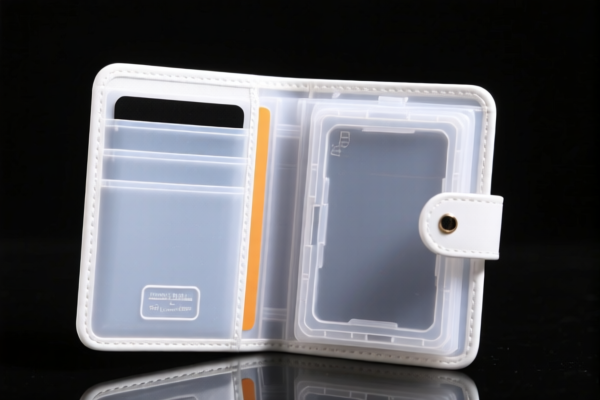
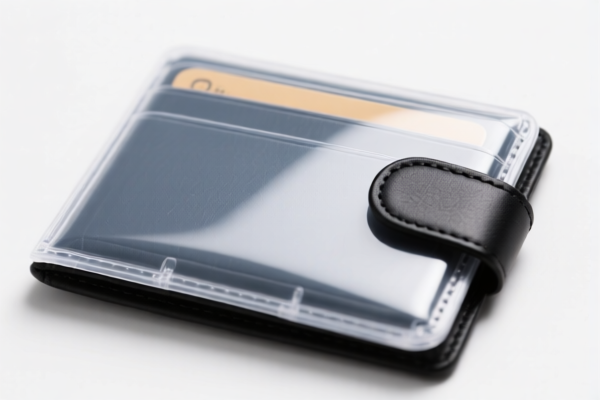
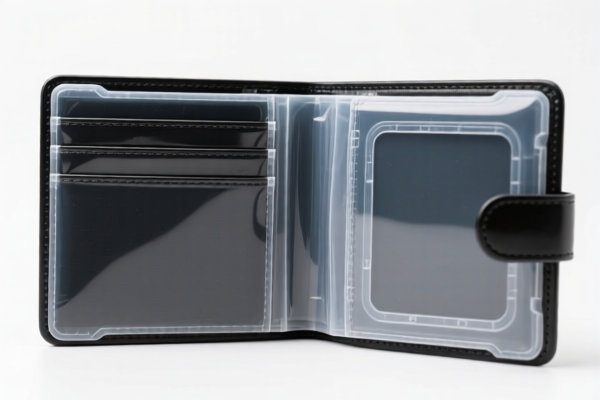
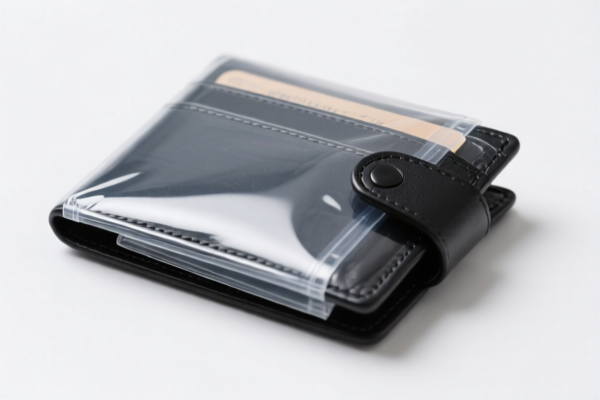
AI Analysis
👛 Plastic Outer Surface Multifunctional Wallet: HS Code & Tax Breakdown
🌐 HS Code Reference & Customs Clearance Guide | 2026 Latest Tariff Analysis | Professional Compliance Strategy 📌 I. Product Definition & Classification: Is It a "Container" or a "Luggage Item"?
A Plastic Outer Surface Multifunctional Wallet is a versatile accessory used for storing currency, cards, and small personal items. In international trade, its classification hinges on two critical factors: 1. Primary Function: Is it primarily for packaging/storage (e.g., coin pouches, document sleeves) or for personal carriage/wear (e.g., handbags, purses)? 2. Surface Material: The prompt explicitly states "Plastic Outer Surface," which triggers specific subheadings under Chapter 42 or Chapter 39 depending on the structural intent.
⚠️ Key Distinction: - If it serves as a protective packaging or storage container (not primarily for daily carry of valuables like a purse) → Chapter 39 (Plastics). - If it is designed as a personal accessory (like a handbag or clutch) with a plastic exterior → Chapter 42 (Articles of Leather; Related Articles).
📦 II. HS Code Classification Details (2026 Latest Tariff Authority Match)
Based on the provided <DATA>, here are the four possible HS Codes, their descriptions, and the specific tax implications.
| HS Code | Product Description (Summary) | Primary Classification Logic | Total Tax Rate |
|---|---|---|---|
3923.90.00.80 |
Plastic material wallet, classified as other packaging supplies | Treated as a plastic container/package, not a personal good. | 38.0% |
3923.10.90.00 |
Plastic material wallet, belongs to other packaging or carrying articles | Similar to above; focuses on the "packaging/carrying" aspect of plastic goods. | 38.0% |
4202.32.20.00 |
Wallet with an outer surface made of plastic sheets | Classified as an article of leather/plastic-like material for personal use (e.g., clutch/purse). | 55.0% |
4202.32.10.00 |
Reinforced or laminated plastic material portable wallet | Specific sub-category for laminated/rigid plastic wallets in Chapter 42. | 12.1¢/kg + 4.6% + 35.0% |
🔍 Critical Insight: - Chapter 39 (Codes ...90) implies the item is seen as packaging. This is often cheaper if the product is simple plastic pouches. - Chapter 42 (Codes ...32) implies the item is a personal accessory (like a handbag). This usually incurs higher duties due to the "luxury/accessory" nature, especially with trade wars. -
4202.32.10.00is unique because it uses a mixed tax model (Specific + Ad Valorem), which can be complex to calculate but may result in a lower effective rate for heavy items.
💰 III. 2026 Latest Tariff Rate Breakdown (Including Surcharges & Policy Add-ons)
✅ Applicable Country: United States (US)
✅ Origin: China (CN)
✅ Effective Time: Ongoing (including post-Nov 10, 2025 importations)
🎯 1. 3923.90.00.80 & 3923.10.90.00 —— Plastic Packaging/Carrying Articles
| Item | Content |
|---|---|
| Base Tariff | 3.0% (Ad Valorem) |
| Section 301 Surcharge | +25.0% (Against China) |
| Section 122 Surcharge | +10.0% (De Minimis/Small Parcel measure) |
| Total Tax Rate | 38.0% |
| Tax Calculation | CIF Value × 38% |
| De Minimis Eligibility | ❌ Not Eligible (Due to Section 122 & 301) |
| Legal Basis Path | USITC:3923.10.90.00 → Section 301: Footnote 9903.88.01 → Section 122 |
📌 Explanation: - These codes treat the wallet as a plastic product. - The 25% is the standard Section 301 tariff for Chinese plastic goods. - The 10% is the Section 122 surcharge, often applied to small shipments to prevent duty evasion. - Total 38% is a flat ad valorem rate, easy to calculate.
🎯 2. 4202.32.20.00 —— Wallet with Plastic Sheet Outer Surface
| Item | Content |
|---|---|
| Base Tariff | 20.0% (Ad Valorem) |
| Section 301 Surcharge | +25.0% (Against China) |
| Section 122 Surcharge | +10.0% (De Minimis/Small Parcel measure) |
| Total Tax Rate | 55.0% |
| Tax Calculation | CIF Value × 55% |
| De Minimis Eligibility | ❌ Not Eligible |
| Legal Basis Path | USITC:4202.32.20.00 → Section 301: Footnote 9903.88.01 → Section 122 |
📌 Warning: - This is the most expensive flat-rate option. - Chapter 42 articles are often viewed as "finished consumer goods" rather than raw materials or packaging, leading to a higher Base Tariff (20%). - Add 25% + 10% = 55% Total. This significantly impacts profit margins.
🎯 3. 4202.32.10.00 —— Reinforced/Laminated Plastic Wallet
| Item | Content |
|---|---|
| Base Tariff | 12.1¢/kg + 4.6% (Mixed Rate) |
| Section 301 Surcharge | +25.0% (Against China) |
| Section 122 Surcharge | +10.0% (De Minimis/Small Parcel measure) |
| Total Tax Structure | Specific Duty + Ad Valorem Total |
| Tax Calculation | (Weight in kg × $0.121) + (CIF Value × 4.6%) + (CIF Value × 25%) + (CIF Value × 10%) |
| De Minimis Eligibility | ❌ Not Eligible |
| Legal Basis Path | USITC:4202.32.10.00 → Section 301 → Section 122 |
📌 Complex Calculation Example: - Assume CIF Value = $100, Weight = 0.5 kg. - Specific Duty: 0.5 kg × $0.121 = $0.06 - Base Ad Valorem: $100 × 4.6% = $4.60 - Section 301: $100 × 25% = $25.00 - Section 122: $100 × 10% = $10.00 - Total Tax: $0.06 + $4.60 + $25.00 + $10.00 = $39.66 - Effective Rate: ~39.66% (Lower than 55%, but higher than 38%).
🛠️ IV. Customs Clearance Practical Advice (Battle-Tested Pitfall Guide)
✅ 1. Document Checklist (Non-Negotiable)
| Document | Required | Explanation |
|---|---|---|
| ✅ Product Specifications | ✔️ | Detail material composition: Is it "laminated," "reinforced," or just "plastic sheets"? This determines 4202.32.10 vs 4202.32.20. |
| ✅ Material Composition Statement | ✔️ | Must state: "Outer surface: Plastic." Inner lining material also matters. |
| ✅ Product Photos | ✔️ | Show the wallet from all angles. If it looks like a handbag, it goes to Ch 42. If it looks like a pouch, it might go to Ch 39. |
| ✅ Commercial Invoice | ✔️ | Must clearly describe the item. Avoid vague terms like "Bag." Use "Plastic Wallet." |
| ✅ Packing List | ✔️ | Include net weight (critical for 4202.32.10.00 calculation). |
✅ 2. Declaration Tips (Key Mantras)
🔥 “Define Surface, Define Use, Pick Code Wisely!”
| Scenario | Correct Declaration | Wrong Action |
|---|---|---|
| Simple plastic pouch for coins | Use 3923.90.00.80 (Packaging) |
Declaring as "Wallet" → Higher risk of Ch 42 classification |
| Fashionable plastic clutch/purse | Use 4202.32.20.00 (Accessory) |
Declaring as "Packaging" → Fraud risk if clearly a purse |
| Rigid, laminated, high-end plastic wallet | Use 4202.32.10.00 (Laminated) |
Not declaring weight → Incorrect tax calculation |
| Mixed materials (e.g., Plastic + Metal Zipper) | Use 4202.32.20.00 (Plastic Surface) |
Ignoring zipper material → Minor, but plastic dominates classification |
✅ 3. Special Considerations
| Situation | Handling Advice |
|---|---|
| De Minimis Loophole Attempts | ❌ Do Not Rely on Section 321 for China-origin goods with Section 301/122. All these codes are explicitly excluded from de minimis exemption. |
| Weight Fluctuation | For 4202.32.10.00, ensure net weight is accurate. A 10% weight error changes the specific duty component. |
| "Plastic Sheets" vs. "Plastic Materials" | 4202.32.20 specifies "Plastic Sheets." If the wallet is made of molded plastic (not sheets), consult a broker. 4202.32.10 covers "Reinforced/Laminated," which might fit molded if treated as a composite. |
| Country of Origin | If the plastic is made in Vietnam but assembled in China, origin is still China. Tariffs remain high. |
🌍 V. Global Market Comparison (2026 Latest)
| Country/Region | Recommended HS Code | Estimated Tax (China Origin) | Notes |
|---|---|---|---|
| 🇺🇸 USA | 4202.32.20.00 |
55.0% | High due to 301/122. Consider Ch 39 if packaging. |
| 🇨🇳 China | 4202.32.20.00 |
~20% (Import Duty) | No Section 301/122. Lower risk. |
| 🇪🇺 EU | 4202.32.20.00 |
~10-12% | No Section 301. Check for VAT/GST. |
| 🇬🇧 UK | 4202.32.20.00 |
~10% | Post-Brexit rules apply. |
| 🇨🇦 Canada | 4202.32.20.00 |
~10-15% | CUSMA may apply if Mexican/Canadian origin. |
📌 Conclusion: - USA is the hardest market due to the叠加 (叠加 =叠加/superposition) of Base, 301, and 122 tariffs. - Strategy: If the product can be legally classified as packaging (
3923), you save 17% (38% vs 55%). - Risk: Misclassifying a fashion purse as packaging can lead to seizures. Ensure the product is genuinely a "container" not a "wearable accessory."
📌 VI. Common Errors & Pitfalls (Lessons Learned)
❌ Error 1: Declaring a fashion handbag as a "Plastic Pouch" (3923)
👉 Consequence: Customs audit, penalties, and retroactive payment of 17% difference + fines.
❌ Error 2: Ignoring Weight for 4202.32.10.00
👉 Consequence: Underpayment of specific duties. Customs will re-calculate and demand payment with interest.
❌ Error 3: Assuming De Minimis applies to Section 122 goods 👉 Consequence: Shipment held at border, delayed delivery, and forced to pay full duties.
❌ Error 4: Vague Description: "Plastic Bag" 👉 Consequence: Customs may choose the highest applicable code or request additional info, causing delays.
✅ Correct Approach:
"Wallet, Outer Surface: Plastic Sheets, Inner Lining: Fabric, Model XYZ, Designed for Personal Use."
🎯 VII. Conclusion: Precision in Classification Saves Money!
🎯 Remember the Mantra:
🔹 "Packaging is 38%, Accessory is 55%, Laminated is Mixed!"
🔹 "Section 301 + Section 122 = No De Minimis for China!"
🔹 "Define Surface Material Clearly!"
📌 Pro Tip:
If your wallet is high-volume, low-cost, consider if it fits the 3923 packaging category to save 17%. If it is a high-fashion item, you must accept the 55% rate under 4202.32.20.00.
For laminated/rigid wallets, calculate the specific duty carefully against the ad valorem options.
📣 Immediate Action:
📞 Consult a customs broker for Advance Ruling if unsure about "Packaging" vs. "Accessory."
🚀 Accurate HS Code = Predictable Costs = Profit Protection!
✨ Professional Clearance, Starts with Precise Classification!
💼 Every Percent Matters in Cross-Border Trade!
Customer Reviews
About HS Code Classification
The Harmonized System (HS) is an internationally standardized nomenclature developed by the World Customs Organization (WCO) to classify traded products. Over 200 countries use the HS system as the basis for customs tariffs, trade statistics, and import/export regulations.
Each HS code follows a hierarchical structure:
- Chapter (2 digits) — Broad category of goods (e.g., Chapter 84: Machinery and Mechanical Appliances)
- Heading (4 digits) — More specific grouping within the chapter
- Subheading (6 digits) — Internationally standardized breakdown, used by all WCO member countries
- National subdivisions (8-10 digits) — Country-specific extensions for further classification, such as US HTSUS 10-digit codes
Correct HS code classification is essential for smooth customs clearance, accurate duty payment, and compliance with trade regulations. Misclassification can lead to customs delays, overpayment of duties, or penalties.
When importing from CN to US, the applicable tariff rates may include:
- Most-Favored-Nation (MFN) rate — The standard duty rate applied to WTO members
- General rate — Applied to countries without trade agreements
- Trade remedy duties — Additional tariffs such as Section 301 (anti-dumping), Section 232 (national security), or countervailing duties
The information provided on this page is for reference purposes only. For official classification, please consult with your local customs authority or a licensed customs broker.