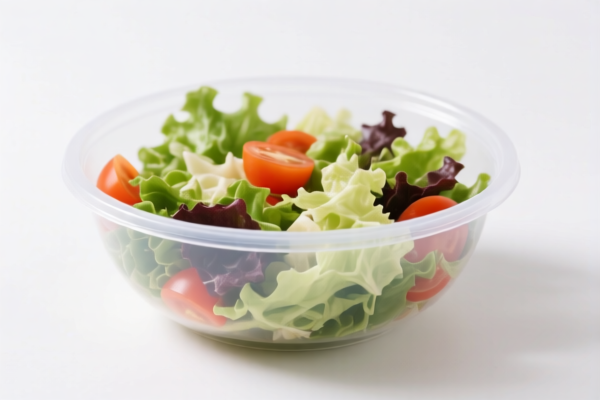
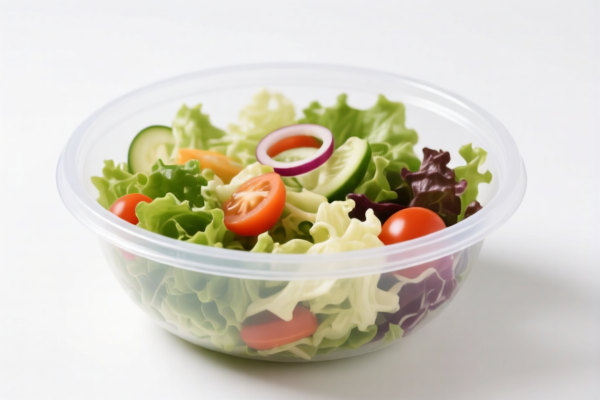
plastic salad bowls
CN → US| HS编码 | 关税税率 | 原产国 | 目的国 | 文档 |
|---|---|---|---|---|
| 3924104000 | 13.4% | CN | US | 官方文档 |
| 3924905650 | 20.9% | CN | US | 官方文档 |
| 3926100000 | 15.3% | CN | US | 官方文档 |
| 3926909989 | 22.8% | CN | US | 官方文档 |
| 6912005000 | 16.0% | CN | US | 官方文档 |
| 6912002000 | 38.0% | CN | US | 官方文档 |
商品图片


AI分析
🥗 Plastic Salad Bowls (The Ultimate Guide to HS Codes & 2026 Customs Strategy)
🌐 HS Code Reference & Clearance Strategy | 2026 Tariff Breakdown | Professional Entry Protocol
📌 I. Product Definition & Classification: What Exactly is a "Plastic Salad Bowl"?
Plastic Salad Bowls are essential kitchenware items designed for mixing, serving, and eating salads. In international trade, their classification hinges on three critical factors:
1. Material Composition: Strictly polymer/plastic (no ceramic, glass, or metal).
2. Primary Function: Used exclusively for dining/eating (tableware) vs. general storage/containers.
3. Specificity: Is it a specialized "Bowl" or a generic "Other Plastic Article"?
⚠️ Critical Distinction:
- If the item is specifically designed as tableware (dining utensil) → It falls under 3924.10 or 3926.10.
- If the item is a generic container not specifically shaped for dining → It falls under 3926.90.
- Misclassification Risk: Declaring a dining bowl as a generic container can lead to 22.8% tariffs instead of 13.4%.
📦 II. HS Code Classification Details (2026 Tariff Authority)
| HS Code | Product Description | Logic & Reasoning | Tax Rate (Total) |
|---|---|---|---|
| 3924.10.40.00 | Plastic Tableware (Bowls) | Direct Match: Specifically designed for dining/serving. "Plastic" + "Dining" = 3924.10. | 13.4% |
| 3924.90.56.50 | Plastic Household Articles/Vessels | Broad Category: If not strictly "dining" (e.g., large storage containers used for salads). | 20.9% |
| 3926.10.00.00 | Other Plastic Articles (Bowls) | Alternative: If classified as "other plastic制品" but shaped like a bowl. Less specific than 3924. | 15.3% |
| 3926.90.99.89 | Other Plastic Articles | Last Resort: Generic plastic containers with no specific dining designation. | 22.8% |
| 6912.00.50.00 | Non-Ceramic Ceramic Bowls | Exclusion: Note: If the material is actually a non-ceramic ceramic (e.g., stoneware), not pure plastic. | 16.0% |
| 6912.00.20.00 | Non-Ceramic Ceramic Kitchenware | Exclusion: High tariff if material is misidentified as "ceramic" instead of plastic. | 38.0% |
🔍 Key Insight:
- 3924.10.40.00 is the gold standard for plastic salad bowls. It offers the lowest tariff (13.4%).
- 6912 codes are TRAPS. Only use if the bowl is made of "non-ceramic ceramic" (e.g., porcelain-like stoneware), NOT plastic. Using this for plastic incurs 38.0%!
💰 III. 2026 Detailed Tariff Breakdown (China to USA Strategy)
✅ Applicable Country: USA (US)
✅ Origin: China (CN)
✅ Effective Date: 2025-2026 Import Season
✅ Applicable to: Pure Plastic Salad Bowls
🎯 1. 3924.10.40.00 —— Plastic Tableware (Dining Bowls)
The Ideal Classification for Salad Bowls
| Item | Detail |
|---|---|
| Base Tariff | 3.4% |
| Section 301 (Add-on) | 0.0% (No additional Section 301 on this specific subheading) |
| Section 122 Tariff | +10.0% (Section 122 specific to this category) |
| Total Tariff | 13.4% |
| Calculation | CIF Value × 13.4% |
| De Minimis | ❌ No (Standard commercial shipment rules apply) |
| Legal Path | HTSUS:3924.10.40.00 → Section 122 |
📌 Explanation:
- The 10% "Section 122 Tariff" is a specific additional levy for plastic tableware from China.
- Base 3.4% is the standard Most-Favored-Nation (MFN) rate.
- Total 13.4% is the most competitive rate for this product.
🎯 2. 3924.90.56.50 —— Plastic Household Articles/Vessels
Higher Risk Alternative
| Item | Detail |
|---|---|
| Base Tariff | 3.4% |
| Section 301 (Add-on) | +7.5% |
| Section 122 Tariff | +10.0% |
| Total Tariff | 20.9% |
| Calculation | CIF Value × 20.9% |
| De Minimis | ❌ No |
📌 Warning:
- This code applies if the bowl is deemed a "Household Article" rather than specific "Tableware".
- Cost Difference: 20.9% - 13.4% = 7.5% extra on every bowl. On $100k shipment, that's $7,500 lost profit.
🎯 3. 3926.90.99.89 —— Other Plastic Articles
Highest Risk / Most Expensive
| Item | Detail |
|---|---|
| Base Tariff | 5.3% |
| Section 301 (Add-on) | +7.5% |
| Section 122 Tariff | +10.0% |
| Total Tariff | 22.8% |
| Calculation | CIF Value × 22.8% |
📌 Why Avoid:
- This is the "catch-all" for plastic. If you don't specify "Tableware" or "Bowl" correctly, Customs may default here.
- 22.8% is significantly higher than the 13.4% target.
🎯 4. 6912.00.20.00 —— Non-Ceramic Ceramic Bowls
The "Material Trap"
| Item | Detail |
|---|---|
| Base Tariff | 28.0% |
| Section 301 (Add-on) | 0.0% |
| Section 122 Tariff | +10.0% |
| Total Tariff | 38.0% |
📌 CRITICAL WARNING:
- DO NOT USE THIS CODE FOR PLASTIC!
- This code is for "Non-Ceramic Ceramic" (e.g., stoneware, earthenware). If you declare plastic salad bowls here because of a naming error, you will pay 38.0% (nearly 3x the correct rate).
- Material Proof is Mandatory: Provide a polymer composition report to prove it is NOT ceramic.
🛠️ IV. Clearance Practical Advice (Real-World Pitfall Avoidance)
✅ 1. Documentation Checklist (Non-Negotiable)
| Document | Must Provide? | Why It Matters |
|---|---|---|
| ✅ Material Certificate | ✔️ | Proves 100% Plastic (polypropylene/PE). Prevents 6912 errors. |
| ✅ Product Photos | ✔️ | Must show dining usage (e.g., food inside, table setting) to justify 3924. |
| ✅ Commercial Invoice | ✔️ | Must explicitly state: "Plastic Dining Bowls / Tableware". |
| ✅ Bill of Lading | ✔️ | Consistency with invoice description. |
| ✅ HS Code Pre-Ruling | ✔️ | Highly recommended for new SKUs to avoid 3926 misclassification. |
✅ 2. Declaration Strategy (The "Golden Rules")
🔥 "Material First, Function Second, Name Specific!"
| Scenario | Correct Declaration | Wrong Declaration | Consequence |
|---|---|---|---|
| Plastic Salad Bowl | 3924.10.40.00 |
6912.00.20.00 (Ceramic) |
Tax JUMP to 38% |
| Plastic Serving Bowl | 3924.10.40.00 |
3926.90.99.89 (Generic) |
Tax JUMP to 22.8% |
| Plastic Storage Container | 3924.90.56.50 |
3924.10.40.00 (Tableware) |
Risk of audit (function mismatch) |
| Set (Bowl + Fork) | 3924.10.40.00 |
Split declaration | Potential under-valuation penalty |
✅ 3. Special Handling Scenarios
| Situation | Strategy |
|---|---|
| "Bowl" vs "Cup" | If the item has a handle and is used for soup, it might be 3924.10.40.00 (Cup) or Bowl. Ensure the shape matches "Bowl". |
| Plastic with Ceramic Coating | If the interior is coated but the body is plastic, it is still 3924 (Plastic). If the body is ceramic, it is 6912. Material weight decides. |
| Bulk Packaging | Do not declare "Bulk Plastic" → declare "Plastic Salad Bowls". Customs will inspect based on the primary item name. |
🌍 V. Global Market Comparison (2026)
| Market | Recommended HS Code | Tariff Rate | Certification |
|---|---|---|---|
| 🇺🇸 USA | 3924.10.40.00 |
13.4% | FDA (Food Contact), Prop 65 |
| 🇪🇺 EU | 3924.10.10.00 |
6.5% (Base) | LFGB, REACH |
| 🇨🇳 China | 3924.10.00.00 |
0% (Import) | GB 4806 (Food Safety) |
| 🇯🇵 Japan | 3924.10.10.00 |
3.0% (Base) | Food Sanitation Act |
📌 Conclusion:
- USA is the only market with the high Section 122 + 301 structure.
- EU/China/Japan are much more favorable (0%~6.5%).
- Strategy: If shipping to the US, ensure your invoice and material certs prove "Plastic Tableware" to avoid the 22.8% or 38% traps.
📌 VI. Common Mistakes & "Blood-Tea" Lessons
❌ Mistake 1: Declaring "Plastic Bowl" as "Ceramic Bowl" (6912) to save on "plastic tax".
👉 Result: 38.0% tariff + Seizure for false material declaration.
❌ Mistake 2: Declaring "Plastic Bowl" as "Generic Plastic Container" (3926.90).
👉 Result: 22.8% tariff vs 13.4% (Loss of 9.4% margin).
❌ Mistake 3: Using vague descriptions like "Plastic Kitchenware" on the invoice.
👉 Result: Customs officer will guess → Likely 3926 (Higher tax).
👉 Fix: Use "Plastic Tableware (Bowl)".
✅ Pro Tip:
Always add "For Dining Use" or "Tableware" to your product name in the invoice. This legally anchors the classification to 3924.
🎯 VII. Final Verdict: How to Ship Plastic Salad Bowls Profitably
🚀 The Winning Strategy:
1. Material: Confirm 100% Plastic (PP/PE).
2. Function: Ensure it is designed for Dining (not just storage).
3. HS Code:3924.10.40.00.
4. Total Duty: 13.4% (3.4% Base + 10% Section 122).
5. Documentation: FDA compliance + "Tableware" label on invoice.⚠️ Avoid:
3926(22.8%) and6912(38.0%) unless you are shipping non-plastic items.
📌 Quick Action Plan:
📞 Contact Customs Broker: Ask for
3924.10.40.00pre-approval.
📄 Update Invoice: Change "Plastic Bowl" to "Plastic Tableware (Salad Bowl)".
📉 Check Cost: If your current quote includes3926, negotiate with your supplier to reclassify!
✨ Precision in Classification = Precision in Profit!
💼 Don't let a 1-digit HS Code change cost you 10,000 USD in duties!
用户评价
关于 HS 编码归类
协调制度(HS)是由世界海关组织(WCO)制定的国际贸易商品分类标准。全球 200 多个国家采用 HS 系统作为海关关税、贸易统计和进出口监管的基础。
每个 HS 编码遵循以下层级结构:
- 章(2 位)——商品大类(例如:第 84 章:机器和机械设备)
- 品目(4 位)——章内的更具体分类
- 子目(6 位)——国际通用细分,所有 WCO 成员国统一使用
- 本国细分(8-10 位)——各国自行扩展的细分编码,如美国 HTSUS 10 位编码
正确的 HS 编码归类对于顺利通关、准确缴纳关税和遵守贸易法规至关重要。错误归类可能导致海关延误、多缴关税或罚款。
从CN进口到US时,适用的关税税率可能包括:
- 最惠国(MFN)税率——适用于 WTO 成员国的标准关税税率
- 普通税率——适用于无贸易协定国家
- 贸易救济关税——附加关税,如 301 条款(反倾销)、232 条款(国家安全)或反补贴税
本页内容仅供参考。如需正式归类,请咨询当地海关或持牌报关代理。