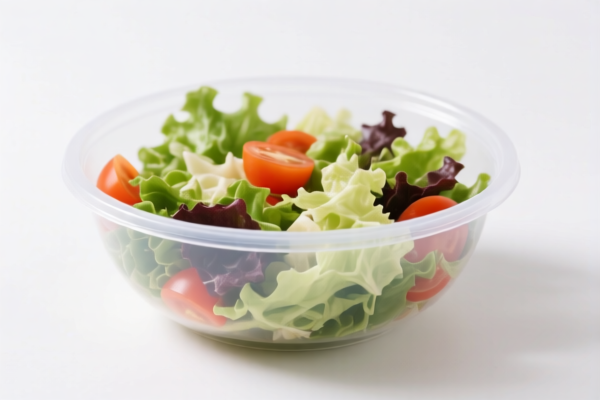
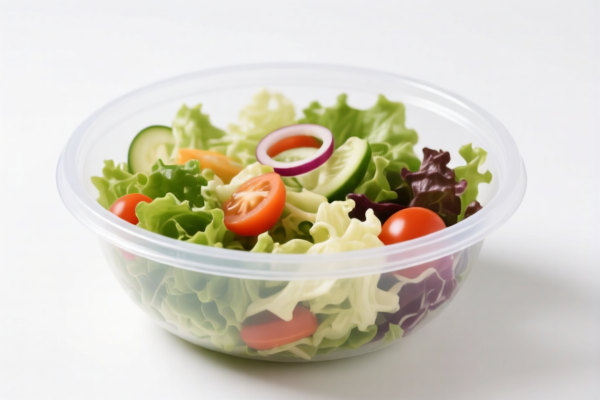
plastic salad bowls
CN → US| HS Code | Tariff Rate | Origin | Destination | Doc |
|---|---|---|---|---|
| 3924104000 | 13.4% | CN | US | Official Doc |
| 3924905650 | 20.9% | CN | US | Official Doc |
| 3926100000 | 15.3% | CN | US | Official Doc |
| 3926909989 | 22.8% | CN | US | Official Doc |
| 6912005000 | 16.0% | CN | US | Official Doc |
| 6912002000 | 38.0% | CN | US | Official Doc |
Product Images


AI Analysis
🥗 Plastic Salad Bowls (The Ultimate Guide to HS Codes & 2026 Customs Strategy)
🌐 HS Code Reference & Clearance Strategy | 2026 Tariff Breakdown | Professional Entry Protocol
📌 I. Product Definition & Classification: What Exactly is a "Plastic Salad Bowl"?
Plastic Salad Bowls are essential kitchenware items designed for mixing, serving, and eating salads. In international trade, their classification hinges on three critical factors:
1. Material Composition: Strictly polymer/plastic (no ceramic, glass, or metal).
2. Primary Function: Used exclusively for dining/eating (tableware) vs. general storage/containers.
3. Specificity: Is it a specialized "Bowl" or a generic "Other Plastic Article"?
⚠️ Critical Distinction:
- If the item is specifically designed as tableware (dining utensil) → It falls under 3924.10 or 3926.10.
- If the item is a generic container not specifically shaped for dining → It falls under 3926.90.
- Misclassification Risk: Declaring a dining bowl as a generic container can lead to 22.8% tariffs instead of 13.4%.
📦 II. HS Code Classification Details (2026 Tariff Authority)
| HS Code | Product Description | Logic & Reasoning | Tax Rate (Total) |
|---|---|---|---|
| 3924.10.40.00 | Plastic Tableware (Bowls) | Direct Match: Specifically designed for dining/serving. "Plastic" + "Dining" = 3924.10. | 13.4% |
| 3924.90.56.50 | Plastic Household Articles/Vessels | Broad Category: If not strictly "dining" (e.g., large storage containers used for salads). | 20.9% |
| 3926.10.00.00 | Other Plastic Articles (Bowls) | Alternative: If classified as "other plastic制品" but shaped like a bowl. Less specific than 3924. | 15.3% |
| 3926.90.99.89 | Other Plastic Articles | Last Resort: Generic plastic containers with no specific dining designation. | 22.8% |
| 6912.00.50.00 | Non-Ceramic Ceramic Bowls | Exclusion: Note: If the material is actually a non-ceramic ceramic (e.g., stoneware), not pure plastic. | 16.0% |
| 6912.00.20.00 | Non-Ceramic Ceramic Kitchenware | Exclusion: High tariff if material is misidentified as "ceramic" instead of plastic. | 38.0% |
🔍 Key Insight:
- 3924.10.40.00 is the gold standard for plastic salad bowls. It offers the lowest tariff (13.4%).
- 6912 codes are TRAPS. Only use if the bowl is made of "non-ceramic ceramic" (e.g., porcelain-like stoneware), NOT plastic. Using this for plastic incurs 38.0%!
💰 III. 2026 Detailed Tariff Breakdown (China to USA Strategy)
✅ Applicable Country: USA (US)
✅ Origin: China (CN)
✅ Effective Date: 2025-2026 Import Season
✅ Applicable to: Pure Plastic Salad Bowls
🎯 1. 3924.10.40.00 —— Plastic Tableware (Dining Bowls)
The Ideal Classification for Salad Bowls
| Item | Detail |
|---|---|
| Base Tariff | 3.4% |
| Section 301 (Add-on) | 0.0% (No additional Section 301 on this specific subheading) |
| Section 122 Tariff | +10.0% (Section 122 specific to this category) |
| Total Tariff | 13.4% |
| Calculation | CIF Value × 13.4% |
| De Minimis | ❌ No (Standard commercial shipment rules apply) |
| Legal Path | HTSUS:3924.10.40.00 → Section 122 |
📌 Explanation:
- The 10% "Section 122 Tariff" is a specific additional levy for plastic tableware from China.
- Base 3.4% is the standard Most-Favored-Nation (MFN) rate.
- Total 13.4% is the most competitive rate for this product.
🎯 2. 3924.90.56.50 —— Plastic Household Articles/Vessels
Higher Risk Alternative
| Item | Detail |
|---|---|
| Base Tariff | 3.4% |
| Section 301 (Add-on) | +7.5% |
| Section 122 Tariff | +10.0% |
| Total Tariff | 20.9% |
| Calculation | CIF Value × 20.9% |
| De Minimis | ❌ No |
📌 Warning:
- This code applies if the bowl is deemed a "Household Article" rather than specific "Tableware".
- Cost Difference: 20.9% - 13.4% = 7.5% extra on every bowl. On $100k shipment, that's $7,500 lost profit.
🎯 3. 3926.90.99.89 —— Other Plastic Articles
Highest Risk / Most Expensive
| Item | Detail |
|---|---|
| Base Tariff | 5.3% |
| Section 301 (Add-on) | +7.5% |
| Section 122 Tariff | +10.0% |
| Total Tariff | 22.8% |
| Calculation | CIF Value × 22.8% |
📌 Why Avoid:
- This is the "catch-all" for plastic. If you don't specify "Tableware" or "Bowl" correctly, Customs may default here.
- 22.8% is significantly higher than the 13.4% target.
🎯 4. 6912.00.20.00 —— Non-Ceramic Ceramic Bowls
The "Material Trap"
| Item | Detail |
|---|---|
| Base Tariff | 28.0% |
| Section 301 (Add-on) | 0.0% |
| Section 122 Tariff | +10.0% |
| Total Tariff | 38.0% |
📌 CRITICAL WARNING:
- DO NOT USE THIS CODE FOR PLASTIC!
- This code is for "Non-Ceramic Ceramic" (e.g., stoneware, earthenware). If you declare plastic salad bowls here because of a naming error, you will pay 38.0% (nearly 3x the correct rate).
- Material Proof is Mandatory: Provide a polymer composition report to prove it is NOT ceramic.
🛠️ IV. Clearance Practical Advice (Real-World Pitfall Avoidance)
✅ 1. Documentation Checklist (Non-Negotiable)
| Document | Must Provide? | Why It Matters |
|---|---|---|
| ✅ Material Certificate | ✔️ | Proves 100% Plastic (polypropylene/PE). Prevents 6912 errors. |
| ✅ Product Photos | ✔️ | Must show dining usage (e.g., food inside, table setting) to justify 3924. |
| ✅ Commercial Invoice | ✔️ | Must explicitly state: "Plastic Dining Bowls / Tableware". |
| ✅ Bill of Lading | ✔️ | Consistency with invoice description. |
| ✅ HS Code Pre-Ruling | ✔️ | Highly recommended for new SKUs to avoid 3926 misclassification. |
✅ 2. Declaration Strategy (The "Golden Rules")
🔥 "Material First, Function Second, Name Specific!"
| Scenario | Correct Declaration | Wrong Declaration | Consequence |
|---|---|---|---|
| Plastic Salad Bowl | 3924.10.40.00 |
6912.00.20.00 (Ceramic) |
Tax JUMP to 38% |
| Plastic Serving Bowl | 3924.10.40.00 |
3926.90.99.89 (Generic) |
Tax JUMP to 22.8% |
| Plastic Storage Container | 3924.90.56.50 |
3924.10.40.00 (Tableware) |
Risk of audit (function mismatch) |
| Set (Bowl + Fork) | 3924.10.40.00 |
Split declaration | Potential under-valuation penalty |
✅ 3. Special Handling Scenarios
| Situation | Strategy |
|---|---|
| "Bowl" vs "Cup" | If the item has a handle and is used for soup, it might be 3924.10.40.00 (Cup) or Bowl. Ensure the shape matches "Bowl". |
| Plastic with Ceramic Coating | If the interior is coated but the body is plastic, it is still 3924 (Plastic). If the body is ceramic, it is 6912. Material weight decides. |
| Bulk Packaging | Do not declare "Bulk Plastic" → declare "Plastic Salad Bowls". Customs will inspect based on the primary item name. |
🌍 V. Global Market Comparison (2026)
| Market | Recommended HS Code | Tariff Rate | Certification |
|---|---|---|---|
| 🇺🇸 USA | 3924.10.40.00 |
13.4% | FDA (Food Contact), Prop 65 |
| 🇪🇺 EU | 3924.10.10.00 |
6.5% (Base) | LFGB, REACH |
| 🇨🇳 China | 3924.10.00.00 |
0% (Import) | GB 4806 (Food Safety) |
| 🇯🇵 Japan | 3924.10.10.00 |
3.0% (Base) | Food Sanitation Act |
📌 Conclusion:
- USA is the only market with the high Section 122 + 301 structure.
- EU/China/Japan are much more favorable (0%~6.5%).
- Strategy: If shipping to the US, ensure your invoice and material certs prove "Plastic Tableware" to avoid the 22.8% or 38% traps.
📌 VI. Common Mistakes & "Blood-Tea" Lessons
❌ Mistake 1: Declaring "Plastic Bowl" as "Ceramic Bowl" (6912) to save on "plastic tax".
👉 Result: 38.0% tariff + Seizure for false material declaration.
❌ Mistake 2: Declaring "Plastic Bowl" as "Generic Plastic Container" (3926.90).
👉 Result: 22.8% tariff vs 13.4% (Loss of 9.4% margin).
❌ Mistake 3: Using vague descriptions like "Plastic Kitchenware" on the invoice.
👉 Result: Customs officer will guess → Likely 3926 (Higher tax).
👉 Fix: Use "Plastic Tableware (Bowl)".
✅ Pro Tip:
Always add "For Dining Use" or "Tableware" to your product name in the invoice. This legally anchors the classification to 3924.
🎯 VII. Final Verdict: How to Ship Plastic Salad Bowls Profitably
🚀 The Winning Strategy:
1. Material: Confirm 100% Plastic (PP/PE).
2. Function: Ensure it is designed for Dining (not just storage).
3. HS Code:3924.10.40.00.
4. Total Duty: 13.4% (3.4% Base + 10% Section 122).
5. Documentation: FDA compliance + "Tableware" label on invoice.⚠️ Avoid:
3926(22.8%) and6912(38.0%) unless you are shipping non-plastic items.
📌 Quick Action Plan:
📞 Contact Customs Broker: Ask for
3924.10.40.00pre-approval.
📄 Update Invoice: Change "Plastic Bowl" to "Plastic Tableware (Salad Bowl)".
📉 Check Cost: If your current quote includes3926, negotiate with your supplier to reclassify!
✨ Precision in Classification = Precision in Profit!
💼 Don't let a 1-digit HS Code change cost you 10,000 USD in duties!
Customer Reviews
About HS Code Classification
The Harmonized System (HS) is an internationally standardized nomenclature developed by the World Customs Organization (WCO) to classify traded products. Over 200 countries use the HS system as the basis for customs tariffs, trade statistics, and import/export regulations.
Each HS code follows a hierarchical structure:
- Chapter (2 digits) — Broad category of goods (e.g., Chapter 84: Machinery and Mechanical Appliances)
- Heading (4 digits) — More specific grouping within the chapter
- Subheading (6 digits) — Internationally standardized breakdown, used by all WCO member countries
- National subdivisions (8-10 digits) — Country-specific extensions for further classification, such as US HTSUS 10-digit codes
Correct HS code classification is essential for smooth customs clearance, accurate duty payment, and compliance with trade regulations. Misclassification can lead to customs delays, overpayment of duties, or penalties.
When importing from CN to US, the applicable tariff rates may include:
- Most-Favored-Nation (MFN) rate — The standard duty rate applied to WTO members
- General rate — Applied to countries without trade agreements
- Trade remedy duties — Additional tariffs such as Section 301 (anti-dumping), Section 232 (national security), or countervailing duties
The information provided on this page is for reference purposes only. For official classification, please consult with your local customs authority or a licensed customs broker.