plastic sheet hs 3920992000
CN → US| HS编码 | 关税税率 | 原产国 | 目的国 | 文档 |
|---|---|---|---|---|
| 3921905050 | 39.8% | CN | US | 官方文档 |
| 3926909989 | 22.8% | CN | US | 官方文档 |
| 3920594000 | 35.0% | CN | US | 官方文档 |
| 3920598000 | 41.5% | CN | US | 官方文档 |
| 3921190090 | 41.5% | CN | US | 官方文档 |
商品图片
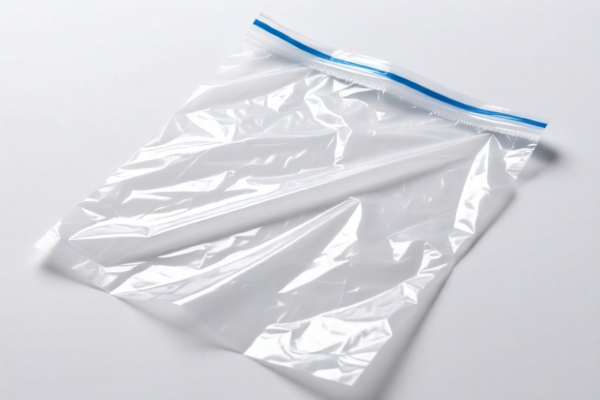
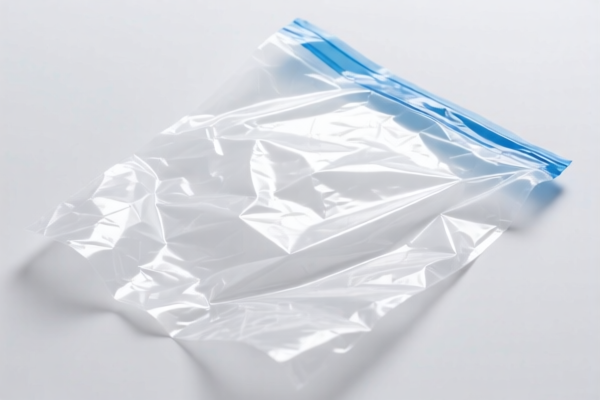
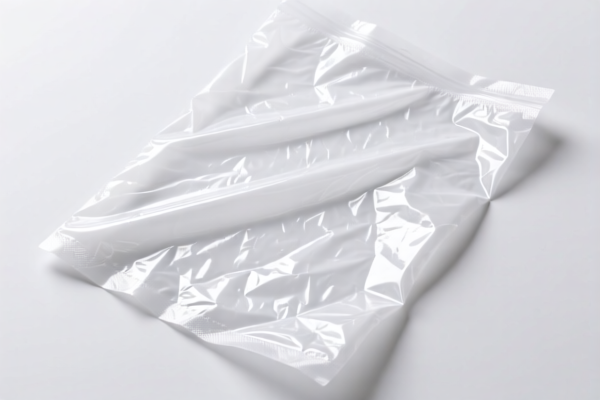
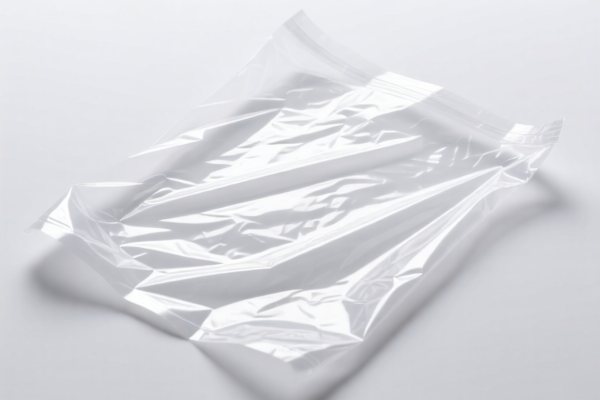
AI分析
🛡️ Plastic Sheets & Films (HS 3920.99.20.00)
🌐 HS Code Reference & Customs Clearance Guide | 2026 Latest Tariff Analysis | Professional Clearance Strategy
📌 I. Product Definition & Classification: What is "Plastic Sheet" really?
Plastic sheets (under HS 3920.99.20.00) are flat, flexible, or semi-rigid products made from plastics, excluding those specifically covered in headings 3901-3914 (basic polymers) or 3921 (plastic plates, sheets, etc., of other polymers not elsewhere specified).
Key Characteristics: - Form: Sheets, films, foils, strips. - Material: Typically polymers not specifically listed in 3901-3914 (e.g., certain copolymers, mixed polymers, or specific thermoplastics/thermosets not covered elsewhere). - Processing: May be plain, printed, perforated, or coated.
⚠️ Critical Distinction:
- If the plastic is polyethylene, polypropylene, PVC, polystyrene, etc., it usually falls under 3904-3911.
- If it is acrylic (polymethyl methacrylate), it falls under 3920.59.
- HS 3920.99.20.00 is often used for other plastics (e.g., certain polycarbonates, ABS, PETG, or specialized engineering plastics) not specifically listed in 3901-3914 or 3920.59.
- Do not confuse with 3921.90 (plastic plates/sheets of other polymers) – the distinction lies in the specific polymer type and whether it’s considered a “sheet” vs. a “plate” in some jurisdictions, but for USHTS, 3920.99 is a catch-all for other plastic sheets.
📦 II. HS Code Classification Details (2026 Latest Tariff Reference)
| HS Code | Product Description | Applicable Scenario | Material Example |
|---|---|---|---|
3920.99.20.00 |
Other plastic sheets, films, foils, strips, of other plastics (not elsewhere specified) | General-purpose plastic sheets, specialized engineering plastics (e.g., PC, ABS, PETG), industrial films | Polycarbonate, ABS, PETG, Polyimide (if not elsewhere classified) |
🔍 Key Reminder:
- 3920.99.20.00 is NOT for acrylic (use 3920.59), NOT for polyethylene/polypropylene (use 3904/3901/3902), and NOT for PVC (use 3904/3901/3902).
- It is for other plastics that do not fit into the specific polymer categories in 3901-3914.
- Always verify the exact polymer composition before classifying. Misclassification can lead to significant tariff differences.
💰 III. 2026 Latest Tariff Rate Details (Including Additional Taxes)
✅ Applicable Country: United States (US)
✅ Origin: China (CN)
✅ Effective Date: From November 10, 2025 (including subsequent imports)
🎯 1. 3920.99.20.00 —— Other Plastic Sheets (Not Elsewhere Specified)
| Item | Content |
|---|---|
| Basic Tariff | 5.3% (ad valorem) |
| USITC Additional Tax | +7.5% (from USITC Footnote 9903.88.01) |
| IEEPA Additional Tax | +10% (for China/HK products, effective November 10, 2025) |
| Total Tariff Rate | 41.5% |
| Tax Calculation | CIF Value × 41.5% |
| De Minimis Exemption | ❌ Not Eligible (deny_de_minimis) |
| Legal Basis Path | IEEPA:9903.01.25 → IEEPA:9903.01.24 → USITC:3920.99.20.00 → FOOTNOTE:9903.88.01 |
📌 Explanation:
- The 7.5% USITC tax is part of the Section 301 additional duties on certain Chinese products.
- The 10% IEEPA tax is the new Trump-era additional tariff on Chinese goods effective November 10, 2025.
- Total 41.5% is a very high tariff. Proper classification is critical to avoid overpayment or penalties.
📊 Comparison with Other Plastic Sheet HS Codes from Data
| HS Code | Summary | Total Tax | Tax Detail |
|---|---|---|---|
3921.90.50.50 |
Plastic sheets, plastic plates, etc. | 39.8% | Basic 4.8% + 25% (301) + 10% (122) |
3926.90.99.89 |
Plastic articles, other | 22.8% | Basic 5.3% + 7.5% (301) + 10% (122) |
3920.59.40.00 |
Plastic sheets, acrylic polymer | 35.0% | Basic 0.0% + 25% (301) + 10% (122) |
3920.59.80.00 |
Plastic sheets, acrylic polymer | 41.5% | Basic 6.5% + 25% (301) + 10% (122) |
3921.19.00.90 |
Plastic sheets, other | 41.5% | Basic 6.5% + 25% (301) + 10% (122) |
3920.99.20.00 |
Plastic sheets, other plastics | 41.5% | Basic 5.3% + 7.5% (301) + 10% (122) |
📌 Note:
- 3920.99.20.00 has a lower Section 301 tax (7.5%) compared to 3921.90 (25%) or 3920.59 (25%).
- However, the basic tariff (5.3%) is higher than 3920.59.40 (0%).
- Total rate (41.5%) is the same as 3920.59.80 and 3921.19, but different from 3921.90 (39.8%).
- Acrylic sheets (3920.59) may have 0% basic tariff if properly classified as 3920.59.40, leading to a lower total (35%).
- Always verify polymer type to ensure correct classification.
🛠️ IV. Customs Clearance Practical Advice (Real-World Pitfall Avoidance)
✅ 1. Required Documentation (All are Mandatory)
| Document | Required | Description |
|---|---|---|
| ✅ Product Specification Sheet | ✔️ | Includes dimensions, thickness, polymer type, mechanical properties |
| ✅ Material Safety Data Sheet (MSDS) | ✔️ | For chemical composition, especially if coated or treated |
| ✅ Product Photos (Including Labels) | ✔️ | Clear images of sheets, rolls, or cut pieces, showing thickness and edges |
| ✅ Third-Party Test Reports | ✔️ | FDA, RoHS, REACH, UL (if applicable) |
| ✅ Commercial Invoice | ✔️ | Clearly state “Plastic Sheet, [Polymer Type], for [Intended Use]” |
| ✅ Certificate of Origin (CO) | ✔️ | If not China-origin, apply for preferential rates |
| ✅ Packing List | ✔️ | Detail packaging, weight, and dimensions |
✅ 2. Declaration Tips (Key Rules)
🔥 “Correct Polymer, Correct HS, Tariff Saved in Half!”
| Scenario | Correct Declaration | Incorrect Practice |
|---|---|---|
| Acrylic sheets | 3920.59.40.00 or 3920.59.80.00 |
Misdeclared as 3920.99.20.00 → Overpay or Underpay |
| Polyethylene sheets | 3901.10.00.00 or 3901.20.00.00 |
Misdeclared as 3920.99.20.00 → 35-41% vs. 0-4.8% |
| Polycarbonate sheets | 3920.99.20.00 |
Misdeclared as 3921.90.50.50 → Higher Section 301 (25% vs 7.5%) |
| Plastic articles (not sheets) | 3926.90.99.89 |
Misdeclared as 3920.99.20.00 → Wrong category |
✅ 3. Special Cases
| Scenario | Handling Advice |
|---|---|
| OEM Custom Sheets | Provide customer orders + design specs to avoid “non-standard” classification |
| Printed/Coated Sheets | Still 3920.99.20.00 if polymer type doesn’t change, but declare printing/coating |
| Sheets for Medical Use | If specialized, may require FDA approval, but HS Code remains same |
| Sheets for Military/Aerospace | May require special permits, but HS Code classification unchanged |
🌍 V. Global Market Comparison (2026 Latest)
| Country/Region | Recommended HS Code | Tariff | Certification | Notes |
|---|---|---|---|---|
| 🇺🇸 US | 3920.99.20.00 |
41.5% (China) | FDA, RoHS | High additional tariffs |
| 🇨🇳 China | 3920.99.20.00 |
5% | CCC, RoHS | No additional tariffs |
| 🇪🇺 EU | 3920.99.20.00 |
0-6.5% (if CE) | CE, REACH | No additional tariffs |
| 🇦🇺 Australia | 3920.99.20.00 |
5% | RCM | No additional tariffs |
| 🇯🇵 Japan | 3920.99.20.00 |
0-6% | PSE | No additional tariffs |
📌 Conclusion:
- The US is the only market with high additional tariffs on Chinese plastic sheets.
- Consider sourcing from Vietnam, Mexico, or other non-China origins to reduce tariff burden.
- Apply for Advance Ruling (USCBP) to confirm HS Code before shipping.
📌 VI. Common Mistakes & Pitfall Avoidance (Lessons Learned)
❌ Mistake 1: Declaring “acrylic sheets” as 3920.99.20.00
👉 Result: Overpaying tariffs or facing penalties if classified as 3920.59.40.00 (35%) or 3920.59.80.00 (41.5%).
❌ Mistake 2: Declaring “polyethylene sheets” as 3920.99.20.00
👉 Result: Paying 41.5% instead of 0-4.8% (for 3901/3902 codes).
❌ Mistake 3: Not providing polymer type in declaration
👉 Result: Customs may reclassify, leading to delays, penalties, or higher tariffs.
❌ Mistake 4: Using generic terms like “plastic sheet” without specifying material
👉 Result: High risk of misclassification and disputes.
✅ Correct Practice:
“Polycarbonate Sheet, 2mm, Transparent, UV-Stabilized, for Industrial Use, FDA Compliant, HS Code: 3920.99.20.00”
🎯 VII. Conclusion: Precision in Classification Saves Money!
🎯 Remember the Rules:
🔹 “Know Your Polymer, Choose Right HS, Avoid High Tariffs!”
🔹 “HS Code Dictates Tariff, 1% Difference, Thousands Saved!”
📌 Pro Tip:
If your plastic sheets are originating from Vietnam, Mexico, Thailand, or Malaysia, you may apply for IEEPA Exemption, reducing tariffs to 0-5%.
Apply for Advance Ruling (USCBP) to avoid clearance risks.
📣 Immediate Action:
📞 Contact a Professional Customs Broker + Provide Product Photos + Apply for HS Code Advance Ruling
🚀 Ensure Smooth Clearance, Efficient Export, Maximized Profits!
✨ Professional Clearance Starts with Accurate Classification!
💼 Every Dollar You Save is Precisely Calculated!
用户评价
关于 HS 编码归类
协调制度(HS)是由世界海关组织(WCO)制定的国际贸易商品分类标准。全球 200 多个国家采用 HS 系统作为海关关税、贸易统计和进出口监管的基础。
每个 HS 编码遵循以下层级结构:
- 章(2 位)——商品大类(例如:第 84 章:机器和机械设备)
- 品目(4 位)——章内的更具体分类
- 子目(6 位)——国际通用细分,所有 WCO 成员国统一使用
- 本国细分(8-10 位)——各国自行扩展的细分编码,如美国 HTSUS 10 位编码
正确的 HS 编码归类对于顺利通关、准确缴纳关税和遵守贸易法规至关重要。错误归类可能导致海关延误、多缴关税或罚款。
从CN进口到US时,适用的关税税率可能包括:
- 最惠国(MFN)税率——适用于 WTO 成员国的标准关税税率
- 普通税率——适用于无贸易协定国家
- 贸易救济关税——附加关税,如 301 条款(反倾销)、232 条款(国家安全)或反补贴税
本页内容仅供参考。如需正式归类,请咨询当地海关或持牌报关代理。