plastic support tray
CN → US| HS编码 | 关税税率 | 原产国 | 目的国 | 文档 |
|---|---|---|---|---|
| 3926100000 | 15.3% | CN | US | 官方文档 |
| 3924103000 | 22.8% | CN | US | 官方文档 |
| 3924104000 | 13.4% | CN | US | 官方文档 |
| 3926909989 | 22.8% | CN | US | 官方文档 |
| 3926901000 | 20.9% | CN | US | 官方文档 |
商品图片
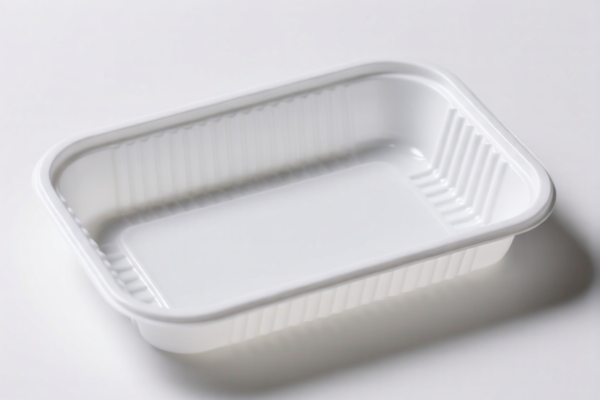
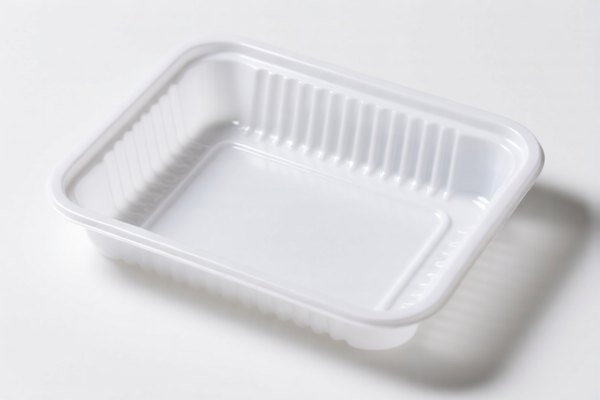
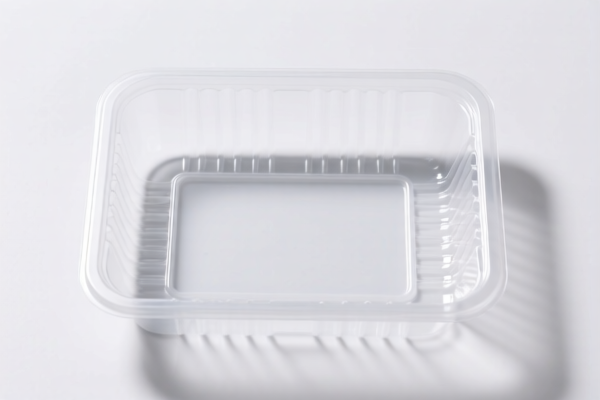
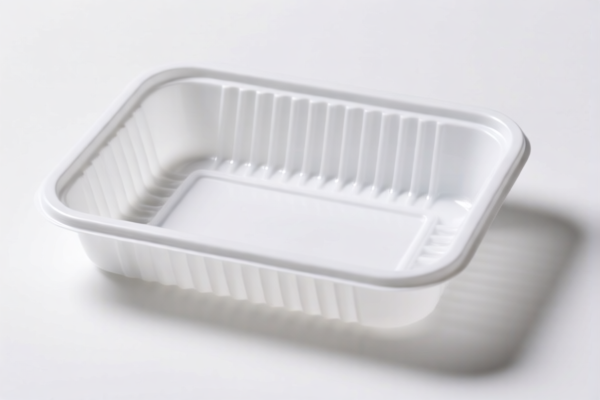
AI分析
📦 Plastic Support Tray (Plastic Material)
🌐 HS Code Reference & Customs Clearance Guide | 2026 Latest Tariff Analysis | Professional Logistics Strategy
📌 Part 1: Product Definition & Classification – Do You Know Your "Tray"?
A Plastic Support Tray is a versatile container or platform made of plastic, used to hold, organize, or support goods. However, in international trade, form, function, and specific material dictate the HS Code. A minor difference in classification can lead to a 9.4% tariff difference!
In customs declarations, "Tray" is not a standalone category. It is classified based on: 1. Is it a generic industrial tool? (e.g., pallet, handling tool) 2. Is it kitchenware/tableware? (e.g., food tray) 3. Is it a specific polymer like Polyethylene?
⚠️ Critical Distinction:
- If it is a general-purpose plastic handling tool (like a pallet or industrial rack) → It falls under Chapter 3926 (Other articles of plastic).
- If it is used for serving food or drinks → It falls under Chapter 3924 (Tableware/Kitchenware).
- If it is explicitly Polyethylene (PE) and doesn't fit standard categories → It may fall under a specific sub-heading 3926.90.10.00.
📋 Part 2: HS Code Classification Details (2026 Latest Tariff Authority)
Below are the 5 specific HS Codes from your data set, ranked by Total Tax Rate (Lowest to Highest).
| HS Code | Product Description (Based on Data) | Key Characteristics | Total Tax Rate |
|---|---|---|---|
3924.10.40.00 |
Plastic Tray (Tableware/Kitchenware) | Plastic material; Form is a tray; Intended Use: Tableware/Kitchenware category. | 13.4% |
3926.10.00.00 |
Plastic Tray (Other Plastic Articles) | Plastic material; Form is a tray; Category: Accessories/Utensils (General Plastic Articles). | 15.3% |
3926.90.10.00 |
Polyethylene Tray (Specific Material) | Material: Polyethylene (PE); Form is a tray; Category: Other plastic articles (Specific sub-category). | 20.9% |
3924.10.30.00 |
Plastic Tray (General Kitchenware) | Plastic material; Form is a tray; Fits definition of Plastic Material & Tray. | 22.8% |
3926.90.99.89 |
Plastic Tray (Catch-all/Unspecified) | Plastic material; Form/Use is Non-specific; Fits "Catch-all" (Residual) category. | 22.8% |
🔍 Key Insight:
- Cheapest Option: If your tray is for food/dining use, classify as3924.10.40.00(13.4%).
- Most Expensive: If it is a generic industrial tray with no specific "kitchenware" or "polyethylene" designation, you risk 22.8%.
- Why the difference? USITC Footnotes often impose higher duties (7.5% Section 301) on "Other" plastic articles compared to specific tableware items which may have lower or zero Section 301 duties depending on the exact subheading history.
💰 Part 3: 2026 Latest Tariff Rate Breakdown (Detailed Tax Clauses)
✅ Applicable Country: United States (US)
✅ Origin: China (CN) (Implied by "122 Clause" and 301-style tariffs)
✅ Effective Time: Current 2026 Tariff Schedule
🎯 1. 3924.10.40.00 — Lowest Tax Option (13.4%)
Best if the tray is used for food/service.
| Item | Content |
|---|---|
| Basic Duty | 3.4% (MFN Rate) |
| Section 301 (Add'l) | 0.0% (Exempt or Low Duty for this specific tableware subheading) |
| Section 122 Duty | 10.0% (Specific tariff clause for plastic articles) |
| Total Tax | 13.4% |
| Tax Calculation | CIF Value × 13.4% |
| De Minimis Eligibility | ❌ No (High duty rate prevents $800 de minimis exemption) |
| Legal Path | USITC:3924.10.40.00 → FOOTNOTE:122 |
📌 Explanation:
- This is the most cost-effective classification if the product can be legally described as "Tableware."
- The 0% Section 301 adds significant savings compared to other plastic goods.
🎯 2. 3926.10.00.00 — Standard Industrial Tray (15.3%)
Best for general plastic accessories/utensils.
| Item | Content |
|---|---|
| Basic Duty | 5.3% |
| Section 301 (Add'l) | 0.0% |
| Section 122 Duty | 10.0% |
| Total Tax | 15.3% |
| Tax Calculation | CIF Value × 15.3% |
| De Minimis Eligibility | ❌ No |
| Legal Path | USITC:3926.10.00.00 → FOOTNOTE:122 |
📌 Explanation:
- Classified as "Other articles of plastic" (accessories/utensils).
- 0% Section 301 makes it cheaper than the "Catch-all" category.
- Use this if the tray is for industrial, retail, or storage use, not for eating.
🎯 3. 3926.90.10.00 — Polyethylene Specific (20.9%)
Only if the material is explicitly Polyethylene (PE).
| Item | Content |
|---|---|
| Basic Duty | 3.4% |
| Section 301 (Add'l) | 7.5% (Standard 301 rate for many plastics) |
| Section 122 Duty | 10.0% |
| Total Tax | 20.9% |
| Tax Calculation | CIF Value × 20.9% |
| De Minimis Eligibility | ❌ No |
| Legal Path | USITC:3926.90.10.00 → FOOTNOTE:122 → 301:7.5% |
📌 Explanation:
- Caution: Even though the basic duty is low (3.4%), the 7.5% Section 301 penalty applies because it falls under "Other" plastics, not the preferred tableware or accessory subheadings.
- Use this only if required by material specificity (e.g., customer requires PE certification).
🎯 4. 3924.10.30.00 — General Kitchenware Tray (22.8%)
Higher tax than 3924.10.40.00. Why?!
| Item | Content |
|---|---|
| Basic Duty | 5.3% |
| Section 301 (Add'l) | 7.5% |
| Section 122 Duty | 10.0% |
| Total Tax | 22.8% |
| Tax Calculation | CIF Value × 22.8% |
| De Minimis Eligibility | ❌ No |
| Legal Path | USITC:3924.10.30.00 → FOOTNOTE:122 → 301:7.5% |
📌 Explanation:
- Although it is "Tableware" (Chapter 3924), this specific subheading attracts the 7.5% Section 301 tariff.
- Avoid this if you can justify3924.10.40.00(0% Section 301).
🎯 5. 3926.90.99.89 — Catch-All / Unspecified (22.8%)
Highest Risk. Use only if nothing else fits.
| Item | Content |
|---|---|
| Basic Duty | 5.3% |
| Section 301 (Add'l) | 7.5% |
| Section 122 Duty | 10.0% |
| Total Tax | 22.8% |
| Tax Calculation | CIF Value × 22.8% |
| De Minimis Eligibility | ❌ No |
| Legal Path | USITC:3926.90.99.89 → FOOTNOTE:122 → 301:7.5% |
📌 Explanation:
- This is the "Others" category for Chapter 3926. It is the least specific and often attracts the full 7.5% Section 301 tariff.
- Do not use this unless the tray is truly non-standard and cannot be classified as a tray, utensil, or tableware.
🛠️ Part 4: Customs Clearance Practical Advice (Pitfall Avoidance Guide)
✅ 1. Documentation Checklist (Mandatory)
| Document | Required? | Notes |
|---|---|---|
| ✅ Product Specification Sheet | ✔️ | Must specify: Material (PP, PE, PS, etc.), Dimensions, Weight, Intended Use. |
| ✅ Photos (Front/Side/Bottom) | ✔️ | Show the tray's structure. Is it stackable? Does it have holes? Is it for food? |
| ✅ Commercial Invoice | ✔️ | Clearly state: "Plastic Support Tray, [Material], for [Use: e.g., Kitchen/Industrial]." |
| ✅ Proof of Material | ✔️ | If claiming 3926.90.10.00 (PE), provide a material safety data sheet (MSDS) or lab test. |
| ✅ Packing List | ✔️ | List net/gross weight, dimensions, and number of pieces. |
✅ 2. Declaration Tips (Key Mnemonics)
🔥 "Use Defines Code, Material Defines Sub-code, 122 Always Hits!"
| Scenario | Correct HS Code | Wrong HS Code (Risk) |
|---|---|---|
| Tray for serving food | 3924.10.40.00 (13.4%) |
3924.10.30.00 (22.8%) → Save 9.4% |
| Tray for storing tools/parts | 3926.10.00.00 (15.3%) |
3926.90.99.89 (22.8%) → Save 7.5% |
| Tray made of Polyethylene | 3926.90.10.00 (20.9%) |
3926.90.99.89 (22.8%) → Save 1.9% |
| Generic Plastic Tray | 3926.10.00.00 (15.3%) |
3924.10.30.00 (22.8%) → Misuse of Chapter 3924 |
📌 Critical Note:
- Never declare a food tray as "Industrial Tray" to avoid inspection if it is used for food. Customs may demand proof of non-food use, leading to delays.
- Always include "Plastic" and "Tray" in the description. Vague terms like "Support" may trigger a "Catch-all" classification.
✅ 3. Special Handling
| Situation | Advice |
|---|---|
| Mixed Materials | If the tray has a plastic base and metal legs, it may not be classified as "Plastic Article." Seek clarification. |
| OEM Custom Trays | Provide the client's design spec. If the spec says "Food Grade," use 3924 chapter. If "Industrial Grade," use 3926. |
| Small Sample Shipments | Still subject to Section 122 (10%). Do not rely on de minimis ($800) exemption as duty > 3%. |
🌍 Part 5: Global Market Comparison (2026)
| Region | Recommended HS Code | Est. Duty | Notes |
|---|---|---|---|
| 🇺🇸 USA | 3924.10.40.00 |
13.4% | Best Option: 0% Section 301. |
| 🇪🇺 EU | 3924.10.00 |
6.5% | Standard MFN rate. No Section 301. |
| 🇨🇳 China | 3924.10.00 |
8.0% | Standard import duty. |
| 🇯🇵 Japan | 3924.10.00 |
6.0% | Low duty for plastic tableware. |
📌 Conclusion:
- USA is the most complex market due to Section 122 (10%) and Section 301 variations.
- Optimize for USA: If you can legally classify the tray as Tableware (3924.10.40.00), you save 9.4% compared to the "Catch-all" plastic category.
📌 Part 6: Common Mistakes & Pitfalls (Lessons Learned)
❌ Mistake 1: Classifying a Food Tray as 3926.90.99.89 (22.8%)
👉 Consequence: You pay 9.4% more tax than necessary.
👉 Fix: Declare as "Plastic Tableware Tray" → 3924.10.40.00 (13.4%).
❌ Mistake 2: Classifying an Industrial Tray as 3924.10.40.00 (13.4%)
👉 Consequence: Customs audit for "Misdeclaration of Use." Fines + Back Taxes.
👉 Fix: If not for food, declare as "Plastic Accessory/Tool" → 3926.10.00.00 (15.3%).
❌ Mistake 3: Ignoring Section 122
👉 Consequence: All plastic trays in this dataset are subject to a 10% additional duty.
👉 Fix: Factor this 10% into your FOB/CIF pricing model. It is non-negotiable for these codes.
🎯 Part 7: Conclusion – Professional Declaration, Cost Savings!
🎯 Remember the Mantra:
🔹 "Food Tray = 3924.40 (13.4%) | Industrial Tray = 3926.10 (15.3%) | Catch-all = 22.8% (Avoid!)"
🔹 "122 Clause is Always 10% | Section 301 is Either 0% or 7.5%"
📌 Pro Tip:
If you are unsure, provide detailed photos and usage context to your customs broker. A small change in description (e.g., "Food Serving Tray" vs. "Storage Bin") can save 9.4% in taxes.
📣 Immediate Action:
📞 Confirm the Intended Use with your client.
📦 Update your Invoice Description to match the HS Code.
🚀 Optimize your Landed Cost by choosing the lowest viable HS Code.
✨ Professional Customs Clearance Starts with Precise Classification!
💼 Your Every Dollar Saved is a Dollar Earned!
用户评价
关于 HS 编码归类
协调制度(HS)是由世界海关组织(WCO)制定的国际贸易商品分类标准。全球 200 多个国家采用 HS 系统作为海关关税、贸易统计和进出口监管的基础。
每个 HS 编码遵循以下层级结构:
- 章(2 位)——商品大类(例如:第 84 章:机器和机械设备)
- 品目(4 位)——章内的更具体分类
- 子目(6 位)——国际通用细分,所有 WCO 成员国统一使用
- 本国细分(8-10 位)——各国自行扩展的细分编码,如美国 HTSUS 10 位编码
正确的 HS 编码归类对于顺利通关、准确缴纳关税和遵守贸易法规至关重要。错误归类可能导致海关延误、多缴关税或罚款。
从CN进口到US时,适用的关税税率可能包括:
- 最惠国(MFN)税率——适用于 WTO 成员国的标准关税税率
- 普通税率——适用于无贸易协定国家
- 贸易救济关税——附加关税,如 301 条款(反倾销)、232 条款(国家安全)或反补贴税
本页内容仅供参考。如需正式归类,请咨询当地海关或持牌报关代理。