plastic support tray
CN → US| HS Code | Tariff Rate | Origin | Destination | Doc |
|---|---|---|---|---|
| 3926100000 | 15.3% | CN | US | Official Doc |
| 3924103000 | 22.8% | CN | US | Official Doc |
| 3924104000 | 13.4% | CN | US | Official Doc |
| 3926909989 | 22.8% | CN | US | Official Doc |
| 3926901000 | 20.9% | CN | US | Official Doc |
Product Images
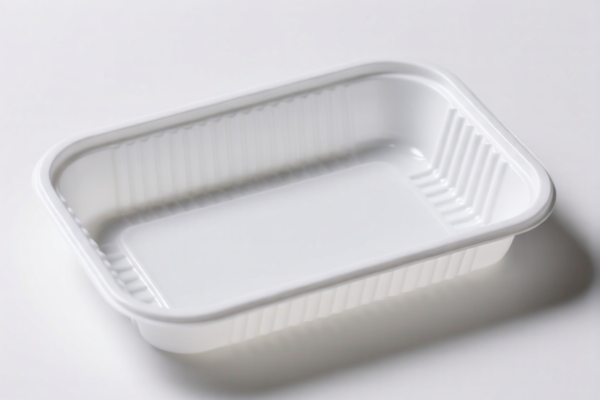
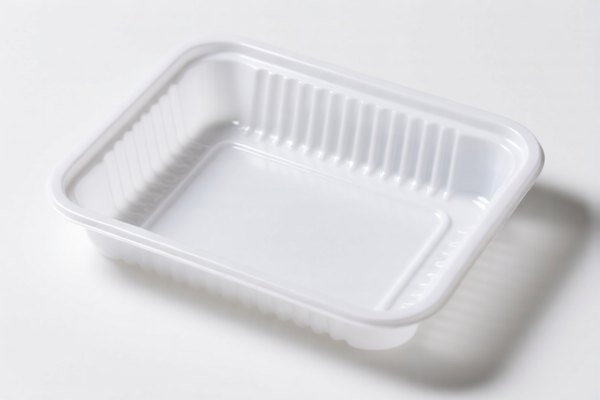
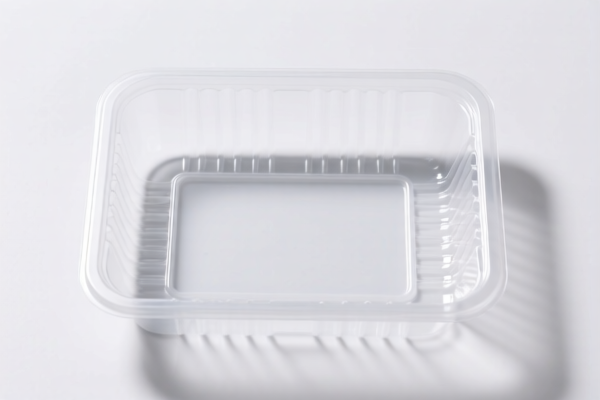
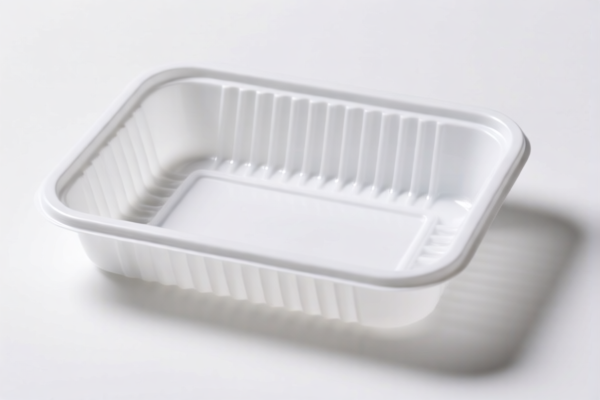
AI Analysis
📦 Plastic Support Tray (Plastic Material)
🌐 HS Code Reference & Customs Clearance Guide | 2026 Latest Tariff Analysis | Professional Logistics Strategy
📌 Part 1: Product Definition & Classification – Do You Know Your "Tray"?
A Plastic Support Tray is a versatile container or platform made of plastic, used to hold, organize, or support goods. However, in international trade, form, function, and specific material dictate the HS Code. A minor difference in classification can lead to a 9.4% tariff difference!
In customs declarations, "Tray" is not a standalone category. It is classified based on: 1. Is it a generic industrial tool? (e.g., pallet, handling tool) 2. Is it kitchenware/tableware? (e.g., food tray) 3. Is it a specific polymer like Polyethylene?
⚠️ Critical Distinction:
- If it is a general-purpose plastic handling tool (like a pallet or industrial rack) → It falls under Chapter 3926 (Other articles of plastic).
- If it is used for serving food or drinks → It falls under Chapter 3924 (Tableware/Kitchenware).
- If it is explicitly Polyethylene (PE) and doesn't fit standard categories → It may fall under a specific sub-heading 3926.90.10.00.
📋 Part 2: HS Code Classification Details (2026 Latest Tariff Authority)
Below are the 5 specific HS Codes from your data set, ranked by Total Tax Rate (Lowest to Highest).
| HS Code | Product Description (Based on Data) | Key Characteristics | Total Tax Rate |
|---|---|---|---|
3924.10.40.00 |
Plastic Tray (Tableware/Kitchenware) | Plastic material; Form is a tray; Intended Use: Tableware/Kitchenware category. | 13.4% |
3926.10.00.00 |
Plastic Tray (Other Plastic Articles) | Plastic material; Form is a tray; Category: Accessories/Utensils (General Plastic Articles). | 15.3% |
3926.90.10.00 |
Polyethylene Tray (Specific Material) | Material: Polyethylene (PE); Form is a tray; Category: Other plastic articles (Specific sub-category). | 20.9% |
3924.10.30.00 |
Plastic Tray (General Kitchenware) | Plastic material; Form is a tray; Fits definition of Plastic Material & Tray. | 22.8% |
3926.90.99.89 |
Plastic Tray (Catch-all/Unspecified) | Plastic material; Form/Use is Non-specific; Fits "Catch-all" (Residual) category. | 22.8% |
🔍 Key Insight:
- Cheapest Option: If your tray is for food/dining use, classify as3924.10.40.00(13.4%).
- Most Expensive: If it is a generic industrial tray with no specific "kitchenware" or "polyethylene" designation, you risk 22.8%.
- Why the difference? USITC Footnotes often impose higher duties (7.5% Section 301) on "Other" plastic articles compared to specific tableware items which may have lower or zero Section 301 duties depending on the exact subheading history.
💰 Part 3: 2026 Latest Tariff Rate Breakdown (Detailed Tax Clauses)
✅ Applicable Country: United States (US)
✅ Origin: China (CN) (Implied by "122 Clause" and 301-style tariffs)
✅ Effective Time: Current 2026 Tariff Schedule
🎯 1. 3924.10.40.00 — Lowest Tax Option (13.4%)
Best if the tray is used for food/service.
| Item | Content |
|---|---|
| Basic Duty | 3.4% (MFN Rate) |
| Section 301 (Add'l) | 0.0% (Exempt or Low Duty for this specific tableware subheading) |
| Section 122 Duty | 10.0% (Specific tariff clause for plastic articles) |
| Total Tax | 13.4% |
| Tax Calculation | CIF Value × 13.4% |
| De Minimis Eligibility | ❌ No (High duty rate prevents $800 de minimis exemption) |
| Legal Path | USITC:3924.10.40.00 → FOOTNOTE:122 |
📌 Explanation:
- This is the most cost-effective classification if the product can be legally described as "Tableware."
- The 0% Section 301 adds significant savings compared to other plastic goods.
🎯 2. 3926.10.00.00 — Standard Industrial Tray (15.3%)
Best for general plastic accessories/utensils.
| Item | Content |
|---|---|
| Basic Duty | 5.3% |
| Section 301 (Add'l) | 0.0% |
| Section 122 Duty | 10.0% |
| Total Tax | 15.3% |
| Tax Calculation | CIF Value × 15.3% |
| De Minimis Eligibility | ❌ No |
| Legal Path | USITC:3926.10.00.00 → FOOTNOTE:122 |
📌 Explanation:
- Classified as "Other articles of plastic" (accessories/utensils).
- 0% Section 301 makes it cheaper than the "Catch-all" category.
- Use this if the tray is for industrial, retail, or storage use, not for eating.
🎯 3. 3926.90.10.00 — Polyethylene Specific (20.9%)
Only if the material is explicitly Polyethylene (PE).
| Item | Content |
|---|---|
| Basic Duty | 3.4% |
| Section 301 (Add'l) | 7.5% (Standard 301 rate for many plastics) |
| Section 122 Duty | 10.0% |
| Total Tax | 20.9% |
| Tax Calculation | CIF Value × 20.9% |
| De Minimis Eligibility | ❌ No |
| Legal Path | USITC:3926.90.10.00 → FOOTNOTE:122 → 301:7.5% |
📌 Explanation:
- Caution: Even though the basic duty is low (3.4%), the 7.5% Section 301 penalty applies because it falls under "Other" plastics, not the preferred tableware or accessory subheadings.
- Use this only if required by material specificity (e.g., customer requires PE certification).
🎯 4. 3924.10.30.00 — General Kitchenware Tray (22.8%)
Higher tax than 3924.10.40.00. Why?!
| Item | Content |
|---|---|
| Basic Duty | 5.3% |
| Section 301 (Add'l) | 7.5% |
| Section 122 Duty | 10.0% |
| Total Tax | 22.8% |
| Tax Calculation | CIF Value × 22.8% |
| De Minimis Eligibility | ❌ No |
| Legal Path | USITC:3924.10.30.00 → FOOTNOTE:122 → 301:7.5% |
📌 Explanation:
- Although it is "Tableware" (Chapter 3924), this specific subheading attracts the 7.5% Section 301 tariff.
- Avoid this if you can justify3924.10.40.00(0% Section 301).
🎯 5. 3926.90.99.89 — Catch-All / Unspecified (22.8%)
Highest Risk. Use only if nothing else fits.
| Item | Content |
|---|---|
| Basic Duty | 5.3% |
| Section 301 (Add'l) | 7.5% |
| Section 122 Duty | 10.0% |
| Total Tax | 22.8% |
| Tax Calculation | CIF Value × 22.8% |
| De Minimis Eligibility | ❌ No |
| Legal Path | USITC:3926.90.99.89 → FOOTNOTE:122 → 301:7.5% |
📌 Explanation:
- This is the "Others" category for Chapter 3926. It is the least specific and often attracts the full 7.5% Section 301 tariff.
- Do not use this unless the tray is truly non-standard and cannot be classified as a tray, utensil, or tableware.
🛠️ Part 4: Customs Clearance Practical Advice (Pitfall Avoidance Guide)
✅ 1. Documentation Checklist (Mandatory)
| Document | Required? | Notes |
|---|---|---|
| ✅ Product Specification Sheet | ✔️ | Must specify: Material (PP, PE, PS, etc.), Dimensions, Weight, Intended Use. |
| ✅ Photos (Front/Side/Bottom) | ✔️ | Show the tray's structure. Is it stackable? Does it have holes? Is it for food? |
| ✅ Commercial Invoice | ✔️ | Clearly state: "Plastic Support Tray, [Material], for [Use: e.g., Kitchen/Industrial]." |
| ✅ Proof of Material | ✔️ | If claiming 3926.90.10.00 (PE), provide a material safety data sheet (MSDS) or lab test. |
| ✅ Packing List | ✔️ | List net/gross weight, dimensions, and number of pieces. |
✅ 2. Declaration Tips (Key Mnemonics)
🔥 "Use Defines Code, Material Defines Sub-code, 122 Always Hits!"
| Scenario | Correct HS Code | Wrong HS Code (Risk) |
|---|---|---|
| Tray for serving food | 3924.10.40.00 (13.4%) |
3924.10.30.00 (22.8%) → Save 9.4% |
| Tray for storing tools/parts | 3926.10.00.00 (15.3%) |
3926.90.99.89 (22.8%) → Save 7.5% |
| Tray made of Polyethylene | 3926.90.10.00 (20.9%) |
3926.90.99.89 (22.8%) → Save 1.9% |
| Generic Plastic Tray | 3926.10.00.00 (15.3%) |
3924.10.30.00 (22.8%) → Misuse of Chapter 3924 |
📌 Critical Note:
- Never declare a food tray as "Industrial Tray" to avoid inspection if it is used for food. Customs may demand proof of non-food use, leading to delays.
- Always include "Plastic" and "Tray" in the description. Vague terms like "Support" may trigger a "Catch-all" classification.
✅ 3. Special Handling
| Situation | Advice |
|---|---|
| Mixed Materials | If the tray has a plastic base and metal legs, it may not be classified as "Plastic Article." Seek clarification. |
| OEM Custom Trays | Provide the client's design spec. If the spec says "Food Grade," use 3924 chapter. If "Industrial Grade," use 3926. |
| Small Sample Shipments | Still subject to Section 122 (10%). Do not rely on de minimis ($800) exemption as duty > 3%. |
🌍 Part 5: Global Market Comparison (2026)
| Region | Recommended HS Code | Est. Duty | Notes |
|---|---|---|---|
| 🇺🇸 USA | 3924.10.40.00 |
13.4% | Best Option: 0% Section 301. |
| 🇪🇺 EU | 3924.10.00 |
6.5% | Standard MFN rate. No Section 301. |
| 🇨🇳 China | 3924.10.00 |
8.0% | Standard import duty. |
| 🇯🇵 Japan | 3924.10.00 |
6.0% | Low duty for plastic tableware. |
📌 Conclusion:
- USA is the most complex market due to Section 122 (10%) and Section 301 variations.
- Optimize for USA: If you can legally classify the tray as Tableware (3924.10.40.00), you save 9.4% compared to the "Catch-all" plastic category.
📌 Part 6: Common Mistakes & Pitfalls (Lessons Learned)
❌ Mistake 1: Classifying a Food Tray as 3926.90.99.89 (22.8%)
👉 Consequence: You pay 9.4% more tax than necessary.
👉 Fix: Declare as "Plastic Tableware Tray" → 3924.10.40.00 (13.4%).
❌ Mistake 2: Classifying an Industrial Tray as 3924.10.40.00 (13.4%)
👉 Consequence: Customs audit for "Misdeclaration of Use." Fines + Back Taxes.
👉 Fix: If not for food, declare as "Plastic Accessory/Tool" → 3926.10.00.00 (15.3%).
❌ Mistake 3: Ignoring Section 122
👉 Consequence: All plastic trays in this dataset are subject to a 10% additional duty.
👉 Fix: Factor this 10% into your FOB/CIF pricing model. It is non-negotiable for these codes.
🎯 Part 7: Conclusion – Professional Declaration, Cost Savings!
🎯 Remember the Mantra:
🔹 "Food Tray = 3924.40 (13.4%) | Industrial Tray = 3926.10 (15.3%) | Catch-all = 22.8% (Avoid!)"
🔹 "122 Clause is Always 10% | Section 301 is Either 0% or 7.5%"
📌 Pro Tip:
If you are unsure, provide detailed photos and usage context to your customs broker. A small change in description (e.g., "Food Serving Tray" vs. "Storage Bin") can save 9.4% in taxes.
📣 Immediate Action:
📞 Confirm the Intended Use with your client.
📦 Update your Invoice Description to match the HS Code.
🚀 Optimize your Landed Cost by choosing the lowest viable HS Code.
✨ Professional Customs Clearance Starts with Precise Classification!
💼 Your Every Dollar Saved is a Dollar Earned!
Customer Reviews
About HS Code Classification
The Harmonized System (HS) is an internationally standardized nomenclature developed by the World Customs Organization (WCO) to classify traded products. Over 200 countries use the HS system as the basis for customs tariffs, trade statistics, and import/export regulations.
Each HS code follows a hierarchical structure:
- Chapter (2 digits) — Broad category of goods (e.g., Chapter 84: Machinery and Mechanical Appliances)
- Heading (4 digits) — More specific grouping within the chapter
- Subheading (6 digits) — Internationally standardized breakdown, used by all WCO member countries
- National subdivisions (8-10 digits) — Country-specific extensions for further classification, such as US HTSUS 10-digit codes
Correct HS code classification is essential for smooth customs clearance, accurate duty payment, and compliance with trade regulations. Misclassification can lead to customs delays, overpayment of duties, or penalties.
When importing from CN to US, the applicable tariff rates may include:
- Most-Favored-Nation (MFN) rate — The standard duty rate applied to WTO members
- General rate — Applied to countries without trade agreements
- Trade remedy duties — Additional tariffs such as Section 301 (anti-dumping), Section 232 (national security), or countervailing duties
The information provided on this page is for reference purposes only. For official classification, please consult with your local customs authority or a licensed customs broker.