plastic tray
CN → US| HS编码 | 关税税率 | 原产国 | 目的国 | 文档 |
|---|---|---|---|---|
| 3926901000 | 20.9% | CN | US | 官方文档 |
| 3926909989 | 22.8% | CN | US | 官方文档 |
| 3923900080 | 38.0% | CN | US | 官方文档 |
| 3923109000 | 38.0% | CN | US | 官方文档 |
| 3920100000 | 39.2% | CN | US | 官方文档 |
商品图片
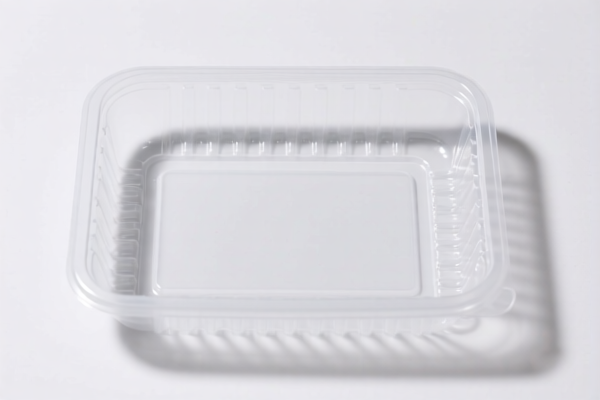
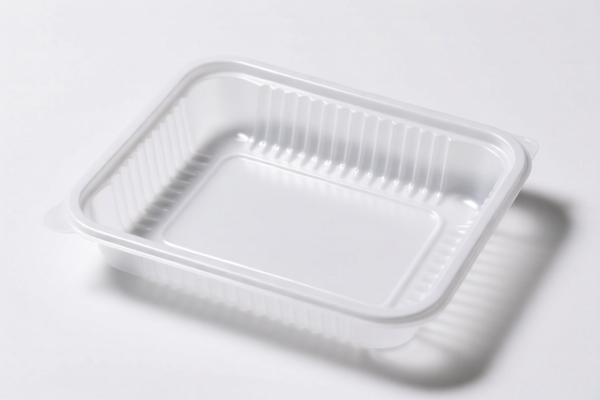
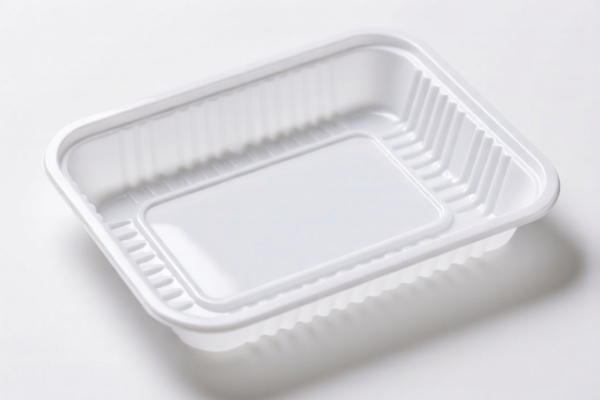
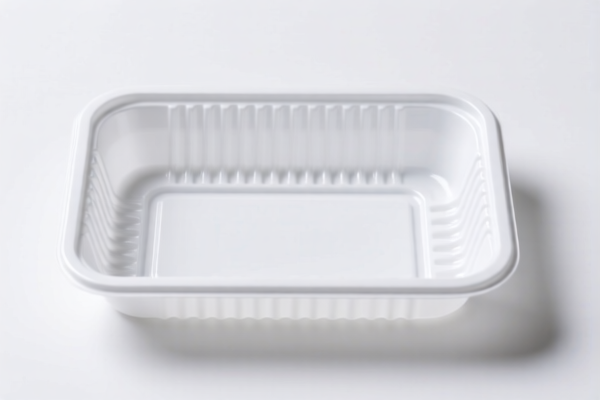
AI分析
📦 Plastic Tray (Polyethylene)
🌐 HS Code Reference & Customs Clearance Guide | 2026 Latest Tariff Analysis | Strategic Clearance Strategy
Polyethylene Trays are ubiquitous in logistics, supply chains, and industrial packaging. However, their classification in international trade is not "one-size-fits-all." Depending on their specific design, usage, and structural characteristics, they fall into different HS Codes with vastly different tax implications.
⚠️ Critical Distinction:
- Packaging vs. Goods: Is the tray considered a "container for transport" (e.g., pallet-like) or just a "general plastic article"?
- Material Specifics: While all examples are Polyethylene, the structure determines the code. - Tax Volatility: Rates range from 20.9% to 39.2% due to additional trade measures (Section 301/122).
📊 HS Code Classification Matrix (2026 Latest Tariff Alignment)
Based on the provided data, here are the 5 valid classifications for Polyethylene Trays:
| HS Code | Summary / Description | Total Tax Rate | Key Classification Logic |
|---|---|---|---|
| 3926.90.10.00 | Polyethylene tray; material: plastic; form: other plastic articles | 20.9% | General "Other plastic articles" – Lowest tariff tier. |
| 3926.90.99.89 | Polyethylene tray; material: plastic; classified as "other products" of plastics | 22.8% | Generic "Other" plastic articles, slight premium over .10. |
| 3923.90.00.80 | Polyethylene tray; material: plastic; use: goods transport or packaging supplies | 38.0% | Classified under "Goods transport/packaging supplies" – Higher tariff. |
| 3923.10.90.00 | Polyethylene tray; material: plastic; classified as "goods transport/packaging supplies" | 38.0% | Specific subheading for packaging/transport plastics. |
| 3920.10.00.00 | Polyethylene tray; material: ethylene polymer; classified as other plastic articles | 39.2% | Classified by raw material (Ethylene Polymer) rather than end-use – Highest tariff. |
💰 Detailed Tax Structure Breakdown (2026)
✅ Applicable Jurisdiction: United States (US)
✅ Origin: China (CN)
✅ Effective Date: Current trade measures including Section 301 and Section 122 tariffs.
🎯 1. The "Low Cost" Tier: HS 3926.90.10.00
- Base Tariff: 3.4%
- Section 301 Surcharge: 7.5%
- Section 122 Tariff: 10%
- 🔥 Total Rate: 20.9%
- Analysis: This is the most favorable classification. It treats the tray as a generic "other plastic article" without emphasizing its role in heavy-duty transport.
- Legal Path:
USITC:3926.90.10.00+FOOTNOTE:Section 301+FOOTNOTE:Section 122
🎯 2. The "Generic Other" Tier: HS 3926.90.99.89
- Base Tariff: 5.3%
- Section 301 Surcharge: 7.5%
- Section 122 Tariff: 10%
- 🔥 Total Rate: 22.8%
- Analysis: Slightly higher base tariff (5.3% vs 3.4%). Used when the specific sub-heading
.10is not applicable. Still relatively competitive.
🎯 3. The "Packaging/Transport" Tier: HS 3923.90.00.80 & 3923.10.90.00
- Base Tariff: 3.0%
- Section 301 Surcharge: 25.0% ⚠️ Major Increase
- Section 122 Tariff: 10%
- 🔥 Total Rate: 38.0%
- Analysis: Despite a lower base tariff (3.0%), the 25% Section 301 surcharge applies to goods classified under Chapter 39.23 (Packaging/Transport goods). This makes it ~17% more expensive than the 3926 classification.
- Risk: If the tray is deemed a "pallet" or "crate" for transport, customs may force this classification.
🎯 4. The "Raw Material" Tier: HS 3920.10.00.00
- Base Tariff: 4.2%
- Section 301 Surcharge: 25.0%
- Section 122 Tariff: 10%
- 🔥 Total Rate: 39.2%
- Analysis: The highest tax burden. Classified under "Plates, sheets, film, foil and strip, of polymers of ethylene." This is usually a misclassification for finished trays but applies if the item is viewed strictly as a shaped polymer product rather than an article.
🛠️ Customs Clearance Strategic Advice
✅ 1. Documentation & Labeling Strategy
To minimize tax liability, your documentation must align with the lowest applicable HS Code (3926.90.10.00) where possible.
| Document | Recommendation | Why? |
|---|---|---|
| Commercial Invoice | Describe as "Plastic Storage Tray" or "General Purpose Plastic Container" | Avoid using keywords like "Pallet," "Crate," or "Transport Package" which trigger 3923 codes. |
| Product Description | Specify "Polyethylene, Non-Folding, No Wheels" | Highlights it as a static article, not a mobile transport device. |
| Material Declaration | "100% High-Density Polyethylene (HDPE)" | Confirm material to support Chapter 39 classification. |
| Usage Statement | "For indoor storage/display" | Distance from "Goods Transport" reduces risk of 3923 classification. |
✅ 2. Classification Decision Tree
-
Is it a Pallet/Crate with forklift holes?
→ Risk of 3923 (38.0%).
Strategy: If it’s a small tray without structural reinforcement for heavy transport, argue for 3926 (20.9%). -
Is it a thin sheet or molded container?
→ Prefer 3926.90.10.00 (20.9%).
Strategy: Emphasize "Article of Plastic" over "Packaging Material." -
Is it a thin film or sheet product?
→ Avoid 3920.10.00.00 (39.2%) unless it’s literally a sheet. Trays are "articles," not "plates/sheets."
✅ 3. Common Pitfalls & Penalties
| Mistake | Consequence |
|---|---|
| Mislabeling as "Pallet" | Triggers 3923 codes → 38.0% Tax instead of 20.9%. |
| Ignoring Section 122 | All classifications above include a 10% Section 122 tariff. Failure to account for this leads to underpayment penalties. |
| Confusing 3920 vs 3926 | 3920 is for unfinished polymer forms. A molded tray is an article (3926). Misclassification can lead to audits. |
🌍 Global Market Comparison (2026)
| Region | Recommended HS Code | Est. Total Tax (China Origin) | Notes |
|---|---|---|---|
| 🇺🇸 USA | 3926.90.10.00 | 20.9% | Best option. Includes 7.5% Sec 301 + 10% Sec 122. |
| 🇺🇸 USA | 3923.xxxx | 38.0% | Avoid if possible. High Sec 301 impact. |
| 🇨🇳 China | 3926.90.90.99 | ~5-7% | Low import duty. No Section 301/122. |
| 🇪🇺 EU | 3926.90.97 | ~0-4% | No equivalent Sec 301 tariffs. |
📌 Conclusion for US Imports:
The 20.9% rate (HS 3926.90.10.00) is the target. The difference between this and the 38.0% rate is 17.1 percentage points. On a $10,000 shipment, this is a $1,710 savings.
📌 Final Checklist for Importers
- Verify Structure: Ensure the tray does not resemble a pallet (heavy-duty, forklift-ready) to avoid 3923.
- Label Smartly: Use "Storage Tray" or "Display Tray" instead of "Shipping Crate."
- Calculate Cost:
- Scenario A (3926): $10,000 × 20.9% = $2,090 Duty
- Scenario B (3923): $10,000 × 38.0% = $3,800 Duty
- Savings: $1,710
- Apply for Pre-Ruling: If unsure, request a CBP Advance Ruling to lock in the 3926.90.10.00 classification.
🎯 Key Takeaway
🔹 "Tray" is not a Tariff Code.
🔹 Avoid "Transport/Packaging" keywords to stay out of the 38% bracket.
🔹 Target HS 3926.90.10.00 for the lowest duty (20.9%).
🔹 Remember: Section 122 (10%) is unavoidable for all China-origin plastics in the US.
✨ Professional Customs Clearance Starts with Precision.
💼 Don't let a 17% tax difference erase your profit margin!
用户评价
关于 HS 编码归类
协调制度(HS)是由世界海关组织(WCO)制定的国际贸易商品分类标准。全球 200 多个国家采用 HS 系统作为海关关税、贸易统计和进出口监管的基础。
每个 HS 编码遵循以下层级结构:
- 章(2 位)——商品大类(例如:第 84 章:机器和机械设备)
- 品目(4 位)——章内的更具体分类
- 子目(6 位)——国际通用细分,所有 WCO 成员国统一使用
- 本国细分(8-10 位)——各国自行扩展的细分编码,如美国 HTSUS 10 位编码
正确的 HS 编码归类对于顺利通关、准确缴纳关税和遵守贸易法规至关重要。错误归类可能导致海关延误、多缴关税或罚款。
从CN进口到US时,适用的关税税率可能包括:
- 最惠国(MFN)税率——适用于 WTO 成员国的标准关税税率
- 普通税率——适用于无贸易协定国家
- 贸易救济关税——附加关税,如 301 条款(反倾销)、232 条款(国家安全)或反补贴税
本页内容仅供参考。如需正式归类,请咨询当地海关或持牌报关代理。