plastic tray
CN → US| HS Code | Tariff Rate | Origin | Destination | Doc |
|---|---|---|---|---|
| 3926901000 | 20.9% | CN | US | Official Doc |
| 3926909989 | 22.8% | CN | US | Official Doc |
| 3923900080 | 38.0% | CN | US | Official Doc |
| 3923109000 | 38.0% | CN | US | Official Doc |
| 3920100000 | 39.2% | CN | US | Official Doc |
Product Images
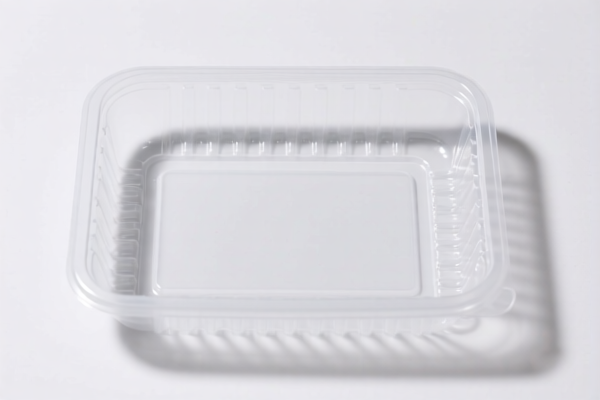
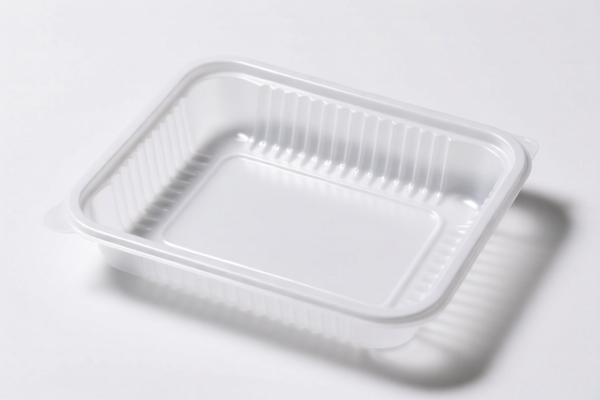
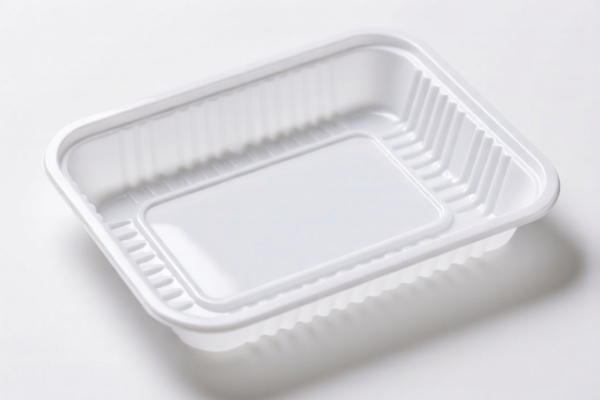
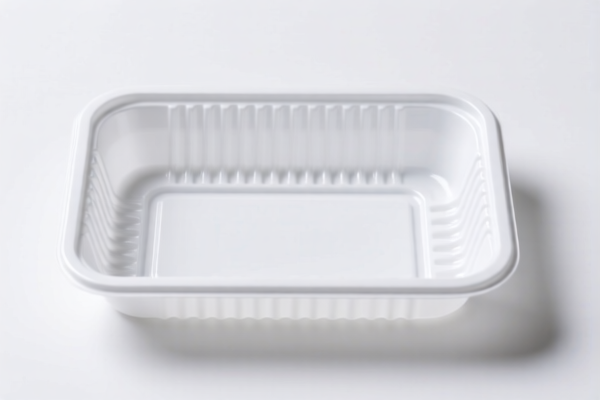
AI Analysis
📦 Plastic Tray (Polyethylene)
🌐 HS Code Reference & Customs Clearance Guide | 2026 Latest Tariff Analysis | Strategic Clearance Strategy
Polyethylene Trays are ubiquitous in logistics, supply chains, and industrial packaging. However, their classification in international trade is not "one-size-fits-all." Depending on their specific design, usage, and structural characteristics, they fall into different HS Codes with vastly different tax implications.
⚠️ Critical Distinction:
- Packaging vs. Goods: Is the tray considered a "container for transport" (e.g., pallet-like) or just a "general plastic article"?
- Material Specifics: While all examples are Polyethylene, the structure determines the code. - Tax Volatility: Rates range from 20.9% to 39.2% due to additional trade measures (Section 301/122).
📊 HS Code Classification Matrix (2026 Latest Tariff Alignment)
Based on the provided data, here are the 5 valid classifications for Polyethylene Trays:
| HS Code | Summary / Description | Total Tax Rate | Key Classification Logic |
|---|---|---|---|
| 3926.90.10.00 | Polyethylene tray; material: plastic; form: other plastic articles | 20.9% | General "Other plastic articles" – Lowest tariff tier. |
| 3926.90.99.89 | Polyethylene tray; material: plastic; classified as "other products" of plastics | 22.8% | Generic "Other" plastic articles, slight premium over .10. |
| 3923.90.00.80 | Polyethylene tray; material: plastic; use: goods transport or packaging supplies | 38.0% | Classified under "Goods transport/packaging supplies" – Higher tariff. |
| 3923.10.90.00 | Polyethylene tray; material: plastic; classified as "goods transport/packaging supplies" | 38.0% | Specific subheading for packaging/transport plastics. |
| 3920.10.00.00 | Polyethylene tray; material: ethylene polymer; classified as other plastic articles | 39.2% | Classified by raw material (Ethylene Polymer) rather than end-use – Highest tariff. |
💰 Detailed Tax Structure Breakdown (2026)
✅ Applicable Jurisdiction: United States (US)
✅ Origin: China (CN)
✅ Effective Date: Current trade measures including Section 301 and Section 122 tariffs.
🎯 1. The "Low Cost" Tier: HS 3926.90.10.00
- Base Tariff: 3.4%
- Section 301 Surcharge: 7.5%
- Section 122 Tariff: 10%
- 🔥 Total Rate: 20.9%
- Analysis: This is the most favorable classification. It treats the tray as a generic "other plastic article" without emphasizing its role in heavy-duty transport.
- Legal Path:
USITC:3926.90.10.00+FOOTNOTE:Section 301+FOOTNOTE:Section 122
🎯 2. The "Generic Other" Tier: HS 3926.90.99.89
- Base Tariff: 5.3%
- Section 301 Surcharge: 7.5%
- Section 122 Tariff: 10%
- 🔥 Total Rate: 22.8%
- Analysis: Slightly higher base tariff (5.3% vs 3.4%). Used when the specific sub-heading
.10is not applicable. Still relatively competitive.
🎯 3. The "Packaging/Transport" Tier: HS 3923.90.00.80 & 3923.10.90.00
- Base Tariff: 3.0%
- Section 301 Surcharge: 25.0% ⚠️ Major Increase
- Section 122 Tariff: 10%
- 🔥 Total Rate: 38.0%
- Analysis: Despite a lower base tariff (3.0%), the 25% Section 301 surcharge applies to goods classified under Chapter 39.23 (Packaging/Transport goods). This makes it ~17% more expensive than the 3926 classification.
- Risk: If the tray is deemed a "pallet" or "crate" for transport, customs may force this classification.
🎯 4. The "Raw Material" Tier: HS 3920.10.00.00
- Base Tariff: 4.2%
- Section 301 Surcharge: 25.0%
- Section 122 Tariff: 10%
- 🔥 Total Rate: 39.2%
- Analysis: The highest tax burden. Classified under "Plates, sheets, film, foil and strip, of polymers of ethylene." This is usually a misclassification for finished trays but applies if the item is viewed strictly as a shaped polymer product rather than an article.
🛠️ Customs Clearance Strategic Advice
✅ 1. Documentation & Labeling Strategy
To minimize tax liability, your documentation must align with the lowest applicable HS Code (3926.90.10.00) where possible.
| Document | Recommendation | Why? |
|---|---|---|
| Commercial Invoice | Describe as "Plastic Storage Tray" or "General Purpose Plastic Container" | Avoid using keywords like "Pallet," "Crate," or "Transport Package" which trigger 3923 codes. |
| Product Description | Specify "Polyethylene, Non-Folding, No Wheels" | Highlights it as a static article, not a mobile transport device. |
| Material Declaration | "100% High-Density Polyethylene (HDPE)" | Confirm material to support Chapter 39 classification. |
| Usage Statement | "For indoor storage/display" | Distance from "Goods Transport" reduces risk of 3923 classification. |
✅ 2. Classification Decision Tree
-
Is it a Pallet/Crate with forklift holes?
→ Risk of 3923 (38.0%).
Strategy: If it’s a small tray without structural reinforcement for heavy transport, argue for 3926 (20.9%). -
Is it a thin sheet or molded container?
→ Prefer 3926.90.10.00 (20.9%).
Strategy: Emphasize "Article of Plastic" over "Packaging Material." -
Is it a thin film or sheet product?
→ Avoid 3920.10.00.00 (39.2%) unless it’s literally a sheet. Trays are "articles," not "plates/sheets."
✅ 3. Common Pitfalls & Penalties
| Mistake | Consequence |
|---|---|
| Mislabeling as "Pallet" | Triggers 3923 codes → 38.0% Tax instead of 20.9%. |
| Ignoring Section 122 | All classifications above include a 10% Section 122 tariff. Failure to account for this leads to underpayment penalties. |
| Confusing 3920 vs 3926 | 3920 is for unfinished polymer forms. A molded tray is an article (3926). Misclassification can lead to audits. |
🌍 Global Market Comparison (2026)
| Region | Recommended HS Code | Est. Total Tax (China Origin) | Notes |
|---|---|---|---|
| 🇺🇸 USA | 3926.90.10.00 | 20.9% | Best option. Includes 7.5% Sec 301 + 10% Sec 122. |
| 🇺🇸 USA | 3923.xxxx | 38.0% | Avoid if possible. High Sec 301 impact. |
| 🇨🇳 China | 3926.90.90.99 | ~5-7% | Low import duty. No Section 301/122. |
| 🇪🇺 EU | 3926.90.97 | ~0-4% | No equivalent Sec 301 tariffs. |
📌 Conclusion for US Imports:
The 20.9% rate (HS 3926.90.10.00) is the target. The difference between this and the 38.0% rate is 17.1 percentage points. On a $10,000 shipment, this is a $1,710 savings.
📌 Final Checklist for Importers
- Verify Structure: Ensure the tray does not resemble a pallet (heavy-duty, forklift-ready) to avoid 3923.
- Label Smartly: Use "Storage Tray" or "Display Tray" instead of "Shipping Crate."
- Calculate Cost:
- Scenario A (3926): $10,000 × 20.9% = $2,090 Duty
- Scenario B (3923): $10,000 × 38.0% = $3,800 Duty
- Savings: $1,710
- Apply for Pre-Ruling: If unsure, request a CBP Advance Ruling to lock in the 3926.90.10.00 classification.
🎯 Key Takeaway
🔹 "Tray" is not a Tariff Code.
🔹 Avoid "Transport/Packaging" keywords to stay out of the 38% bracket.
🔹 Target HS 3926.90.10.00 for the lowest duty (20.9%).
🔹 Remember: Section 122 (10%) is unavoidable for all China-origin plastics in the US.
✨ Professional Customs Clearance Starts with Precision.
💼 Don't let a 17% tax difference erase your profit margin!
Customer Reviews
About HS Code Classification
The Harmonized System (HS) is an internationally standardized nomenclature developed by the World Customs Organization (WCO) to classify traded products. Over 200 countries use the HS system as the basis for customs tariffs, trade statistics, and import/export regulations.
Each HS code follows a hierarchical structure:
- Chapter (2 digits) — Broad category of goods (e.g., Chapter 84: Machinery and Mechanical Appliances)
- Heading (4 digits) — More specific grouping within the chapter
- Subheading (6 digits) — Internationally standardized breakdown, used by all WCO member countries
- National subdivisions (8-10 digits) — Country-specific extensions for further classification, such as US HTSUS 10-digit codes
Correct HS code classification is essential for smooth customs clearance, accurate duty payment, and compliance with trade regulations. Misclassification can lead to customs delays, overpayment of duties, or penalties.
When importing from CN to US, the applicable tariff rates may include:
- Most-Favored-Nation (MFN) rate — The standard duty rate applied to WTO members
- General rate — Applied to countries without trade agreements
- Trade remedy duties — Additional tariffs such as Section 301 (anti-dumping), Section 232 (national security), or countervailing duties
The information provided on this page is for reference purposes only. For official classification, please consult with your local customs authority or a licensed customs broker.