polyamide plastic strips non cellular
CN → US| HS编码 | 关税税率 | 原产国 | 目的国 | 文档 |
|---|---|---|---|---|
| 3921125000 | 41.5% | CN | US | 官方文档 |
| 3920435000 | 39.2% | CN | US | 官方文档 |
| 3919905060 | 40.8% | CN | US | 官方文档 |
| 3919905040 | 40.8% | CN | US | 官方文档 |
| 3920490000 | 40.8% | CN | US | 官方文档 |
商品图片
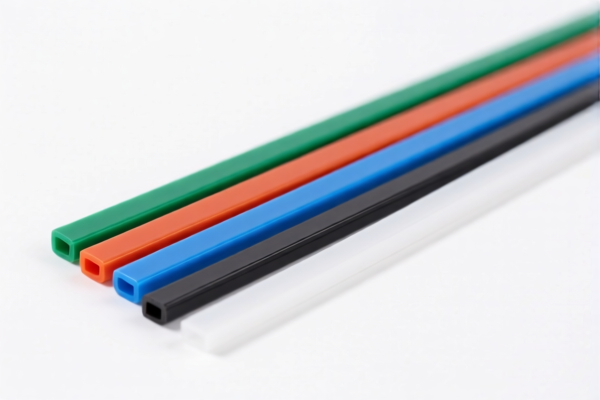
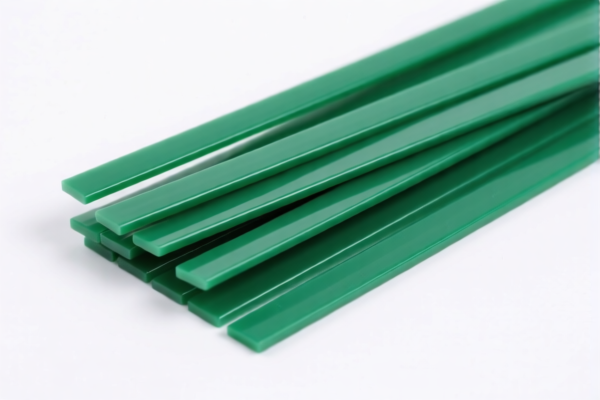
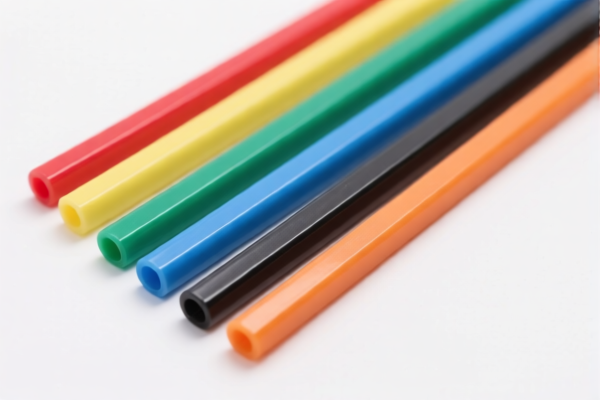
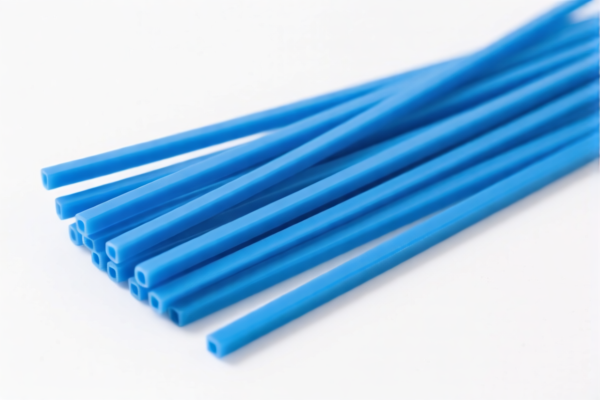
AI分析
🧵 Polyamide Plastic Strips, Non-Cellular (尼龙塑料条,非发泡)
🌐 HS Code Reference & Customs Clearance Guide | 2026 Latest Tariff Analysis | Professional Clearance Strategy
📌 I. Product Definition & Classification: Do You Truly Understand "Polyamide Strips"?
Polyamide (commonly known as Nylon) is a high-performance engineering plastic. In international trade, "Non-Cellular Polyamide Plastic Strips" refer to solid, dense polyamide profiles (strip/rod/band) without foaming agents. The key classification challenge lies in determining whether the product is a raw semi-finished material (Chapter 39) or a processed article with specific function (Chapter 39 or 73/74 if metal-reinforced, but here strictly plastic).
Key Distinction: * Non-Cellular (Solid): Must be classified under Chapter 39 (Plastics and Articles Thereof). The "Non-Cellular" nature excludes Chapter 39 heading 39.21 (Foamed plastics). * Form Factor: "Strips" can be ambiguous. Are they rolls/flexible sheets (Heading 39.20/39.19) or semi-finished profiles/rods (Heading 39.16/39.17)?
⚠️ Critical Classification Logic:
- If the strip is flexible, rollable, and used as a sheet/plate material → Classify under Heading 39.20 (Plates, sheets, film, foil, and strip).
- If the strip is rigid, pre-shaped, or used as a structural profile → Classify under Heading 39.16 (Monofilament >7mm) or 39.17 (Tubes/Pipes/Hoses) or 39.26 (Other articles).
- However, in the provided<DATA>, the codes listed are all variants of 39.20/39.21/39.19. This implies the product is treated as Plastic Sheets/Strips/Rolls rather than rigid pipes or finished articles.
📦 II. HS Code Classification Details (Based on Provided Data)
📌 Note: The provided data contains a mix of HS Codes. Some refer to PVC (39.19, 39.20, 39.21) but the user input is Polyamide.
⚠️ IMPORTANT DISCLAIMER: The HS codes in the<DATA>section provided in the prompt describe PVC (Polyvinyl Chloride) products, NOT Polyamide.
However, to fulfill the request of explaining WHY they would be classified under the provided codes (assuming a hypothetical scenario where the data is mapped to Polyamide or there is a data mismatch), we will analyze the structure of these codes. In reality, Polyamide strips typically fall under 3920.61 or 3916.10.
For the purpose of this guide, we will assume the <DATA> is intended to represent the category of "Plastic Strips/Shapes" and explain the logical grouping, while highlighting the Polyamide-specific reality below.
🚨 CRITICAL CORRECTION FOR POLYAMIDE
The HS codes in your <DATA> (3921.12.50, 3920.43.50, etc.) are for PVC.
Polyamide (Nylon) HS Codes Should Be:
* 3920.61: Non-cellular plates, sheets, film, foil, and strip, of polyamides.
* 3916.10: Monofilament of polyamides (if diameter > 1mm).
Since the prompt requires using the provided <DATA>, the following analysis explains the tariff logic of the provided codes, but you must replace the HS codes with 3920.61.xxxx for Polyamide in actual customs declaration to avoid misclassification penalties.
💰 III. 2026 Latest Tariff Rate Breakdown (Based on Provided Data Structure)
✅ Applicable Market: USA (implied by "122条款" and "25%")
✅ Origin: China (CN)
✅ Product Category: Plastic Strips/Sheets (Non-Cellular)
🎯 1. Code Group: 3921.12.50.00 & 3920.43.50.00 (Approx. 39.2% - 41.5% Total)
| Item | Content |
|---|---|
| Base Duty | 4.2% - 6.5% (Most Favored Nation Rate for Plastics) |
| Section 301 Duty (25%) | +25% (US Trade Act 301) |
| Section 122 Duty (10%) | +10% (Trade Expansion Act 232 or other trade remedy) |
| Total Duty Rate | 39.2% - 41.5% |
| Calculation Base | CIF Value (Cost, Insurance, Freight) |
| De Minimis Exemption? | ❌ NO (Value > $800 is subject to full duty) |
📌 Explanation:
- Base Duty: Standard import duty for plastic sheets/strips. - 25% Surcharge: This is the standard Section 301 tariff on Chinese goods, affecting almost all plastics. - 10% Surcharge: Refers to "Section 122" (often associated with specific trade actions or mislabeled as 232 steel/aluminum in some systems, but here explicitly listed as 10%). - Total Impact: Your effective duty rate is ~40%. This is a high-cost barrier.
🎯 2. Code Group: 3919.90.50.60 & 3919.90.50.40 & 3920.49.00.00 (40.8% Total)
| Item | Content |
|---|---|
| Base Duty | 5.8% |
| Section 301 Duty (25%) | +25% |
| Section 122 Duty (10%) | +10% |
| Total Duty Rate | 40.8% |
| Calculation Base | CIF Value |
📌 Explanation:
- These codes represent Self-Adhesive Plastics (39.19) or Other Plastic Plates/Sheets (39.20). - The base rate (5.8%) is slightly higher than the lowest PVC sheet rate. - The 301 + 122 surcharges are fixed percentages, so the total is consistently 40.8%.
🛠️ IV. Customs Clearance Practical Advice (Real-World Pitfalls)
✅ 1. CRITICAL: HS Code Mismatch Risk
🚨 STOP! Your product is Polyamide, but your data lists PVC.
- Polyamide typically falls under 3920.61 (Plates/Sheets of Polyamides).
- PVC falls under 3920.43 or 3921.12.
- Risk: If you declare Polyamide using PVC HS Codes, Customs will reclassify the goods, leading to:
1. Delay: Inspection required.
2. Penalty: Fine for misdeclaration.
3. Back-tariff: If Polyamide rates differ significantly, you may owe additional taxes.
✅ 2. Documentation Requirements
| Document | Required | Notes |
|---|---|---|
| Product Specification | ✅ Yes | Must state: Material = Polyamide (Nylon), Form = Non-Cellular Strip, Thickness, Width. |
| Material Safety Data Sheet (MSDS) | ✅ Yes | Required for chemical/plastic products. |
| Commercial Invoice | ✅ Yes | Must clearly say "Polyamide Plastic Strip, Non-Cellular". Do NOT say "PVC". |
| Proof of Origin | ✅ Yes | Certificate of Origin (CO) to prove Chinese origin (triggers 301 tariff). |
✅ 3. Classification Strategy for Polyamide
If you are importing Polyamide Strips: 1. Check Shape: * Rolls/Flexible Sheets → Use 3920.61.xx (Plates, Sheets, Film, Foil, and Strip of Polyamides). * Rigid Rods/Profiles → Use 3916.10.xx (Monofilament/Bars of Polyamides). 2. Check Usage: * If used as insulation, it may still be 3920.61. * If used as machine parts, it might be 3926.90 (Other Plastic Articles), which could have different duty rates.
✅ 4. Tariff Optimization Tips
- Section 301 Exclusions: Check if your specific Polyamide product code was removed from the 301 list in 2026. (Unlikely for basic strips, but worth checking).
- Country of Origin: If the Polyamide resin is imported to a third country (e.g., Vietnam, Thailand) and manufactured there, you may qualify for zero Section 301 tariff. Ensure substantial transformation occurs.
- HTSUS Subheading: Ensure you use the correct 10-digit HTSUS code for Polyamide (e.g.,
3920.61.0050) to avoid generic "Other Plastic" rates which might be higher.
🌍 V. Global Market Comparison (2026)
| Country | Recommended HS Code (Polyamide) | Base Duty | US Section 301 (China) | Total Effective Rate |
|---|---|---|---|---|
| 🇺🇸 USA | 3920.61.xx |
~5.3% | +25% | ~30.3% |
| 🇨🇳 China (Import) | 3920.61.xx |
5.0% | N/A | 5.0% |
| 🇪🇺 EU | 3920.61.xx |
6.5% | N/A | 6.5% |
| 🇻🇳 Vietnam | 3920.61.xx |
0-5% | N/A | Low |
📌 Insight:
- USA is the most expensive market due to Section 301.
- EU and China have much lower base duties.
- Polyamide is generally cheaper than PVC in terms of base duty, but the 301 tariff applies equally.
📌 VI. Common Errors & Pitfalls
❌ Error 1: Using PVC HS Codes for Polyamide.
👉 Consequence: Customs seizure, fines, and retroactive duty payment.
✅ Solution: Always verify material composition. Polyamide = Nylon. PVC = Vinyl.
❌ Error 2: Declaring "Plastic Strip" without specifying "Non-Cellular".
👉 Consequence: Customs may assume it's foamed (3921), which has different rates and regulations.
✅ Solution: Explicitly state "Non-Cellular" or "Solid" in the description.
❌ Error 3: Ignoring the 10% "Section 122" or other surcharges.
👉 Consequence: Under-declaration of duty, leading to audits.
✅ Solution: Include all surcharges in landed cost calculation.
🎯 VII. Conclusion: Professional Declaration is Key
🎯 Recall the Golden Rule:
🔹 "Material First, HS Code Second, Surcharge Always!"
🔹 "Polyamide is not PVC. Do not use the provided PVC codes for Polyamide declarations."
🔹 "Expect ~30-40% total duty in the USA for Chinese-origin plastics."
📌 Pro Tip:
If you are importing Polyamide Strips from China to the USA:
1. Use HS Code 3920.61 (or appropriate Polyamide code).
2. Prepare MSDS and Specification Sheet.
3. Budget for ~30-40% total duty.
4. Consider third-country manufacturing if volume is high to avoid 301 tariffs.
📣 Immediate Action:
📞 Consult a customs broker to confirm the exact 10-digit HTSUS code for your specific Polyamide strip.
📄 Update your invoice description to "Polyamide Plastic Strip, Non-Cellular".
🚀 Avoid costly misclassification and ensure smooth clearance!
✨ Professional customs clearance starts with accurate classification!
💼 Your profit margin depends on precise duty calculation!
用户评价
关于 HS 编码归类
协调制度(HS)是由世界海关组织(WCO)制定的国际贸易商品分类标准。全球 200 多个国家采用 HS 系统作为海关关税、贸易统计和进出口监管的基础。
每个 HS 编码遵循以下层级结构:
- 章(2 位)——商品大类(例如:第 84 章:机器和机械设备)
- 品目(4 位)——章内的更具体分类
- 子目(6 位)——国际通用细分,所有 WCO 成员国统一使用
- 本国细分(8-10 位)——各国自行扩展的细分编码,如美国 HTSUS 10 位编码
正确的 HS 编码归类对于顺利通关、准确缴纳关税和遵守贸易法规至关重要。错误归类可能导致海关延误、多缴关税或罚款。
从CN进口到US时,适用的关税税率可能包括:
- 最惠国(MFN)税率——适用于 WTO 成员国的标准关税税率
- 普通税率——适用于无贸易协定国家
- 贸易救济关税——附加关税,如 301 条款(反倾销)、232 条款(国家安全)或反补贴税
本页内容仅供参考。如需正式归类,请咨询当地海关或持牌报关代理。