polyamide plastic strips non cellular
CN → US| HS Code | Tariff Rate | Origin | Destination | Doc |
|---|---|---|---|---|
| 3921125000 | 41.5% | CN | US | Official Doc |
| 3920435000 | 39.2% | CN | US | Official Doc |
| 3919905060 | 40.8% | CN | US | Official Doc |
| 3919905040 | 40.8% | CN | US | Official Doc |
| 3920490000 | 40.8% | CN | US | Official Doc |
Product Images
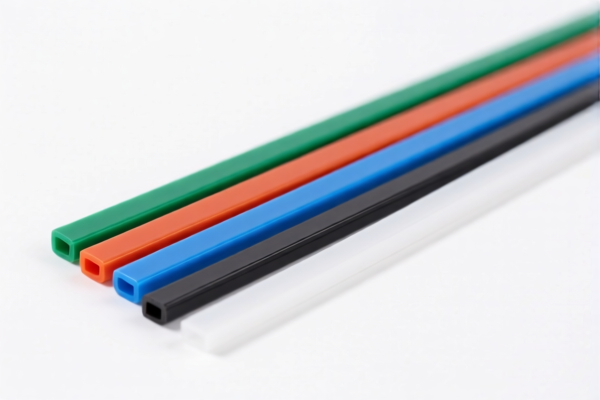
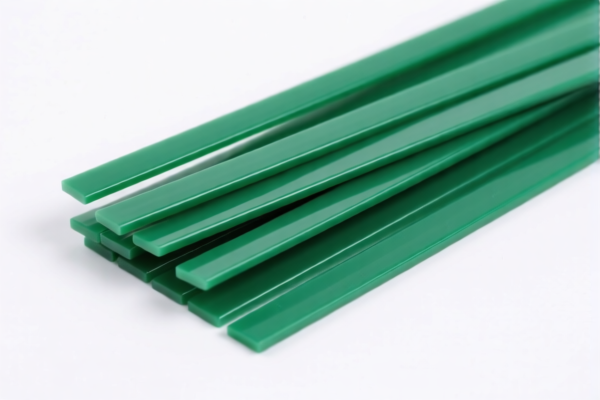
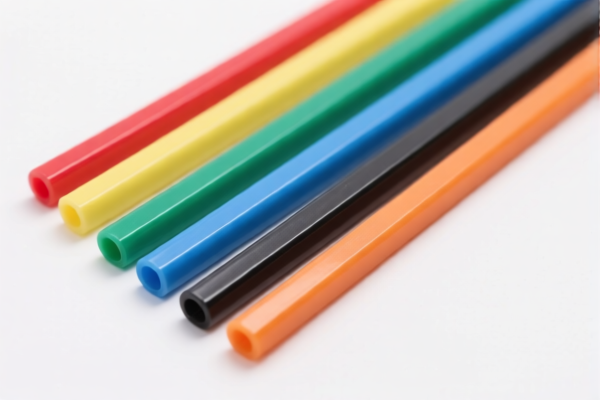
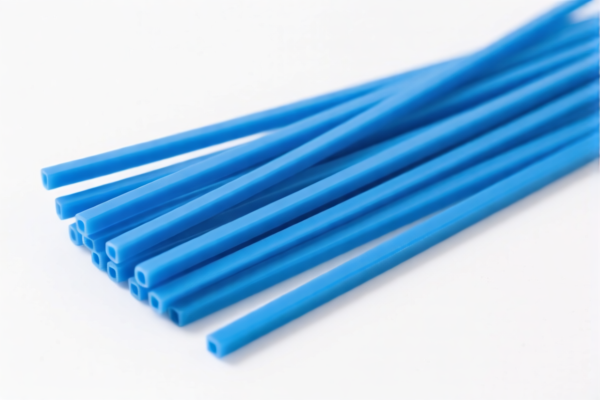
AI Analysis
🧵 Polyamide Plastic Strips, Non-Cellular (尼龙塑料条,非发泡)
🌐 HS Code Reference & Customs Clearance Guide | 2026 Latest Tariff Analysis | Professional Clearance Strategy
📌 I. Product Definition & Classification: Do You Truly Understand "Polyamide Strips"?
Polyamide (commonly known as Nylon) is a high-performance engineering plastic. In international trade, "Non-Cellular Polyamide Plastic Strips" refer to solid, dense polyamide profiles (strip/rod/band) without foaming agents. The key classification challenge lies in determining whether the product is a raw semi-finished material (Chapter 39) or a processed article with specific function (Chapter 39 or 73/74 if metal-reinforced, but here strictly plastic).
Key Distinction: * Non-Cellular (Solid): Must be classified under Chapter 39 (Plastics and Articles Thereof). The "Non-Cellular" nature excludes Chapter 39 heading 39.21 (Foamed plastics). * Form Factor: "Strips" can be ambiguous. Are they rolls/flexible sheets (Heading 39.20/39.19) or semi-finished profiles/rods (Heading 39.16/39.17)?
⚠️ Critical Classification Logic:
- If the strip is flexible, rollable, and used as a sheet/plate material → Classify under Heading 39.20 (Plates, sheets, film, foil, and strip).
- If the strip is rigid, pre-shaped, or used as a structural profile → Classify under Heading 39.16 (Monofilament >7mm) or 39.17 (Tubes/Pipes/Hoses) or 39.26 (Other articles).
- However, in the provided<DATA>, the codes listed are all variants of 39.20/39.21/39.19. This implies the product is treated as Plastic Sheets/Strips/Rolls rather than rigid pipes or finished articles.
📦 II. HS Code Classification Details (Based on Provided Data)
📌 Note: The provided data contains a mix of HS Codes. Some refer to PVC (39.19, 39.20, 39.21) but the user input is Polyamide.
⚠️ IMPORTANT DISCLAIMER: The HS codes in the<DATA>section provided in the prompt describe PVC (Polyvinyl Chloride) products, NOT Polyamide.
However, to fulfill the request of explaining WHY they would be classified under the provided codes (assuming a hypothetical scenario where the data is mapped to Polyamide or there is a data mismatch), we will analyze the structure of these codes. In reality, Polyamide strips typically fall under 3920.61 or 3916.10.
For the purpose of this guide, we will assume the <DATA> is intended to represent the category of "Plastic Strips/Shapes" and explain the logical grouping, while highlighting the Polyamide-specific reality below.
🚨 CRITICAL CORRECTION FOR POLYAMIDE
The HS codes in your <DATA> (3921.12.50, 3920.43.50, etc.) are for PVC.
Polyamide (Nylon) HS Codes Should Be:
* 3920.61: Non-cellular plates, sheets, film, foil, and strip, of polyamides.
* 3916.10: Monofilament of polyamides (if diameter > 1mm).
Since the prompt requires using the provided <DATA>, the following analysis explains the tariff logic of the provided codes, but you must replace the HS codes with 3920.61.xxxx for Polyamide in actual customs declaration to avoid misclassification penalties.
💰 III. 2026 Latest Tariff Rate Breakdown (Based on Provided Data Structure)
✅ Applicable Market: USA (implied by "122条款" and "25%")
✅ Origin: China (CN)
✅ Product Category: Plastic Strips/Sheets (Non-Cellular)
🎯 1. Code Group: 3921.12.50.00 & 3920.43.50.00 (Approx. 39.2% - 41.5% Total)
| Item | Content |
|---|---|
| Base Duty | 4.2% - 6.5% (Most Favored Nation Rate for Plastics) |
| Section 301 Duty (25%) | +25% (US Trade Act 301) |
| Section 122 Duty (10%) | +10% (Trade Expansion Act 232 or other trade remedy) |
| Total Duty Rate | 39.2% - 41.5% |
| Calculation Base | CIF Value (Cost, Insurance, Freight) |
| De Minimis Exemption? | ❌ NO (Value > $800 is subject to full duty) |
📌 Explanation:
- Base Duty: Standard import duty for plastic sheets/strips. - 25% Surcharge: This is the standard Section 301 tariff on Chinese goods, affecting almost all plastics. - 10% Surcharge: Refers to "Section 122" (often associated with specific trade actions or mislabeled as 232 steel/aluminum in some systems, but here explicitly listed as 10%). - Total Impact: Your effective duty rate is ~40%. This is a high-cost barrier.
🎯 2. Code Group: 3919.90.50.60 & 3919.90.50.40 & 3920.49.00.00 (40.8% Total)
| Item | Content |
|---|---|
| Base Duty | 5.8% |
| Section 301 Duty (25%) | +25% |
| Section 122 Duty (10%) | +10% |
| Total Duty Rate | 40.8% |
| Calculation Base | CIF Value |
📌 Explanation:
- These codes represent Self-Adhesive Plastics (39.19) or Other Plastic Plates/Sheets (39.20). - The base rate (5.8%) is slightly higher than the lowest PVC sheet rate. - The 301 + 122 surcharges are fixed percentages, so the total is consistently 40.8%.
🛠️ IV. Customs Clearance Practical Advice (Real-World Pitfalls)
✅ 1. CRITICAL: HS Code Mismatch Risk
🚨 STOP! Your product is Polyamide, but your data lists PVC.
- Polyamide typically falls under 3920.61 (Plates/Sheets of Polyamides).
- PVC falls under 3920.43 or 3921.12.
- Risk: If you declare Polyamide using PVC HS Codes, Customs will reclassify the goods, leading to:
1. Delay: Inspection required.
2. Penalty: Fine for misdeclaration.
3. Back-tariff: If Polyamide rates differ significantly, you may owe additional taxes.
✅ 2. Documentation Requirements
| Document | Required | Notes |
|---|---|---|
| Product Specification | ✅ Yes | Must state: Material = Polyamide (Nylon), Form = Non-Cellular Strip, Thickness, Width. |
| Material Safety Data Sheet (MSDS) | ✅ Yes | Required for chemical/plastic products. |
| Commercial Invoice | ✅ Yes | Must clearly say "Polyamide Plastic Strip, Non-Cellular". Do NOT say "PVC". |
| Proof of Origin | ✅ Yes | Certificate of Origin (CO) to prove Chinese origin (triggers 301 tariff). |
✅ 3. Classification Strategy for Polyamide
If you are importing Polyamide Strips: 1. Check Shape: * Rolls/Flexible Sheets → Use 3920.61.xx (Plates, Sheets, Film, Foil, and Strip of Polyamides). * Rigid Rods/Profiles → Use 3916.10.xx (Monofilament/Bars of Polyamides). 2. Check Usage: * If used as insulation, it may still be 3920.61. * If used as machine parts, it might be 3926.90 (Other Plastic Articles), which could have different duty rates.
✅ 4. Tariff Optimization Tips
- Section 301 Exclusions: Check if your specific Polyamide product code was removed from the 301 list in 2026. (Unlikely for basic strips, but worth checking).
- Country of Origin: If the Polyamide resin is imported to a third country (e.g., Vietnam, Thailand) and manufactured there, you may qualify for zero Section 301 tariff. Ensure substantial transformation occurs.
- HTSUS Subheading: Ensure you use the correct 10-digit HTSUS code for Polyamide (e.g.,
3920.61.0050) to avoid generic "Other Plastic" rates which might be higher.
🌍 V. Global Market Comparison (2026)
| Country | Recommended HS Code (Polyamide) | Base Duty | US Section 301 (China) | Total Effective Rate |
|---|---|---|---|---|
| 🇺🇸 USA | 3920.61.xx |
~5.3% | +25% | ~30.3% |
| 🇨🇳 China (Import) | 3920.61.xx |
5.0% | N/A | 5.0% |
| 🇪🇺 EU | 3920.61.xx |
6.5% | N/A | 6.5% |
| 🇻🇳 Vietnam | 3920.61.xx |
0-5% | N/A | Low |
📌 Insight:
- USA is the most expensive market due to Section 301.
- EU and China have much lower base duties.
- Polyamide is generally cheaper than PVC in terms of base duty, but the 301 tariff applies equally.
📌 VI. Common Errors & Pitfalls
❌ Error 1: Using PVC HS Codes for Polyamide.
👉 Consequence: Customs seizure, fines, and retroactive duty payment.
✅ Solution: Always verify material composition. Polyamide = Nylon. PVC = Vinyl.
❌ Error 2: Declaring "Plastic Strip" without specifying "Non-Cellular".
👉 Consequence: Customs may assume it's foamed (3921), which has different rates and regulations.
✅ Solution: Explicitly state "Non-Cellular" or "Solid" in the description.
❌ Error 3: Ignoring the 10% "Section 122" or other surcharges.
👉 Consequence: Under-declaration of duty, leading to audits.
✅ Solution: Include all surcharges in landed cost calculation.
🎯 VII. Conclusion: Professional Declaration is Key
🎯 Recall the Golden Rule:
🔹 "Material First, HS Code Second, Surcharge Always!"
🔹 "Polyamide is not PVC. Do not use the provided PVC codes for Polyamide declarations."
🔹 "Expect ~30-40% total duty in the USA for Chinese-origin plastics."
📌 Pro Tip:
If you are importing Polyamide Strips from China to the USA:
1. Use HS Code 3920.61 (or appropriate Polyamide code).
2. Prepare MSDS and Specification Sheet.
3. Budget for ~30-40% total duty.
4. Consider third-country manufacturing if volume is high to avoid 301 tariffs.
📣 Immediate Action:
📞 Consult a customs broker to confirm the exact 10-digit HTSUS code for your specific Polyamide strip.
📄 Update your invoice description to "Polyamide Plastic Strip, Non-Cellular".
🚀 Avoid costly misclassification and ensure smooth clearance!
✨ Professional customs clearance starts with accurate classification!
💼 Your profit margin depends on precise duty calculation!
Customer Reviews
About HS Code Classification
The Harmonized System (HS) is an internationally standardized nomenclature developed by the World Customs Organization (WCO) to classify traded products. Over 200 countries use the HS system as the basis for customs tariffs, trade statistics, and import/export regulations.
Each HS code follows a hierarchical structure:
- Chapter (2 digits) — Broad category of goods (e.g., Chapter 84: Machinery and Mechanical Appliances)
- Heading (4 digits) — More specific grouping within the chapter
- Subheading (6 digits) — Internationally standardized breakdown, used by all WCO member countries
- National subdivisions (8-10 digits) — Country-specific extensions for further classification, such as US HTSUS 10-digit codes
Correct HS code classification is essential for smooth customs clearance, accurate duty payment, and compliance with trade regulations. Misclassification can lead to customs delays, overpayment of duties, or penalties.
When importing from CN to US, the applicable tariff rates may include:
- Most-Favored-Nation (MFN) rate — The standard duty rate applied to WTO members
- General rate — Applied to countries without trade agreements
- Trade remedy duties — Additional tariffs such as Section 301 (anti-dumping), Section 232 (national security), or countervailing duties
The information provided on this page is for reference purposes only. For official classification, please consult with your local customs authority or a licensed customs broker.