polyisobutylene rubber raw material
CN → US| HS编码 | 关税税率 | 原产国 | 目的国 | 文档 |
|---|---|---|---|---|
| 3902205000 | 41.5% | CN | US | 官方文档 |
| 3902201000 | 35.0% | CN | US | 官方文档 |
| 3911901000 | 35.0% | CN | US | 官方文档 |
| 3911901500 | 35.0% | CN | US | 官方文档 |
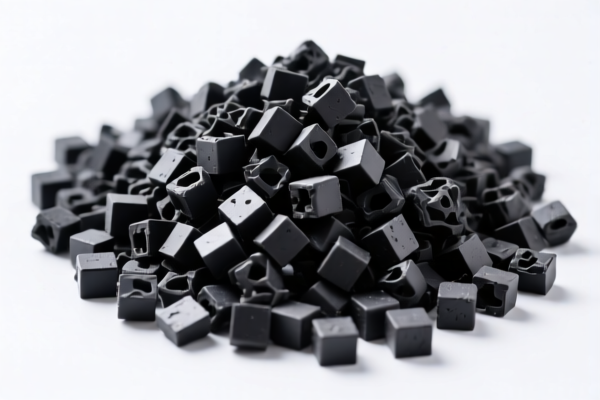
商品图片



AI分析
🧪 Polyisobutylene (PIB) Rubber Raw Material – The Invisible Shield in Global Trade
🌐 HS Code Reference & Customs Clearance Guide | 2026 Tariff Landscape | Strategic Import Strategy
📌 I. Product Definition & Classification: What is Polyisobutylene?
Polyisobutylene (PIB), often referred to as butyl rubber precursor, is a synthetic rubber made from the polymerization of isobutylene with a small amount of isoprene. It is renowned for its excellent gas impermeability, chemical stability, and viscosity.
In international trade, PIB is not a "finished good" but a chemical intermediate. Its classification depends heavily on its physical state and chemical structure:
1. Primary Forms (Unworked Polymers): - High molecular weight PIB used directly in adhesives, sealants, or as additives. - Typically appears as viscous liquids, gels, or solid beads/powders.
2. Modified/Resin Forms: - PIB mixed with other resins or modified for specific industrial applications (e.g., plasticizers, couplings). - Falls under broader "petroleum resins" or "modified polymers" categories.
⚠️ Critical Distinction Point:
- If the PIB is in its raw, unmodified primary polymeric state → It belongs to Chapter 39 (Plastics in Primary Forms).
- If it is blended, modified, or classified as a petroleum resin → It may fall under Chapter 39.11 (Petroleum Resins/Sulfur) or other specialty chemical codes.
📦 II. HS Code Classification Matrix (2026 Latest Tariff Concordance)
Based on the provided data, here are the four specific HS Codes applicable to Polyisobutylene, with their rationale and tax implications.
| HS Code | Product Description & Rationale | Applicable Scenario | Material State |
|---|---|---|---|
3902.20.50.00 |
Polyisobutylene Polymers Rationale: Explicitly classified as primary form polymer under "Poly-1-alkenes". |
Raw PIB for adhesives, sealants, or rubber compounding. | ✅ Primary Polymer |
3902.20.10.00 |
Polyisobutylene Polymers (Other) Rationale: Inferred as primary shape based on polymer attributes; generic fallback for PIB not specified elsewhere. |
Standard industrial grade PIB, not specified in 3902.20.50. | ✅ Primary Shape |
3911.90.10.00 |
Petroleum Resins / Polyolefins Rationale: Classified as elastomer or petroleum-based resin due to modification or blending. |
PIB used as a plasticizer, coupling agent, or modified resin. | ⚠️ Modified/Resin |
3911.90.15.00 |
Hydrocarbon Polymers / Modified Resins Rationale: Fits "Petroleum resins and other modified polymers" under hydrocarbon category. |
Specialized PIB derivatives or blends classified as hydrocarbon resins. | ⚠️ Hydrocarbon Resin |
🔍 Key Insight:
- Codes3902.20.xxare for pure Polyisobutylene. - Codes3911.90.xxare for PIB-based resins or modified forms. - The choice depends on the Technical Data Sheet (TDS): Is it pure PIB or a resin blend?
💰 III. 2026 Tariff Rate Breakdown (Including Surtaxes & Policy Add-ons)
✅ Applicable Country: United States (US)
✅ Country of Origin: China (CN)
✅ Effective Date: November 10, 2025 onwards
🎯 1. 3902.20.50.00 & 3902.20.10.00 – Pure Polyisobutylene (Primary Forms)
| Item | Details |
|---|---|
| Base Tariff | 6.5% (3902.20.50) / 0.0% (3902.20.10) |
| Section 301 Surcharge | +25.0% (All Chinese imports under these codes) |
| Section 122 Surcharge | +10.0% (Specific to certain polymeric materials) |
| Total Tax Rate | 41.5% (3902.20.50) or 35.0% (3902.20.10) |
| Calculation Basis | CIF Value × Total Rate |
| De Minimis Exemption | ❌ NOT Eligible (Denied under current trade rules for polymeric materials) |
| Legal Basis Path | USITC:3902.20 → Section 301: Footnote 9903.88.01 → Section 122: IEEPA 9903.01.24 |
📌 Explanation:
-3902.20.50.00has a 6.5% base rate, leading to a 41.5% total tax.
-3902.20.10.00has a 0% base rate, leading to a 35.0% total tax.
- Difference: 6.5% base rate gap.
- Both are subject to 25% Section 301 and 10% Section 122 surcharges.
🎯 2. 3911.90.10.00 & 3911.90.15.00 – Modified PIB / Petroleum Resins
| Item | Details |
|---|---|
| Base Tariff | 0.0% (Both codes) |
| Section 301 Surcharge | +25.0% (All Chinese imports) |
| Section 122 Surcharge | +10.0% (Specific to polymeric/resin materials) |
| Total Tax Rate | 35.0% |
| Calculation Basis | CIF Value × 35.0% |
| De Minimis Exemption | ❌ NOT Eligible |
| Legal Basis Path | USITC:3911.90 → Section 301 → Section 122 |
📌 Explanation:
- Both codes have 0% base rate, so the total tax is driven entirely by surcharges: 25% + 10% = 35%.
- These codes are ideal if your PIB is modified or blended, as they avoid the 6.5% base duty.
🛠️ IV. Customs Clearance Best Practices (Avoiding Pitfalls)
✅ 1. Documentation Checklist (Non-Negotiable)
| Document | Mandatory? | Purpose |
|---|---|---|
| ✅ Technical Data Sheet (TDS) | ✔️ | To prove material is PIB and determine primary vs. modified state. |
| ✅ Certificate of Analysis (COA) | ✔️ | Confirms chemical composition (e.g., % isobutylene, viscosity). |
| ✅ Material Safety Data Sheet (MSDS) | ✔️ | Required for hazardous material classification (if any). |
| ✅ Commercial Invoice | ✔️ | Must clearly state "Polyisobutylene" or "Petroleum Resin" – NO vague terms. |
| ✅ Packing List | ✔️ | Weight, volume, and packaging type. |
| ✅ Supply Chain Declaration | ✔️ | Confirm origin is China to trigger 301/122 surcharges correctly. |
✅ 2. Classification Strategy (Key Decision Matrix)
| Scenario | Recommended HS Code | Total Tax | Why? |
|---|---|---|---|
| Pure PIB, High Molecular Weight | 3902.20.50.00 |
41.5% | Most accurate for raw polymer. |
| Pure PIB, Generic Grade | 3902.20.10.00 |
35.0% | Better if base rate is 0%. |
| PIB Blended with Resins | 3911.90.10.00 |
35.0% | Classified as modified resin; avoids 6.5% base. |
| PIB as Plasticizer/Additive | 3911.90.15.00 |
35.0% | Hydrocarbon resin category. |
🔥 Golden Rule:
"If it’s pure PIB, fight for3902.20.10(35%). If it’s modified, use3911.90(35%). Avoid3902.20.50(41.5%) unless required by your supplier’s COA."
✅ 3. Common Mistakes & Consequences
| Mistake | Consequence |
|---|---|
| ❌ Declaring as "Rubber" or "Elastomer" | May be misclassified under Chapter 40, leading to audits, delays, or penalties. |
| ❌ Using vague terms like "Chemical Mix" | Customs will assign worst-case scenario code (highest duty). |
| ❌ Ignoring Section 122 | Failure to declare polymeric nature → 10% penalty + retroactive tax. |
| ❌ Not providing TDS | Customs cannot verify primary vs. modified form → Goods held at port. |
🌍 V. Global Market Comparison (2026)
| Country | Recommended HS Code | Total Tax (CN Origin) | Notes |
|---|---|---|---|
| 🇺🇸 USA | 3902.20.10.00 or 3911.90.xx |
35% | 25% 301 + 10% 122. No base duty for optimized codes. |
| 🇨🇳 China | 3902.20.10.00 |
6.5% | No surcharges. Import duty only. |
| 🇪🇺 EU | 3902.20.00 |
5.3% | No Section 301/122 equivalents. Lower overall cost. |
| 🇯🇵 Japan | 3902.20.000 |
6.0% | Stable tariff, no surcharges. |
📌 Conclusion:
- US Market is the most expensive due to dual surcharges (35% total).
- Optimize classification to3902.20.10or3911.90to save 6.5% compared to3902.20.50.
- Consider alternative origins (e.g., Malaysia, Korea) if possible to avoid 301/122 surcharges.
📌 VI. Actionable Recommendations
-
Get a Pre-Ruling:
Submit your TDS and COA to US Customs for a Binding Ruling to confirm if your PIB qualifies for3902.20.10.00(0% base) vs.3902.20.50.00(6.5% base). -
Clarify Product Description:
Use exact terms: "Polyisobutylene, Primary Form, Unmodified" or "Polyisobutylene Petroleum Resin, Modified". Avoid "Rubber" unless it’s vulcanized. -
Audit Your Supply Chain:
If your supplier provides a COA showing blending or modification, argue for3911.90.10.00or3911.90.15.00to eliminate base duty. -
Budget for 35-41.5% Tax:
Factor this into your landed cost. If margin is thin, explore FTZ (Foreign Trade Zone) storage to delay duty payment.
🎯 Final Takeaway:
🔹 "Pure PIB? Aim for
3902.20.10(35%). Modified? Use3911.90(35%). Avoid3902.20.50(41.5%) unless forced."
🔹 "Documentation is King: TDS + COA = Clear Classification."
🔹 "US Market is Harsh: 35-41.5% Tax is Real. Plan Accordingly."
✨ Pro Tip:
If your PIB is not destined for direct consumption (e.g., for re-export), consider Foreign Trade Zone (FTZ) entry to defer duties. This can improve cash flow significantly.
📣 Need Help?
📞 Contact a licensed customs broker to file a Pre-Ruling Request.
🚀 Optimize your HS Code, save up to 6.5%, and ensure smooth clearance.
💼 Precision in Classification = Profit in Your Pocket.
用户评价
关于 HS 编码归类
协调制度(HS)是由世界海关组织(WCO)制定的国际贸易商品分类标准。全球 200 多个国家采用 HS 系统作为海关关税、贸易统计和进出口监管的基础。
每个 HS 编码遵循以下层级结构:
- 章(2 位)——商品大类(例如:第 84 章:机器和机械设备)
- 品目(4 位)——章内的更具体分类
- 子目(6 位)——国际通用细分,所有 WCO 成员国统一使用
- 本国细分(8-10 位)——各国自行扩展的细分编码,如美国 HTSUS 10 位编码
正确的 HS 编码归类对于顺利通关、准确缴纳关税和遵守贸易法规至关重要。错误归类可能导致海关延误、多缴关税或罚款。
从CN进口到US时,适用的关税税率可能包括:
- 最惠国(MFN)税率——适用于 WTO 成员国的标准关税税率
- 普通税率——适用于无贸易协定国家
- 贸易救济关税——附加关税,如 301 条款(反倾销)、232 条款(国家安全)或反补贴税
本页内容仅供参考。如需正式归类,请咨询当地海关或持牌报关代理。