polyisobutylene rubber raw material
CN → US| HS Code | Tariff Rate | Origin | Destination | Doc |
|---|---|---|---|---|
| 3902205000 | 41.5% | CN | US | Official Doc |
| 3902201000 | 35.0% | CN | US | Official Doc |
| 3911901000 | 35.0% | CN | US | Official Doc |
| 3911901500 | 35.0% | CN | US | Official Doc |
Product Images

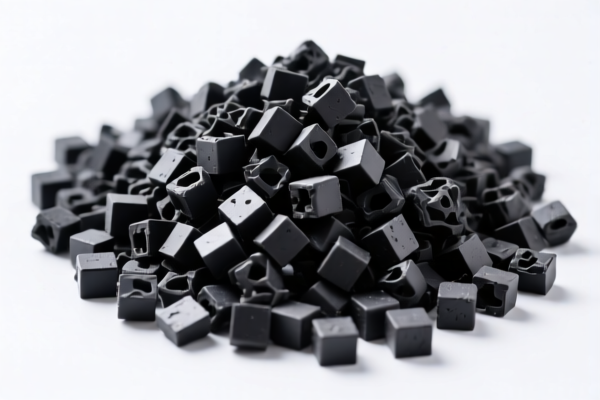


AI Analysis
🧪 Polyisobutylene (PIB) Rubber Raw Material – The Invisible Shield in Global Trade
🌐 HS Code Reference & Customs Clearance Guide | 2026 Tariff Landscape | Strategic Import Strategy
📌 I. Product Definition & Classification: What is Polyisobutylene?
Polyisobutylene (PIB), often referred to as butyl rubber precursor, is a synthetic rubber made from the polymerization of isobutylene with a small amount of isoprene. It is renowned for its excellent gas impermeability, chemical stability, and viscosity.
In international trade, PIB is not a "finished good" but a chemical intermediate. Its classification depends heavily on its physical state and chemical structure:
1. Primary Forms (Unworked Polymers): - High molecular weight PIB used directly in adhesives, sealants, or as additives. - Typically appears as viscous liquids, gels, or solid beads/powders.
2. Modified/Resin Forms: - PIB mixed with other resins or modified for specific industrial applications (e.g., plasticizers, couplings). - Falls under broader "petroleum resins" or "modified polymers" categories.
⚠️ Critical Distinction Point:
- If the PIB is in its raw, unmodified primary polymeric state → It belongs to Chapter 39 (Plastics in Primary Forms).
- If it is blended, modified, or classified as a petroleum resin → It may fall under Chapter 39.11 (Petroleum Resins/Sulfur) or other specialty chemical codes.
📦 II. HS Code Classification Matrix (2026 Latest Tariff Concordance)
Based on the provided data, here are the four specific HS Codes applicable to Polyisobutylene, with their rationale and tax implications.
| HS Code | Product Description & Rationale | Applicable Scenario | Material State |
|---|---|---|---|
3902.20.50.00 |
Polyisobutylene Polymers Rationale: Explicitly classified as primary form polymer under "Poly-1-alkenes". |
Raw PIB for adhesives, sealants, or rubber compounding. | ✅ Primary Polymer |
3902.20.10.00 |
Polyisobutylene Polymers (Other) Rationale: Inferred as primary shape based on polymer attributes; generic fallback for PIB not specified elsewhere. |
Standard industrial grade PIB, not specified in 3902.20.50. | ✅ Primary Shape |
3911.90.10.00 |
Petroleum Resins / Polyolefins Rationale: Classified as elastomer or petroleum-based resin due to modification or blending. |
PIB used as a plasticizer, coupling agent, or modified resin. | ⚠️ Modified/Resin |
3911.90.15.00 |
Hydrocarbon Polymers / Modified Resins Rationale: Fits "Petroleum resins and other modified polymers" under hydrocarbon category. |
Specialized PIB derivatives or blends classified as hydrocarbon resins. | ⚠️ Hydrocarbon Resin |
🔍 Key Insight:
- Codes3902.20.xxare for pure Polyisobutylene. - Codes3911.90.xxare for PIB-based resins or modified forms. - The choice depends on the Technical Data Sheet (TDS): Is it pure PIB or a resin blend?
💰 III. 2026 Tariff Rate Breakdown (Including Surtaxes & Policy Add-ons)
✅ Applicable Country: United States (US)
✅ Country of Origin: China (CN)
✅ Effective Date: November 10, 2025 onwards
🎯 1. 3902.20.50.00 & 3902.20.10.00 – Pure Polyisobutylene (Primary Forms)
| Item | Details |
|---|---|
| Base Tariff | 6.5% (3902.20.50) / 0.0% (3902.20.10) |
| Section 301 Surcharge | +25.0% (All Chinese imports under these codes) |
| Section 122 Surcharge | +10.0% (Specific to certain polymeric materials) |
| Total Tax Rate | 41.5% (3902.20.50) or 35.0% (3902.20.10) |
| Calculation Basis | CIF Value × Total Rate |
| De Minimis Exemption | ❌ NOT Eligible (Denied under current trade rules for polymeric materials) |
| Legal Basis Path | USITC:3902.20 → Section 301: Footnote 9903.88.01 → Section 122: IEEPA 9903.01.24 |
📌 Explanation:
-3902.20.50.00has a 6.5% base rate, leading to a 41.5% total tax.
-3902.20.10.00has a 0% base rate, leading to a 35.0% total tax.
- Difference: 6.5% base rate gap.
- Both are subject to 25% Section 301 and 10% Section 122 surcharges.
🎯 2. 3911.90.10.00 & 3911.90.15.00 – Modified PIB / Petroleum Resins
| Item | Details |
|---|---|
| Base Tariff | 0.0% (Both codes) |
| Section 301 Surcharge | +25.0% (All Chinese imports) |
| Section 122 Surcharge | +10.0% (Specific to polymeric/resin materials) |
| Total Tax Rate | 35.0% |
| Calculation Basis | CIF Value × 35.0% |
| De Minimis Exemption | ❌ NOT Eligible |
| Legal Basis Path | USITC:3911.90 → Section 301 → Section 122 |
📌 Explanation:
- Both codes have 0% base rate, so the total tax is driven entirely by surcharges: 25% + 10% = 35%.
- These codes are ideal if your PIB is modified or blended, as they avoid the 6.5% base duty.
🛠️ IV. Customs Clearance Best Practices (Avoiding Pitfalls)
✅ 1. Documentation Checklist (Non-Negotiable)
| Document | Mandatory? | Purpose |
|---|---|---|
| ✅ Technical Data Sheet (TDS) | ✔️ | To prove material is PIB and determine primary vs. modified state. |
| ✅ Certificate of Analysis (COA) | ✔️ | Confirms chemical composition (e.g., % isobutylene, viscosity). |
| ✅ Material Safety Data Sheet (MSDS) | ✔️ | Required for hazardous material classification (if any). |
| ✅ Commercial Invoice | ✔️ | Must clearly state "Polyisobutylene" or "Petroleum Resin" – NO vague terms. |
| ✅ Packing List | ✔️ | Weight, volume, and packaging type. |
| ✅ Supply Chain Declaration | ✔️ | Confirm origin is China to trigger 301/122 surcharges correctly. |
✅ 2. Classification Strategy (Key Decision Matrix)
| Scenario | Recommended HS Code | Total Tax | Why? |
|---|---|---|---|
| Pure PIB, High Molecular Weight | 3902.20.50.00 |
41.5% | Most accurate for raw polymer. |
| Pure PIB, Generic Grade | 3902.20.10.00 |
35.0% | Better if base rate is 0%. |
| PIB Blended with Resins | 3911.90.10.00 |
35.0% | Classified as modified resin; avoids 6.5% base. |
| PIB as Plasticizer/Additive | 3911.90.15.00 |
35.0% | Hydrocarbon resin category. |
🔥 Golden Rule:
"If it’s pure PIB, fight for3902.20.10(35%). If it’s modified, use3911.90(35%). Avoid3902.20.50(41.5%) unless required by your supplier’s COA."
✅ 3. Common Mistakes & Consequences
| Mistake | Consequence |
|---|---|
| ❌ Declaring as "Rubber" or "Elastomer" | May be misclassified under Chapter 40, leading to audits, delays, or penalties. |
| ❌ Using vague terms like "Chemical Mix" | Customs will assign worst-case scenario code (highest duty). |
| ❌ Ignoring Section 122 | Failure to declare polymeric nature → 10% penalty + retroactive tax. |
| ❌ Not providing TDS | Customs cannot verify primary vs. modified form → Goods held at port. |
🌍 V. Global Market Comparison (2026)
| Country | Recommended HS Code | Total Tax (CN Origin) | Notes |
|---|---|---|---|
| 🇺🇸 USA | 3902.20.10.00 or 3911.90.xx |
35% | 25% 301 + 10% 122. No base duty for optimized codes. |
| 🇨🇳 China | 3902.20.10.00 |
6.5% | No surcharges. Import duty only. |
| 🇪🇺 EU | 3902.20.00 |
5.3% | No Section 301/122 equivalents. Lower overall cost. |
| 🇯🇵 Japan | 3902.20.000 |
6.0% | Stable tariff, no surcharges. |
📌 Conclusion:
- US Market is the most expensive due to dual surcharges (35% total).
- Optimize classification to3902.20.10or3911.90to save 6.5% compared to3902.20.50.
- Consider alternative origins (e.g., Malaysia, Korea) if possible to avoid 301/122 surcharges.
📌 VI. Actionable Recommendations
-
Get a Pre-Ruling:
Submit your TDS and COA to US Customs for a Binding Ruling to confirm if your PIB qualifies for3902.20.10.00(0% base) vs.3902.20.50.00(6.5% base). -
Clarify Product Description:
Use exact terms: "Polyisobutylene, Primary Form, Unmodified" or "Polyisobutylene Petroleum Resin, Modified". Avoid "Rubber" unless it’s vulcanized. -
Audit Your Supply Chain:
If your supplier provides a COA showing blending or modification, argue for3911.90.10.00or3911.90.15.00to eliminate base duty. -
Budget for 35-41.5% Tax:
Factor this into your landed cost. If margin is thin, explore FTZ (Foreign Trade Zone) storage to delay duty payment.
🎯 Final Takeaway:
🔹 "Pure PIB? Aim for
3902.20.10(35%). Modified? Use3911.90(35%). Avoid3902.20.50(41.5%) unless forced."
🔹 "Documentation is King: TDS + COA = Clear Classification."
🔹 "US Market is Harsh: 35-41.5% Tax is Real. Plan Accordingly."
✨ Pro Tip:
If your PIB is not destined for direct consumption (e.g., for re-export), consider Foreign Trade Zone (FTZ) entry to defer duties. This can improve cash flow significantly.
📣 Need Help?
📞 Contact a licensed customs broker to file a Pre-Ruling Request.
🚀 Optimize your HS Code, save up to 6.5%, and ensure smooth clearance.
💼 Precision in Classification = Profit in Your Pocket.
Customer Reviews
About HS Code Classification
The Harmonized System (HS) is an internationally standardized nomenclature developed by the World Customs Organization (WCO) to classify traded products. Over 200 countries use the HS system as the basis for customs tariffs, trade statistics, and import/export regulations.
Each HS code follows a hierarchical structure:
- Chapter (2 digits) — Broad category of goods (e.g., Chapter 84: Machinery and Mechanical Appliances)
- Heading (4 digits) — More specific grouping within the chapter
- Subheading (6 digits) — Internationally standardized breakdown, used by all WCO member countries
- National subdivisions (8-10 digits) — Country-specific extensions for further classification, such as US HTSUS 10-digit codes
Correct HS code classification is essential for smooth customs clearance, accurate duty payment, and compliance with trade regulations. Misclassification can lead to customs delays, overpayment of duties, or penalties.
When importing from CN to US, the applicable tariff rates may include:
- Most-Favored-Nation (MFN) rate — The standard duty rate applied to WTO members
- General rate — Applied to countries without trade agreements
- Trade remedy duties — Additional tariffs such as Section 301 (anti-dumping), Section 232 (national security), or countervailing duties
The information provided on this page is for reference purposes only. For official classification, please consult with your local customs authority or a licensed customs broker.