polymer plastic barrier sheet
CN → US| HS编码 | 关税税率 | 原产国 | 目的国 | 文档 |
|---|---|---|---|---|
| 3920991000 | 41.0% | CN | US | 官方文档 |
| 3921190090 | 41.5% | CN | US | 官方文档 |
| 3921905050 | 39.8% | CN | US | 官方文档 |
| 3926906090 | 39.2% | CN | US | 官方文档 |
| 3926909989 | 22.8% | CN | US | 官方文档 |
| 3920995000 | 40.8% | CN | US | 官方文档 |
商品图片
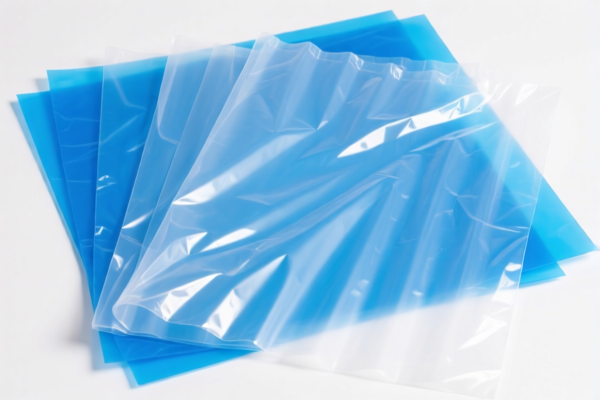
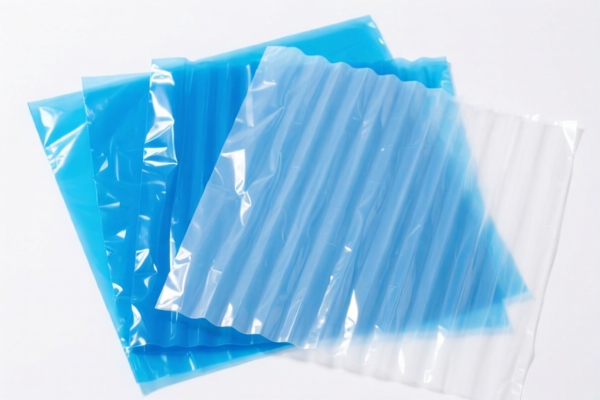
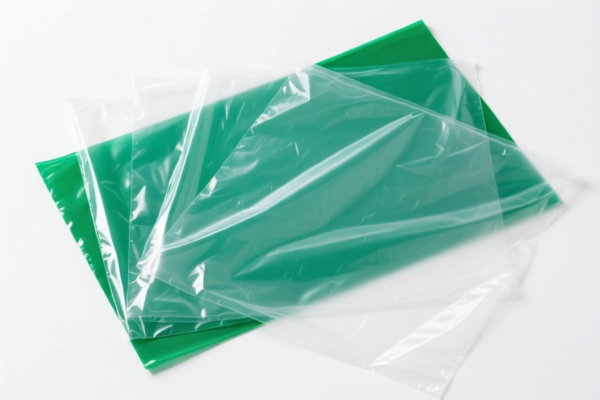
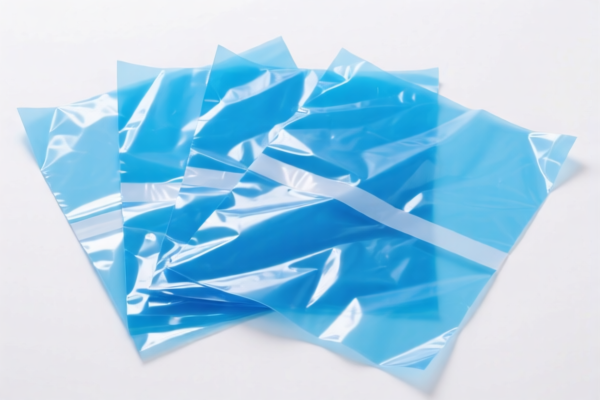
AI分析
🛡️ Polymer Plastic Barrier Sheet (Plastic Barrier Plates)
🌐 HS Code Reference & Customs Clearance Guide | 2026 Latest Tariff Analysis | Professional Strategy for China-Origin Goods
📌 I. Product Definition & Classification: What Exactly is a "Plastic Barrier Sheet"?
Polymer Plastic Barrier Sheet refers to rigid or semi-rigid plastic products designed to prevent the passage of gases, liquids, or other substances. In international trade, these products are often classified based on their composition structure (layered/composite vs. single layer) and specific application.
Key Classification Distinctions: * Composite/Laminated Sheets (Plastisols/Extruded Layers): If the barrier property comes from multiple layers bonded together or specific chemical treatments intended for barrier functionality, it often falls under Chapter 39 Section 01 (Plastics and articles thereof; plates, sheets, film, etc.). * Generic Plastic Plates: If the "barrier" function is incidental or it is a general-purpose plastic plate without specific composite layering, it may fall under Chapter 39 Section 06 (Other articles of plastics). * Origin Impact: For goods originating from China, the distinction is critical due to Section 301 tariffs (25%) and Section 122 tariffs (10%), which significantly vary the final tax burden depending on the subheading.
⚠️ Critical Distinction:
- If the product is a composite/laminated barrier specifically engineered for isolation → Likely 3920.99 or 3921.xx.
- If the product is a general plastic plate with incidental barrier properties → Likely 3926.90.
- Misclassification Risk: Declaring a high-barrier composite sheet as a generic plastic plate (3926) to avoid higher taxes is a common customs audit trigger.
📦 II. HS Code Classification Details (2026 Latest Tariff Authority Alignment)
Based on the provided data for "Polymer Plastic Barrier Sheet," here are the six potential HS Codes with their specific tax implications.
| HS Code | Product Description & Rationale | Total Tax Rate | Tax Breakdown |
|---|---|---|---|
3920.99.10.00 |
Plastic Barrier Plate, Laminated/Composite. Made of plastic, form is plate, function is barrier, belongs to laminated/composite functional category. |
41.0% | Base: 6.0% Sec 301: 25.0% Sec 122: 10.0% |
3921.19.00.90 |
Plastic Barrier Plate, Single Layer/Specific Form. Material: Plastic; Form: Plate, sheet, film type; Matches HS description directly. |
41.5% | Base: 6.5% Sec 301: 25.0% Sec 122: 10.0% |
3921.90.50.50 |
Plastic Barrier Plate, Other/General Purpose. Material: Plastic; Form: Plate; Falls under "Other" catch-all category; No material/form conflict. |
39.8% | Base: 4.8% Sec 301: 25.0% Sec 122: 10.0% |
3926.90.60.90 |
Plastic Barrier Plate, Other Article. Material: Plastic; Form: Plate; Falls under "Other articles" category; No material/form conflict. |
39.2% | Base: 4.2% Sec 301: 25.0% Sec 122: 10.0% |
3926.90.99.89 |
Plastic Barrier Plate, Final Catch-All. Material: Plastic; Form: Plate; Falls under "Other制品" (Other manufactured articles) catch-all. |
22.8% | Base: 5.3% Sec 301: 7.5% Sec 122: 10.0% |
3920.99.50.00 |
Plastic Barrier Plate, Compliant Board Classification. Material: Plastic; Form: Plate; Fits plastic board classification requirements; No conflicts. |
40.8% | Base: 5.8% Sec 301: 25.0% Sec 122: 10.0% |
🔍 Key Insight:
- The lowest tax rate (22.8%) is available under3926.90.99.89, but only if the product can be legally argued as a general "other article of plastic" rather than a specialized "plate/sheet" (3920/3921). - The highest tax rates (~41%) apply to3920and3921subheadings, which carry the standard 25% Section 301 tariff in addition to the 10% Section 122 tariff. -3926.90.99.89benefits from a reduced Section 301 rate of 7.5% (likely due to specific trade agreement exclusions or product category exemptions not applicable to plates/sheets).
💰 III. 2026 Latest Tariff Rate Detailed Explanation (Including Additional Taxes)
✅ Applicable Country: USA (US)
✅ Country of Origin: China (CN)
✅ Effective Date: Post-November 2025 (Includes subsequent imports)
🎯 1. High-Tax Category: 3920.99.10.00 & 3921.19.00.90 (Barrier Plates/Sheets)
| Item | Details |
|---|---|
| Base Tariff | 6.0% – 6.5% (Ad valorem) |
| Section 301 Tariff (USITC) | +25.0% (Standard China-origin surcharge for Chapter 39 plates/sheets) |
| Section 122 Tariff | +10.0% (Additional surcharge for specific China-origin goods) |
| Total Effective Rate | 41.0% – 41.5% |
| Tax Calculation | CIF Value × Total Rate |
| De Minimis Exemption | ❌ Not Eligible (Value > $800 threshold; complex chemical/plastic goods often scrutinized) |
| Legal Basis | HTSUS 3920/3921 + USITC Footnotes + IEEPA Authorities |
📌 Explanation:
- These codes classify the product as specialized plastic plates or sheets. The 25% Section 301 tariff is standard for this category unless an exclusion is held. - The 10% Section 122 tariff is an additional layer often applied to specific Chinese imports. - Total cost impact is high (~41%). Importers must have strong documentation proving the exact nature of the "barrier" function.
🎯 2. Mid-Tax Category: 3921.90.50.50 & 3920.99.50.00 (Other Plastic Plates)
| Item | Details |
|---|---|
| Base Tariff | 4.8% – 5.8% |
| Section 301 Tariff (USITC) | +25.0% |
| Section 122 Tariff | +10.0% |
| Total Effective Rate | 39.8% – 40.8% |
| Tax Calculation | CIF Value × Total Rate |
| De Minimis Exemption | ❌ Not Eligible |
| Legal Basis | HTSUS 3920/3921 General Provisions |
📌 Explanation:
- Slightly lower base tariffs (4.8-5.8%) result in a total rate of ~40%. - Still subject to the full 25% Section 301 surcharge. - This classification is used when the plate doesn't fit the specific "film/sheet" description of 3921.19 but is still a "plate."
🎯 3. Low-Tax Category: 3926.90.60.90 (Other Plastic Articles)
| Item | Details |
|---|---|
| Base Tariff | 4.2% |
| Section 301 Tariff (USITC) | +25.0% |
| Section 122 Tariff | +10.0% |
| Total Effective Rate | 39.2% |
| Tax Calculation | CIF Value × Total Rate |
| De Minimis Exemption | ❌ Not Eligible |
| Legal Basis | HTSUS 3926.90 (Other articles of plastics) |
📌 Explanation:
- If the product is deemed a generic "other article" (e.g., a simple barrier block rather than a continuous sheet), it might fall here. - Note: Even here, the 25% + 10% surcharges apply, bringing the total to 39.2%. This is slightly better than the 41% range but still very high.
🎯 4. Optimal Tax Category: 3926.90.99.89 (Other Plastic Articles - Catch-All)
| Item | Details |
|---|---|
| Base Tariff | 5.3% |
| Section 301 Tariff (USITC) | +7.5% (Reduced/Special Rate) |
| Section 122 Tariff | +10.0% |
| Total Effective Rate | 22.8% |
| Tax Calculation | CIF Value × Total Rate |
| De Minimis Exemption | ❌ Not Eligible |
| Legal Basis | HTSUS 3926.90.99.89 + Specific Exclusion/Category |
📌 CRITICAL ADVANTAGE:
- This code offers the lowest total tax rate of 22.8%. - The key difference is the Section 301 rate is only 7.5% instead of 25%. This reduction is often due to specific product category exclusions or different legal interpretations for "other articles" vs. "plates/sheets." - Strategy: Importers should investigate if their specific barrier sheet can be legally classified here (e.g., as a custom-molded plastic part rather than a generic sheet).
🛠️ IV. Customs Clearance Practical Advice (Avoid Pitfalls)
✅ 1. Essential Documentation Checklist
| Document | Required? | Description |
|---|---|---|
| ✅ Product Specification Sheet | ✔️ | Must detail material composition (e.g., PE, PP, PET), layer count, and barrier properties. |
| ✅ Technical Data Sheet (TDS) | ✔️ | Shows if the product is a "sheet/plate" (continuous) or an "article" (discrete/cut). |
| ✅ Commercial Invoice | ✔️ | Clearly state "Polymer Plastic Barrier Sheet" or "Plastic Barrier Component." Avoid vague terms like "Plastic Part." |
| ✅ Packing List | ✔️ | Detail dimensions, weight, and quantity. |
| ✅ Certificate of Origin (CO) | ✔️ | Must specify China origin to trigger/review applicable surcharges. |
| ✅ Photographs | ✔️ | Show cross-section (if layered) or end-use to justify classification. |
✅ 2. Classification Strategy (Key Decision Points)
🔥 "Form Dictates Tax: Sheet vs. Article"
| Product Feature | Recommended HS Code | Tax Rate | Risk Level |
|---|---|---|---|
| Continuous Roll/Sheet (Standard barrier film/plate) | 3920.99.10.00 or 3921.19.00.90 |
~41.0% | 🟢 Standard |
| Cut-to-Size Barrier Plate (Rigid, discrete) | 3926.90.60.90 or 3926.90.99.89 |
22.8% - 39.2% | 🟡 Review Needed |
| Complex Assembly with Non-Plastic Parts | Not listed | N/A | 🔴 High Risk |
| Generic Plastic Block (No specific barrier certification) | 3926.90.99.89 |
22.8% | 🟢 Target Option |
📌 Explanation:
- If your product is a continuous sheet or roll used for packaging/lining, it will likely be forced into 3920/3921 (41% tax). - If your product is a discrete, molded, or cut barrier component (e.g., a plastic barrier plate for a specific machine), you may argue for 3926.90.99.89 (22.8% tax). - Do not misdeclare a sheet as a "part" to save tax. Customs may request technical evidence to prove it is not a standard plate.
✅ 3. Special Handling & Compliance
| Scenario | Recommendation |
|---|---|
| Layered/Composite Material | Provide layer-by-layer material breakdown. If any layer is non-plastic, classification may change entirely (e.g., to textile or rubber chapter). |
| Chemical Treatment | If barrier properties come from chemical coating, provide SDS (Safety Data Sheet) to prove it remains a plastic article. |
| Custom Molded | If the barrier plate is custom-molded for a specific OEM, emphasize "Other Article" status to aim for 3926.90.99.89. |
| Section 301 Exclusion | Check if your specific HS code currently has an active exclusion (e.g., from USTR lists). Some 3920 items may have expired exclusions. |
🌍 V. Global Market Comparison (2026 Context)
| Market | Recommended HS Code | Est. Total Tax (China Origin) | Notes |
|---|---|---|---|
| 🇺🇸 USA | 3926.90.99.89 |
22.8% | Best rate for "Other Articles." |
| 🇺🇸 USA | 3920.99.10.00 |
41.0% | Standard for "Plastic Plates/Sheets." |
| 🇨🇳 China | 3921.90.50.50 |
~4-10% | Lower import tariffs, but irrelevant for export. |
| 🇪🇺 EU | 3920.99 |
~3-6.5% | No Section 301/122. VAT applies separately. |
| 🇦🇺 Australia | 3926.90 |
~5% | No additional punitive tariffs. |
📌 Conclusion:
- The USA market is the most challenging due to Section 301 and Section 122 tariffs. - Classification strategy is critical: A 18.2% tax difference exists between3920.99.10.00(41.0%) and3926.90.99.89(22.8%). - EU and Australia offer significantly lower barriers, making them attractive alternatives if logistics allow.
📌 VI. Common Mistakes & Pitfalls (Lessons Learned)
❌ Mistake 1: Declaring a continuous plastic barrier sheet as a "Plastic Part" to get the 22.8% rate.
👉 Consequence: Customs audit, retroactive tax assessment of 41% + penalties.
❌ Mistake 2: Ignoring Section 122 Tariff.
👉 Consequence: Even if Section 301 is low, the 10% Section 122 adds up. Always calculate Total Tax.
❌ Mistake 3: Using vague descriptions like "Plastic Sheet."
👉 Consequence: Customs may assign a higher default duty rate or request detailed specs, delaying clearance.
❌ Mistake 4: Assuming all plastic barriers are the same.
👉 Consequence: Layered vs. single-layer, rigid vs. flexible, and composite vs. homogeneous materials dictate the HS code.
✅ Correct Approach:
"Plastic Barrier Plate, Multi-Layer Composite, Custom Cut, For Industrial Use, Model XYZ"
- If Multi-Layer/Composite → Aim for3920.99.10.00(41%) but provide strong evidence if contesting.
- If Discrete/Custom Molded → Aim for3926.90.99.89(22.8%) with technical specs showing it is an "article" not a "sheet."
🎯 VII. Conclusion: Professional Classification, Cost Optimization
🎯 Key Takeaway:
🔹 "Form is Key: Sheet = 41%, Article = 22.8%!"
🔹 "Section 301 is the Main Driver: 25% vs. 7.5% makes a huge difference."
🔹 "Documentation is Your Shield: Technical specs must support your chosen HS Code."
📌 Pro Tip:
If your product can be reasonably described as a custom-molded plastic component rather than a generic plastic sheet/plate, pursue
3926.90.99.89to save ~18% in taxes.
Consider applying for an Advance Ruling from U.S. Customs and Border Protection (CBP) to lock in the lower rate.
📣 Immediate Action:
📞 Consult with a licensed customs broker.
📄 Prepare Technical Data Sheets highlighting "Article" vs. "Sheet" characteristics.
🚀 Optimize your supply chain cost through precise classification.
✨ Precision in Classification, Power in Compliance!
💼 Every percent saved is pure profit!
用户评价
关于 HS 编码归类
协调制度(HS)是由世界海关组织(WCO)制定的国际贸易商品分类标准。全球 200 多个国家采用 HS 系统作为海关关税、贸易统计和进出口监管的基础。
每个 HS 编码遵循以下层级结构:
- 章(2 位)——商品大类(例如:第 84 章:机器和机械设备)
- 品目(4 位)——章内的更具体分类
- 子目(6 位)——国际通用细分,所有 WCO 成员国统一使用
- 本国细分(8-10 位)——各国自行扩展的细分编码,如美国 HTSUS 10 位编码
正确的 HS 编码归类对于顺利通关、准确缴纳关税和遵守贸易法规至关重要。错误归类可能导致海关延误、多缴关税或罚款。
从CN进口到US时,适用的关税税率可能包括:
- 最惠国(MFN)税率——适用于 WTO 成员国的标准关税税率
- 普通税率——适用于无贸易协定国家
- 贸易救济关税——附加关税,如 301 条款(反倾销)、232 条款(国家安全)或反补贴税
本页内容仅供参考。如需正式归类,请咨询当地海关或持牌报关代理。