polymer plastic barrier sheet
CN → US| HS Code | Tariff Rate | Origin | Destination | Doc |
|---|---|---|---|---|
| 3920991000 | 41.0% | CN | US | Official Doc |
| 3921190090 | 41.5% | CN | US | Official Doc |
| 3921905050 | 39.8% | CN | US | Official Doc |
| 3926906090 | 39.2% | CN | US | Official Doc |
| 3926909989 | 22.8% | CN | US | Official Doc |
| 3920995000 | 40.8% | CN | US | Official Doc |
Product Images


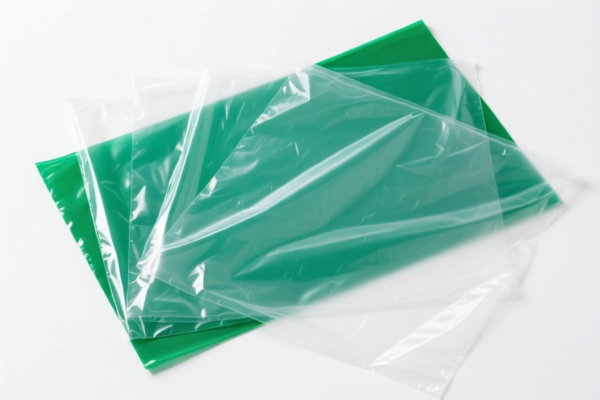

AI Analysis
🛡️ Polymer Plastic Barrier Sheet (Plastic Barrier Plates)
🌐 HS Code Reference & Customs Clearance Guide | 2026 Latest Tariff Analysis | Professional Strategy for China-Origin Goods
📌 I. Product Definition & Classification: What Exactly is a "Plastic Barrier Sheet"?
Polymer Plastic Barrier Sheet refers to rigid or semi-rigid plastic products designed to prevent the passage of gases, liquids, or other substances. In international trade, these products are often classified based on their composition structure (layered/composite vs. single layer) and specific application.
Key Classification Distinctions: * Composite/Laminated Sheets (Plastisols/Extruded Layers): If the barrier property comes from multiple layers bonded together or specific chemical treatments intended for barrier functionality, it often falls under Chapter 39 Section 01 (Plastics and articles thereof; plates, sheets, film, etc.). * Generic Plastic Plates: If the "barrier" function is incidental or it is a general-purpose plastic plate without specific composite layering, it may fall under Chapter 39 Section 06 (Other articles of plastics). * Origin Impact: For goods originating from China, the distinction is critical due to Section 301 tariffs (25%) and Section 122 tariffs (10%), which significantly vary the final tax burden depending on the subheading.
⚠️ Critical Distinction:
- If the product is a composite/laminated barrier specifically engineered for isolation → Likely 3920.99 or 3921.xx.
- If the product is a general plastic plate with incidental barrier properties → Likely 3926.90.
- Misclassification Risk: Declaring a high-barrier composite sheet as a generic plastic plate (3926) to avoid higher taxes is a common customs audit trigger.
📦 II. HS Code Classification Details (2026 Latest Tariff Authority Alignment)
Based on the provided data for "Polymer Plastic Barrier Sheet," here are the six potential HS Codes with their specific tax implications.
| HS Code | Product Description & Rationale | Total Tax Rate | Tax Breakdown |
|---|---|---|---|
3920.99.10.00 |
Plastic Barrier Plate, Laminated/Composite. Made of plastic, form is plate, function is barrier, belongs to laminated/composite functional category. |
41.0% | Base: 6.0% Sec 301: 25.0% Sec 122: 10.0% |
3921.19.00.90 |
Plastic Barrier Plate, Single Layer/Specific Form. Material: Plastic; Form: Plate, sheet, film type; Matches HS description directly. |
41.5% | Base: 6.5% Sec 301: 25.0% Sec 122: 10.0% |
3921.90.50.50 |
Plastic Barrier Plate, Other/General Purpose. Material: Plastic; Form: Plate; Falls under "Other" catch-all category; No material/form conflict. |
39.8% | Base: 4.8% Sec 301: 25.0% Sec 122: 10.0% |
3926.90.60.90 |
Plastic Barrier Plate, Other Article. Material: Plastic; Form: Plate; Falls under "Other articles" category; No material/form conflict. |
39.2% | Base: 4.2% Sec 301: 25.0% Sec 122: 10.0% |
3926.90.99.89 |
Plastic Barrier Plate, Final Catch-All. Material: Plastic; Form: Plate; Falls under "Other制品" (Other manufactured articles) catch-all. |
22.8% | Base: 5.3% Sec 301: 7.5% Sec 122: 10.0% |
3920.99.50.00 |
Plastic Barrier Plate, Compliant Board Classification. Material: Plastic; Form: Plate; Fits plastic board classification requirements; No conflicts. |
40.8% | Base: 5.8% Sec 301: 25.0% Sec 122: 10.0% |
🔍 Key Insight:
- The lowest tax rate (22.8%) is available under3926.90.99.89, but only if the product can be legally argued as a general "other article of plastic" rather than a specialized "plate/sheet" (3920/3921). - The highest tax rates (~41%) apply to3920and3921subheadings, which carry the standard 25% Section 301 tariff in addition to the 10% Section 122 tariff. -3926.90.99.89benefits from a reduced Section 301 rate of 7.5% (likely due to specific trade agreement exclusions or product category exemptions not applicable to plates/sheets).
💰 III. 2026 Latest Tariff Rate Detailed Explanation (Including Additional Taxes)
✅ Applicable Country: USA (US)
✅ Country of Origin: China (CN)
✅ Effective Date: Post-November 2025 (Includes subsequent imports)
🎯 1. High-Tax Category: 3920.99.10.00 & 3921.19.00.90 (Barrier Plates/Sheets)
| Item | Details |
|---|---|
| Base Tariff | 6.0% – 6.5% (Ad valorem) |
| Section 301 Tariff (USITC) | +25.0% (Standard China-origin surcharge for Chapter 39 plates/sheets) |
| Section 122 Tariff | +10.0% (Additional surcharge for specific China-origin goods) |
| Total Effective Rate | 41.0% – 41.5% |
| Tax Calculation | CIF Value × Total Rate |
| De Minimis Exemption | ❌ Not Eligible (Value > $800 threshold; complex chemical/plastic goods often scrutinized) |
| Legal Basis | HTSUS 3920/3921 + USITC Footnotes + IEEPA Authorities |
📌 Explanation:
- These codes classify the product as specialized plastic plates or sheets. The 25% Section 301 tariff is standard for this category unless an exclusion is held. - The 10% Section 122 tariff is an additional layer often applied to specific Chinese imports. - Total cost impact is high (~41%). Importers must have strong documentation proving the exact nature of the "barrier" function.
🎯 2. Mid-Tax Category: 3921.90.50.50 & 3920.99.50.00 (Other Plastic Plates)
| Item | Details |
|---|---|
| Base Tariff | 4.8% – 5.8% |
| Section 301 Tariff (USITC) | +25.0% |
| Section 122 Tariff | +10.0% |
| Total Effective Rate | 39.8% – 40.8% |
| Tax Calculation | CIF Value × Total Rate |
| De Minimis Exemption | ❌ Not Eligible |
| Legal Basis | HTSUS 3920/3921 General Provisions |
📌 Explanation:
- Slightly lower base tariffs (4.8-5.8%) result in a total rate of ~40%. - Still subject to the full 25% Section 301 surcharge. - This classification is used when the plate doesn't fit the specific "film/sheet" description of 3921.19 but is still a "plate."
🎯 3. Low-Tax Category: 3926.90.60.90 (Other Plastic Articles)
| Item | Details |
|---|---|
| Base Tariff | 4.2% |
| Section 301 Tariff (USITC) | +25.0% |
| Section 122 Tariff | +10.0% |
| Total Effective Rate | 39.2% |
| Tax Calculation | CIF Value × Total Rate |
| De Minimis Exemption | ❌ Not Eligible |
| Legal Basis | HTSUS 3926.90 (Other articles of plastics) |
📌 Explanation:
- If the product is deemed a generic "other article" (e.g., a simple barrier block rather than a continuous sheet), it might fall here. - Note: Even here, the 25% + 10% surcharges apply, bringing the total to 39.2%. This is slightly better than the 41% range but still very high.
🎯 4. Optimal Tax Category: 3926.90.99.89 (Other Plastic Articles - Catch-All)
| Item | Details |
|---|---|
| Base Tariff | 5.3% |
| Section 301 Tariff (USITC) | +7.5% (Reduced/Special Rate) |
| Section 122 Tariff | +10.0% |
| Total Effective Rate | 22.8% |
| Tax Calculation | CIF Value × Total Rate |
| De Minimis Exemption | ❌ Not Eligible |
| Legal Basis | HTSUS 3926.90.99.89 + Specific Exclusion/Category |
📌 CRITICAL ADVANTAGE:
- This code offers the lowest total tax rate of 22.8%. - The key difference is the Section 301 rate is only 7.5% instead of 25%. This reduction is often due to specific product category exclusions or different legal interpretations for "other articles" vs. "plates/sheets." - Strategy: Importers should investigate if their specific barrier sheet can be legally classified here (e.g., as a custom-molded plastic part rather than a generic sheet).
🛠️ IV. Customs Clearance Practical Advice (Avoid Pitfalls)
✅ 1. Essential Documentation Checklist
| Document | Required? | Description |
|---|---|---|
| ✅ Product Specification Sheet | ✔️ | Must detail material composition (e.g., PE, PP, PET), layer count, and barrier properties. |
| ✅ Technical Data Sheet (TDS) | ✔️ | Shows if the product is a "sheet/plate" (continuous) or an "article" (discrete/cut). |
| ✅ Commercial Invoice | ✔️ | Clearly state "Polymer Plastic Barrier Sheet" or "Plastic Barrier Component." Avoid vague terms like "Plastic Part." |
| ✅ Packing List | ✔️ | Detail dimensions, weight, and quantity. |
| ✅ Certificate of Origin (CO) | ✔️ | Must specify China origin to trigger/review applicable surcharges. |
| ✅ Photographs | ✔️ | Show cross-section (if layered) or end-use to justify classification. |
✅ 2. Classification Strategy (Key Decision Points)
🔥 "Form Dictates Tax: Sheet vs. Article"
| Product Feature | Recommended HS Code | Tax Rate | Risk Level |
|---|---|---|---|
| Continuous Roll/Sheet (Standard barrier film/plate) | 3920.99.10.00 or 3921.19.00.90 |
~41.0% | 🟢 Standard |
| Cut-to-Size Barrier Plate (Rigid, discrete) | 3926.90.60.90 or 3926.90.99.89 |
22.8% - 39.2% | 🟡 Review Needed |
| Complex Assembly with Non-Plastic Parts | Not listed | N/A | 🔴 High Risk |
| Generic Plastic Block (No specific barrier certification) | 3926.90.99.89 |
22.8% | 🟢 Target Option |
📌 Explanation:
- If your product is a continuous sheet or roll used for packaging/lining, it will likely be forced into 3920/3921 (41% tax). - If your product is a discrete, molded, or cut barrier component (e.g., a plastic barrier plate for a specific machine), you may argue for 3926.90.99.89 (22.8% tax). - Do not misdeclare a sheet as a "part" to save tax. Customs may request technical evidence to prove it is not a standard plate.
✅ 3. Special Handling & Compliance
| Scenario | Recommendation |
|---|---|
| Layered/Composite Material | Provide layer-by-layer material breakdown. If any layer is non-plastic, classification may change entirely (e.g., to textile or rubber chapter). |
| Chemical Treatment | If barrier properties come from chemical coating, provide SDS (Safety Data Sheet) to prove it remains a plastic article. |
| Custom Molded | If the barrier plate is custom-molded for a specific OEM, emphasize "Other Article" status to aim for 3926.90.99.89. |
| Section 301 Exclusion | Check if your specific HS code currently has an active exclusion (e.g., from USTR lists). Some 3920 items may have expired exclusions. |
🌍 V. Global Market Comparison (2026 Context)
| Market | Recommended HS Code | Est. Total Tax (China Origin) | Notes |
|---|---|---|---|
| 🇺🇸 USA | 3926.90.99.89 |
22.8% | Best rate for "Other Articles." |
| 🇺🇸 USA | 3920.99.10.00 |
41.0% | Standard for "Plastic Plates/Sheets." |
| 🇨🇳 China | 3921.90.50.50 |
~4-10% | Lower import tariffs, but irrelevant for export. |
| 🇪🇺 EU | 3920.99 |
~3-6.5% | No Section 301/122. VAT applies separately. |
| 🇦🇺 Australia | 3926.90 |
~5% | No additional punitive tariffs. |
📌 Conclusion:
- The USA market is the most challenging due to Section 301 and Section 122 tariffs. - Classification strategy is critical: A 18.2% tax difference exists between3920.99.10.00(41.0%) and3926.90.99.89(22.8%). - EU and Australia offer significantly lower barriers, making them attractive alternatives if logistics allow.
📌 VI. Common Mistakes & Pitfalls (Lessons Learned)
❌ Mistake 1: Declaring a continuous plastic barrier sheet as a "Plastic Part" to get the 22.8% rate.
👉 Consequence: Customs audit, retroactive tax assessment of 41% + penalties.
❌ Mistake 2: Ignoring Section 122 Tariff.
👉 Consequence: Even if Section 301 is low, the 10% Section 122 adds up. Always calculate Total Tax.
❌ Mistake 3: Using vague descriptions like "Plastic Sheet."
👉 Consequence: Customs may assign a higher default duty rate or request detailed specs, delaying clearance.
❌ Mistake 4: Assuming all plastic barriers are the same.
👉 Consequence: Layered vs. single-layer, rigid vs. flexible, and composite vs. homogeneous materials dictate the HS code.
✅ Correct Approach:
"Plastic Barrier Plate, Multi-Layer Composite, Custom Cut, For Industrial Use, Model XYZ"
- If Multi-Layer/Composite → Aim for3920.99.10.00(41%) but provide strong evidence if contesting.
- If Discrete/Custom Molded → Aim for3926.90.99.89(22.8%) with technical specs showing it is an "article" not a "sheet."
🎯 VII. Conclusion: Professional Classification, Cost Optimization
🎯 Key Takeaway:
🔹 "Form is Key: Sheet = 41%, Article = 22.8%!"
🔹 "Section 301 is the Main Driver: 25% vs. 7.5% makes a huge difference."
🔹 "Documentation is Your Shield: Technical specs must support your chosen HS Code."
📌 Pro Tip:
If your product can be reasonably described as a custom-molded plastic component rather than a generic plastic sheet/plate, pursue
3926.90.99.89to save ~18% in taxes.
Consider applying for an Advance Ruling from U.S. Customs and Border Protection (CBP) to lock in the lower rate.
📣 Immediate Action:
📞 Consult with a licensed customs broker.
📄 Prepare Technical Data Sheets highlighting "Article" vs. "Sheet" characteristics.
🚀 Optimize your supply chain cost through precise classification.
✨ Precision in Classification, Power in Compliance!
💼 Every percent saved is pure profit!
Customer Reviews
About HS Code Classification
The Harmonized System (HS) is an internationally standardized nomenclature developed by the World Customs Organization (WCO) to classify traded products. Over 200 countries use the HS system as the basis for customs tariffs, trade statistics, and import/export regulations.
Each HS code follows a hierarchical structure:
- Chapter (2 digits) — Broad category of goods (e.g., Chapter 84: Machinery and Mechanical Appliances)
- Heading (4 digits) — More specific grouping within the chapter
- Subheading (6 digits) — Internationally standardized breakdown, used by all WCO member countries
- National subdivisions (8-10 digits) — Country-specific extensions for further classification, such as US HTSUS 10-digit codes
Correct HS code classification is essential for smooth customs clearance, accurate duty payment, and compliance with trade regulations. Misclassification can lead to customs delays, overpayment of duties, or penalties.
When importing from CN to US, the applicable tariff rates may include:
- Most-Favored-Nation (MFN) rate — The standard duty rate applied to WTO members
- General rate — Applied to countries without trade agreements
- Trade remedy duties — Additional tariffs such as Section 301 (anti-dumping), Section 232 (national security), or countervailing duties
The information provided on this page is for reference purposes only. For official classification, please consult with your local customs authority or a licensed customs broker.