polysaccharide derivatives for agriculture
CN → US| HS编码 | 关税税率 | 原产国 | 目的国 | 文档 |
|---|---|---|---|---|
| 3913902090 | 40.8% | CN | US | 官方文档 |
| 3913902015 | 40.8% | CN | US | 官方文档 |
| 3505100015 | 0.0% | CN | US | 官方文档 |
| 3505100045 | 0.0% | CN | US | 官方文档 |
商品图片

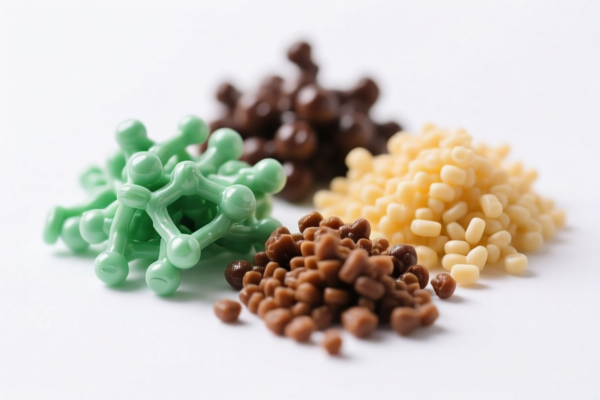
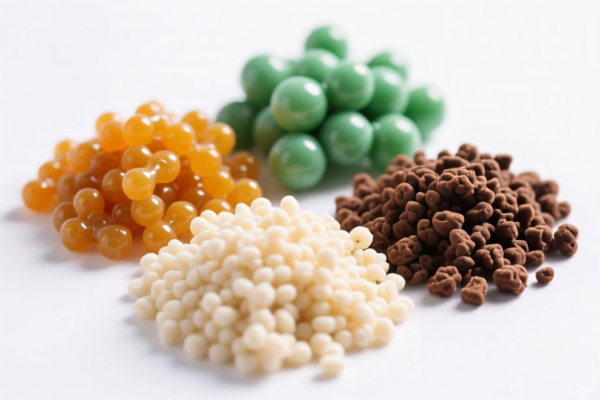
AI分析
🌾 Polysaccharide Derivatives for Agriculture
🌐 HS Code Reference & Customs Clearance Guide | 2026 Latest Tariff Analysis | Strategic Entry Strategy
📌 1. Product Definition & Classification: What Are "Polysaccharide Derivatives"?
In international trade, "Polysaccharide Derivatives" are not a single homogeneous product. They are broadly categorized based on their source material and chemical modification. For agricultural applications, these materials are often used as soil stabilizers, seed coatings, or bio-fertilizer carriers.
The key to accurate classification lies in distinguishing between: 1. Starch-Based Derivatives: Such as dextrins derived from potato starch (used as biodegradable adhesives or soil binders). 2. Natural Polymer-Based Derivatives: Such as Xanthan Gum or other modified natural polymers (used as thickeners, emulsifiers in pesticide formulations, or soil moisture retainers).
⚠️ Critical Distinction Point:
- If the product is a dextrin (modified starch), it falls under Chapter 35 (Prepared Binders).
- If the product is a natural polymer derivative (like xanthan gum or other polysaccharides not elsewhere specified), it falls under Chapter 39 (Plastics/Resins in primary forms).
- Do not mix these up! The tariff rates differ drastically (0% vs. 30.8%).
📦 2. HS Code Classification Details (2026 Latest Tariff Authority Comparison)
Based on the provided data, here are the specific HS Codes and their applications for agricultural polysaccharide derivatives:
| HS Code | Product Description | Agricultural Application | Source Material |
|---|---|---|---|
| 3505.10.00.15 | Dextrins; derived from Potato Starch | Biodegradable seed coating agents, soil stabilizers, organic binders | Potato Starch |
| 3505.10.00.45 | Other Dextrins; derived from Potato Starch | Similar to above, but distinct sub-category for specific dextrin types | Potato Starch |
| 3913.90.20.15 | Natural Polymers; Xanthan Gum | Pesticide adjuvants, herbicide thickeners, soil moisture retention agents | Fermentation-derived (Bacterial) |
| 3913.90.20.90 | Natural Polymers; Other Polysaccharides & Derivatives | General-purpose bio-polymers, unspecified modified starches, or other natural polysaccharides | Various (Algic acid, etc.) |
🔍 Key Reminder:
- Chapter 35 (3505) is for Dextrins and modified starches (glues/binders).
- Chapter 39 (3913) is for Natural polymers (like Xanthan Gum) not elsewhere specified.
- Do not misclassify Xanthan Gum as Dextrin, and vice versa. The tax implications are significant.
💰 3. 2026 Latest Tariff Rate Breakdown (Including Additional Duties & Policies)
✅ Applicable Country: USA (US)
✅ Origin: China (CN) (Note: Tax details provided are specific to Chinese origin imports as per the data snippet)
✅ Effective Date: 2025-11-10 onwards (including subsequent imports)
🎯 1. HS Code 3505.10.00.15 & 3505.10.00.45 —— Dextrins (Potato Starch Derived)
| Item | Content |
|---|---|
| Base Duty Rate | 0.0% |
| Additional Duty (Section 301/IEEPA) | 0.0% |
| Total Tax Rate | 0.0% |
| Tax Calculation | CIF Value × 0% = $0 |
| De Minimis Exemption Eligibility | ✅ Yes (Low duty allows for potential small shipment benefits, though check specific CBP rules for 3505) |
| Legal Basis | No additional Section 301 or IEEPA penalties listed for these specific potato starch dextrin codes in the provided data. |
📌 Explanation:
- Dextrins derived from potato starch are classified under 3505.10.
- According to the provided data, both3505.10.00.15and3505.10.00.45have 0% total tax.
- This is a significant cost advantage for agricultural bio-adhesives or soil binders sourced from potato starch.
🎯 2. HS Code 3913.90.20.15 —— Xanthan Gum
| Item | Content |
|---|---|
| Base Duty Rate | 0.0% |
| Additional Duty (Section 301/IEEPA) | 0.0% |
| Total Tax Rate | 0.0% |
| Tax Calculation | CIF Value × 0% = $0 |
| De Minimis Exemption Eligibility | ✅ Yes |
| Legal Basis | No additional Section 301 or IEEPA penalties listed for Xanthan Gum in the provided data. |
📌 Explanation:
- Xanthan Gum is a natural polymer derivative classified under 3913.90.20.15.
- Despite being a chemical derivative, it enjoys 0% total tax for Chinese origin.
- This makes it highly competitive for use in pesticide formulations and agricultural chemicals.
🎯 3. HS Code 3913.90.20.90 —— Other Polysaccharides & Derivatives
| Item | Content |
|---|---|
| Base Duty Rate | 5.8% |
| Additional Duty (Section 301/IEEPA) | 25.0% |
| Total Tax Rate | 30.8% |
| Tax Calculation | CIF Value × 30.8% |
| De Minimis Exemption Eligibility | ❌ No (High duty usually disqualifies from de minimis benefits in certain contexts, but primarily it’s just expensive) |
| Legal Basis | USITC:3913.90.20.90 + Footnote: 301/IEEPA surcharge |
📌 Explanation:
- This code captures "Other" polysaccharide derivatives not specified as Xanthan Gum or Potato Dextrins.
- Total Tax: 30.8% is VERY HIGH.
- This includes items like modified algic acid, hardened proteins (if classified here), or other unspecified natural polymers.
- Warning: Misclassifying a product that should be3913.90.20.15(Xanthan) or3505(Dextrin) into this "Other" category will result in a 30.8% tax bill instead of 0%.
🛠️ 4. Customs Clearance Practical Advice (实战避坑指南)
✅ 1. Documentation Checklist (Must-Have)
| Document | Required? | Notes |
|---|---|---|
| Product Specification Sheet | ✅ | Must clearly state: Source Material (Potato Starch vs. Fermentation/Xanthan) and Chemical Structure (Dextrin vs. Polysaccharide Derivative). |
| Certificate of Origin (CO) | ✅ | Essential to prove Chinese origin and apply correct tax rates. |
| Formula/Composition Analysis | ✅ | Critical to distinguish between 3505 (Starch/Dextrin) and 3913 (Natural Polymer). |
| Commercial Invoice | ✅ | Clearly describe the product. Use precise HS Code descriptions. |
| Usage Declaration | ✅ | State agricultural use (e.g., "Soil Stabilizer," "Pesticide Adjuvant") to help customs verify HS Code. |
✅ 2. Declaration Tips (Key Mnemonics)
🔥 "Source Matters: Starch=Dextrin(0%), Xanthan=Polymer(0%), Others=Heavy(30.8%)!"
| Scenario | Correct HS Code | Incorrect HS Code | Consequence |
|---|---|---|---|
| Potato Starch Dextrin | 3505.10.00.15 / .45 |
3913.90.20.90 |
Save 30.8%! Don’t pay 30.8% if you qualify for 0%. |
| Xanthan Gum | 3913.90.20.15 |
3505.10.00.15 |
Wrong chapter. May cause inspection delays. |
| Unspecified Polysaccharide | 3913.90.20.90 |
3505.10.00.15 |
Pay 30.8% if it’s not starch-based dextrin or xanthan. |
✅ 3. Special Cases Handling
| Case | Handling Advice |
|---|---|
| Blend of Xanthan and Starch | If >50% Xanthan by weight/value, may lean towards 3913. If mixed, consult with a customs broker. Risk of classification dispute. |
| Modified Starch (Esterified) | Falls under 3505.10. Ensure it’s not classified as 3913. |
| Agricultural Bio-Stimulants | If the product is a fertilizer, check if it falls under Chapter 31. However, "Polysaccharide Derivatives" themselves are usually intermediate chemicals, so Chapter 35/39 is more likely. |
🌍 5. Global Market Comparison (2026 Latest)
| Country/Region | Recommended HS Code | Duty Rate (China Origin) | Certification | Notes |
|---|---|---|---|---|
| 🇺🇸 USA | 3505.10.00.15 / .45 |
0% | No special | Best for potato dextrins. |
| 🇺🇸 USA | 3913.90.20.15 (Xanthan) |
0% | No special | Best for Xanthan Gum. |
| 🇺🇸 USA | 3913.90.20.90 (Other) |
30.8% | No special | Avoid if possible. |
| 🇪🇺 EU | Check local chapter | Varies | REACH, EFSA | EU has different tax structure. |
| 🇨🇳 China | 3505 / 3913 |
Varies | No special | Import duty to China may differ. |
📌 Conclusion:
- USA Tariff Advantage: Potato-derived Dextrins (3505) and Xanthan Gum (3913.90.20.15) enjoy 0% total duty for Chinese origin.
- High Risk Item: Any other polysaccharide derivative (3913.90.20.90) faces 30.8% duty.
- Strategy: Clearly define your raw material (Potato vs. Fermentation vs. Other) and chemical nature (Dextrin vs. Polymer) to maximize tax savings.
📌 6. Common Errors & Pitfalls (Blood & Tears Lessons)
❌ Mistake 1: Declaring Xanthan Gum as Dextrin (3505)
👉 Consequence: Wrong HS Code. Even if tax is 0%, incorrect declaration can lead to fines and delays for misclassification.
❌ Mistake 2: Declaring Unspecified Polysaccharide as Xanthan Gum (3913.90.20.15)
👉 Consequence: If it’s not pure Xanthan Gum, you are evading 30.8% tax. This is tariff evasion → Severe penalties, seizure, and blacklisting.
❌ Mistake 3: Not distinguishing Potato Dextrin (3505.10.00.15/.45) from Other Dextrins
👉 Consequence: Both are 0%, but using the wrong sub-code can cause customs scrutiny or data mismatch in trade statistics.
✅ Correct Approach:
"Dextrin, Potato Starch Derivative, for Soil Binding, HS Code 3505.10.00.15"
OR
"Xanthan Gum, Natural Polymer, for Pesticide Adjuvant, HS Code 3913.90.20.15"
🎯 7. Conclusion: Precision Classification Saves 30.8%!
🎯 Remember the Mnemonic:
🔹 "Potato Dextrin = 0%, Xanthan = 0%, Other Polysaccharides = 30.8%!"
🔹 "Source matters. If it’s not Potato Dextrin or Xanthan, expect a 30.8% tax bill."
📌 Pro Tip:
If your product is a custom blend or unspecified polysaccharide, consider applying for an Advance Ruling (AAO) from U.S. Customs and Border Protection (CBP) before shipment. This provides legal certainty and avoids surprise duties.
📣 Immediate Action:
📞 Contact your customs broker with:
1. Material Safety Data Sheet (MSDS)
2. Detailed Composition Analysis
3. Intended Use Description
🚀 Ensure your HS Code is 3505.10.00.15/.45 or 3913.90.20.15 to benefit from 0% duty!
✨ Professional Clearance Starts with Accurate Classification!
💼 Your Cost is Calculated Precisely!
用户评价
关于 HS 编码归类
协调制度(HS)是由世界海关组织(WCO)制定的国际贸易商品分类标准。全球 200 多个国家采用 HS 系统作为海关关税、贸易统计和进出口监管的基础。
每个 HS 编码遵循以下层级结构:
- 章(2 位)——商品大类(例如:第 84 章:机器和机械设备)
- 品目(4 位)——章内的更具体分类
- 子目(6 位)——国际通用细分,所有 WCO 成员国统一使用
- 本国细分(8-10 位)——各国自行扩展的细分编码,如美国 HTSUS 10 位编码
正确的 HS 编码归类对于顺利通关、准确缴纳关税和遵守贸易法规至关重要。错误归类可能导致海关延误、多缴关税或罚款。
从CN进口到US时,适用的关税税率可能包括:
- 最惠国(MFN)税率——适用于 WTO 成员国的标准关税税率
- 普通税率——适用于无贸易协定国家
- 贸易救济关税——附加关税,如 301 条款(反倾销)、232 条款(国家安全)或反补贴税
本页内容仅供参考。如需正式归类,请咨询当地海关或持牌报关代理。