polysaccharide derivatives for agriculture
CN → US| HS Code | Tariff Rate | Origin | Destination | Doc |
|---|---|---|---|---|
| 3913902090 | 40.8% | CN | US | Official Doc |
| 3913902015 | 40.8% | CN | US | Official Doc |
| 3505100015 | 0.0% | CN | US | Official Doc |
| 3505100045 | 0.0% | CN | US | Official Doc |
Product Images

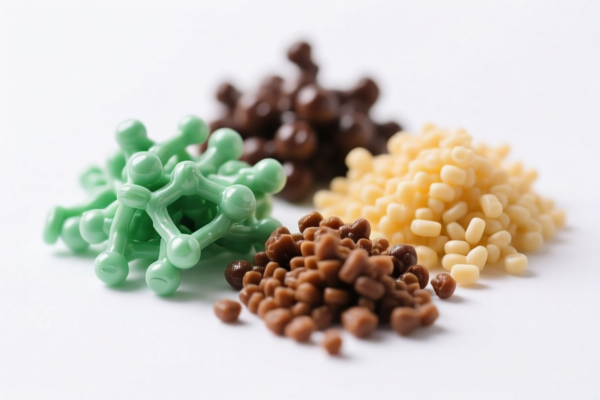
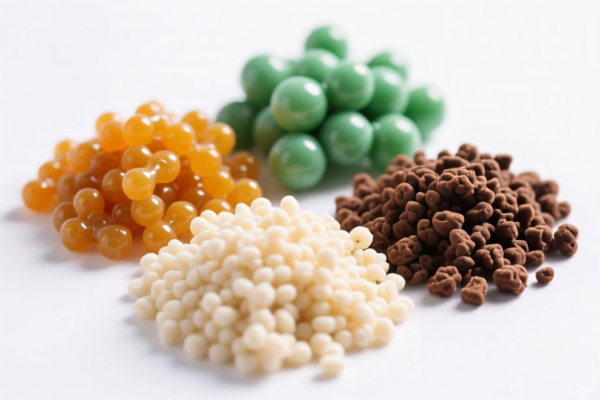
AI Analysis
🌾 Polysaccharide Derivatives for Agriculture
🌐 HS Code Reference & Customs Clearance Guide | 2026 Latest Tariff Analysis | Strategic Entry Strategy
📌 1. Product Definition & Classification: What Are "Polysaccharide Derivatives"?
In international trade, "Polysaccharide Derivatives" are not a single homogeneous product. They are broadly categorized based on their source material and chemical modification. For agricultural applications, these materials are often used as soil stabilizers, seed coatings, or bio-fertilizer carriers.
The key to accurate classification lies in distinguishing between: 1. Starch-Based Derivatives: Such as dextrins derived from potato starch (used as biodegradable adhesives or soil binders). 2. Natural Polymer-Based Derivatives: Such as Xanthan Gum or other modified natural polymers (used as thickeners, emulsifiers in pesticide formulations, or soil moisture retainers).
⚠️ Critical Distinction Point:
- If the product is a dextrin (modified starch), it falls under Chapter 35 (Prepared Binders).
- If the product is a natural polymer derivative (like xanthan gum or other polysaccharides not elsewhere specified), it falls under Chapter 39 (Plastics/Resins in primary forms).
- Do not mix these up! The tariff rates differ drastically (0% vs. 30.8%).
📦 2. HS Code Classification Details (2026 Latest Tariff Authority Comparison)
Based on the provided data, here are the specific HS Codes and their applications for agricultural polysaccharide derivatives:
| HS Code | Product Description | Agricultural Application | Source Material |
|---|---|---|---|
| 3505.10.00.15 | Dextrins; derived from Potato Starch | Biodegradable seed coating agents, soil stabilizers, organic binders | Potato Starch |
| 3505.10.00.45 | Other Dextrins; derived from Potato Starch | Similar to above, but distinct sub-category for specific dextrin types | Potato Starch |
| 3913.90.20.15 | Natural Polymers; Xanthan Gum | Pesticide adjuvants, herbicide thickeners, soil moisture retention agents | Fermentation-derived (Bacterial) |
| 3913.90.20.90 | Natural Polymers; Other Polysaccharides & Derivatives | General-purpose bio-polymers, unspecified modified starches, or other natural polysaccharides | Various (Algic acid, etc.) |
🔍 Key Reminder:
- Chapter 35 (3505) is for Dextrins and modified starches (glues/binders).
- Chapter 39 (3913) is for Natural polymers (like Xanthan Gum) not elsewhere specified.
- Do not misclassify Xanthan Gum as Dextrin, and vice versa. The tax implications are significant.
💰 3. 2026 Latest Tariff Rate Breakdown (Including Additional Duties & Policies)
✅ Applicable Country: USA (US)
✅ Origin: China (CN) (Note: Tax details provided are specific to Chinese origin imports as per the data snippet)
✅ Effective Date: 2025-11-10 onwards (including subsequent imports)
🎯 1. HS Code 3505.10.00.15 & 3505.10.00.45 —— Dextrins (Potato Starch Derived)
| Item | Content |
|---|---|
| Base Duty Rate | 0.0% |
| Additional Duty (Section 301/IEEPA) | 0.0% |
| Total Tax Rate | 0.0% |
| Tax Calculation | CIF Value × 0% = $0 |
| De Minimis Exemption Eligibility | ✅ Yes (Low duty allows for potential small shipment benefits, though check specific CBP rules for 3505) |
| Legal Basis | No additional Section 301 or IEEPA penalties listed for these specific potato starch dextrin codes in the provided data. |
📌 Explanation:
- Dextrins derived from potato starch are classified under 3505.10.
- According to the provided data, both3505.10.00.15and3505.10.00.45have 0% total tax.
- This is a significant cost advantage for agricultural bio-adhesives or soil binders sourced from potato starch.
🎯 2. HS Code 3913.90.20.15 —— Xanthan Gum
| Item | Content |
|---|---|
| Base Duty Rate | 0.0% |
| Additional Duty (Section 301/IEEPA) | 0.0% |
| Total Tax Rate | 0.0% |
| Tax Calculation | CIF Value × 0% = $0 |
| De Minimis Exemption Eligibility | ✅ Yes |
| Legal Basis | No additional Section 301 or IEEPA penalties listed for Xanthan Gum in the provided data. |
📌 Explanation:
- Xanthan Gum is a natural polymer derivative classified under 3913.90.20.15.
- Despite being a chemical derivative, it enjoys 0% total tax for Chinese origin.
- This makes it highly competitive for use in pesticide formulations and agricultural chemicals.
🎯 3. HS Code 3913.90.20.90 —— Other Polysaccharides & Derivatives
| Item | Content |
|---|---|
| Base Duty Rate | 5.8% |
| Additional Duty (Section 301/IEEPA) | 25.0% |
| Total Tax Rate | 30.8% |
| Tax Calculation | CIF Value × 30.8% |
| De Minimis Exemption Eligibility | ❌ No (High duty usually disqualifies from de minimis benefits in certain contexts, but primarily it’s just expensive) |
| Legal Basis | USITC:3913.90.20.90 + Footnote: 301/IEEPA surcharge |
📌 Explanation:
- This code captures "Other" polysaccharide derivatives not specified as Xanthan Gum or Potato Dextrins.
- Total Tax: 30.8% is VERY HIGH.
- This includes items like modified algic acid, hardened proteins (if classified here), or other unspecified natural polymers.
- Warning: Misclassifying a product that should be3913.90.20.15(Xanthan) or3505(Dextrin) into this "Other" category will result in a 30.8% tax bill instead of 0%.
🛠️ 4. Customs Clearance Practical Advice (实战避坑指南)
✅ 1. Documentation Checklist (Must-Have)
| Document | Required? | Notes |
|---|---|---|
| Product Specification Sheet | ✅ | Must clearly state: Source Material (Potato Starch vs. Fermentation/Xanthan) and Chemical Structure (Dextrin vs. Polysaccharide Derivative). |
| Certificate of Origin (CO) | ✅ | Essential to prove Chinese origin and apply correct tax rates. |
| Formula/Composition Analysis | ✅ | Critical to distinguish between 3505 (Starch/Dextrin) and 3913 (Natural Polymer). |
| Commercial Invoice | ✅ | Clearly describe the product. Use precise HS Code descriptions. |
| Usage Declaration | ✅ | State agricultural use (e.g., "Soil Stabilizer," "Pesticide Adjuvant") to help customs verify HS Code. |
✅ 2. Declaration Tips (Key Mnemonics)
🔥 "Source Matters: Starch=Dextrin(0%), Xanthan=Polymer(0%), Others=Heavy(30.8%)!"
| Scenario | Correct HS Code | Incorrect HS Code | Consequence |
|---|---|---|---|
| Potato Starch Dextrin | 3505.10.00.15 / .45 |
3913.90.20.90 |
Save 30.8%! Don’t pay 30.8% if you qualify for 0%. |
| Xanthan Gum | 3913.90.20.15 |
3505.10.00.15 |
Wrong chapter. May cause inspection delays. |
| Unspecified Polysaccharide | 3913.90.20.90 |
3505.10.00.15 |
Pay 30.8% if it’s not starch-based dextrin or xanthan. |
✅ 3. Special Cases Handling
| Case | Handling Advice |
|---|---|
| Blend of Xanthan and Starch | If >50% Xanthan by weight/value, may lean towards 3913. If mixed, consult with a customs broker. Risk of classification dispute. |
| Modified Starch (Esterified) | Falls under 3505.10. Ensure it’s not classified as 3913. |
| Agricultural Bio-Stimulants | If the product is a fertilizer, check if it falls under Chapter 31. However, "Polysaccharide Derivatives" themselves are usually intermediate chemicals, so Chapter 35/39 is more likely. |
🌍 5. Global Market Comparison (2026 Latest)
| Country/Region | Recommended HS Code | Duty Rate (China Origin) | Certification | Notes |
|---|---|---|---|---|
| 🇺🇸 USA | 3505.10.00.15 / .45 |
0% | No special | Best for potato dextrins. |
| 🇺🇸 USA | 3913.90.20.15 (Xanthan) |
0% | No special | Best for Xanthan Gum. |
| 🇺🇸 USA | 3913.90.20.90 (Other) |
30.8% | No special | Avoid if possible. |
| 🇪🇺 EU | Check local chapter | Varies | REACH, EFSA | EU has different tax structure. |
| 🇨🇳 China | 3505 / 3913 |
Varies | No special | Import duty to China may differ. |
📌 Conclusion:
- USA Tariff Advantage: Potato-derived Dextrins (3505) and Xanthan Gum (3913.90.20.15) enjoy 0% total duty for Chinese origin.
- High Risk Item: Any other polysaccharide derivative (3913.90.20.90) faces 30.8% duty.
- Strategy: Clearly define your raw material (Potato vs. Fermentation vs. Other) and chemical nature (Dextrin vs. Polymer) to maximize tax savings.
📌 6. Common Errors & Pitfalls (Blood & Tears Lessons)
❌ Mistake 1: Declaring Xanthan Gum as Dextrin (3505)
👉 Consequence: Wrong HS Code. Even if tax is 0%, incorrect declaration can lead to fines and delays for misclassification.
❌ Mistake 2: Declaring Unspecified Polysaccharide as Xanthan Gum (3913.90.20.15)
👉 Consequence: If it’s not pure Xanthan Gum, you are evading 30.8% tax. This is tariff evasion → Severe penalties, seizure, and blacklisting.
❌ Mistake 3: Not distinguishing Potato Dextrin (3505.10.00.15/.45) from Other Dextrins
👉 Consequence: Both are 0%, but using the wrong sub-code can cause customs scrutiny or data mismatch in trade statistics.
✅ Correct Approach:
"Dextrin, Potato Starch Derivative, for Soil Binding, HS Code 3505.10.00.15"
OR
"Xanthan Gum, Natural Polymer, for Pesticide Adjuvant, HS Code 3913.90.20.15"
🎯 7. Conclusion: Precision Classification Saves 30.8%!
🎯 Remember the Mnemonic:
🔹 "Potato Dextrin = 0%, Xanthan = 0%, Other Polysaccharides = 30.8%!"
🔹 "Source matters. If it’s not Potato Dextrin or Xanthan, expect a 30.8% tax bill."
📌 Pro Tip:
If your product is a custom blend or unspecified polysaccharide, consider applying for an Advance Ruling (AAO) from U.S. Customs and Border Protection (CBP) before shipment. This provides legal certainty and avoids surprise duties.
📣 Immediate Action:
📞 Contact your customs broker with:
1. Material Safety Data Sheet (MSDS)
2. Detailed Composition Analysis
3. Intended Use Description
🚀 Ensure your HS Code is 3505.10.00.15/.45 or 3913.90.20.15 to benefit from 0% duty!
✨ Professional Clearance Starts with Accurate Classification!
💼 Your Cost is Calculated Precisely!
Customer Reviews
About HS Code Classification
The Harmonized System (HS) is an internationally standardized nomenclature developed by the World Customs Organization (WCO) to classify traded products. Over 200 countries use the HS system as the basis for customs tariffs, trade statistics, and import/export regulations.
Each HS code follows a hierarchical structure:
- Chapter (2 digits) — Broad category of goods (e.g., Chapter 84: Machinery and Mechanical Appliances)
- Heading (4 digits) — More specific grouping within the chapter
- Subheading (6 digits) — Internationally standardized breakdown, used by all WCO member countries
- National subdivisions (8-10 digits) — Country-specific extensions for further classification, such as US HTSUS 10-digit codes
Correct HS code classification is essential for smooth customs clearance, accurate duty payment, and compliance with trade regulations. Misclassification can lead to customs delays, overpayment of duties, or penalties.
When importing from CN to US, the applicable tariff rates may include:
- Most-Favored-Nation (MFN) rate — The standard duty rate applied to WTO members
- General rate — Applied to countries without trade agreements
- Trade remedy duties — Additional tariffs such as Section 301 (anti-dumping), Section 232 (national security), or countervailing duties
The information provided on this page is for reference purposes only. For official classification, please consult with your local customs authority or a licensed customs broker.