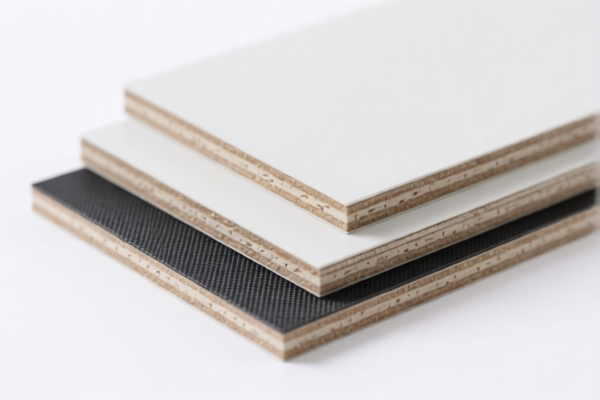
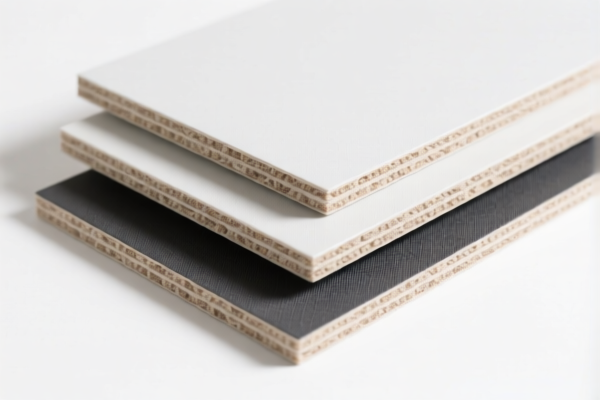
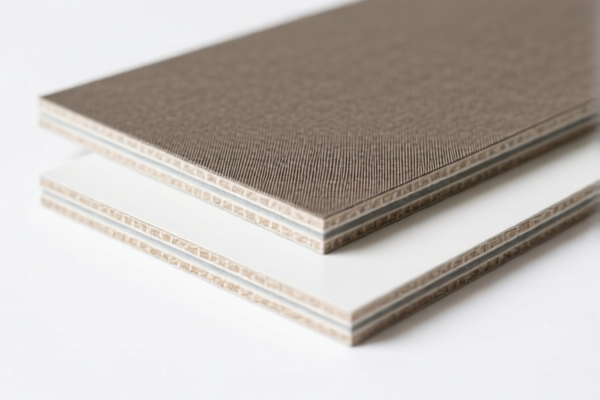
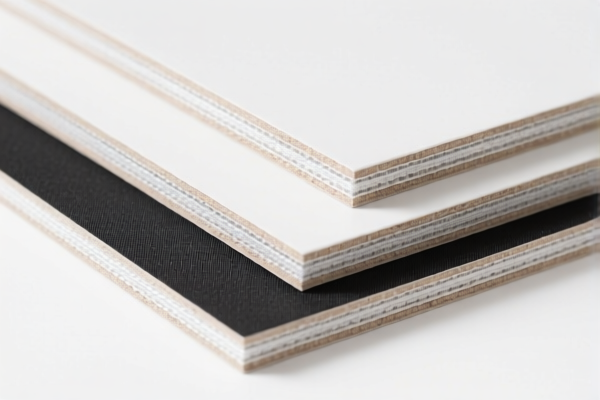
polyurethane textile composite packaging board
CN → US| HS编码 | 关税税率 | 原产国 | 目的国 | 文档 |
|---|---|---|---|---|
| 3921131500 | 41.5% | CN | US | 官方文档 |
| 3921131950 | 40.3% | CN | US | 官方文档 |
| 5903202500 | 42.5% | CN | US | 官方文档 |
| 5903202000 | 35.0% | CN | US | 官方文档 |
| 6810990080 | 35.0% | CN | US | 官方文档 |
商品图片
AI分析
📦 Polyurethane Textile Composite Packaging Board (PU-TCB)
🌐 HS Code Reference & Customs Clearance Guide | 2026 Latest Tariff Analysis | Professional Clearance Strategy
📌 I. Product Definition & Classification: What Exactly is "Polyurethane Textile Composite Packaging Board"?
Polyurethane Textile Composite Packaging Board is a specialized building and packaging material formed by combining Polyurethane (PU) foam or resin with Textile/Fabric materials through lamination, impregnation, or coating processes.
In international trade, this product is ambiguous because it contains both plastic/polymer components (PU) and textile components. The classification depends heavily on which material defines the essential character and the specific manufacturing process.
⚠️ Key Distinction Point:
- If the board is primarily a textile fabric coated/laminated with PU for strength/barrier properties → Chapter 59 (Impregnated Textiles)
- If the board is primarily a plastic board with textile reinforcement → Chapter 39 (Plastics)
- If the board is misidentified as a cement/concrete board due to shape → Chapter 68 (Other Stone Products) (High Risk!)
📦 II. HS Code Classification Details (2026 Latest Tariff Authority Cross-Reference)
Based on the provided data, here are the 5 possible HS Code classifications for this product, ranging from 35% to 42.5% total tax (including US-specific surcharges).
| HS Code | Product Description (Summary from Data) | Essential Character | Total Tax Rate (US) | Tax Breakdown Detail |
|---|---|---|---|---|
| 5903.20.25.00 | PU Textile Composite Board, name includes PU material & textile form, conforms to PU-treated artificial fiber textile fabric classification. | Textile (Treated Fabric) | 42.5% | Base: 7.5%, Add-on: 25.0%, Section 122: 10% |
| 3921.13.15.00 | PU Textile Composite Building Board, Material: PU, Form: Composite Board, Use: Building. Fits PU + Textile combination. | Plastic (Composite Plastic) | 41.5% | Base: 6.5%, Add-on: 25.0%, Section 122: 10% |
| 3921.13.19.50 | PU Textile Composite Building Board, Material: PU, Form: Board/Sheet, Use: Building. Fits PU, Sheet, Film description. | Plastic (Unspecified Composite) | 40.3% | Base: 5.3%, Add-on: 25.0%, Section 122: 10% |
| 5903.20.20.00 | PU Textile Composite Board, PU corresponds to material, textile composite fits impregnated/coated/laminated characteristics, building board is downstream application. | Textile (Impregnated/Laminated) | 35.0% | Base: 0.0%, Add-on: 25.0%, Section 122: 10% |
| 6810.99.00.80 | PU Textile Composite Building Board, inferred from "building board" to fit Cement/Concrete or Artificial Stone products other than specific categories. | Stone/Cement (Incorrect but Risky) | 35.0% | Base: 0.0%, Add-on: 25.0%, Section 122: 10% |
🔍 Critical Warning:
- HS Code 6810.99.00.80 is a high-risk misclassification. Even though it has a low base rate (0%), it misidentifies a PU-Textile product as a "Cement/Concrete" product. Customs may flag this for misdeclaration penalties if physical evidence (flexibility, PU smell, fabric layers) contradicts the "stone" classification.
- HS Code 5903.20.20.00 offers the lowest total tax (35%) and is technically plausible if the textile nature is dominant, but requires proof of "impregnation/lamination."
💰 III. 2026 Latest Tariff Rate Breakdown (Including Add-ons & Policy Surcharges)
✅ Applicable Country: United States (US)
✅ Origin: China (CN) (Assumed based on tax details including Section 122/301)
✅ Effective Time: 2025 onwards (Current Trade War Context)
🎯 1. 5903.20.25.00 – Treated Artificial Fiber Textile Fabric (PU-Coated)
| Item | Content |
|---|---|
| Base Rate | 7.5% (ad valorem) |
| USITC Add-on (Section 301) | +25% |
| Section 122 Add-on | +10% (Specific to China textile/apparel categories) |
| Total Tax Rate | 42.5% |
| Tax Calculation | CIF Value × 42.5% |
| De Minimis Exemption | ❌ Not Applicable (deny_de_minimis for Section 301/122 goods) |
| Legal Basis | HTSUS 5903.20.25 → USITC Footnote 9903.88.01 → IEEPA 9903.01.25 |
📌 Explanation:
- This classification treats the product as a textile fabric that has been coated with polyurethane.
- The 7.5% base rate is standard for certain treated textiles.
- Total 42.5% is the highest among the options, making it the most expensive but potentially the most "honest" if the textile content is visually dominant.
🎯 2. 3921.13.15.00 – Other Plates, Sheets, Film, Foil & Strip (Plastic)
| Item | Content |
|---|---|
| Base Rate | 6.5% |
| USITC Add-on (Section 301) | +25% |
| Section 122 Add-on | +10% |
| Total Tax Rate | 41.5% |
| Tax Calculation | CIF Value × 41.5% |
| De Minimis Exemption | ❌ Not Applicable |
| Legal Basis | HTSUS 3921.13.15 → USITC 9903.88.01 → IEEPA 9903.01.25 |
📌 Explanation:
- This classifies the product as a plastic composite board.
- The base rate is lower (6.5%) than the textile option.
- Suitable if the PU foam/core provides the structural integrity of the board.
🎯 3. 3921.13.19.50 – Other Plastic Plates, Sheets (Unspecified)
| Item | Content |
|---|---|
| Base Rate | 5.3% |
| USITC Add-on (Section 301) | +25% |
| Section 122 Add-on | +10% |
| Total Tax Rate | 40.3% |
| Tax Calculation | CIF Value × 40.3% |
| De Minimis Exemption | ❌ Not Applicable |
| Legal Basis | HTSUS 3921.13.19.50 → USITC 9903.88.01 → IEEPA 9903.01.25 |
📌 Explanation:
- This is a "catch-all" for plastic sheets not specifically listed elsewhere.
- Lowest base rate among plastic options.
- Riskier classification if the product is specifically designed as a "composite" rather than a general plastic sheet.
🎯 4. 5903.20.20.00 – Impregnated, Coated, Covered or Laminated Textile Fabrics
| Item | Content |
|---|---|
| Base Rate | 0.0% |
| USITC Add-on (Section 301) | +25% |
| Section 122 Add-on | +10% |
| Total Tax Rate | 35.0% |
| Tax Calculation | CIF Value × 35.0% |
| De Minimis Exemption | ❌ Not Applicable |
| Legal Basis | HTSUS 5903.20.20 → USITC 9903.88.01 → IEEPA 9903.01.25 |
📌 Explanation:
- Lowest Total Tax (35%)!
- The 0% base rate is crucial.
- Requirement: Must prove the textile is impregnated, coated, covered, or laminated with PU. The PU is not the primary structure but a treatment layer.
- High Scrutiny Risk: Customs will ask for layer analysis to prove it's not just a plastic board.
🎯 5. 6810.99.00.80 – Other Articles of Cement, Concrete or Artificial Stone
| Item | Content |
|---|---|
| Base Rate | 0.0% |
| USITC Add-on (Section 301) | +25% |
| Section 122 Add-on | +10% |
| Total Tax Rate | 35.0% |
| Tax Calculation | CIF Value × 35.0% |
| De Minimis Exemption | ❌ Not Applicable |
| Legal Basis | HTSUS 6810.99.00.80 → USITC 9903.88.01 → IEEPA 9903.01.25 |
📌 Explanation:
- Lowest Total Tax (35%) but Highest Misdeclaration Risk.
- Do NOT use this unless the product is literally a stone board with PU coating.
- If Customs inspects and sees fabric layers, they will impose fines + back taxes + penalty for misclassification.
🛠️ IV. Customs Clearance Practical Advice (Real-World Pitfall Guide)
✅ 1. Preparation Checklist (Mandatory)
| Document | Required | Explanation |
|---|---|---|
| ✅ Product Specification Sheet | ✔️ | Detail the layer structure: e.g., "Top: Fabric, Middle: PU Foam, Bottom: Fabric." |
| ✅ Cross-Sectional Photo | ✔️ | Critical! Show the fabric-PU-textile layers clearly. Proves it's not a solid plastic or stone board. |
| ✅ Manufacturing Process Description | ✔️ | Explain if it's laminated (layer-by-layer) or impregnated (soaked). Determines if it's 5903 or 3921. |
| ✅ Commercial Invoice | ✔️ | Clearly state: "Polyurethane-Laminated Textile Composite Board, Not Cement-Based." |
| ✅ Bill of Lading | ✔️ | Ensure packaging description matches HS Code (e.g., "Textile Rolls" vs. "Plastic Sheets"). |
✅ 2. Declaration Strategy (Key Mnemonics)
🔥 "Look at the Layers, Not Just the Name! PU + Fabric = 5903? PU Core = 3921? Never Lie to 6810!"
| Scenario | Recommended HS Code | Risk Level |
|---|---|---|
| Fabric is visible on both sides, PU is the glue/foam core | 5903.20.20.00 (35%) |
🟡 Medium (Requires proof of lamination) |
| PU Foam is the main bulk, fabric is just a thin skin | 3921.13.15.00 (41.5%) |
🟢 Low (Plastic composite is clearer) |
| Product is rigid, looks like a tile, made of stone-like material | 6810.99.00.80 (35%) |
🔴 High (Misdeclaration risk) |
| Product is flexible, cloth-like, PU-coated | 5903.20.20.00 (35%) |
🟢 Low (Most accurate for textiles) |
✅ 3. Special Handling Tips
| Situation | Advice |
|---|---|
| OEM Custom Boards | Provide customer design specs showing the textile pattern and PU thickness. |
| "Building Board" Terminology | Avoid using "Cement Board" or "Stone Board" in the description. Use "Composite Board" or "Laminated Board." |
| Packaging Label | Ensure labels do not say "Inorganic" or "Concrete" if the product is organic (PU/Textile). |
| Section 122 Impact | Be aware that both Chapter 39 and 59 may be subject to Section 122 (10% surcharge) if deemed textile/apparel-related. Check latest IEEPA updates. |
🌍 V. Global Market Clearance Comparison (2026)
| Country/Region | Recommended HS Code | Tariff (China Origin) | Key Certification | Notes |
|---|---|---|---|---|
| 🇺🇸 USA | 5903.20.20.00 or 3921.13.15.00 |
35% - 42.5% | No specific (but proof of material needed) | High scrutiny on "Textile vs. Plastic" |
| 🇨🇳 China | 3921.13.15.00 or 5903.20.20.00 |
0% - 7.5% | CCC (if electrical) | Low import tax, but high customs inspection rate |
| 🇪🇺 EU | 3921.13 or 5903.20 |
0% - 6% | CE (if applicable) | No Section 301/122 add-ons |
| 🇬🇧 UK | 3921.13 or 5903.20 |
0% - 6% | UKCA | Post-Brexit rules similar to EU |
📌 Conclusion:
- USA is the only market with punitive add-ons (301/122).
- Choose5903.20.20.00for the best legal rate (35%) if you can prove the textile nature.
- Choose3921.13.15.00for safety if the PU foam is the dominant structural component.
📌 VI. Common Mistakes & Pitfalls (Blood Lessons)
❌ Mistake 1: Calling the product "Cement Board" or "Stone Board" to avoid high textile/plastic taxes.
👉 Consequence: Customs finds PU/Textile layers → Penalty + Back Tax + Seizure.
❌ Mistake 2: Declaring as 3921.13.19.50 (40.3%) when it fits 5903.20.20.00 (35%) perfectly.
👉 Consequence: Overpaying 5.3% on every shipment unnecessarily.
❌ Mistake 3: Failing to provide cross-sectional photos.
👉 Consequence: Customs assumes worst-case scenario (e.g., misclassification) → Delay + Inspection Fee.
❌ Mistake 4: Ignoring Section 122.
👉 Consequence: Even if base tax is 0%, the 10% Section 122 still applies to many textile/plastic composites from China.
✅ Correct Action:
"Polyurethane-Laminated Textile Composite Board, Flexible, PU Core, Fabric Layers, For Packaging Use. NOT Cement-Based."
🎯 VII. Conclusion: Professional Classification Saves Money!
🎯 Remember the Mnemonic:
🔹 "Fabric + PU = 5903 (35%)? Plastic + Fabric = 3921 (40-42%)? Stone = 6810 (LIE & GET FINED)!"
🔹 "Base Tax 0% is tempting, but Section 301/122 makes it 35%. Don't gamble with 6810!"
📌 Pro Tip:
If your product is primarily textile, apply for a Binding Tariff Ruling (BTR) from US Customs and Border Protection (CBP) before shipping. This legalizes your choice of 5903.20.20.00 and protects you from audits.
📣 Immediate Action:
📞 Consult a licensed customs broker + Provide layer photos + Request CBP Advance Ruling.
🚀 Ensure your Polyurethane Textile Composite Board clears customs legally, efficiently, and cost-effectively!
✨ Professional Clearance Starts with Precise Classification!
💼 Every Dollar of Tariff Matters – Optimize It!
用户评价
关于 HS 编码归类
协调制度(HS)是由世界海关组织(WCO)制定的国际贸易商品分类标准。全球 200 多个国家采用 HS 系统作为海关关税、贸易统计和进出口监管的基础。
每个 HS 编码遵循以下层级结构:
- 章(2 位)——商品大类(例如:第 84 章:机器和机械设备)
- 品目(4 位)——章内的更具体分类
- 子目(6 位)——国际通用细分,所有 WCO 成员国统一使用
- 本国细分(8-10 位)——各国自行扩展的细分编码,如美国 HTSUS 10 位编码
正确的 HS 编码归类对于顺利通关、准确缴纳关税和遵守贸易法规至关重要。错误归类可能导致海关延误、多缴关税或罚款。
从CN进口到US时,适用的关税税率可能包括:
- 最惠国(MFN)税率——适用于 WTO 成员国的标准关税税率
- 普通税率——适用于无贸易协定国家
- 贸易救济关税——附加关税,如 301 条款(反倾销)、232 条款(国家安全)或反补贴税
本页内容仅供参考。如需正式归类,请咨询当地海关或持牌报关代理。