polyurethane textile composite packaging board
CN → US| HS Code | Tariff Rate | Origin | Destination | Doc |
|---|---|---|---|---|
| 3921131500 | 41.5% | CN | US | Official Doc |
| 3921131950 | 40.3% | CN | US | Official Doc |
| 5903202500 | 42.5% | CN | US | Official Doc |
| 5903202000 | 35.0% | CN | US | Official Doc |
| 6810990080 | 35.0% | CN | US | Official Doc |
Product Images
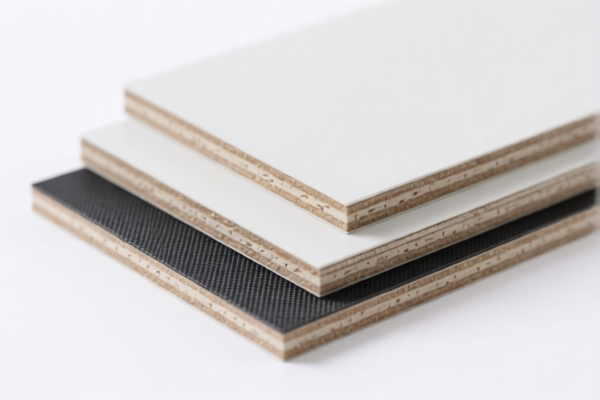
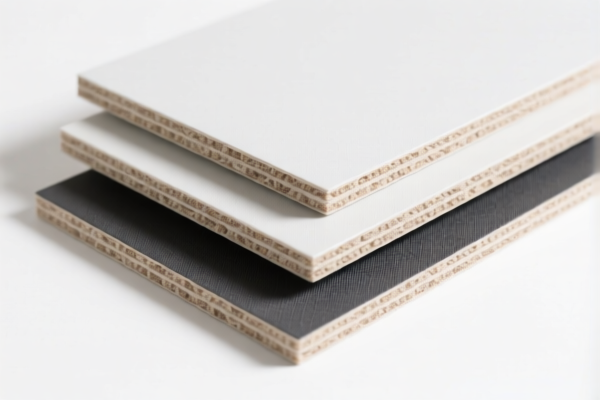
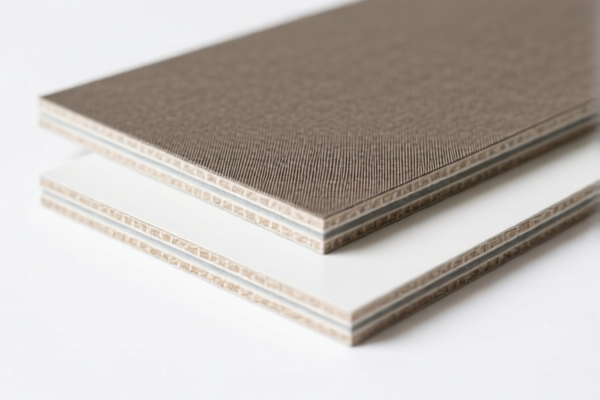
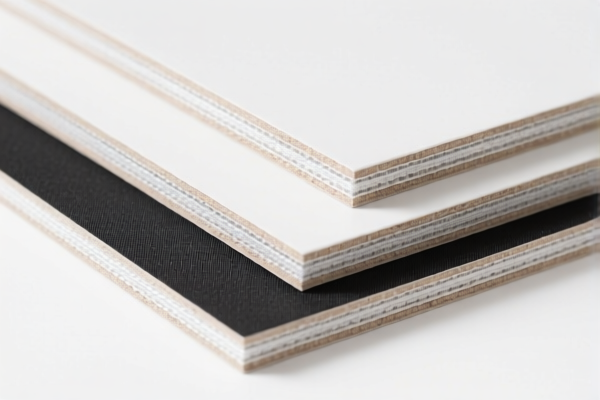
AI Analysis
📦 Polyurethane Textile Composite Packaging Board (PU-TCB)
🌐 HS Code Reference & Customs Clearance Guide | 2026 Latest Tariff Analysis | Professional Clearance Strategy
📌 I. Product Definition & Classification: What Exactly is "Polyurethane Textile Composite Packaging Board"?
Polyurethane Textile Composite Packaging Board is a specialized building and packaging material formed by combining Polyurethane (PU) foam or resin with Textile/Fabric materials through lamination, impregnation, or coating processes.
In international trade, this product is ambiguous because it contains both plastic/polymer components (PU) and textile components. The classification depends heavily on which material defines the essential character and the specific manufacturing process.
⚠️ Key Distinction Point:
- If the board is primarily a textile fabric coated/laminated with PU for strength/barrier properties → Chapter 59 (Impregnated Textiles)
- If the board is primarily a plastic board with textile reinforcement → Chapter 39 (Plastics)
- If the board is misidentified as a cement/concrete board due to shape → Chapter 68 (Other Stone Products) (High Risk!)
📦 II. HS Code Classification Details (2026 Latest Tariff Authority Cross-Reference)
Based on the provided data, here are the 5 possible HS Code classifications for this product, ranging from 35% to 42.5% total tax (including US-specific surcharges).
| HS Code | Product Description (Summary from Data) | Essential Character | Total Tax Rate (US) | Tax Breakdown Detail |
|---|---|---|---|---|
| 5903.20.25.00 | PU Textile Composite Board, name includes PU material & textile form, conforms to PU-treated artificial fiber textile fabric classification. | Textile (Treated Fabric) | 42.5% | Base: 7.5%, Add-on: 25.0%, Section 122: 10% |
| 3921.13.15.00 | PU Textile Composite Building Board, Material: PU, Form: Composite Board, Use: Building. Fits PU + Textile combination. | Plastic (Composite Plastic) | 41.5% | Base: 6.5%, Add-on: 25.0%, Section 122: 10% |
| 3921.13.19.50 | PU Textile Composite Building Board, Material: PU, Form: Board/Sheet, Use: Building. Fits PU, Sheet, Film description. | Plastic (Unspecified Composite) | 40.3% | Base: 5.3%, Add-on: 25.0%, Section 122: 10% |
| 5903.20.20.00 | PU Textile Composite Board, PU corresponds to material, textile composite fits impregnated/coated/laminated characteristics, building board is downstream application. | Textile (Impregnated/Laminated) | 35.0% | Base: 0.0%, Add-on: 25.0%, Section 122: 10% |
| 6810.99.00.80 | PU Textile Composite Building Board, inferred from "building board" to fit Cement/Concrete or Artificial Stone products other than specific categories. | Stone/Cement (Incorrect but Risky) | 35.0% | Base: 0.0%, Add-on: 25.0%, Section 122: 10% |
🔍 Critical Warning:
- HS Code 6810.99.00.80 is a high-risk misclassification. Even though it has a low base rate (0%), it misidentifies a PU-Textile product as a "Cement/Concrete" product. Customs may flag this for misdeclaration penalties if physical evidence (flexibility, PU smell, fabric layers) contradicts the "stone" classification.
- HS Code 5903.20.20.00 offers the lowest total tax (35%) and is technically plausible if the textile nature is dominant, but requires proof of "impregnation/lamination."
💰 III. 2026 Latest Tariff Rate Breakdown (Including Add-ons & Policy Surcharges)
✅ Applicable Country: United States (US)
✅ Origin: China (CN) (Assumed based on tax details including Section 122/301)
✅ Effective Time: 2025 onwards (Current Trade War Context)
🎯 1. 5903.20.25.00 – Treated Artificial Fiber Textile Fabric (PU-Coated)
| Item | Content |
|---|---|
| Base Rate | 7.5% (ad valorem) |
| USITC Add-on (Section 301) | +25% |
| Section 122 Add-on | +10% (Specific to China textile/apparel categories) |
| Total Tax Rate | 42.5% |
| Tax Calculation | CIF Value × 42.5% |
| De Minimis Exemption | ❌ Not Applicable (deny_de_minimis for Section 301/122 goods) |
| Legal Basis | HTSUS 5903.20.25 → USITC Footnote 9903.88.01 → IEEPA 9903.01.25 |
📌 Explanation:
- This classification treats the product as a textile fabric that has been coated with polyurethane.
- The 7.5% base rate is standard for certain treated textiles.
- Total 42.5% is the highest among the options, making it the most expensive but potentially the most "honest" if the textile content is visually dominant.
🎯 2. 3921.13.15.00 – Other Plates, Sheets, Film, Foil & Strip (Plastic)
| Item | Content |
|---|---|
| Base Rate | 6.5% |
| USITC Add-on (Section 301) | +25% |
| Section 122 Add-on | +10% |
| Total Tax Rate | 41.5% |
| Tax Calculation | CIF Value × 41.5% |
| De Minimis Exemption | ❌ Not Applicable |
| Legal Basis | HTSUS 3921.13.15 → USITC 9903.88.01 → IEEPA 9903.01.25 |
📌 Explanation:
- This classifies the product as a plastic composite board.
- The base rate is lower (6.5%) than the textile option.
- Suitable if the PU foam/core provides the structural integrity of the board.
🎯 3. 3921.13.19.50 – Other Plastic Plates, Sheets (Unspecified)
| Item | Content |
|---|---|
| Base Rate | 5.3% |
| USITC Add-on (Section 301) | +25% |
| Section 122 Add-on | +10% |
| Total Tax Rate | 40.3% |
| Tax Calculation | CIF Value × 40.3% |
| De Minimis Exemption | ❌ Not Applicable |
| Legal Basis | HTSUS 3921.13.19.50 → USITC 9903.88.01 → IEEPA 9903.01.25 |
📌 Explanation:
- This is a "catch-all" for plastic sheets not specifically listed elsewhere.
- Lowest base rate among plastic options.
- Riskier classification if the product is specifically designed as a "composite" rather than a general plastic sheet.
🎯 4. 5903.20.20.00 – Impregnated, Coated, Covered or Laminated Textile Fabrics
| Item | Content |
|---|---|
| Base Rate | 0.0% |
| USITC Add-on (Section 301) | +25% |
| Section 122 Add-on | +10% |
| Total Tax Rate | 35.0% |
| Tax Calculation | CIF Value × 35.0% |
| De Minimis Exemption | ❌ Not Applicable |
| Legal Basis | HTSUS 5903.20.20 → USITC 9903.88.01 → IEEPA 9903.01.25 |
📌 Explanation:
- Lowest Total Tax (35%)!
- The 0% base rate is crucial.
- Requirement: Must prove the textile is impregnated, coated, covered, or laminated with PU. The PU is not the primary structure but a treatment layer.
- High Scrutiny Risk: Customs will ask for layer analysis to prove it's not just a plastic board.
🎯 5. 6810.99.00.80 – Other Articles of Cement, Concrete or Artificial Stone
| Item | Content |
|---|---|
| Base Rate | 0.0% |
| USITC Add-on (Section 301) | +25% |
| Section 122 Add-on | +10% |
| Total Tax Rate | 35.0% |
| Tax Calculation | CIF Value × 35.0% |
| De Minimis Exemption | ❌ Not Applicable |
| Legal Basis | HTSUS 6810.99.00.80 → USITC 9903.88.01 → IEEPA 9903.01.25 |
📌 Explanation:
- Lowest Total Tax (35%) but Highest Misdeclaration Risk.
- Do NOT use this unless the product is literally a stone board with PU coating.
- If Customs inspects and sees fabric layers, they will impose fines + back taxes + penalty for misclassification.
🛠️ IV. Customs Clearance Practical Advice (Real-World Pitfall Guide)
✅ 1. Preparation Checklist (Mandatory)
| Document | Required | Explanation |
|---|---|---|
| ✅ Product Specification Sheet | ✔️ | Detail the layer structure: e.g., "Top: Fabric, Middle: PU Foam, Bottom: Fabric." |
| ✅ Cross-Sectional Photo | ✔️ | Critical! Show the fabric-PU-textile layers clearly. Proves it's not a solid plastic or stone board. |
| ✅ Manufacturing Process Description | ✔️ | Explain if it's laminated (layer-by-layer) or impregnated (soaked). Determines if it's 5903 or 3921. |
| ✅ Commercial Invoice | ✔️ | Clearly state: "Polyurethane-Laminated Textile Composite Board, Not Cement-Based." |
| ✅ Bill of Lading | ✔️ | Ensure packaging description matches HS Code (e.g., "Textile Rolls" vs. "Plastic Sheets"). |
✅ 2. Declaration Strategy (Key Mnemonics)
🔥 "Look at the Layers, Not Just the Name! PU + Fabric = 5903? PU Core = 3921? Never Lie to 6810!"
| Scenario | Recommended HS Code | Risk Level |
|---|---|---|
| Fabric is visible on both sides, PU is the glue/foam core | 5903.20.20.00 (35%) |
🟡 Medium (Requires proof of lamination) |
| PU Foam is the main bulk, fabric is just a thin skin | 3921.13.15.00 (41.5%) |
🟢 Low (Plastic composite is clearer) |
| Product is rigid, looks like a tile, made of stone-like material | 6810.99.00.80 (35%) |
🔴 High (Misdeclaration risk) |
| Product is flexible, cloth-like, PU-coated | 5903.20.20.00 (35%) |
🟢 Low (Most accurate for textiles) |
✅ 3. Special Handling Tips
| Situation | Advice |
|---|---|
| OEM Custom Boards | Provide customer design specs showing the textile pattern and PU thickness. |
| "Building Board" Terminology | Avoid using "Cement Board" or "Stone Board" in the description. Use "Composite Board" or "Laminated Board." |
| Packaging Label | Ensure labels do not say "Inorganic" or "Concrete" if the product is organic (PU/Textile). |
| Section 122 Impact | Be aware that both Chapter 39 and 59 may be subject to Section 122 (10% surcharge) if deemed textile/apparel-related. Check latest IEEPA updates. |
🌍 V. Global Market Clearance Comparison (2026)
| Country/Region | Recommended HS Code | Tariff (China Origin) | Key Certification | Notes |
|---|---|---|---|---|
| 🇺🇸 USA | 5903.20.20.00 or 3921.13.15.00 |
35% - 42.5% | No specific (but proof of material needed) | High scrutiny on "Textile vs. Plastic" |
| 🇨🇳 China | 3921.13.15.00 or 5903.20.20.00 |
0% - 7.5% | CCC (if electrical) | Low import tax, but high customs inspection rate |
| 🇪🇺 EU | 3921.13 or 5903.20 |
0% - 6% | CE (if applicable) | No Section 301/122 add-ons |
| 🇬🇧 UK | 3921.13 or 5903.20 |
0% - 6% | UKCA | Post-Brexit rules similar to EU |
📌 Conclusion:
- USA is the only market with punitive add-ons (301/122).
- Choose5903.20.20.00for the best legal rate (35%) if you can prove the textile nature.
- Choose3921.13.15.00for safety if the PU foam is the dominant structural component.
📌 VI. Common Mistakes & Pitfalls (Blood Lessons)
❌ Mistake 1: Calling the product "Cement Board" or "Stone Board" to avoid high textile/plastic taxes.
👉 Consequence: Customs finds PU/Textile layers → Penalty + Back Tax + Seizure.
❌ Mistake 2: Declaring as 3921.13.19.50 (40.3%) when it fits 5903.20.20.00 (35%) perfectly.
👉 Consequence: Overpaying 5.3% on every shipment unnecessarily.
❌ Mistake 3: Failing to provide cross-sectional photos.
👉 Consequence: Customs assumes worst-case scenario (e.g., misclassification) → Delay + Inspection Fee.
❌ Mistake 4: Ignoring Section 122.
👉 Consequence: Even if base tax is 0%, the 10% Section 122 still applies to many textile/plastic composites from China.
✅ Correct Action:
"Polyurethane-Laminated Textile Composite Board, Flexible, PU Core, Fabric Layers, For Packaging Use. NOT Cement-Based."
🎯 VII. Conclusion: Professional Classification Saves Money!
🎯 Remember the Mnemonic:
🔹 "Fabric + PU = 5903 (35%)? Plastic + Fabric = 3921 (40-42%)? Stone = 6810 (LIE & GET FINED)!"
🔹 "Base Tax 0% is tempting, but Section 301/122 makes it 35%. Don't gamble with 6810!"
📌 Pro Tip:
If your product is primarily textile, apply for a Binding Tariff Ruling (BTR) from US Customs and Border Protection (CBP) before shipping. This legalizes your choice of 5903.20.20.00 and protects you from audits.
📣 Immediate Action:
📞 Consult a licensed customs broker + Provide layer photos + Request CBP Advance Ruling.
🚀 Ensure your Polyurethane Textile Composite Board clears customs legally, efficiently, and cost-effectively!
✨ Professional Clearance Starts with Precise Classification!
💼 Every Dollar of Tariff Matters – Optimize It!
Customer Reviews
About HS Code Classification
The Harmonized System (HS) is an internationally standardized nomenclature developed by the World Customs Organization (WCO) to classify traded products. Over 200 countries use the HS system as the basis for customs tariffs, trade statistics, and import/export regulations.
Each HS code follows a hierarchical structure:
- Chapter (2 digits) — Broad category of goods (e.g., Chapter 84: Machinery and Mechanical Appliances)
- Heading (4 digits) — More specific grouping within the chapter
- Subheading (6 digits) — Internationally standardized breakdown, used by all WCO member countries
- National subdivisions (8-10 digits) — Country-specific extensions for further classification, such as US HTSUS 10-digit codes
Correct HS code classification is essential for smooth customs clearance, accurate duty payment, and compliance with trade regulations. Misclassification can lead to customs delays, overpayment of duties, or penalties.
When importing from CN to US, the applicable tariff rates may include:
- Most-Favored-Nation (MFN) rate — The standard duty rate applied to WTO members
- General rate — Applied to countries without trade agreements
- Trade remedy duties — Additional tariffs such as Section 301 (anti-dumping), Section 232 (national security), or countervailing duties
The information provided on this page is for reference purposes only. For official classification, please consult with your local customs authority or a licensed customs broker.