polyurethane textile composite profiled board
CN → US| HS编码 | 关税税率 | 原产国 | 目的国 | 文档 |
|---|---|---|---|---|
| 3921131500 | 41.5% | CN | US | 官方文档 |
| 3921131950 | 40.3% | CN | US | 官方文档 |
| 5903202500 | 42.5% | CN | US | 官方文档 |
| 5903202000 | 35.0% | CN | US | 官方文档 |
| 6810990080 | 35.0% | CN | US | 官方文档 |
商品图片

AI分析
🏗️ Polyurethane Textile Composite Profiled Board (PU-TBC)
🌐 HS Code Reference & Clearance Guide | 2026 Latest Tariff Analysis | Professional Customs Strategy
📌 I. Product Definition & Classification: What is a "PU Textile Composite Board"?
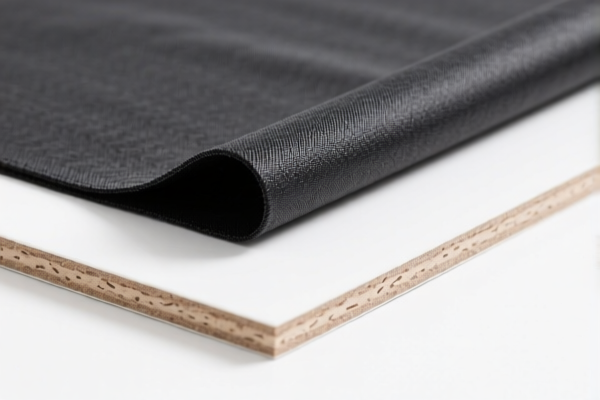
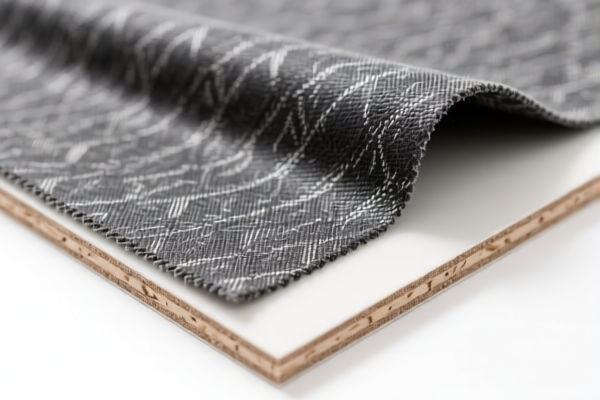
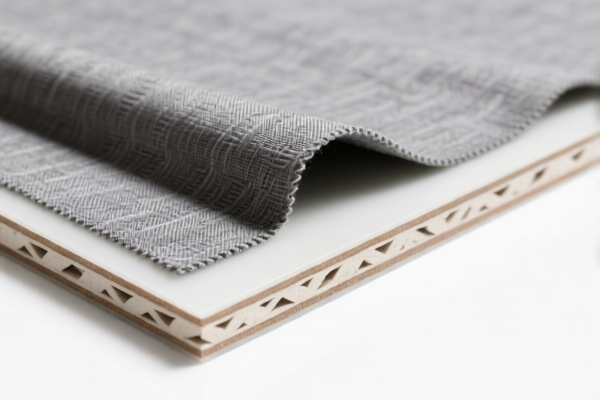
This product is a composite building material consisting of Polyurethane (PU) as the core/matrix and Textile/Fabric as the facing or reinforcing layer. It is shaped into profiled boards (ripped, corrugated, or trapezoidal profiles) primarily for construction applications (insulation, cladding, roofing).
Key Classification Dilemma:
The critical question for customs is: Is this primarily a "Plastic Product" (Chapter 39) or a "Textile Product" (Chapter 59/60)?
⚠️ Critical Distinction:
- If the textile is merely a surface finish or reinforcement, and the polyurethane provides the essential character (structure, insulation, waterproofing) → Chapter 39 (Plastics) applies.
- If the textile substrate is dominant (e.g., heavy fabric coated with thin PU for flexibility) → Chapter 59 (Impregnated Textiles) might apply.
- Note: Misclassification can lead to significant duty differences (from 0% to 7.5% base duty + 25% Section 301 + 10% IEEPA).
📦 II. HS Code Classification Matrix (Based on Provided Data)
| HS Code | Summary Description | Total Tax Rate | Tax Breakdown |
|---|---|---|---|
| 3921.13.15.00 | PU Textile Composite Building Board, Composite Form. Matches PU + Textile combination. | 41.5% | Base: 6.5% + Sec 301: 25.0% + IEEPA: 10% |
| 3921.13.19.50 | PU Textile Composite Board, Board Form. Matches "Plastics, sheets, films, etc." | 40.3% | Base: 5.3% + Sec 301: 25.0% + IEEPA: 10% |
| 5903.20.25.00 | PU-impregnated Textile Fabric. PU treatment of artificial fiber fabric. | 42.5% | Base: 7.5% + Sec 301: 25.0% + IEEPA: 10% |
| 5903.20.20.00 | PU-impregnated/laminated Textile. Downstream use: Building Board. | 35.0% | Base: 0.0% + Sec 301: 25.0% + IEEPA: 10% |
| 6810.99.00.80 | Cement/Concrete/Stone Product. Inferred from "Building Board" form. | 35.0% | Base: 0.0% + Sec 301: 25.0% + IEEPA: 10% |
🔍 Analysis of Tax Variance:
- The highest rate (42.5%) applies if classified as Textile (5903.20.25.00) with the highest base duty (7.5%).
- The lowest total rate (35.0%) is available via 5903.20.20.00 or 6810.99.00.80, both having 0% base duty.
- However, 6810.99.00.80 is a high-risk misclassification unless the board contains significant cement/concrete/stone components. Pure PU-Textile boards should NOT be classified here without strong technical proof of mineral content.
💰 III. Detailed Tariff Structure & Legal Basis (2026)
✅ Applicable Country: United States (US)
✅ Origin: China (CN)
✅ Effective Date: Post-2025 November 10 (Current Trade Policy)
🎯 1. 3921.13.15.00 – Plastic Plates, Sheets, etc., of Polyurethane, Reinforced with Textile
- Base Duty: 6.5%
- Section 301 (25%): Yes
- IEEPA (10%): Yes
- Total: 41.5%
- Legal Path:
USITC:3921.13.15.00→FOOTNOTE:9903.88.01→IEEPA:9903.01.24 - Interpretation: This is the most accurate description if the board is fundamentally a plastic product with textile reinforcement.
🎯 2. 3921.13.19.50 – Other Plastic Boards, Not Reinforced/Specifically Listed
- Base Duty: 5.3%
- Section 301 (25%): Yes
- IEEPA (10%): Yes
- Total: 40.3%
- Interpretation: A "catch-all" for PU boards not specifically listed under .15. Slightly lower base duty makes it attractive if the textile reinforcement isn't the primary defining feature.
🎯 3. 5903.20.20.00 – Textile Impregnated with PU, Not Elsewhere Specified
- Base Duty: 0.0%
- Section 301 (25%): Yes
- IEEPA (10%): Yes
- Total: 35.0% ✅ Lowest Risk if Textile Dominant
- Interpretation: If you can prove the textile fabric is the essential character (e.g., flexible, lightweight, primarily used as a membrane), this offers 7.5% savings on base duty compared to .25.
🎯 4. 5903.20.25.00 – Textile Impregnated with PU, Artificial Fiber
- Base Duty: 7.5%
- Section 301 (25%): Yes
- IEEPA (10%)
- Total: 42.5%
- Interpretation: Avoid unless required by specific textile classification rules. Highest total tax.
🎯 5. 6810.99.00.80 – Artificial Stone/Cement Products
- Base Duty: 0.0%
- Section 301 (25%): Yes
- IEEPA (10%)
- Total: 35.0%
- ⚠️ HIGH RISK: Only valid if the board contains significant cement/concrete/stone. Do not use for pure PU-Textile composites. Customs may reject this and reassess under Chapter 39/59, causing delays and penalties.
🛠️ IV. Customs Clearance Practical Advice
✅ 1. Documentation Checklist (Must-Have)
| Document | Requirement | Purpose |
|---|---|---|
| Technical Data Sheet | ✔️ Mandatory | Must specify % of PU vs. Textile, thickness, density, and essential character |
| Material Composition Report | ✔️ Mandatory | Proves whether PU or Textile dominates (critical for Ch. 39 vs. Ch. 59) |
| Product Photos | ✔️ Mandatory | Clear view of profile, surface (textile pattern), and cross-section |
| Application Statement | ✔️ Mandatory | Confirm "Building/Construction Use" to support 3921/5903 classification |
| Bill of Lading | ✔️ Mandatory | Ensure "Polyurethane Textile Composite Board" is used, not vague terms |
✅ 2. Classification Strategy & Risk Mitigation
| Strategy | Recommended HS Code | Pros | Cons |
|---|---|---|---|
| Safe & Accurate | 3921.13.15.00 | Matches "Plastic Product" nature; widely accepted for composite panels | 41.5% Total Tax |
| Aggressive Cost-Saving | 5903.20.20.00 | 35.0% Total Tax (7.5% savings) | Requires proof that Textile is essential character; higher audit risk |
| Incorrect/Avoid | 6810.99.00.80 | 35.0% Total Tax | High Risk of Rejection if no stone/cement content. May trigger fraud investigation |
🔥 Key Tip:
- If the board is rigid, thick, and used for structural insulation, argue for Chapter 39 (3921.13.15.00).
- If the board is flexible, thin, and used as a membrane/lining, argue for Chapter 59 (5903.20.20.00).
- Never claim it is a "stone product" (6810) unless it is literally a PU-modified cement board.
✅ 3. Avoid These Common Mistakes
❌ Mistake 1: Using generic terms like "Building Panel" or "Insulation Board"
👉 Result: Customs may assign arbitrary codes, leading to delays.
👉 Fix: Use precise name: "Polyurethane Textile Composite Profiled Board, For Construction."
❌ Mistake 2: Misclassifying as "Textile" (5903.20.25.00) when it’s primarily Plastic
👉 Result: Higher base duty (7.5% vs 5.3/0%) and potential rejection if not truly textile-dominant.
❌ Mistake 3: Splitting shipment into "PU Core" and "Textile Cover"
👉 Result: Both parts face separate duties; total tax may exceed 45%.
👉 Fix: Declare as a composite good in one HS code.
🌍 V. Global Market Comparison (2026)
| Market | Recommended HS Code | Estimated Total Tax | Notes |
|---|---|---|---|
| 🇺🇸 USA | 3921.13.15.00 or 5903.20.20.00 | 35.0% – 41.5% | Includes 25% Sec 301 + 10% IEEPA |
| 🇨🇳 China | 3921.13.15.00 | ~5.0–7.5% | No additional tariffs |
| 🇪🇺 EU | 3921.10.40 | ~6.5% | No Section 301 or IEEPA |
| 🇯🇵 Japan | 3921.13.19 | ~5.0–8.0% | No additional tariffs |
📌 Conclusion for USA:
- The 25% Section 301 tariff is unavoidable for Chinese-origin goods.
- The 10% IEEPA tariff adds further cost.
- Strategy: Use 5903.20.20.00 (35%) if technically defensible (Textile-dominant). Otherwise, 3921.13.15.00 (41.5%) is the safest standard classification.
📌 VI. Final Recommendation
-
For Rigid Building Boards:
➤ Declare as 3921.13.15.00 (Plastic Product).
➤ Total Tax: 41.5%.
➤ Reason: Accurate, defensible, low audit risk. -
For Flexible Textile-Membrane Boards:
➤ Declare as 5903.20.20.00 (Impregnated Textile).
➤ Total Tax: 35.0%.
➤ Reason: Saves 7.5% on base duty. Must provide technical proof of textile dominance. -
Do NOT use 6810.99.00.80 unless the product contains significant cement/stone.
➤ Risk: High chance of rejection, fines, and shipment hold.
🎯 Pro Tip:
"If in doubt, go with Chapter 39 (Plastics) for rigid boards. If flexible, consider Chapter 59 (Textiles). Always back up your claim with a Technical Data Sheet!"
✨ Clear Classification = Faster Clearance = Lower Costs!
💼 Consult a licensed customs broker for pre-classification rulings if uncertain.
用户评价
关于 HS 编码归类
协调制度(HS)是由世界海关组织(WCO)制定的国际贸易商品分类标准。全球 200 多个国家采用 HS 系统作为海关关税、贸易统计和进出口监管的基础。
每个 HS 编码遵循以下层级结构:
- 章(2 位)——商品大类(例如:第 84 章:机器和机械设备)
- 品目(4 位)——章内的更具体分类
- 子目(6 位)——国际通用细分,所有 WCO 成员国统一使用
- 本国细分(8-10 位)——各国自行扩展的细分编码,如美国 HTSUS 10 位编码
正确的 HS 编码归类对于顺利通关、准确缴纳关税和遵守贸易法规至关重要。错误归类可能导致海关延误、多缴关税或罚款。
从CN进口到US时,适用的关税税率可能包括:
- 最惠国(MFN)税率——适用于 WTO 成员国的标准关税税率
- 普通税率——适用于无贸易协定国家
- 贸易救济关税——附加关税,如 301 条款(反倾销)、232 条款(国家安全)或反补贴税
本页内容仅供参考。如需正式归类,请咨询当地海关或持牌报关代理。