polyurethane textile composite profiled board
CN → US| HS Code | Tariff Rate | Origin | Destination | Doc |
|---|---|---|---|---|
| 3921131500 | 41.5% | CN | US | Official Doc |
| 3921131950 | 40.3% | CN | US | Official Doc |
| 5903202500 | 42.5% | CN | US | Official Doc |
| 5903202000 | 35.0% | CN | US | Official Doc |
| 6810990080 | 35.0% | CN | US | Official Doc |
Product Images
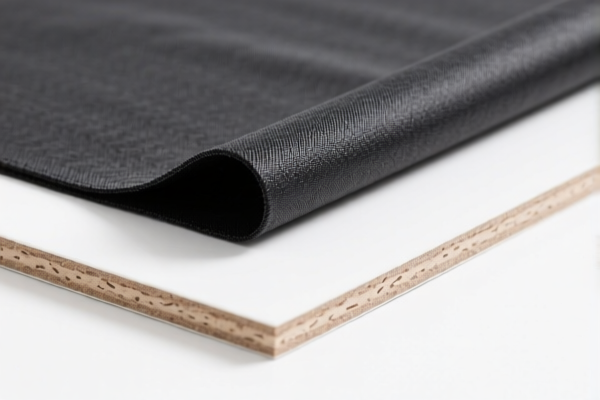
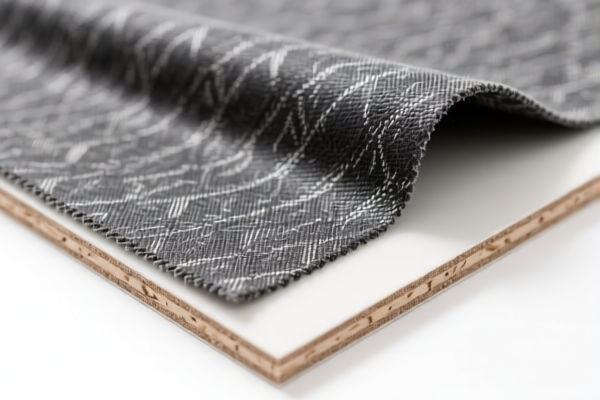
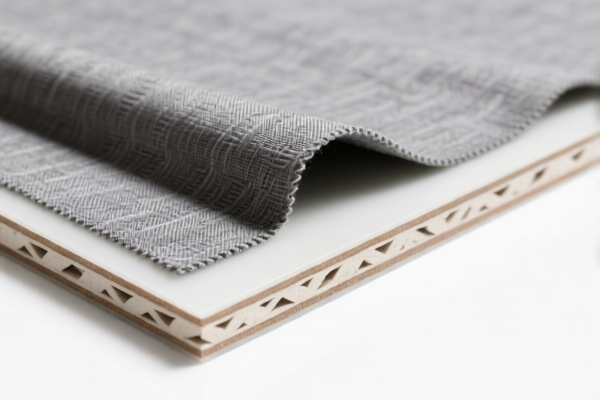

AI Analysis
🏗️ Polyurethane Textile Composite Profiled Board (PU-TBC)
🌐 HS Code Reference & Clearance Guide | 2026 Latest Tariff Analysis | Professional Customs Strategy
📌 I. Product Definition & Classification: What is a "PU Textile Composite Board"?
This product is a composite building material consisting of Polyurethane (PU) as the core/matrix and Textile/Fabric as the facing or reinforcing layer. It is shaped into profiled boards (ripped, corrugated, or trapezoidal profiles) primarily for construction applications (insulation, cladding, roofing).
Key Classification Dilemma:
The critical question for customs is: Is this primarily a "Plastic Product" (Chapter 39) or a "Textile Product" (Chapter 59/60)?
⚠️ Critical Distinction:
- If the textile is merely a surface finish or reinforcement, and the polyurethane provides the essential character (structure, insulation, waterproofing) → Chapter 39 (Plastics) applies.
- If the textile substrate is dominant (e.g., heavy fabric coated with thin PU for flexibility) → Chapter 59 (Impregnated Textiles) might apply.
- Note: Misclassification can lead to significant duty differences (from 0% to 7.5% base duty + 25% Section 301 + 10% IEEPA).
📦 II. HS Code Classification Matrix (Based on Provided Data)
| HS Code | Summary Description | Total Tax Rate | Tax Breakdown |
|---|---|---|---|
| 3921.13.15.00 | PU Textile Composite Building Board, Composite Form. Matches PU + Textile combination. | 41.5% | Base: 6.5% + Sec 301: 25.0% + IEEPA: 10% |
| 3921.13.19.50 | PU Textile Composite Board, Board Form. Matches "Plastics, sheets, films, etc." | 40.3% | Base: 5.3% + Sec 301: 25.0% + IEEPA: 10% |
| 5903.20.25.00 | PU-impregnated Textile Fabric. PU treatment of artificial fiber fabric. | 42.5% | Base: 7.5% + Sec 301: 25.0% + IEEPA: 10% |
| 5903.20.20.00 | PU-impregnated/laminated Textile. Downstream use: Building Board. | 35.0% | Base: 0.0% + Sec 301: 25.0% + IEEPA: 10% |
| 6810.99.00.80 | Cement/Concrete/Stone Product. Inferred from "Building Board" form. | 35.0% | Base: 0.0% + Sec 301: 25.0% + IEEPA: 10% |
🔍 Analysis of Tax Variance:
- The highest rate (42.5%) applies if classified as Textile (5903.20.25.00) with the highest base duty (7.5%).
- The lowest total rate (35.0%) is available via 5903.20.20.00 or 6810.99.00.80, both having 0% base duty.
- However, 6810.99.00.80 is a high-risk misclassification unless the board contains significant cement/concrete/stone components. Pure PU-Textile boards should NOT be classified here without strong technical proof of mineral content.
💰 III. Detailed Tariff Structure & Legal Basis (2026)
✅ Applicable Country: United States (US)
✅ Origin: China (CN)
✅ Effective Date: Post-2025 November 10 (Current Trade Policy)
🎯 1. 3921.13.15.00 – Plastic Plates, Sheets, etc., of Polyurethane, Reinforced with Textile
- Base Duty: 6.5%
- Section 301 (25%): Yes
- IEEPA (10%): Yes
- Total: 41.5%
- Legal Path:
USITC:3921.13.15.00→FOOTNOTE:9903.88.01→IEEPA:9903.01.24 - Interpretation: This is the most accurate description if the board is fundamentally a plastic product with textile reinforcement.
🎯 2. 3921.13.19.50 – Other Plastic Boards, Not Reinforced/Specifically Listed
- Base Duty: 5.3%
- Section 301 (25%): Yes
- IEEPA (10%): Yes
- Total: 40.3%
- Interpretation: A "catch-all" for PU boards not specifically listed under .15. Slightly lower base duty makes it attractive if the textile reinforcement isn't the primary defining feature.
🎯 3. 5903.20.20.00 – Textile Impregnated with PU, Not Elsewhere Specified
- Base Duty: 0.0%
- Section 301 (25%): Yes
- IEEPA (10%): Yes
- Total: 35.0% ✅ Lowest Risk if Textile Dominant
- Interpretation: If you can prove the textile fabric is the essential character (e.g., flexible, lightweight, primarily used as a membrane), this offers 7.5% savings on base duty compared to .25.
🎯 4. 5903.20.25.00 – Textile Impregnated with PU, Artificial Fiber
- Base Duty: 7.5%
- Section 301 (25%): Yes
- IEEPA (10%)
- Total: 42.5%
- Interpretation: Avoid unless required by specific textile classification rules. Highest total tax.
🎯 5. 6810.99.00.80 – Artificial Stone/Cement Products
- Base Duty: 0.0%
- Section 301 (25%): Yes
- IEEPA (10%)
- Total: 35.0%
- ⚠️ HIGH RISK: Only valid if the board contains significant cement/concrete/stone. Do not use for pure PU-Textile composites. Customs may reject this and reassess under Chapter 39/59, causing delays and penalties.
🛠️ IV. Customs Clearance Practical Advice
✅ 1. Documentation Checklist (Must-Have)
| Document | Requirement | Purpose |
|---|---|---|
| Technical Data Sheet | ✔️ Mandatory | Must specify % of PU vs. Textile, thickness, density, and essential character |
| Material Composition Report | ✔️ Mandatory | Proves whether PU or Textile dominates (critical for Ch. 39 vs. Ch. 59) |
| Product Photos | ✔️ Mandatory | Clear view of profile, surface (textile pattern), and cross-section |
| Application Statement | ✔️ Mandatory | Confirm "Building/Construction Use" to support 3921/5903 classification |
| Bill of Lading | ✔️ Mandatory | Ensure "Polyurethane Textile Composite Board" is used, not vague terms |
✅ 2. Classification Strategy & Risk Mitigation
| Strategy | Recommended HS Code | Pros | Cons |
|---|---|---|---|
| Safe & Accurate | 3921.13.15.00 | Matches "Plastic Product" nature; widely accepted for composite panels | 41.5% Total Tax |
| Aggressive Cost-Saving | 5903.20.20.00 | 35.0% Total Tax (7.5% savings) | Requires proof that Textile is essential character; higher audit risk |
| Incorrect/Avoid | 6810.99.00.80 | 35.0% Total Tax | High Risk of Rejection if no stone/cement content. May trigger fraud investigation |
🔥 Key Tip:
- If the board is rigid, thick, and used for structural insulation, argue for Chapter 39 (3921.13.15.00).
- If the board is flexible, thin, and used as a membrane/lining, argue for Chapter 59 (5903.20.20.00).
- Never claim it is a "stone product" (6810) unless it is literally a PU-modified cement board.
✅ 3. Avoid These Common Mistakes
❌ Mistake 1: Using generic terms like "Building Panel" or "Insulation Board"
👉 Result: Customs may assign arbitrary codes, leading to delays.
👉 Fix: Use precise name: "Polyurethane Textile Composite Profiled Board, For Construction."
❌ Mistake 2: Misclassifying as "Textile" (5903.20.25.00) when it’s primarily Plastic
👉 Result: Higher base duty (7.5% vs 5.3/0%) and potential rejection if not truly textile-dominant.
❌ Mistake 3: Splitting shipment into "PU Core" and "Textile Cover"
👉 Result: Both parts face separate duties; total tax may exceed 45%.
👉 Fix: Declare as a composite good in one HS code.
🌍 V. Global Market Comparison (2026)
| Market | Recommended HS Code | Estimated Total Tax | Notes |
|---|---|---|---|
| 🇺🇸 USA | 3921.13.15.00 or 5903.20.20.00 | 35.0% – 41.5% | Includes 25% Sec 301 + 10% IEEPA |
| 🇨🇳 China | 3921.13.15.00 | ~5.0–7.5% | No additional tariffs |
| 🇪🇺 EU | 3921.10.40 | ~6.5% | No Section 301 or IEEPA |
| 🇯🇵 Japan | 3921.13.19 | ~5.0–8.0% | No additional tariffs |
📌 Conclusion for USA:
- The 25% Section 301 tariff is unavoidable for Chinese-origin goods.
- The 10% IEEPA tariff adds further cost.
- Strategy: Use 5903.20.20.00 (35%) if technically defensible (Textile-dominant). Otherwise, 3921.13.15.00 (41.5%) is the safest standard classification.
📌 VI. Final Recommendation
-
For Rigid Building Boards:
➤ Declare as 3921.13.15.00 (Plastic Product).
➤ Total Tax: 41.5%.
➤ Reason: Accurate, defensible, low audit risk. -
For Flexible Textile-Membrane Boards:
➤ Declare as 5903.20.20.00 (Impregnated Textile).
➤ Total Tax: 35.0%.
➤ Reason: Saves 7.5% on base duty. Must provide technical proof of textile dominance. -
Do NOT use 6810.99.00.80 unless the product contains significant cement/stone.
➤ Risk: High chance of rejection, fines, and shipment hold.
🎯 Pro Tip:
"If in doubt, go with Chapter 39 (Plastics) for rigid boards. If flexible, consider Chapter 59 (Textiles). Always back up your claim with a Technical Data Sheet!"
✨ Clear Classification = Faster Clearance = Lower Costs!
💼 Consult a licensed customs broker for pre-classification rulings if uncertain.
Customer Reviews
About HS Code Classification
The Harmonized System (HS) is an internationally standardized nomenclature developed by the World Customs Organization (WCO) to classify traded products. Over 200 countries use the HS system as the basis for customs tariffs, trade statistics, and import/export regulations.
Each HS code follows a hierarchical structure:
- Chapter (2 digits) — Broad category of goods (e.g., Chapter 84: Machinery and Mechanical Appliances)
- Heading (4 digits) — More specific grouping within the chapter
- Subheading (6 digits) — Internationally standardized breakdown, used by all WCO member countries
- National subdivisions (8-10 digits) — Country-specific extensions for further classification, such as US HTSUS 10-digit codes
Correct HS code classification is essential for smooth customs clearance, accurate duty payment, and compliance with trade regulations. Misclassification can lead to customs delays, overpayment of duties, or penalties.
When importing from CN to US, the applicable tariff rates may include:
- Most-Favored-Nation (MFN) rate — The standard duty rate applied to WTO members
- General rate — Applied to countries without trade agreements
- Trade remedy duties — Additional tariffs such as Section 301 (anti-dumping), Section 232 (national security), or countervailing duties
The information provided on this page is for reference purposes only. For official classification, please consult with your local customs authority or a licensed customs broker.