preserved pine wood strips
CN → US| HS编码 | 关税税率 | 原产国 | 目的国 | 文档 |
|---|---|---|---|---|
| 4407110002 | 35.0% | CN | US | 官方文档 |
| 4407190002 | 35.0% | CN | US | 官方文档 |
| 4403110060 | 35.0% | CN | US | 官方文档 |
| 4403210165 | 35.0% | CN | US | 官方文档 |
| 4409104090 | 35.0% | CN | US | 官方文档 |
商品图片
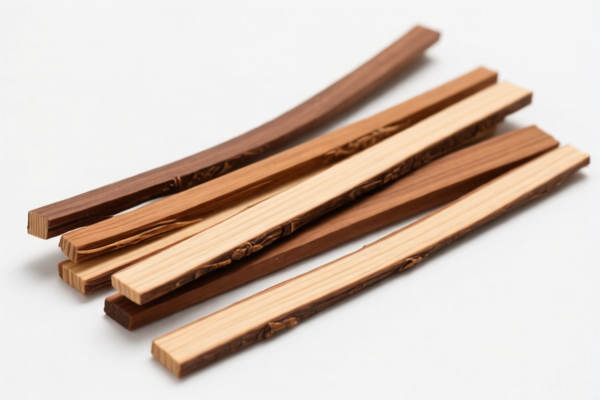
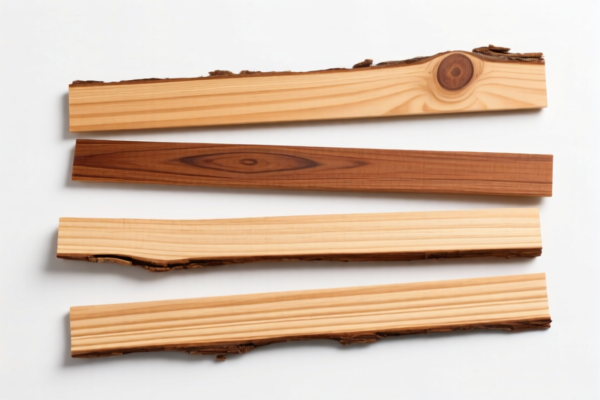
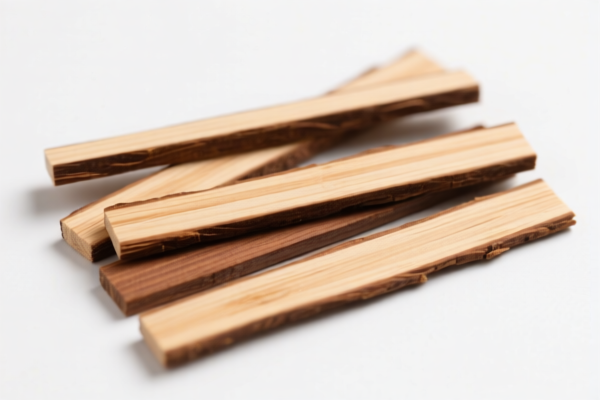
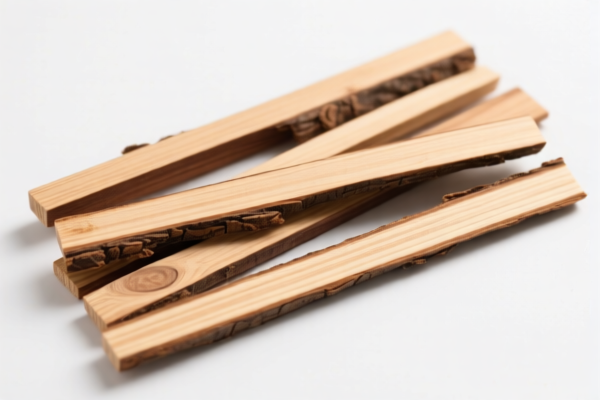
AI分析
🌲 Preserved Pine Wood Strips (Preserved Pine Timber)
🌐 HS Code Reference & Customs Clearance Guide | 2026 Latest Tariff Structure | Strategic Compliance for US Imports
📌 I. Product Definition & Classification: Do You Truly Understand "Preserved Pine"?
Preserved pine wood strips represent a specialized category of processed timber, primarily sourced from coniferous species (specifically Pinus spp.). In international trade, these products are distinguished by two critical factors: physical form (strips, sawn lumber, or logs) and chemical treatment (preservation against rot, insects, or decay).
The classification hinges on whether the wood is in its raw/sawn state or further worked (e.g., molded or tongued/grooved), and strictly which HS Code chapter captures the "preserved" nature of the product.
⚠️ Key Classification Distinction:
- If the wood is sawn longitudinally (strips/lumber) but not further molded → Typically falls under Chapter 44 Section IV (Sawn Wood).
- If the wood is rough-sawn logs/bolts intended for further processing → Typically falls under Chapter 44 Section II (Sawn Wood Logs).
- Crucial Note: The "Preserved" status does not change the base HS Code to a chemical product; it remains a wood product, but triggers specific anti-dumping/countervailing or Section 301/122 tariff liabilities.
📦 II. HS Code Classification Details (2026 Latest Tariff Authority Mapping)
Based on the provided data, here are the exact HS Codes for Preserved Pine Wood Strips/Lumber, mapped to their specific descriptions and tax implications.
| HS Code | Product Description & Summary | Applicable Scenario | Form/Treatment |
|---|---|---|---|
4407.11.00.02 |
Preserved Pine Strips: Material is Pine. Form is longitudinal sawing/slicing. Treated with preservatives. | Architectural millwork, decking strips, fence pickets. | ✅ Sawn/Sliced + Preserved |
4407.19.00.02 |
Preserved Pine Strips: Material is Coniferous Pine. Form is Wood (Strips/Sawn). Treated with preservatives. | General softwood lumber strips not specified in other subheadings. | ✅ Sawn + Preserved |
4403.11.00.60 |
Preserved Pine: Material is Pine (Coniferous). Form is Rough-sawn timber. Treated with preservatives. | Rough lumber for construction, pallets, structural framing. | ✅ Rough Sawn + Preserved |
4403.21.01.65 |
Preserved Pine: Material is Pine (Pinus spp.). Bottom-up category for coniferous logs/timber. Treated with preservatives. | General coniferous timber imports where specific species subheadings may not apply. | ✅ Timber + Preserved |
4409.10.40.90 |
Preserved Pine: Material is Pine (Pinus spp.). Other bottom-up category with no material conflict. | Further worked wood (e.g., tongued, grooved, chamfered) made of pine. | ✅ Worked/Profiled + Preserved |
🔍 Critical Clarification:
- All listed HS Codes include the phrase "Preserved" or "Treated."
-4403series: Refers to wood in the rough (sawn, but not further processed).
-4407series: Refers to wood planed, tongued, grooved, etc., or simply sawn/peeled beyond certain dimensions.
-4409series: Refers to wood continuously shaped along its length (e.g., tongue-and-groove).
- Tax Liability: All these codes currently attract a 35% Total Tax Rate for US imports from China due to combined tariffs.
💰 III. 2026 Latest Tariff Rate Breakdown (Including Surtaxes & Policy Add-ons)
✅ Applicable Country: United States (US)
✅ Origin: China (CN)
✅ Effective Date: Current regimes apply (Section 301 + IEEPA 122)
🎯 1. 4407.11.00.02 & 4407.19.00.02 —— Preserved Pine Strips (Sawn/Planed)
| Item | Content |
|---|---|
| Base Duty Rate | 0.0% (Ad Valorem, General Rate) |
| Section 301 Surtax | +25.0% (Under USITC Footnote 9903.88.01 / 301 Tariff List) |
| IEEPA "122" Clause | +10.0% (Specific add-on for certain Chinese wood products, effective Nov 2025+) |
| Total Tax Rate | 35.0% |
| Tax Calculation | CIF Value × 35% |
| De Minimis Eligibility | ❌ No (Wood products of this nature are generally excluded from de minimis relief if classified under 4403/4407/4409) |
| Legal Basis Path | IEEPA:122 → USITC:4407 → FOOTNOTE:301 |
📌 Explanation:
- "Base Duty 0%": Softwood lumber from China often has a zero base MFN rate.
- "Surtax 25%": This is the standard Section 301 tariff for most Chinese wood products.
- "IEEPA 10%": A specific additional clause (often referred to as "122条款" in Chinese trade docs) targeting strategic material imports.
- Total 35%: This is a high-cost entry point. Margin compression must be accounted for.
🎯 2. 4403.11.00.60 & 4403.21.01.65 —— Preserved Pine (Rough Sawn/Timber)
| Item | Content |
|---|---|
| Base Duty Rate | 0.0% |
| Section 301 Surtax | +25.0% |
| IEEPA "122" Clause | +10.0% |
| Total Tax Rate | 35.0% |
| Tax Calculation | CIF Value × 35% |
| De Minimis Eligibility | ❌ No |
| Legal Basis Path | IEEPA:122 → USITC:4403 → FOOTNOTE:301 |
📌 Note:
- Rough-sawn timber and preserved lumber are treated identically in terms of tariff structure.
- Even if the wood is "log" form (4403), the 35% total rate applies.
🎯 3. 4409.10.40.90 —— Preserved Pine (Further Worked/Profiled)
| Item | Content |
|---|---|
| Base Duty Rate | 0.0% |
| Section 301 Surtax | +25.0% |
| IEEPA "122" Clause | +10.0% |
| Total Tax Rate | 35.0% |
| Tax Calculation | CIF Value × 35% |
| De Minimis Eligibility | ❌ No |
| Legal Basis Path | IEEPA:122 → USITC:4409 → FOOTNOTE:301 |
📌 Note:
- Even if the wood is shaped (tongue-and-groove), it remains subject to the same 35% total tariff.
- Do not assume "value-added" processing reduces tariffs; the origin (China) drives the surtax.
🛠️ IV. Customs Clearance Practical Advice (Real-World Pitfall Avoidance)
✅ 1. Required Documentation Checklist (Non-Negotiable)
| Document | Must Provide? | Notes |
|---|---|---|
| ✅ Treatment Certificate | ✔️ | Must specify preservative type (e.g., ACQ, CCA, Borate) and retention level. |
| ✅ Species Declaration | ✔️ | Must clearly state "Pinus spp." or specific pine species (e.g., Radiata, Southern Yellow). |
| ✅ ISPM 15 Phytosanitary Certificate | ✔️ | Even if preserved, wood must meet phytosanitary standards to prevent pest entry. |
| ✅ Commercial Invoice | ✔️ | Must describe as "Preserved Pine [Form]", not generic "Wood." |
| ✅ Packing List | ✔️ | Detail net/gross weight, dimensions, and number of bundles/strips. |
| ✅ Bill of Lading/Air Waybill | ✔️ | Standard shipping document. |
| ✅ Fumigation/Treatment Label | ✔️ | Physical label on bundles showing treatment facility code (e.g., HT, MB, or Preservative Code). |
✅ 2. Declaration Tips (Key Mantra)
🔥 “Species Clear, Treatment Stated, HS Precise, Tariff Avoided!”
| Scenario | Correct Declaration | Incorrect Action |
|---|---|---|
| Preserved Strips | 4407.11.00.02: "Preserved Pine Strips, Longitudinal Sawn, Treated with ACQ" |
Generic "Pine Wood" → Risk of reclassification & penalty. |
| Rough Sawn Timber | 4403.11.00.60: "Preserved Pine Lumber, Rough Sawn" |
Misdeclaring as "Lumber" under 4407 to seek lower rate → Audit Failure. |
| Further Worked (T&G) | 4409.10.40.90: "Preserved Pine Tongue & Groove" |
Declaring as 4407 → Potential under/over-declaration issues. |
| Mixed Shipments | Split HS Codes by form (4403 vs 4407) | Single HS for mixed goods → Customs delay, potential seizure. |
✅ 3. Special Circumstances Handling
| Situation | Handling Advice |
|---|---|
| Chemical Compliance | Ensure preservative is EPA-approved (if for domestic US sale) or meets destination country chemical rules. |
| Wood-Boring Pests | Even with preservative, if not properly dried or treated, may be flagged by APHIS. |
| Value Assessment | Customs may scrutinize "Preserved" vs "Untreated" value. Ensure invoice reflects actual treatment cost if significant. |
| Origin Marking | Clearly mark "Made in China" on bundles and packaging. |
🌍 V. Global Market Customs Comparison (2026 Latest)
| Country/Region | Recommended HS Code | Tariff (China Origin) | Certification | Notes |
|---|---|---|---|---|
| 🇺🇸 USA | 4407.11.00.02 / 4403.11.00.60 |
35% (0% Base + 25% Surtax + 10% IEEPA) | APHIS, EPA (if retail) | High Tariff. Strict phytosanitary checks. |
| 🇨🇳 China | 4407.11.00.02 |
~2.5% - 5% | None | Low tariff, but re-export may face duties. |
| 🇪🇺 EU | 4407.11.00 |
~10% + 0% Surtax | CE (if treated wood product) | No Section 301 equivalent, but CITES may apply if rare species. |
| 🇬🇧 UK | 4407.11.00 |
~10% | UKCA | Post-Brexit rules apply. |
| 🇯🇵 Japan | 4407.11.00 |
~0% - 3% | Phytosanitary | Low tariff, but strict inspection for borers. |
📌 Conclusion:
- USA is the most challenging market due to the 35% combined tariff.
- EU and Japan offer more favorable tariff rates, but phytosanitary standards are equally or more strict.
- Consider third-country transshipment (e.g., Vietnam, Mexico) only if substantial transformation occurs; otherwise, "Made in China" origin marking may still trigger US surtaxes.
📌 VI. Common Errors & Pitfall Guide (Lessons Learned)
❌ Mistake 1: Declaring "Untreated" Pine when it is "Preserved"
👉 Consequence: Customs detects chemical traces → Seizure, fines, and re-export.
❌ Mistake 2: Using Generic HS Code "4407" without specific subheading
👉 Consequence: Misclassification penalty + potential audit for correct 8-digit code (4407.11.00.02).
❌ Mistake 3: Ignoring the "122 Clause" (IEEPA 10%)
👉 Consequence: Underpayment of 10% → Back taxes + Interest.
❌ Mistake 4: Missing Phytosanitary Certificate
👉 Consequence: Goods held at port until certificate is produced or destroyed.
✅ Correct Practice:
"Preserved Pine Strips, Pinus spp., ACQ Treated, HS 4407.11.00.02, Origin China"
+ Attach Treatment Certificate + Phytosanitary Certificate.
🎯 VII. Conclusion: Precision in Classification Saves Costs!
🎯 Remember the Mantra:
🔹 "Treated Wood, Not Just Wood. HS Code 4403/4407/4409. Tariff 35%. Don't Forget the 122 Clause!"
🔹 "Preservation Status is Key. Declare It. Certify It. Avoid the 35% Pitfall!"
📌 Pro Tip:
If your pine wood strips are originally sourced from Canada or Vietnam, they may qualify for lower or zero Section 301 tariffs.
For US-bound shipments, conduct a HS Code Pre-Ruling with CBP if the treatment method is unique.
📣 Immediate Action:
📞 Consult a licensed customs broker.
📄 Ensure all Treatement Certificates and Phytosanitary Certs are in English and match the invoice.
🚀 Clearance Success, Cost Efficiency, Supply Chain Resilience.
✨ Professional Classification, Seamless Customs Clearance.
💼 Every Percent of Tariff Matters. Every HS Digit Counts.
用户评价
关于 HS 编码归类
协调制度(HS)是由世界海关组织(WCO)制定的国际贸易商品分类标准。全球 200 多个国家采用 HS 系统作为海关关税、贸易统计和进出口监管的基础。
每个 HS 编码遵循以下层级结构:
- 章(2 位)——商品大类(例如:第 84 章:机器和机械设备)
- 品目(4 位)——章内的更具体分类
- 子目(6 位)——国际通用细分,所有 WCO 成员国统一使用
- 本国细分(8-10 位)——各国自行扩展的细分编码,如美国 HTSUS 10 位编码
正确的 HS 编码归类对于顺利通关、准确缴纳关税和遵守贸易法规至关重要。错误归类可能导致海关延误、多缴关税或罚款。
从CN进口到US时,适用的关税税率可能包括:
- 最惠国(MFN)税率——适用于 WTO 成员国的标准关税税率
- 普通税率——适用于无贸易协定国家
- 贸易救济关税——附加关税,如 301 条款(反倾销)、232 条款(国家安全)或反补贴税
本页内容仅供参考。如需正式归类,请咨询当地海关或持牌报关代理。