preserved pine wood strips
CN → US| HS Code | Tariff Rate | Origin | Destination | Doc |
|---|---|---|---|---|
| 4407110002 | 35.0% | CN | US | Official Doc |
| 4407190002 | 35.0% | CN | US | Official Doc |
| 4403110060 | 35.0% | CN | US | Official Doc |
| 4403210165 | 35.0% | CN | US | Official Doc |
| 4409104090 | 35.0% | CN | US | Official Doc |
Product Images
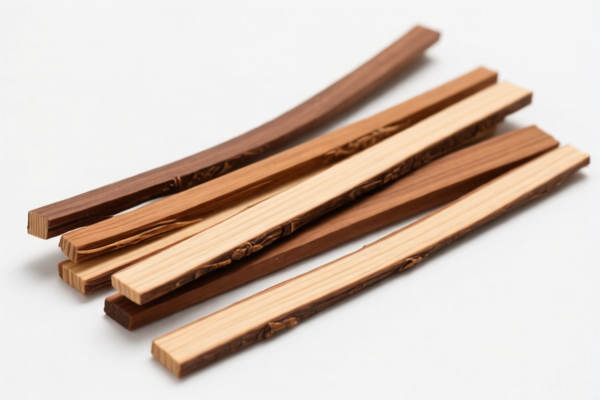
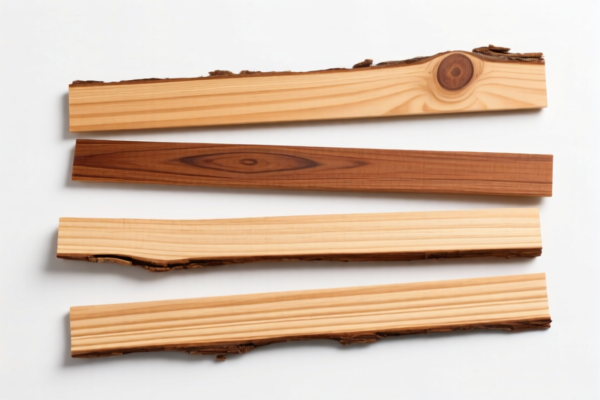
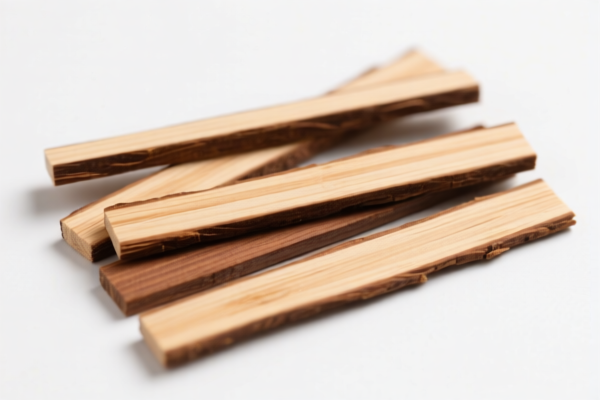
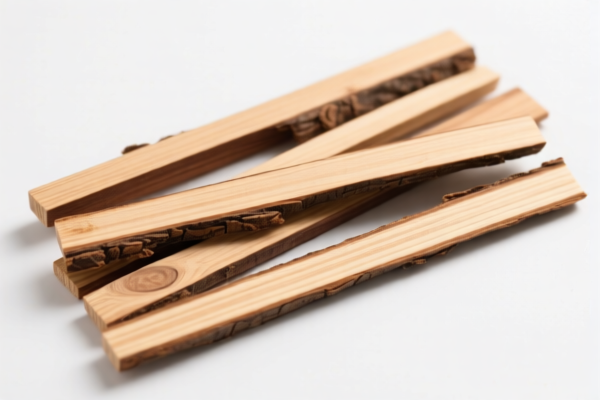
AI Analysis
🌲 Preserved Pine Wood Strips (Preserved Pine Timber)
🌐 HS Code Reference & Customs Clearance Guide | 2026 Latest Tariff Structure | Strategic Compliance for US Imports
📌 I. Product Definition & Classification: Do You Truly Understand "Preserved Pine"?
Preserved pine wood strips represent a specialized category of processed timber, primarily sourced from coniferous species (specifically Pinus spp.). In international trade, these products are distinguished by two critical factors: physical form (strips, sawn lumber, or logs) and chemical treatment (preservation against rot, insects, or decay).
The classification hinges on whether the wood is in its raw/sawn state or further worked (e.g., molded or tongued/grooved), and strictly which HS Code chapter captures the "preserved" nature of the product.
⚠️ Key Classification Distinction:
- If the wood is sawn longitudinally (strips/lumber) but not further molded → Typically falls under Chapter 44 Section IV (Sawn Wood).
- If the wood is rough-sawn logs/bolts intended for further processing → Typically falls under Chapter 44 Section II (Sawn Wood Logs).
- Crucial Note: The "Preserved" status does not change the base HS Code to a chemical product; it remains a wood product, but triggers specific anti-dumping/countervailing or Section 301/122 tariff liabilities.
📦 II. HS Code Classification Details (2026 Latest Tariff Authority Mapping)
Based on the provided data, here are the exact HS Codes for Preserved Pine Wood Strips/Lumber, mapped to their specific descriptions and tax implications.
| HS Code | Product Description & Summary | Applicable Scenario | Form/Treatment |
|---|---|---|---|
4407.11.00.02 |
Preserved Pine Strips: Material is Pine. Form is longitudinal sawing/slicing. Treated with preservatives. | Architectural millwork, decking strips, fence pickets. | ✅ Sawn/Sliced + Preserved |
4407.19.00.02 |
Preserved Pine Strips: Material is Coniferous Pine. Form is Wood (Strips/Sawn). Treated with preservatives. | General softwood lumber strips not specified in other subheadings. | ✅ Sawn + Preserved |
4403.11.00.60 |
Preserved Pine: Material is Pine (Coniferous). Form is Rough-sawn timber. Treated with preservatives. | Rough lumber for construction, pallets, structural framing. | ✅ Rough Sawn + Preserved |
4403.21.01.65 |
Preserved Pine: Material is Pine (Pinus spp.). Bottom-up category for coniferous logs/timber. Treated with preservatives. | General coniferous timber imports where specific species subheadings may not apply. | ✅ Timber + Preserved |
4409.10.40.90 |
Preserved Pine: Material is Pine (Pinus spp.). Other bottom-up category with no material conflict. | Further worked wood (e.g., tongued, grooved, chamfered) made of pine. | ✅ Worked/Profiled + Preserved |
🔍 Critical Clarification:
- All listed HS Codes include the phrase "Preserved" or "Treated."
-4403series: Refers to wood in the rough (sawn, but not further processed).
-4407series: Refers to wood planed, tongued, grooved, etc., or simply sawn/peeled beyond certain dimensions.
-4409series: Refers to wood continuously shaped along its length (e.g., tongue-and-groove).
- Tax Liability: All these codes currently attract a 35% Total Tax Rate for US imports from China due to combined tariffs.
💰 III. 2026 Latest Tariff Rate Breakdown (Including Surtaxes & Policy Add-ons)
✅ Applicable Country: United States (US)
✅ Origin: China (CN)
✅ Effective Date: Current regimes apply (Section 301 + IEEPA 122)
🎯 1. 4407.11.00.02 & 4407.19.00.02 —— Preserved Pine Strips (Sawn/Planed)
| Item | Content |
|---|---|
| Base Duty Rate | 0.0% (Ad Valorem, General Rate) |
| Section 301 Surtax | +25.0% (Under USITC Footnote 9903.88.01 / 301 Tariff List) |
| IEEPA "122" Clause | +10.0% (Specific add-on for certain Chinese wood products, effective Nov 2025+) |
| Total Tax Rate | 35.0% |
| Tax Calculation | CIF Value × 35% |
| De Minimis Eligibility | ❌ No (Wood products of this nature are generally excluded from de minimis relief if classified under 4403/4407/4409) |
| Legal Basis Path | IEEPA:122 → USITC:4407 → FOOTNOTE:301 |
📌 Explanation:
- "Base Duty 0%": Softwood lumber from China often has a zero base MFN rate.
- "Surtax 25%": This is the standard Section 301 tariff for most Chinese wood products.
- "IEEPA 10%": A specific additional clause (often referred to as "122条款" in Chinese trade docs) targeting strategic material imports.
- Total 35%: This is a high-cost entry point. Margin compression must be accounted for.
🎯 2. 4403.11.00.60 & 4403.21.01.65 —— Preserved Pine (Rough Sawn/Timber)
| Item | Content |
|---|---|
| Base Duty Rate | 0.0% |
| Section 301 Surtax | +25.0% |
| IEEPA "122" Clause | +10.0% |
| Total Tax Rate | 35.0% |
| Tax Calculation | CIF Value × 35% |
| De Minimis Eligibility | ❌ No |
| Legal Basis Path | IEEPA:122 → USITC:4403 → FOOTNOTE:301 |
📌 Note:
- Rough-sawn timber and preserved lumber are treated identically in terms of tariff structure.
- Even if the wood is "log" form (4403), the 35% total rate applies.
🎯 3. 4409.10.40.90 —— Preserved Pine (Further Worked/Profiled)
| Item | Content |
|---|---|
| Base Duty Rate | 0.0% |
| Section 301 Surtax | +25.0% |
| IEEPA "122" Clause | +10.0% |
| Total Tax Rate | 35.0% |
| Tax Calculation | CIF Value × 35% |
| De Minimis Eligibility | ❌ No |
| Legal Basis Path | IEEPA:122 → USITC:4409 → FOOTNOTE:301 |
📌 Note:
- Even if the wood is shaped (tongue-and-groove), it remains subject to the same 35% total tariff.
- Do not assume "value-added" processing reduces tariffs; the origin (China) drives the surtax.
🛠️ IV. Customs Clearance Practical Advice (Real-World Pitfall Avoidance)
✅ 1. Required Documentation Checklist (Non-Negotiable)
| Document | Must Provide? | Notes |
|---|---|---|
| ✅ Treatment Certificate | ✔️ | Must specify preservative type (e.g., ACQ, CCA, Borate) and retention level. |
| ✅ Species Declaration | ✔️ | Must clearly state "Pinus spp." or specific pine species (e.g., Radiata, Southern Yellow). |
| ✅ ISPM 15 Phytosanitary Certificate | ✔️ | Even if preserved, wood must meet phytosanitary standards to prevent pest entry. |
| ✅ Commercial Invoice | ✔️ | Must describe as "Preserved Pine [Form]", not generic "Wood." |
| ✅ Packing List | ✔️ | Detail net/gross weight, dimensions, and number of bundles/strips. |
| ✅ Bill of Lading/Air Waybill | ✔️ | Standard shipping document. |
| ✅ Fumigation/Treatment Label | ✔️ | Physical label on bundles showing treatment facility code (e.g., HT, MB, or Preservative Code). |
✅ 2. Declaration Tips (Key Mantra)
🔥 “Species Clear, Treatment Stated, HS Precise, Tariff Avoided!”
| Scenario | Correct Declaration | Incorrect Action |
|---|---|---|
| Preserved Strips | 4407.11.00.02: "Preserved Pine Strips, Longitudinal Sawn, Treated with ACQ" |
Generic "Pine Wood" → Risk of reclassification & penalty. |
| Rough Sawn Timber | 4403.11.00.60: "Preserved Pine Lumber, Rough Sawn" |
Misdeclaring as "Lumber" under 4407 to seek lower rate → Audit Failure. |
| Further Worked (T&G) | 4409.10.40.90: "Preserved Pine Tongue & Groove" |
Declaring as 4407 → Potential under/over-declaration issues. |
| Mixed Shipments | Split HS Codes by form (4403 vs 4407) | Single HS for mixed goods → Customs delay, potential seizure. |
✅ 3. Special Circumstances Handling
| Situation | Handling Advice |
|---|---|
| Chemical Compliance | Ensure preservative is EPA-approved (if for domestic US sale) or meets destination country chemical rules. |
| Wood-Boring Pests | Even with preservative, if not properly dried or treated, may be flagged by APHIS. |
| Value Assessment | Customs may scrutinize "Preserved" vs "Untreated" value. Ensure invoice reflects actual treatment cost if significant. |
| Origin Marking | Clearly mark "Made in China" on bundles and packaging. |
🌍 V. Global Market Customs Comparison (2026 Latest)
| Country/Region | Recommended HS Code | Tariff (China Origin) | Certification | Notes |
|---|---|---|---|---|
| 🇺🇸 USA | 4407.11.00.02 / 4403.11.00.60 |
35% (0% Base + 25% Surtax + 10% IEEPA) | APHIS, EPA (if retail) | High Tariff. Strict phytosanitary checks. |
| 🇨🇳 China | 4407.11.00.02 |
~2.5% - 5% | None | Low tariff, but re-export may face duties. |
| 🇪🇺 EU | 4407.11.00 |
~10% + 0% Surtax | CE (if treated wood product) | No Section 301 equivalent, but CITES may apply if rare species. |
| 🇬🇧 UK | 4407.11.00 |
~10% | UKCA | Post-Brexit rules apply. |
| 🇯🇵 Japan | 4407.11.00 |
~0% - 3% | Phytosanitary | Low tariff, but strict inspection for borers. |
📌 Conclusion:
- USA is the most challenging market due to the 35% combined tariff.
- EU and Japan offer more favorable tariff rates, but phytosanitary standards are equally or more strict.
- Consider third-country transshipment (e.g., Vietnam, Mexico) only if substantial transformation occurs; otherwise, "Made in China" origin marking may still trigger US surtaxes.
📌 VI. Common Errors & Pitfall Guide (Lessons Learned)
❌ Mistake 1: Declaring "Untreated" Pine when it is "Preserved"
👉 Consequence: Customs detects chemical traces → Seizure, fines, and re-export.
❌ Mistake 2: Using Generic HS Code "4407" without specific subheading
👉 Consequence: Misclassification penalty + potential audit for correct 8-digit code (4407.11.00.02).
❌ Mistake 3: Ignoring the "122 Clause" (IEEPA 10%)
👉 Consequence: Underpayment of 10% → Back taxes + Interest.
❌ Mistake 4: Missing Phytosanitary Certificate
👉 Consequence: Goods held at port until certificate is produced or destroyed.
✅ Correct Practice:
"Preserved Pine Strips, Pinus spp., ACQ Treated, HS 4407.11.00.02, Origin China"
+ Attach Treatment Certificate + Phytosanitary Certificate.
🎯 VII. Conclusion: Precision in Classification Saves Costs!
🎯 Remember the Mantra:
🔹 "Treated Wood, Not Just Wood. HS Code 4403/4407/4409. Tariff 35%. Don't Forget the 122 Clause!"
🔹 "Preservation Status is Key. Declare It. Certify It. Avoid the 35% Pitfall!"
📌 Pro Tip:
If your pine wood strips are originally sourced from Canada or Vietnam, they may qualify for lower or zero Section 301 tariffs.
For US-bound shipments, conduct a HS Code Pre-Ruling with CBP if the treatment method is unique.
📣 Immediate Action:
📞 Consult a licensed customs broker.
📄 Ensure all Treatement Certificates and Phytosanitary Certs are in English and match the invoice.
🚀 Clearance Success, Cost Efficiency, Supply Chain Resilience.
✨ Professional Classification, Seamless Customs Clearance.
💼 Every Percent of Tariff Matters. Every HS Digit Counts.
Customer Reviews
About HS Code Classification
The Harmonized System (HS) is an internationally standardized nomenclature developed by the World Customs Organization (WCO) to classify traded products. Over 200 countries use the HS system as the basis for customs tariffs, trade statistics, and import/export regulations.
Each HS code follows a hierarchical structure:
- Chapter (2 digits) — Broad category of goods (e.g., Chapter 84: Machinery and Mechanical Appliances)
- Heading (4 digits) — More specific grouping within the chapter
- Subheading (6 digits) — Internationally standardized breakdown, used by all WCO member countries
- National subdivisions (8-10 digits) — Country-specific extensions for further classification, such as US HTSUS 10-digit codes
Correct HS code classification is essential for smooth customs clearance, accurate duty payment, and compliance with trade regulations. Misclassification can lead to customs delays, overpayment of duties, or penalties.
When importing from CN to US, the applicable tariff rates may include:
- Most-Favored-Nation (MFN) rate — The standard duty rate applied to WTO members
- General rate — Applied to countries without trade agreements
- Trade remedy duties — Additional tariffs such as Section 301 (anti-dumping), Section 232 (national security), or countervailing duties
The information provided on this page is for reference purposes only. For official classification, please consult with your local customs authority or a licensed customs broker.