pvc custom profile
CN → US| HS编码 | 关税税率 | 原产国 | 目的国 | 文档 |
|---|---|---|---|---|
| 3916200020 | 40.8% | CN | US | 官方文档 |
| 3926909989 | 22.8% | CN | US | 官方文档 |
| 3925900000 | 40.3% | CN | US | 官方文档 |
| 3916200091 | 40.8% | CN | US | 官方文档 |
| 3926909987 | 22.8% | CN | US | 官方文档 |
商品图片
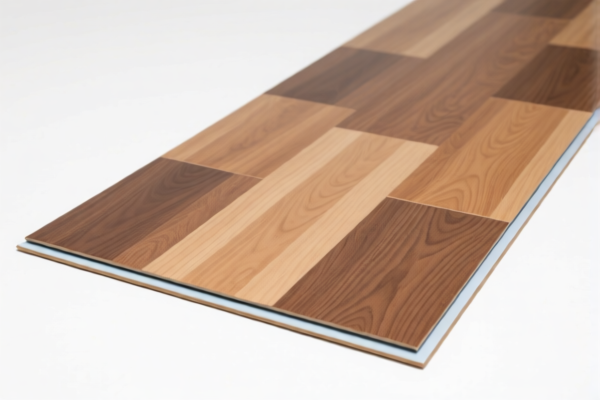
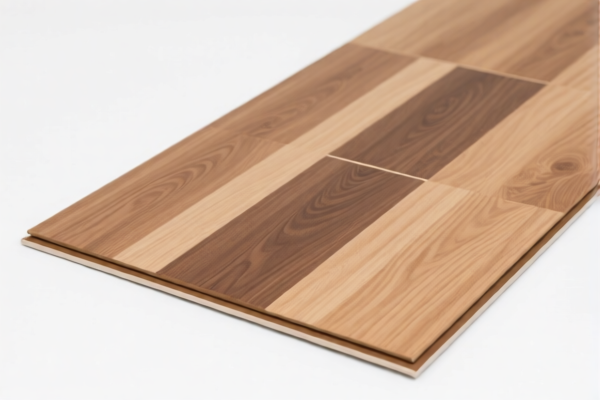


AI分析
🏗️ PVC Custom Profile (Polyvinyl Chloride Profiles)
🌐 HS Code Reference & Customs Clearance Guide | 2026 Latest Tariff Analysis | Professional Clearance Strategy
📌 Part 1: Product Definition and Classification: Do You Really Understand "PVC Custom Profile"?
PVC Custom Profiles, made from Polyvinyl Chloride (PVC), are rigid or semi-rigid plastic extrusions widely used in construction, industrial manufacturing, and furniture. In international trade, they are primarily classified based on their material composition (Polymer type) and shape (Profile/Extrusion).
Key Distinction Points: - Material: PVC is a "Chlorinated Polymer" (not a generic "Plastic" in the broad sense for Chapter 39 primary headings). - Shape: "Profile" implies extruded shapes (such as pipes, tubes, rods, angles, channels, etc.). - Application: The intended use (Construction vs. Industrial vs. General) often determines whether it falls under specific heading 39.16 (Profiles for Construction/General) or 39.25/39.26 (Specific Parts/Other Articles).
⚠️ Critical Clarification:
- If it is a PVC extruded profile (rigid pipe, tube, rod, or shaped profile), it generally falls under Heading 39.16.
- If it is a finished plastic article (e.g., a specific pipe fitting, a finished window frame component that is not just a raw profile, or an industrial part not listed elsewhere), it may fall under Heading 39.26 (Other articles of plastics) or 39.25 (Builders' ware of plastics).
📦 Part 2: HS Code Classification Details (2026 Latest Tariff Authority Comparison)
The provided data identifies five potential HS Codes. Below is the authoritative breakdown for PVC Custom Profiles:
| HS Code | Product Description | Applicability Scenario | Classification Logic |
|---|---|---|---|
3916.20.00.20 |
Profiles, rods, tubes, of polymers of vinyl chloride (PVC) | Primary Classification for PVC Profiles. Raw or semi-finished extruded PVC shapes (e.g., pipes, rods, angles). | ✅ Best Fit: Explicitly covers "polymers of vinyl chloride" in "profile" form. |
3916.20.00.91 |
Other profiles of polymers of vinyl chloride (PVC) | Alternative for PVC Profiles. Covers PVC profiles not specifically listed in .20 (e.g., specialized industrial shapes). | ✅ Strong Fit: Same heading (39.16) but "Other" category. |
3925.90.00.00 |
Builders' ware of plastics, n.e.s. | Construction-Focused. If the PVC profile is a finished construction component (e.g., finished window frame part, siding) rather than a raw profile. | ⚠️ Conditional: Only if it is considered a "builder's ware" item, not a raw extrusion. |
3926.90.99.89 |
Other articles of plastics, n.e.s. | General Industrial/Other. For PVC profiles that do not fit into construction (39.25) or standard profiles (39.16), e.g., specific industrial plastic parts. | ⚠️ Fallback: Used when no more specific code applies. |
3926.90.99.87 |
Other articles of plastics, n.e.s. | Industrial/Other (Specific Sub-category). Similar to .89 but potentially for different end-uses (e.g., hard tubes for industrial use not covered by 39.16). | ⚠️ Fallback: For specialized industrial plastic articles. |
🔍 Key Insight:
- Heading 39.16 is the most accurate for PVC Extruded Profiles because it specifically targets "polymers of vinyl chloride" in profile form.
- Headings 39.25/39.26 are generally for finished articles or builders' ware that are not raw profiles. Use these only if the product is a finished assembly or a specific component not covered by 39.16.
💰 Part 3: 2026 Latest Tariff Rate Breakdown (Including Surtaxes & Policy Surcharges)
✅ Applicable Country: United States (US)
✅ Origin: China (CN)
✅ Effective Date: From November 10, 2025 (and subsequent imports)
🎯 1. 3916.20.00.20 & 3916.20.00.91 —— PVC Profiles (Most Likely Codes)
| Item | Content |
|---|---|
| Base Duty Rate | 5.8% (Ad Valorem) |
| Section 301 Surcharge | +25.0% |
| Section 122 Tariff | +10.0% |
| Total Tax Rate | 40.8% |
| Tax Calculation | CIF Value × 40.8% |
| De Minimis Exemption? | ❌ No (Denied) |
| Legal Basis Path | 3916.20.00 → USITC Footnote → Section 301 (25%) → Section 122 (10%) |
📌 Explanation:
- Base Rate (5.8%): Standard Most Favored Nation (MFN) rate for PVC profiles.
- Section 301 (25%): Additional tariff imposed on Chinese goods under Trade Act Section 301.
- Section 122 (10%): Additional tariff under Section 122 of the Trade Expansion Act of 1962 (National Security).
- Total: 40.8%. This is a high tariff rate. Accurate classification under 39.16 is crucial to avoid misclassification penalties.
🎯 2. 3926.90.99.89 & 3926.90.99.87 —— Other Plastic Articles (Fallback Codes)
| Item | Content |
|---|---|
| Base Duty Rate | 5.3% (Ad Valorem) |
| Section 301 Surcharge | +7.5% |
| Section 122 Tariff | +10.0% |
| Total Tax Rate | 22.8% |
| Tax Calculation | CIF Value × 22.8% |
| De Minimis Exemption? | ❌ No (Denied) |
| Legal Basis Path | 3926.90.99 → USITC Footnote → Section 301 (7.5%) → Section 122 (10%) |
📌 Note:
- If the product is misclassified as a "general plastic article" instead of a "PVC profile," the total tariff drops to 22.8%.
- However, this is risky. U.S. Customs and Border Protection (CBP) strictly enforces that PVC profiles must be classified under 39.16. Misclassification to 39.26 could lead to audits, back taxes, and penalties.
🎯 3. 3925.90.00.00 —— Builders' Ware of Plastics
| Item | Content |
|---|---|
| Base Duty Rate | 5.3% (Ad Valorem) |
| Section 301 Surcharge | +25.0% |
| Section 122 Tariff | +10.0% |
| Total Tax Rate | 40.3% |
| Tax Calculation | CIF Value × 40.3% |
| De Minimis Exemption? | ❌ No (Denied) |
| Legal Basis Path | 3925.90.00 → USITC Footnote → Section 301 (25%) → Section 122 (10%) |
📌 Warning:
- Only use if the product is a finished construction component (e.g., a completed window frame, not a raw PVC tube).
- Tax rate is 40.3%, nearly identical to 39.16.
- Risk: High scrutiny from CBP if used for raw profiles.
🛠️ Part 4: Customs Clearance Practical Advice (Real-World Pitfall Guide)
✅ 1. Required Documentation Checklist (No Exceptions)
| Document | Must Provide | Description |
|---|---|---|
| ✅ Product Specification Sheet | ✔️ | Must specify: Material (PVC), Shape (Profile/Extrusion), Dimensions, Cross-section, Hardness. |
| ✅ Product Photos | ✔️ | Clear images of the profile cross-section, length, and any finished components. |
| ✅ Declaration of Non-Assembly | ✔️ | If declaring as raw profile (39.16), confirm it is not a pre-assembled part. |
| ✅ Commercial Invoice | ✔️ | Clearly state: "PVC Extruded Profiles, Custom Shape, Not Assembled." |
| ✅ Packing List | ✔️ | Detail weight, volume, and packaging type. |
✅ 2. Declaration Tips (Critical Mnemonic)
🔥 "Raw Profile = 39.16, Finished Part = 39.25/26. Do Not Mix!"
| Scenario | Correct HS Code | Wrong Approach |
|---|---|---|
| Raw PVC Extruded Profile (e.g., tube, rod, custom shape) | 3916.20.00.20 or .91 |
❌ Declare as "Plastic Part" → Risk of 22.8% but potential audit. |
| Finished PVC Window Frame (Cut, Drilled, Assembled) | 3925.90.00.00 |
❌ Declare as "Profile" → May be rejected as incomplete. |
| PVC Pipe Fitting (Elbow, Tee) | 3917.23.00.00 (Not in provided data, but common) |
❌ Declare as "Profile" → Incorrect. |
| Industrial PVC Part (Non-construction, non-profile) | 3926.90.99.89 or .87 |
❌ Declare as "Profile" → Misclassification. |
✅ 3. Special Case Handling
| Situation | Handling Advice |
|---|---|
| Custom/Exotic Shapes | Provide detailed cross-section drawings. CBP may inspect to confirm it is a "profile" and not a "molded article." |
| Mixed Shipments | If PVC profiles are shipped with other plastic goods, declare separately. Do not mix under one HS Code. |
| OEM Custom Parts | If the "custom profile" is a specific part for a machine (e.g., a seal or gasket profile), it may still be 39.16 if it is extruded. If it is a finished gasket, it may be 39.26. |
| China Origin | Always include Section 301 and 122 surcharges in cost calculations. |
🌍 Part 5: Global Market Comparison (2026 Latest)
| Country/Region | Recommended HS Code | Tariff (China Origin) | Certification Requirement | Notes |
|---|---|---|---|---|
| 🇺🇸 USA | 3916.20.00.20 |
40.8% | FCC/UL (if electrical), RoHS (if applicable) | Highest Tariff. Strict enforcement of 39.16. |
| 🇨🇳 China | 3916.20.00.00 |
5.8% | CCC (if applicable) | No surcharges. Standard import. |
| 🇪🇺 EU | 3916.20.00.00 |
6.5% | REACH, RoHS | No Section 301/122. Lower duty than US. |
| 🇬🇧 UK | 3916.20.00.00 |
6.5% | UKCA, RoHS | Post-Brexit rules apply. |
| 🇯🇵 Japan | 3916.20.00.00 |
6.0% | PSE (if electrical) | No major surcharges. |
📌 Conclusion:
- USA is the most challenging market for PVC profiles from China due to the 40.8% total tariff.
- EU/UK/Japan offer significantly lower tariffs (~6%), making them more attractive for price-sensitive shipments.
- Recommendation: If shipping to the US, ensure perfect documentation to avoid CBP audits. Consider supply chain diversification (e.g., manufacturing in Vietnam/Mexico) to avoid Section 301 and 122 tariffs.
📌 Part 6: Common Mistakes & Pitfall Guide (Lessons Learned)
❌ Mistake 1: Classifying Raw PVC Profiles under 3926.90.99.89 to get a lower rate (22.8%).
👉 Consequence: CBP audit, back taxes, and penalties. CBP considers PVC profiles as 39.16.
❌ Mistake 2: Declaring Finished Window Frames as "PVC Profiles" (39.16).
👉 Consequence: Misclassification. Finished frames are 39.25 (Builders' Ware). While the rate is similar (40.3% vs 40.8%), it affects inventory and compliance reporting.
❌ Mistake 3: Ignoring Section 122 Tariffs.
👉 Consequence: Unexpected 10% surcharge on all imports. This is not optional.
❌ Mistake 4: Using vague descriptions like "Plastic Part."
👉 Consequence: CBP may reclassify under the highest applicable duty or demand additional information, causing delays.
✅ Correct Approach:
"PVC Extruded Profile, Custom Cross-Section, Raw Material, Not Assembled, Model: XYZ-123, Material: PVC (Polyvinyl Chloride)"
🎯 Part 7: Conclusion: Precision Classification, Cost Control, Efficiency!
🎯 Remember the Mnemonic:
🔹 "PVC Profile = 39.16, Tax 40.8%. Finished Part = 39.25/26, Tax 22.8-40.3%. Do Not Mix!"
🔹 "HS Code Determines Duty, 18% Difference, Misclassification Means Penalties!"
📌 Pro Tip:
- If your PVC profiles are essential for national security or critical infrastructure, explore Exclusion Requests under Section 301.
- For high-volume shipments, consider Advance Rulings from CBP to confirm classification and avoid disputes.
📣 Immediate Action:
📞 Contact a Licensed Customs Broker + Provide Product Drawings + Request HS Code Pre-Ruling
🚀 Ensure Smooth Customs Clearance, Cost Optimization, and Global Compliance!
✨ Professional Clearance Starts with Accurate Classification!
💼 Every Percent of Tariff Saved is Pure Profit!
用户评价
关于 HS 编码归类
协调制度(HS)是由世界海关组织(WCO)制定的国际贸易商品分类标准。全球 200 多个国家采用 HS 系统作为海关关税、贸易统计和进出口监管的基础。
每个 HS 编码遵循以下层级结构:
- 章(2 位)——商品大类(例如:第 84 章:机器和机械设备)
- 品目(4 位)——章内的更具体分类
- 子目(6 位)——国际通用细分,所有 WCO 成员国统一使用
- 本国细分(8-10 位)——各国自行扩展的细分编码,如美国 HTSUS 10 位编码
正确的 HS 编码归类对于顺利通关、准确缴纳关税和遵守贸易法规至关重要。错误归类可能导致海关延误、多缴关税或罚款。
从CN进口到US时,适用的关税税率可能包括:
- 最惠国(MFN)税率——适用于 WTO 成员国的标准关税税率
- 普通税率——适用于无贸易协定国家
- 贸易救济关税——附加关税,如 301 条款(反倾销)、232 条款(国家安全)或反补贴税
本页内容仅供参考。如需正式归类,请咨询当地海关或持牌报关代理。