pvc custom profile
CN → US| HS Code | Tariff Rate | Origin | Destination | Doc |
|---|---|---|---|---|
| 3916200020 | 40.8% | CN | US | Official Doc |
| 3926909989 | 22.8% | CN | US | Official Doc |
| 3925900000 | 40.3% | CN | US | Official Doc |
| 3916200091 | 40.8% | CN | US | Official Doc |
| 3926909987 | 22.8% | CN | US | Official Doc |
Product Images
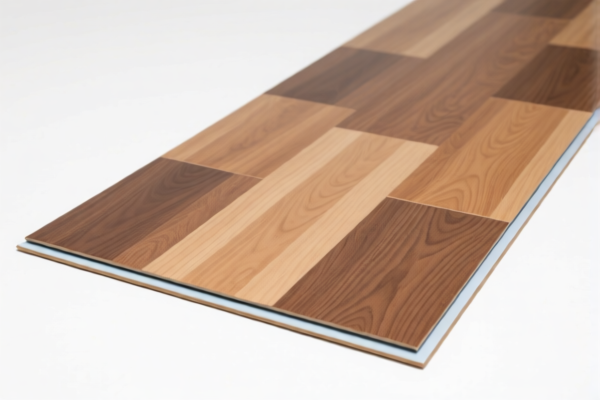
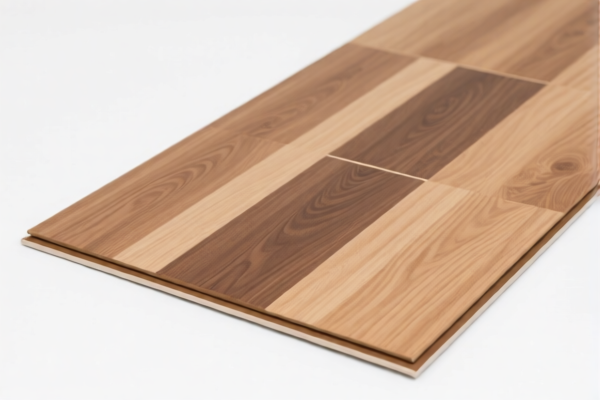


AI Analysis
🏗️ PVC Custom Profile (Polyvinyl Chloride Profiles)
🌐 HS Code Reference & Customs Clearance Guide | 2026 Latest Tariff Analysis | Professional Clearance Strategy
📌 Part 1: Product Definition and Classification: Do You Really Understand "PVC Custom Profile"?
PVC Custom Profiles, made from Polyvinyl Chloride (PVC), are rigid or semi-rigid plastic extrusions widely used in construction, industrial manufacturing, and furniture. In international trade, they are primarily classified based on their material composition (Polymer type) and shape (Profile/Extrusion).
Key Distinction Points: - Material: PVC is a "Chlorinated Polymer" (not a generic "Plastic" in the broad sense for Chapter 39 primary headings). - Shape: "Profile" implies extruded shapes (such as pipes, tubes, rods, angles, channels, etc.). - Application: The intended use (Construction vs. Industrial vs. General) often determines whether it falls under specific heading 39.16 (Profiles for Construction/General) or 39.25/39.26 (Specific Parts/Other Articles).
⚠️ Critical Clarification:
- If it is a PVC extruded profile (rigid pipe, tube, rod, or shaped profile), it generally falls under Heading 39.16.
- If it is a finished plastic article (e.g., a specific pipe fitting, a finished window frame component that is not just a raw profile, or an industrial part not listed elsewhere), it may fall under Heading 39.26 (Other articles of plastics) or 39.25 (Builders' ware of plastics).
📦 Part 2: HS Code Classification Details (2026 Latest Tariff Authority Comparison)
The provided data identifies five potential HS Codes. Below is the authoritative breakdown for PVC Custom Profiles:
| HS Code | Product Description | Applicability Scenario | Classification Logic |
|---|---|---|---|
3916.20.00.20 |
Profiles, rods, tubes, of polymers of vinyl chloride (PVC) | Primary Classification for PVC Profiles. Raw or semi-finished extruded PVC shapes (e.g., pipes, rods, angles). | ✅ Best Fit: Explicitly covers "polymers of vinyl chloride" in "profile" form. |
3916.20.00.91 |
Other profiles of polymers of vinyl chloride (PVC) | Alternative for PVC Profiles. Covers PVC profiles not specifically listed in .20 (e.g., specialized industrial shapes). | ✅ Strong Fit: Same heading (39.16) but "Other" category. |
3925.90.00.00 |
Builders' ware of plastics, n.e.s. | Construction-Focused. If the PVC profile is a finished construction component (e.g., finished window frame part, siding) rather than a raw profile. | ⚠️ Conditional: Only if it is considered a "builder's ware" item, not a raw extrusion. |
3926.90.99.89 |
Other articles of plastics, n.e.s. | General Industrial/Other. For PVC profiles that do not fit into construction (39.25) or standard profiles (39.16), e.g., specific industrial plastic parts. | ⚠️ Fallback: Used when no more specific code applies. |
3926.90.99.87 |
Other articles of plastics, n.e.s. | Industrial/Other (Specific Sub-category). Similar to .89 but potentially for different end-uses (e.g., hard tubes for industrial use not covered by 39.16). | ⚠️ Fallback: For specialized industrial plastic articles. |
🔍 Key Insight:
- Heading 39.16 is the most accurate for PVC Extruded Profiles because it specifically targets "polymers of vinyl chloride" in profile form.
- Headings 39.25/39.26 are generally for finished articles or builders' ware that are not raw profiles. Use these only if the product is a finished assembly or a specific component not covered by 39.16.
💰 Part 3: 2026 Latest Tariff Rate Breakdown (Including Surtaxes & Policy Surcharges)
✅ Applicable Country: United States (US)
✅ Origin: China (CN)
✅ Effective Date: From November 10, 2025 (and subsequent imports)
🎯 1. 3916.20.00.20 & 3916.20.00.91 —— PVC Profiles (Most Likely Codes)
| Item | Content |
|---|---|
| Base Duty Rate | 5.8% (Ad Valorem) |
| Section 301 Surcharge | +25.0% |
| Section 122 Tariff | +10.0% |
| Total Tax Rate | 40.8% |
| Tax Calculation | CIF Value × 40.8% |
| De Minimis Exemption? | ❌ No (Denied) |
| Legal Basis Path | 3916.20.00 → USITC Footnote → Section 301 (25%) → Section 122 (10%) |
📌 Explanation:
- Base Rate (5.8%): Standard Most Favored Nation (MFN) rate for PVC profiles.
- Section 301 (25%): Additional tariff imposed on Chinese goods under Trade Act Section 301.
- Section 122 (10%): Additional tariff under Section 122 of the Trade Expansion Act of 1962 (National Security).
- Total: 40.8%. This is a high tariff rate. Accurate classification under 39.16 is crucial to avoid misclassification penalties.
🎯 2. 3926.90.99.89 & 3926.90.99.87 —— Other Plastic Articles (Fallback Codes)
| Item | Content |
|---|---|
| Base Duty Rate | 5.3% (Ad Valorem) |
| Section 301 Surcharge | +7.5% |
| Section 122 Tariff | +10.0% |
| Total Tax Rate | 22.8% |
| Tax Calculation | CIF Value × 22.8% |
| De Minimis Exemption? | ❌ No (Denied) |
| Legal Basis Path | 3926.90.99 → USITC Footnote → Section 301 (7.5%) → Section 122 (10%) |
📌 Note:
- If the product is misclassified as a "general plastic article" instead of a "PVC profile," the total tariff drops to 22.8%.
- However, this is risky. U.S. Customs and Border Protection (CBP) strictly enforces that PVC profiles must be classified under 39.16. Misclassification to 39.26 could lead to audits, back taxes, and penalties.
🎯 3. 3925.90.00.00 —— Builders' Ware of Plastics
| Item | Content |
|---|---|
| Base Duty Rate | 5.3% (Ad Valorem) |
| Section 301 Surcharge | +25.0% |
| Section 122 Tariff | +10.0% |
| Total Tax Rate | 40.3% |
| Tax Calculation | CIF Value × 40.3% |
| De Minimis Exemption? | ❌ No (Denied) |
| Legal Basis Path | 3925.90.00 → USITC Footnote → Section 301 (25%) → Section 122 (10%) |
📌 Warning:
- Only use if the product is a finished construction component (e.g., a completed window frame, not a raw PVC tube).
- Tax rate is 40.3%, nearly identical to 39.16.
- Risk: High scrutiny from CBP if used for raw profiles.
🛠️ Part 4: Customs Clearance Practical Advice (Real-World Pitfall Guide)
✅ 1. Required Documentation Checklist (No Exceptions)
| Document | Must Provide | Description |
|---|---|---|
| ✅ Product Specification Sheet | ✔️ | Must specify: Material (PVC), Shape (Profile/Extrusion), Dimensions, Cross-section, Hardness. |
| ✅ Product Photos | ✔️ | Clear images of the profile cross-section, length, and any finished components. |
| ✅ Declaration of Non-Assembly | ✔️ | If declaring as raw profile (39.16), confirm it is not a pre-assembled part. |
| ✅ Commercial Invoice | ✔️ | Clearly state: "PVC Extruded Profiles, Custom Shape, Not Assembled." |
| ✅ Packing List | ✔️ | Detail weight, volume, and packaging type. |
✅ 2. Declaration Tips (Critical Mnemonic)
🔥 "Raw Profile = 39.16, Finished Part = 39.25/26. Do Not Mix!"
| Scenario | Correct HS Code | Wrong Approach |
|---|---|---|
| Raw PVC Extruded Profile (e.g., tube, rod, custom shape) | 3916.20.00.20 or .91 |
❌ Declare as "Plastic Part" → Risk of 22.8% but potential audit. |
| Finished PVC Window Frame (Cut, Drilled, Assembled) | 3925.90.00.00 |
❌ Declare as "Profile" → May be rejected as incomplete. |
| PVC Pipe Fitting (Elbow, Tee) | 3917.23.00.00 (Not in provided data, but common) |
❌ Declare as "Profile" → Incorrect. |
| Industrial PVC Part (Non-construction, non-profile) | 3926.90.99.89 or .87 |
❌ Declare as "Profile" → Misclassification. |
✅ 3. Special Case Handling
| Situation | Handling Advice |
|---|---|
| Custom/Exotic Shapes | Provide detailed cross-section drawings. CBP may inspect to confirm it is a "profile" and not a "molded article." |
| Mixed Shipments | If PVC profiles are shipped with other plastic goods, declare separately. Do not mix under one HS Code. |
| OEM Custom Parts | If the "custom profile" is a specific part for a machine (e.g., a seal or gasket profile), it may still be 39.16 if it is extruded. If it is a finished gasket, it may be 39.26. |
| China Origin | Always include Section 301 and 122 surcharges in cost calculations. |
🌍 Part 5: Global Market Comparison (2026 Latest)
| Country/Region | Recommended HS Code | Tariff (China Origin) | Certification Requirement | Notes |
|---|---|---|---|---|
| 🇺🇸 USA | 3916.20.00.20 |
40.8% | FCC/UL (if electrical), RoHS (if applicable) | Highest Tariff. Strict enforcement of 39.16. |
| 🇨🇳 China | 3916.20.00.00 |
5.8% | CCC (if applicable) | No surcharges. Standard import. |
| 🇪🇺 EU | 3916.20.00.00 |
6.5% | REACH, RoHS | No Section 301/122. Lower duty than US. |
| 🇬🇧 UK | 3916.20.00.00 |
6.5% | UKCA, RoHS | Post-Brexit rules apply. |
| 🇯🇵 Japan | 3916.20.00.00 |
6.0% | PSE (if electrical) | No major surcharges. |
📌 Conclusion:
- USA is the most challenging market for PVC profiles from China due to the 40.8% total tariff.
- EU/UK/Japan offer significantly lower tariffs (~6%), making them more attractive for price-sensitive shipments.
- Recommendation: If shipping to the US, ensure perfect documentation to avoid CBP audits. Consider supply chain diversification (e.g., manufacturing in Vietnam/Mexico) to avoid Section 301 and 122 tariffs.
📌 Part 6: Common Mistakes & Pitfall Guide (Lessons Learned)
❌ Mistake 1: Classifying Raw PVC Profiles under 3926.90.99.89 to get a lower rate (22.8%).
👉 Consequence: CBP audit, back taxes, and penalties. CBP considers PVC profiles as 39.16.
❌ Mistake 2: Declaring Finished Window Frames as "PVC Profiles" (39.16).
👉 Consequence: Misclassification. Finished frames are 39.25 (Builders' Ware). While the rate is similar (40.3% vs 40.8%), it affects inventory and compliance reporting.
❌ Mistake 3: Ignoring Section 122 Tariffs.
👉 Consequence: Unexpected 10% surcharge on all imports. This is not optional.
❌ Mistake 4: Using vague descriptions like "Plastic Part."
👉 Consequence: CBP may reclassify under the highest applicable duty or demand additional information, causing delays.
✅ Correct Approach:
"PVC Extruded Profile, Custom Cross-Section, Raw Material, Not Assembled, Model: XYZ-123, Material: PVC (Polyvinyl Chloride)"
🎯 Part 7: Conclusion: Precision Classification, Cost Control, Efficiency!
🎯 Remember the Mnemonic:
🔹 "PVC Profile = 39.16, Tax 40.8%. Finished Part = 39.25/26, Tax 22.8-40.3%. Do Not Mix!"
🔹 "HS Code Determines Duty, 18% Difference, Misclassification Means Penalties!"
📌 Pro Tip:
- If your PVC profiles are essential for national security or critical infrastructure, explore Exclusion Requests under Section 301.
- For high-volume shipments, consider Advance Rulings from CBP to confirm classification and avoid disputes.
📣 Immediate Action:
📞 Contact a Licensed Customs Broker + Provide Product Drawings + Request HS Code Pre-Ruling
🚀 Ensure Smooth Customs Clearance, Cost Optimization, and Global Compliance!
✨ Professional Clearance Starts with Accurate Classification!
💼 Every Percent of Tariff Saved is Pure Profit!
Customer Reviews
About HS Code Classification
The Harmonized System (HS) is an internationally standardized nomenclature developed by the World Customs Organization (WCO) to classify traded products. Over 200 countries use the HS system as the basis for customs tariffs, trade statistics, and import/export regulations.
Each HS code follows a hierarchical structure:
- Chapter (2 digits) — Broad category of goods (e.g., Chapter 84: Machinery and Mechanical Appliances)
- Heading (4 digits) — More specific grouping within the chapter
- Subheading (6 digits) — Internationally standardized breakdown, used by all WCO member countries
- National subdivisions (8-10 digits) — Country-specific extensions for further classification, such as US HTSUS 10-digit codes
Correct HS code classification is essential for smooth customs clearance, accurate duty payment, and compliance with trade regulations. Misclassification can lead to customs delays, overpayment of duties, or penalties.
When importing from CN to US, the applicable tariff rates may include:
- Most-Favored-Nation (MFN) rate — The standard duty rate applied to WTO members
- General rate — Applied to countries without trade agreements
- Trade remedy duties — Additional tariffs such as Section 301 (anti-dumping), Section 232 (national security), or countervailing duties
The information provided on this page is for reference purposes only. For official classification, please consult with your local customs authority or a licensed customs broker.