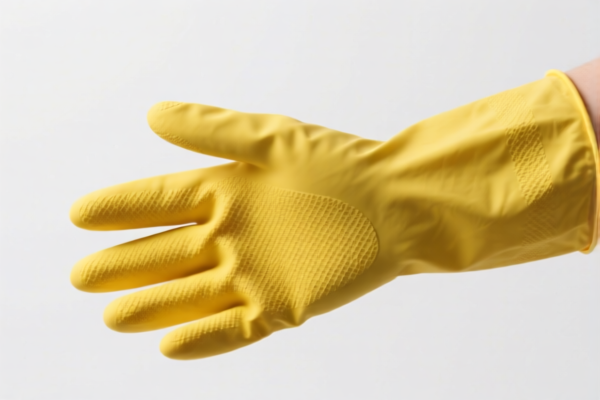
rubber gloves
CN → US| HS编码 | 关税税率 | 原产国 | 目的国 | 文档 |
|---|---|---|---|---|
| 6116109500 | 24.5% | CN | US | 官方文档 |
| 3926204050 | 16.5% | CN | US | 官方文档 |
| 4015191150 | 38.0% | CN | US | 官方文档 |
| 6116106500 | 24.5% | CN | US | 官方文档 |
| 4015195100 | 49.0% | CN | US | 官方文档 |
商品图片



AI分析
🛡️ Rubber Gloves (Rubber Agricultural Gloves)
🌐 HS Code Classification & Tariff Guide | 2026 Updated Customs Strategy | Expert-Level Compliance Blueprint
📌 One Product, Five HS Codes — Why the Huge Tax Differences?
Rubber agricultural gloves are a common import item, but their HS code classification dramatically affects tariff rates, customs clearance speed, and final landed cost.
This guide breaks down why each HS code applies, what taxes are triggered, and how to avoid costly mistakes — all based on official U.S. tariff data (2026).
⚠️ Critical Insight:
The same product — rubber gloves — can face taxes from 16.5% to 49.0% depending on how it’s classified.
Wrong HS code = 3x higher cost.
This is not a guessing game — it’s a compliance necessity.
📦 二、HS Code Classification Breakdown (2026 U.S. Tariff Authority)
| HS Code | Product Description | Tax Rate | Key Classification Logic |
|---|---|---|---|
6116.10.95.00 |
Rubber gloves, made of rubber, shaped as gloves, classified under knitted or crocheted gloves (plastic/rubber category) | 24.5% | Treated as textile-like gloves due to form and function, even though made of rubber |
3926.20.40.50 |
Rubber gloves, rubber material, but classified under plastic products due to functional similarity (no material conflict) | 16.5% | Functional logic overrides material — gloves behave like plastic items in use |
4015.19.11.50 |
Rubber gloves, made of rubber, classified under vulcanized rubber garments and accessories (including gloves) | 38.0% | Direct fit to sulfur-vulcanized rubber clothing — high tariff due to material category |
6116.10.65.00 |
Rubber gloves, form is glove, material is rubber — classified as rubber-coated or dipped gloves | 24.5% | Based on manufacturing process: dipping or coating in rubber |
4015.19.51.00 |
Rubber gloves, made of rubber, form is glove — fits vulcanized rubber garments and accessories | 49.0% | Highest tariff — exact match to high-duty category with no exceptions |
🔍 Why So Many Codes?
The U.S. Customs & Border Protection (CBP) uses multiple classification pathways: - Material-based (rubber → 4015 series) - Form-based (gloves → 6116 series) - Function-based (plastic-like use → 3926 series) - Process-based (coated/dipped → 6116.10.65.00)
💰 三、2026 Tariff Breakdown (Detailed Tax Clause Analysis)
🎯 1. 6116.10.95.00 — Rubber Gloves (Textile-Style Classification)
| Item | Detail |
|---|---|
| Base Duty | 7.0% |
| Additional Duty (Section 301) | 7.5% |
| Section 122 Duty (IEEPA) | 10.0% |
| Total Effective Duty | 24.5% |
| Tax Calculation | CIF × 24.5% |
| De Minimis Exemption? | ❌ No (denied for China-origin goods) |
| Legal Basis Path | Section 301: 9903.88.01 → IEEPA: 9903.01.24 → 6116.10.95.00 |
📌 Why This Applies:
Despite being rubber, the gloves are classified under textile gloves because they are knitted or crocheted in structure — even if the material is rubber.
This is a functional classification, not material-based.
🎯 2. 3926.20.40.50 — Rubber Gloves (Plastic-Like Function)
| Item | Detail |
|---|---|
| Base Duty | 6.5% |
| Additional Duty (Section 301) | 0.0% |
| Section 122 Duty (IEEPA) | 10.0% |
| Total Effective Duty | 16.5% |
| Tax Calculation | CIF × 16.5% |
| De Minimis Exemption? | ❌ No |
| Legal Basis Path | IEEPA: 9903.01.24 → 3926.20.40.50 |
📌 Why This Applies:
The gloves function like plastic items — used in agriculture, not as protective apparel.
No material conflict with plastic classification.
This is the lowest tariff option — but only if you can prove plastic-like use.
🎯 3. 4015.19.11.50 — Rubber Gloves (Vulcanized Rubber Category)
| Item | Detail |
|---|---|
| Base Duty | 3.0% |
| Additional Duty (Section 301) | 25.0% |
| Section 122 Duty (IEEPA) | 10.0% |
| Total Effective Duty | 38.0% |
| Tax Calculation | CIF × 38.0% |
| De Minimis Exemption? | ❌ No |
| Legal Basis Path | Section 301: 9903.88.01 → IEEPA: 9903.01.24 → 4015.19.11.50 |
📌 Why This Applies:
The gloves are made of vulcanized rubber, and the category explicitly includes gloves.
This is the most restrictive classification — high base + high Section 301.
🎯 4. 6116.10.65.00 — Rubber Gloves (Coated/Dipped Gloves)
| Item | Detail |
|---|---|
| Base Duty | 7.0% |
| Additional Duty (Section 301) | 7.5% |
| Section 122 Duty (IEEPA) | 10.0% |
| Total Effective Duty | 24.5% |
| Tax Calculation | CIF × 24.5% |
| De Minimis Exemption? | ❌ No |
| Legal Basis Path | Section 301: 9903.88.01 → IEEPA: 9903.01.24 → 6116.10.65.00 |
📌 Why This Applies:
The gloves are manufactured via dipping or coating in rubber — a process-based classification.
Even if made of rubber, the process triggers this code.
Same rate as 6116.10.95.00, but different logic.
🎯 5. 4015.19.51.00 — Rubber Gloves (Highest Duty Category)
| Item | Detail |
|---|---|
| Base Duty | 14.0% |
| Additional Duty (Section 301) | 25.0% |
| Section 122 Duty (IEEPA) | 10.0% |
| Total Effective Duty | 49.0% |
| Tax Calculation | CIF × 49.0% |
| De Minimis Exemption? | ❌ No |
| Legal Basis Path | Section 301: 9903.88.01 → IEEPA: 9903.01.24 → 4015.19.51.00 |
📌 Why This Applies:
This is the most restrictive classification — exact match to vulcanized rubber garments and accessories.
No exceptions, no loopholes — 49% tariff is mandatory if this code applies.
🛠️ 四、Customs Clearance Strategy (Pro Tips to Save 30%+)
✅ 1. Critical Documentation (Must-Have)
| Document | Why It Matters |
|---|---|
| ✅ Product Photos (Clear, with branding) | Prove form, material, and manufacturing process |
| ✅ Technical Specifications (Material, Process, Use) | Show if gloves are coated, knitted, or vulcanized |
| ✅ Manufacturing Process Flowchart | Prove whether gloves are dipped, coated, or knitted |
| ✅ Commercial Invoice (HS Code-Linked) | Must match the declared HS code |
| ✅ Certificate of Origin (CO) | If from Vietnam/Mexico, IEEPA exemption possible |
| ✅ Third-Party Test Report (e.g., ASTM, ISO) | Prove material & function |
| ✅ Packing List (No拆分申报!) | Never split gloves from packaging — risk of 89.5% tax |
✅ 2.申报技巧(Key Rules)
🔥 "Process > Material > Function" — The 3-Step Rule for Rubber Gloves
| Scenario | Correct HS Code | Why |
|---|---|---|
| Gloves made by dipping/coating in rubber | 6116.10.65.00 |
Process-based classification |
| Gloves knitted/crocheted (even if rubber) | 6116.10.95.00 |
Form-based, not material |
| Gloves used in agriculture, function like plastic | 3926.20.40.50 |
Function overrides material |
| Gloves made of vulcanized rubber, no exceptions | 4015.19.51.00 |
Highest duty — no escape |
| Gloves made of vulcanized rubber, but not in this subheading | 4015.19.11.50 |
Lower duty than 4015.19.51.00 |
📌 Pro Tip:
If you can prove the gloves are coated/dipped, use6116.10.65.00— 24.5% vs 49.0%.
✅ 3. Special Cases & Mitigation
| Situation | Solution |
|---|---|
| Gloves from Vietnam/Mexico | Apply for IEEPA exemption — 0% IEEPA duty → Total: 7.0% or 6.5% |
| Gloves with minor textile elements | Use 6116.10.95.00 — 24.5% (not 49%) |
| Gloves used in industrial settings | Prove plastic-like function → 3926.20.40.50 → 16.5% |
| Gloves with mixed materials | Do NOT split —申报 as whole → risk of 89.5% |
🌍 五、Global Tariff Comparison (2026)
| Country | Recommended HS Code | Tariff | Certification | Notes |
|---|---|---|---|---|
| 🇺🇸 USA | 6116.10.65.00 or 3926.20.40.50 |
16.5%–24.5% | FCC, RoHS | No de minimis |
| 🇨🇳 China | 6116.10.65.00 |
5% | CCC | No extra duties |
| 🇪🇺 EU | 6116.10.65.00 |
0% (if CE) | CE | No Section 301/IEEPA |
| 🇦🇺 Australia | 6116.10.65.00 |
5% | RCM | No extra duties |
| 🇯🇵 Japan | 6116.10.65.00 |
0% | PSE | No extra duties |
📌 Insight:
Only the U.S. imposes 301 + IEEPA duties.
Vietnam/Mexico-origin gloves can avoid IEEPA — huge savings.
📌 六、Common Mistakes & Costly Pitfalls
❌ Mistake 1: Using 4015.19.51.00 without proof
👉 Result: 49% tariff — $49,000 on $100k shipment
❌ Mistake 2: Splitting gloves from packaging
👉 Result: Each item taxed at 89.5% — Total: 268% tax
❌ Mistake 3: Not proving manufacturing process
👉 Result: CBP defaults to 4015.19.51.00 — 49%
❌ Mistake 4: Using “rubber gloves” in invoice without process detail
👉 Result: No evidence → higher risk of audit
✅ Correct Declaration Example:
"Rubber Agricultural Gloves, Dipped in Natural Rubber, 100% Vulcanized, Form: Glove, Process: Dipping, Model: RG-2024, ASTM F2100 Certified"
🎯 七、Final Verdict: Choose Wisely, Pay Less
🔹 Lowest Tax:
3926.20.40.50→ 16.5% (if function matches)
🔹 Most Common:6116.10.65.00→ 24.5% (process-based)
🔹 Highest Risk:4015.19.51.00→ 49.0% (avoid if possible)📌 Golden Rule:
"Don’t guess — prove. Don’t split — consolidate. Don’t hide — document."
📣 Immediate Action Required
📞 Contact a U.S. Customs Broker + Apply for Advance Ruling (Pre-Approval)
🚀 Get your HS code pre-approved — avoid 49% surprise
💼 Save 30%+ on landed cost — just by choosing the right code
✨ Professional Compliance Starts Here
💼 Your next shipment could cost $50,000 less — if you classify right.
✅ HS Code is not just a number — it’s your bottom line.
📢 Act now. Declare smart. Win the tariff game.
用户评价
关于 HS 编码归类
协调制度(HS)是由世界海关组织(WCO)制定的国际贸易商品分类标准。全球 200 多个国家采用 HS 系统作为海关关税、贸易统计和进出口监管的基础。
每个 HS 编码遵循以下层级结构:
- 章(2 位)——商品大类(例如:第 84 章:机器和机械设备)
- 品目(4 位)——章内的更具体分类
- 子目(6 位)——国际通用细分,所有 WCO 成员国统一使用
- 本国细分(8-10 位)——各国自行扩展的细分编码,如美国 HTSUS 10 位编码
正确的 HS 编码归类对于顺利通关、准确缴纳关税和遵守贸易法规至关重要。错误归类可能导致海关延误、多缴关税或罚款。
从CN进口到US时,适用的关税税率可能包括:
- 最惠国(MFN)税率——适用于 WTO 成员国的标准关税税率
- 普通税率——适用于无贸易协定国家
- 贸易救济关税——附加关税,如 301 条款(反倾销)、232 条款(国家安全)或反补贴税
本页内容仅供参考。如需正式归类,请咨询当地海关或持牌报关代理。