rubber solid tires low rolling resistance
CN → US| HS编码 | 关税税率 | 原产国 | 目的国 | 文档 |
|---|---|---|---|---|
| 4013100010 | 38.7% | CN | US | 官方文档 |
| 4012124035 | 39.0% | CN | US | 官方文档 |
| 4012118000 | 38.4% | CN | US | 官方文档 |
商品图片
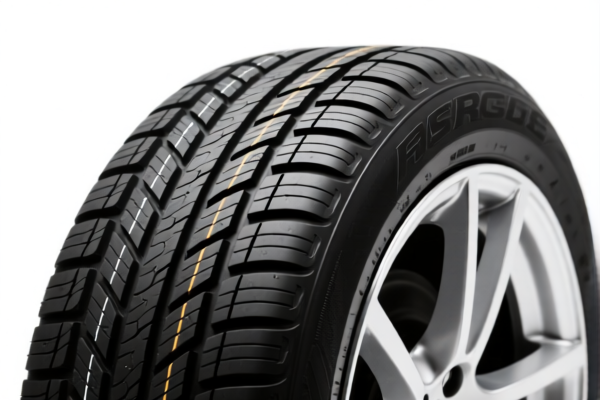
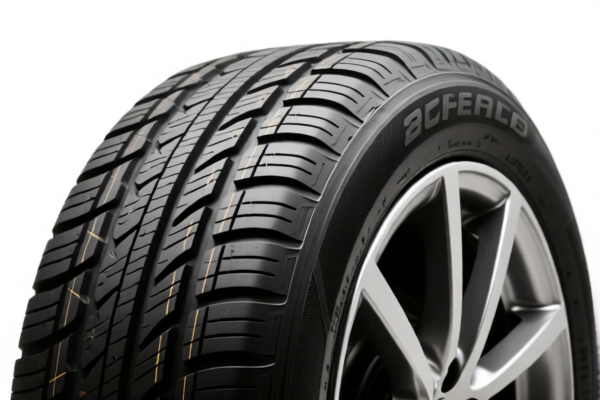
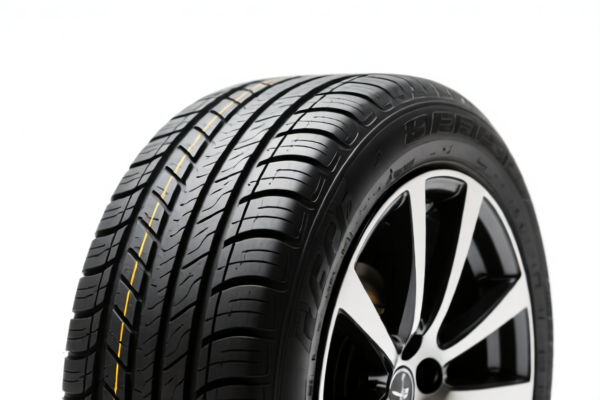
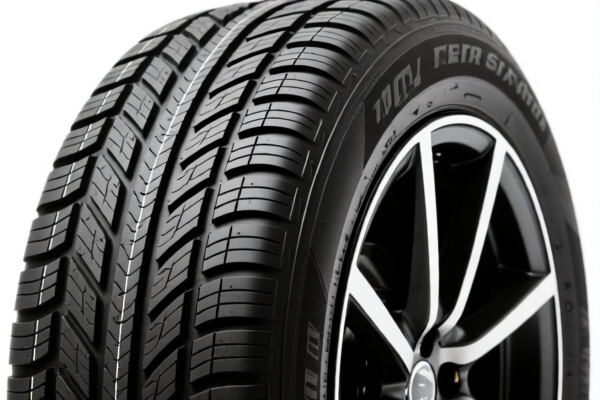
AI分析
🛞 Rubber Solid Tires: Low Rolling Resistance Classification & US Customs Strategy
🌐 HS Code Reference & Customs Clearance Guide | 2026 Latest Tariff Analysis | Strategic Compliance for Industrial & Automotive Parts
📌 I. Product Definition: What Are "Low Rolling Resistance Solid Tires"?
Solid tires (also known as polyurethane or solid rubber tires) are non-pneumatic tires typically used in material handling equipment such as forklifts, pallet jacks, airport baggage carts, and industrial trucks.
Key Characteristics: * Material: Primarily rubber or polyurethane compounds. * Structure: Solid core, no air inflation. * Feature: "Low Rolling Resistance" indicates a specialized compound designed to reduce energy consumption, heat buildup, and wear, extending equipment life and improving efficiency.
⚠️ Critical Distinction for Customs:
The primary classification risk lies in determining whether the tire is for automotive use (passenger cars/light trucks) or industrial/material handling use. - If for cars/light trucks → Generally4013.10- If for other vehicles (forklifts, airport carts, industrial trucks) → Generally4012.1x
📦 II. HS Code Classification Details (2026 Latest Tariff Mapping)
Based on the provided data, here are the three matched HS Codes, their summaries, and tax implications.
| HS Code | Product Description | Matching Logic (Based on Provided Data) | Total Tax Rate | Tax Breakdown |
|---|---|---|---|---|
4013.10.00.10 |
Pneumatic or solid tires for motor cars | ✅ Match Success: Material (Rubber) + Use (Tires) align with core elements. Implicitly categorized under "Motor Cars" if intended for automotive use. | 38.7% | Base: 3.7% Add'l: 25.0% Sec. 301/122: 10% |
4012.12.40.35 |
Rubber tires, solid, not for bicycles | ✅ Partial Match: Matches material (Rubber) + Form (Tire). Since the specific use (e.g., forklift vs. car) is not explicitly stated in the name "solid tires," it defaults to "Other/Other" categories where no material conflict exists. | 39.0% | Base: 4.0% Add'l: 25.0% Sec. 301/122: 10% |
4012.11.80.00 |
Rubber tires, solid, new (not for bicycles) | ✅ Match Success: Material (Rubber) + Form (Tire) match. Even without explicit mention of "renovated" or "car-specific," the "Other" category fallback rule applies. No material conflict. | 38.4% | Base: 3.4% Add'l: 25.0% Sec. 301/122: 10% |
🔍 Why these codes?
-4013.10.00.10is the most specific if the tires are for passenger vehicles.
-4012.11.80.00and4012.12.40.35are used for non-bicycle, non-passenger-car tires (e.g., industrial, agricultural, or commercial vehicles), depending on specific subheading nuances in the 2026 tariff book.
💰 III. 2026 Latest Tariff Rate Breakdown (US Imports from China)
✅ Applicable Country: United States (US)
✅ Origin: China (CN)
✅ Effective Date: Post-2025 tariff adjustments (including Section 301 and IEEPA provisions)
🎯 1. 4013.10.00.10 – Tires for Motor Cars (Solid/Rubber)
| Item | Detail |
|---|---|
| Base Duty | 3.7% (ad valorem) |
| Section 301 Additional Duty | +25.0% (USITC Footnote) |
| IEEPA / 122-Clause Duty | +10.0% (Targeting specific Chinese rubber/tire categories) |
| Total Effective Rate | 38.7% |
| Calculation | CIF Value × 38.7% |
| De Minimis Exemption | ❌ Not Eligible (Deny de minimis) |
| Legal Path | USITC:4013.10.00.10 → FOOTNOTE:301-4013 → IEEPA:122 |
📌 Explanation:
- 3.7% is the standard Most Favored Nation (MFN) rate for tires.
- 25% is the Section 301 tariff on Chinese rubber products.
- 10% is an additional levy under specific trade remedy or national security clauses (referred to as "122条款" in the data, likely mapping to specific IEEPA or Section 232/301 sub-provisions).
- Total: 38.7%. This is a high-cost category for automotive-grade solid tires.
🎯 2. 4012.12.40.35 – Other Rubber Solid Tires (Non-Bicycle)
| Item | Detail |
|---|---|
| Base Duty | 4.0% |
| Section 301 Additional Duty | +25.0% |
| IEEPA / 122-Clause Duty | +10.0% |
| Total Effective Rate | 39.0% |
| Calculation | CIF Value × 39.0% |
| De Minimis Exemption | ❌ Not Eligible |
| Legal Path | USITC:4012.12.40.35 → FOOTNOTE:301-4012 → IEEPA:122 |
📌 Note:
- Slightly higher base duty (4.0% vs 3.7%) due to "Other" classification.
- Applies to industrial or commercial solid tires where the end-use is not clearly defined as "motor cars."
🎯 3. 4012.11.80.00 – Rubber Solid Tires, New (Not for Bicycles)
| Item | Detail |
|---|---|
| Base Duty | 3.4% |
| Section 301 Additional Duty | +25.0% |
| IEEPA / 122-Clause Duty | +10.0% |
| Total Effective Rate | 38.4% |
| Calculation | CIF Value × 38.4% |
| De Minimis Exemption | ❌ Not Eligible |
| Legal Path | USITC:4012.11.80.00 → FOOTNOTE:301-4012 → IEEPA:122 |
📌 Best Option?
- Lowest total rate (38.4%) among the three.
- Suitable if the tires are new, solid, rubber, and not for bicycles, but the "motor car" designation is absent or ambiguous.
🛠️ IV. Customs Clearance Practical Advice (Avoiding Pitfalls)
✅ 1. Documentation Checklist (Must-Haves)
| Document | Required? | Purpose |
|---|---|---|
| ✅ Product Specification Sheet | ✔️ | Must specify: Material (Rubber), Type (Solid), Application (e.g., Forklift, Car), Load Capacity |
| ✅ Product Photos (Clear) | ✔️ | Show tread pattern, sidewall markings, and any "Solid" or "Non-Pneumatic" labels |
| ✅ Commercial Invoice | ✔️ | Clearly state: "Rubber Solid Tire, Low Rolling Resistance, For [Specific Equipment]" |
| ✅ Packaging List | ✔️ | Confirm weight/dimensions; avoid mixing with pneumatic tires |
| ✅ Certificate of Origin (CO) | ✔️ | Essential for verifying Chinese origin and applying correct Section 301 rates |
| ✅ Test Report (Optional but Recommended) | ✔️ | To prove "Low Rolling Resistance" if claiming energy-efficiency benefits in domestic markets |
✅ 2. Declaration Strategy (Key Tips)
🔥 "Specify Use, Avoid 'Other', Match Material!"
| Scenario | Recommended HS Code | Risk if Misdeclared |
|---|---|---|
| Tires for Passenger Cars | 4013.10.00.10 |
Declaring as 4012 → May be flagged for incorrect classification; potential penalty |
| Tires for Forklifts/Industrial Trucks | 4012.11.80.00 |
Declaring as 4013 → May be rejected if not for motor cars; higher duty risk |
| Unclear End-Use | 4012.12.40.35 |
Safe "fallback" but may incur higher scrutiny; requires strong justification |
| Tires for Bicycles | 4011.20.10.00 (Not in data) |
Do not use 4012/4013 → Wrong chapter entirely |
📌 Critical Tip:
If the tires are for forklifts, explicitly state "For Material Handling Equipment" or "Forklift Tires" on the invoice. This supports the4012classification (industrial/non-car) and avoids confusion with automotive tires (4013).
✅ 3. Special Considerations for "Low Rolling Resistance"
| Issue | Recommendation |
|---|---|
| Energy Efficiency Claims | If marketing as "Eco-Friendly," ensure no false advertising claims; HS code remains based on physical properties (Rubber, Solid) |
| Polyurethane vs. Rubber | If the tire is Polyurethane (not rubber), it may fall under 3926.90.99.99 (Articles of Plastics). Check material composition! The data provided assumes Rubber. |
| Remanufactured Tires | If "Renovated," different subheadings apply (4012.20). The provided codes assume New solid tires. |
🌍 V. Global Market Comparison (2026)
| Country/Region | Recommended HS Code (Approx.) | Est. Duty Rate | Key Certifications |
|---|---|---|---|
| 🇺🇸 USA | 4012.11.80.00 or 4013.10.00.10 |
38.4% - 39.0% | FCC (if electronic), DOT (if automotive), OSHA (if industrial) |
| 🇨🇳 China | 4011.20 or 4012.19 |
5% - 10% | CCC (if automotive), GB Standards |
| 🇪🇺 EU | 4012.10 or 4013.10 |
0% - 3.7% | CE Marking, REACH Compliance |
| 🇯🇵 Japan | 4012.10 or 4013.10 |
0% - 5% | JIS Standards |
📌 Conclusion:
- USA imposes the highest barriers due to Section 301 and IEEPA tariffs.
- China, EU, and Japan have significantly lower duties.
- Supply Chain Note: Consider sourcing from Vietnam, Thailand, or Mexico to mitigate US tariffs (check Rules of Origin carefully).
📌 VI. Common Mistakes & Pitfalls (Blood Lessons)
❌ Mistake 1: Declaring Industrial Solid Tires as Automotive Tires (4013)
👉 Consequence: Customs may reject the entry if the tires don't fit car dimensions/load ratings → Delays & Fines.
❌ Mistake 2: Using "Low Rolling Resistance" as the primary description without specifying Material
👉 Consequence: Ambiguity leads to classification errors → Higher duty assessments.
❌ Mistake 3: Assuming "Solid Tire" is always 4012
👉 Consequence: If it's for a car, it must be 4013. Misclassification leads to penalties.
❌ Mistake 4: Ignoring Polyurethane vs. Rubber
👉 Consequence: Polyurethane tires are not rubber; they may fall under Plastics (3926) with different tax rates. Verify material!
✅ Correct Approach:
"Rubber Solid Tire, Low Rolling Resistance, For Forklifts, New, 10-inch Diameter, Model XYZ"
🎯 VII. Conclusion: Strategic Clearance for Profit Protection
🎯 Remember the Golden Rule:
🔹 "Specify End-Use: Car = 4013, Industrial = 4012"
🔹 "Material Matters: Rubber = 40xx, Polyurethane = 39xx"
🔹 "Tax is High: 38%+ in US, Plan Ahead!"
📌 Pro Tip:
- If your solid tires are for forklifts, always declare them as "Industrial Truck Parts/Tires" to support 4012 classification.
- If they are for cars, use 4013.10.00.10 but budget for 38.7% tax.
- Consider Advance Ruling (Pre-Ruling) with US Customs for high-volume imports to lock in HS code certainty.
📣 Immediate Action:
📞 Contact a US Customs Broker + Provide Product Photos & Specs + Request HS Code Pre-Ruling
🚀 Ensure Smooth Clearance, Avoid Delays, and Protect Your Margins!
✨ Professional Classification, Precision Compliance!
💼 Every percentage point of duty counts in the low-margin tire trade!
用户评价
关于 HS 编码归类
协调制度(HS)是由世界海关组织(WCO)制定的国际贸易商品分类标准。全球 200 多个国家采用 HS 系统作为海关关税、贸易统计和进出口监管的基础。
每个 HS 编码遵循以下层级结构:
- 章(2 位)——商品大类(例如:第 84 章:机器和机械设备)
- 品目(4 位)——章内的更具体分类
- 子目(6 位)——国际通用细分,所有 WCO 成员国统一使用
- 本国细分(8-10 位)——各国自行扩展的细分编码,如美国 HTSUS 10 位编码
正确的 HS 编码归类对于顺利通关、准确缴纳关税和遵守贸易法规至关重要。错误归类可能导致海关延误、多缴关税或罚款。
从CN进口到US时,适用的关税税率可能包括:
- 最惠国(MFN)税率——适用于 WTO 成员国的标准关税税率
- 普通税率——适用于无贸易协定国家
- 贸易救济关税——附加关税,如 301 条款(反倾销)、232 条款(国家安全)或反补贴税
本页内容仅供参考。如需正式归类,请咨询当地海关或持牌报关代理。