rubber solid tires low rolling resistance
CN → US| HS Code | Tariff Rate | Origin | Destination | Doc |
|---|---|---|---|---|
| 4013100010 | 38.7% | CN | US | Official Doc |
| 4012124035 | 39.0% | CN | US | Official Doc |
| 4012118000 | 38.4% | CN | US | Official Doc |
Product Images
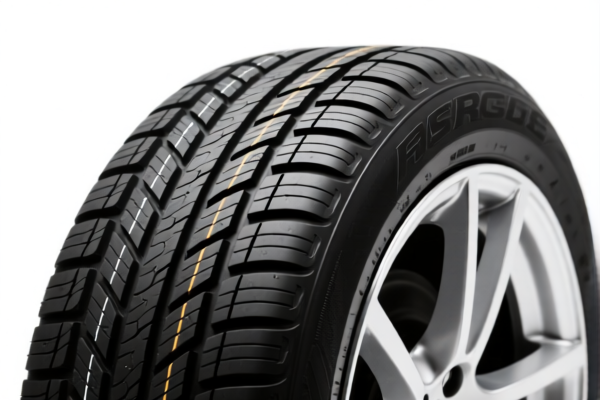
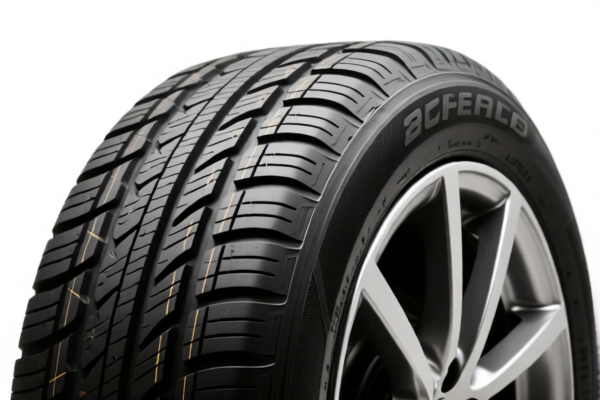
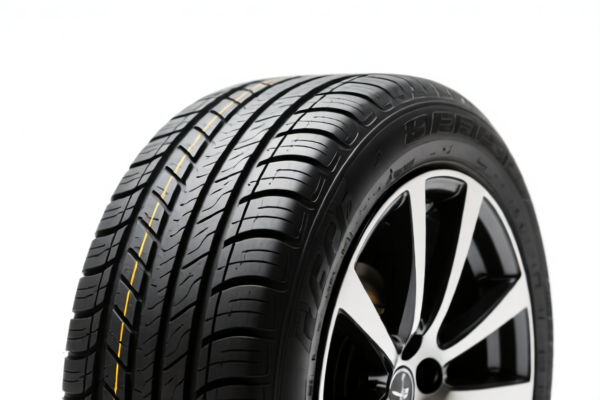
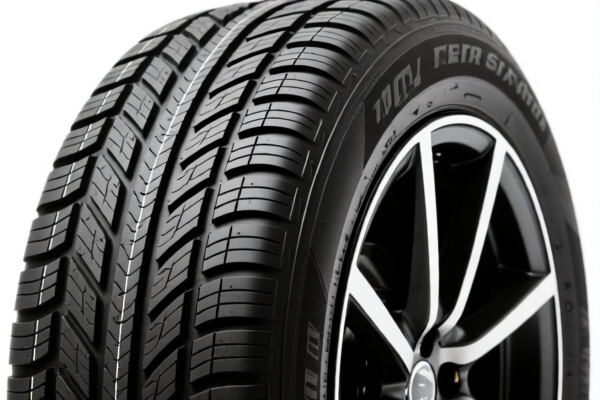
AI Analysis
🛞 Rubber Solid Tires: Low Rolling Resistance Classification & US Customs Strategy
🌐 HS Code Reference & Customs Clearance Guide | 2026 Latest Tariff Analysis | Strategic Compliance for Industrial & Automotive Parts
📌 I. Product Definition: What Are "Low Rolling Resistance Solid Tires"?
Solid tires (also known as polyurethane or solid rubber tires) are non-pneumatic tires typically used in material handling equipment such as forklifts, pallet jacks, airport baggage carts, and industrial trucks.
Key Characteristics: * Material: Primarily rubber or polyurethane compounds. * Structure: Solid core, no air inflation. * Feature: "Low Rolling Resistance" indicates a specialized compound designed to reduce energy consumption, heat buildup, and wear, extending equipment life and improving efficiency.
⚠️ Critical Distinction for Customs:
The primary classification risk lies in determining whether the tire is for automotive use (passenger cars/light trucks) or industrial/material handling use. - If for cars/light trucks → Generally4013.10- If for other vehicles (forklifts, airport carts, industrial trucks) → Generally4012.1x
📦 II. HS Code Classification Details (2026 Latest Tariff Mapping)
Based on the provided data, here are the three matched HS Codes, their summaries, and tax implications.
| HS Code | Product Description | Matching Logic (Based on Provided Data) | Total Tax Rate | Tax Breakdown |
|---|---|---|---|---|
4013.10.00.10 |
Pneumatic or solid tires for motor cars | ✅ Match Success: Material (Rubber) + Use (Tires) align with core elements. Implicitly categorized under "Motor Cars" if intended for automotive use. | 38.7% | Base: 3.7% Add'l: 25.0% Sec. 301/122: 10% |
4012.12.40.35 |
Rubber tires, solid, not for bicycles | ✅ Partial Match: Matches material (Rubber) + Form (Tire). Since the specific use (e.g., forklift vs. car) is not explicitly stated in the name "solid tires," it defaults to "Other/Other" categories where no material conflict exists. | 39.0% | Base: 4.0% Add'l: 25.0% Sec. 301/122: 10% |
4012.11.80.00 |
Rubber tires, solid, new (not for bicycles) | ✅ Match Success: Material (Rubber) + Form (Tire) match. Even without explicit mention of "renovated" or "car-specific," the "Other" category fallback rule applies. No material conflict. | 38.4% | Base: 3.4% Add'l: 25.0% Sec. 301/122: 10% |
🔍 Why these codes?
-4013.10.00.10is the most specific if the tires are for passenger vehicles.
-4012.11.80.00and4012.12.40.35are used for non-bicycle, non-passenger-car tires (e.g., industrial, agricultural, or commercial vehicles), depending on specific subheading nuances in the 2026 tariff book.
💰 III. 2026 Latest Tariff Rate Breakdown (US Imports from China)
✅ Applicable Country: United States (US)
✅ Origin: China (CN)
✅ Effective Date: Post-2025 tariff adjustments (including Section 301 and IEEPA provisions)
🎯 1. 4013.10.00.10 – Tires for Motor Cars (Solid/Rubber)
| Item | Detail |
|---|---|
| Base Duty | 3.7% (ad valorem) |
| Section 301 Additional Duty | +25.0% (USITC Footnote) |
| IEEPA / 122-Clause Duty | +10.0% (Targeting specific Chinese rubber/tire categories) |
| Total Effective Rate | 38.7% |
| Calculation | CIF Value × 38.7% |
| De Minimis Exemption | ❌ Not Eligible (Deny de minimis) |
| Legal Path | USITC:4013.10.00.10 → FOOTNOTE:301-4013 → IEEPA:122 |
📌 Explanation:
- 3.7% is the standard Most Favored Nation (MFN) rate for tires.
- 25% is the Section 301 tariff on Chinese rubber products.
- 10% is an additional levy under specific trade remedy or national security clauses (referred to as "122条款" in the data, likely mapping to specific IEEPA or Section 232/301 sub-provisions).
- Total: 38.7%. This is a high-cost category for automotive-grade solid tires.
🎯 2. 4012.12.40.35 – Other Rubber Solid Tires (Non-Bicycle)
| Item | Detail |
|---|---|
| Base Duty | 4.0% |
| Section 301 Additional Duty | +25.0% |
| IEEPA / 122-Clause Duty | +10.0% |
| Total Effective Rate | 39.0% |
| Calculation | CIF Value × 39.0% |
| De Minimis Exemption | ❌ Not Eligible |
| Legal Path | USITC:4012.12.40.35 → FOOTNOTE:301-4012 → IEEPA:122 |
📌 Note:
- Slightly higher base duty (4.0% vs 3.7%) due to "Other" classification.
- Applies to industrial or commercial solid tires where the end-use is not clearly defined as "motor cars."
🎯 3. 4012.11.80.00 – Rubber Solid Tires, New (Not for Bicycles)
| Item | Detail |
|---|---|
| Base Duty | 3.4% |
| Section 301 Additional Duty | +25.0% |
| IEEPA / 122-Clause Duty | +10.0% |
| Total Effective Rate | 38.4% |
| Calculation | CIF Value × 38.4% |
| De Minimis Exemption | ❌ Not Eligible |
| Legal Path | USITC:4012.11.80.00 → FOOTNOTE:301-4012 → IEEPA:122 |
📌 Best Option?
- Lowest total rate (38.4%) among the three.
- Suitable if the tires are new, solid, rubber, and not for bicycles, but the "motor car" designation is absent or ambiguous.
🛠️ IV. Customs Clearance Practical Advice (Avoiding Pitfalls)
✅ 1. Documentation Checklist (Must-Haves)
| Document | Required? | Purpose |
|---|---|---|
| ✅ Product Specification Sheet | ✔️ | Must specify: Material (Rubber), Type (Solid), Application (e.g., Forklift, Car), Load Capacity |
| ✅ Product Photos (Clear) | ✔️ | Show tread pattern, sidewall markings, and any "Solid" or "Non-Pneumatic" labels |
| ✅ Commercial Invoice | ✔️ | Clearly state: "Rubber Solid Tire, Low Rolling Resistance, For [Specific Equipment]" |
| ✅ Packaging List | ✔️ | Confirm weight/dimensions; avoid mixing with pneumatic tires |
| ✅ Certificate of Origin (CO) | ✔️ | Essential for verifying Chinese origin and applying correct Section 301 rates |
| ✅ Test Report (Optional but Recommended) | ✔️ | To prove "Low Rolling Resistance" if claiming energy-efficiency benefits in domestic markets |
✅ 2. Declaration Strategy (Key Tips)
🔥 "Specify Use, Avoid 'Other', Match Material!"
| Scenario | Recommended HS Code | Risk if Misdeclared |
|---|---|---|
| Tires for Passenger Cars | 4013.10.00.10 |
Declaring as 4012 → May be flagged for incorrect classification; potential penalty |
| Tires for Forklifts/Industrial Trucks | 4012.11.80.00 |
Declaring as 4013 → May be rejected if not for motor cars; higher duty risk |
| Unclear End-Use | 4012.12.40.35 |
Safe "fallback" but may incur higher scrutiny; requires strong justification |
| Tires for Bicycles | 4011.20.10.00 (Not in data) |
Do not use 4012/4013 → Wrong chapter entirely |
📌 Critical Tip:
If the tires are for forklifts, explicitly state "For Material Handling Equipment" or "Forklift Tires" on the invoice. This supports the4012classification (industrial/non-car) and avoids confusion with automotive tires (4013).
✅ 3. Special Considerations for "Low Rolling Resistance"
| Issue | Recommendation |
|---|---|
| Energy Efficiency Claims | If marketing as "Eco-Friendly," ensure no false advertising claims; HS code remains based on physical properties (Rubber, Solid) |
| Polyurethane vs. Rubber | If the tire is Polyurethane (not rubber), it may fall under 3926.90.99.99 (Articles of Plastics). Check material composition! The data provided assumes Rubber. |
| Remanufactured Tires | If "Renovated," different subheadings apply (4012.20). The provided codes assume New solid tires. |
🌍 V. Global Market Comparison (2026)
| Country/Region | Recommended HS Code (Approx.) | Est. Duty Rate | Key Certifications |
|---|---|---|---|
| 🇺🇸 USA | 4012.11.80.00 or 4013.10.00.10 |
38.4% - 39.0% | FCC (if electronic), DOT (if automotive), OSHA (if industrial) |
| 🇨🇳 China | 4011.20 or 4012.19 |
5% - 10% | CCC (if automotive), GB Standards |
| 🇪🇺 EU | 4012.10 or 4013.10 |
0% - 3.7% | CE Marking, REACH Compliance |
| 🇯🇵 Japan | 4012.10 or 4013.10 |
0% - 5% | JIS Standards |
📌 Conclusion:
- USA imposes the highest barriers due to Section 301 and IEEPA tariffs.
- China, EU, and Japan have significantly lower duties.
- Supply Chain Note: Consider sourcing from Vietnam, Thailand, or Mexico to mitigate US tariffs (check Rules of Origin carefully).
📌 VI. Common Mistakes & Pitfalls (Blood Lessons)
❌ Mistake 1: Declaring Industrial Solid Tires as Automotive Tires (4013)
👉 Consequence: Customs may reject the entry if the tires don't fit car dimensions/load ratings → Delays & Fines.
❌ Mistake 2: Using "Low Rolling Resistance" as the primary description without specifying Material
👉 Consequence: Ambiguity leads to classification errors → Higher duty assessments.
❌ Mistake 3: Assuming "Solid Tire" is always 4012
👉 Consequence: If it's for a car, it must be 4013. Misclassification leads to penalties.
❌ Mistake 4: Ignoring Polyurethane vs. Rubber
👉 Consequence: Polyurethane tires are not rubber; they may fall under Plastics (3926) with different tax rates. Verify material!
✅ Correct Approach:
"Rubber Solid Tire, Low Rolling Resistance, For Forklifts, New, 10-inch Diameter, Model XYZ"
🎯 VII. Conclusion: Strategic Clearance for Profit Protection
🎯 Remember the Golden Rule:
🔹 "Specify End-Use: Car = 4013, Industrial = 4012"
🔹 "Material Matters: Rubber = 40xx, Polyurethane = 39xx"
🔹 "Tax is High: 38%+ in US, Plan Ahead!"
📌 Pro Tip:
- If your solid tires are for forklifts, always declare them as "Industrial Truck Parts/Tires" to support 4012 classification.
- If they are for cars, use 4013.10.00.10 but budget for 38.7% tax.
- Consider Advance Ruling (Pre-Ruling) with US Customs for high-volume imports to lock in HS code certainty.
📣 Immediate Action:
📞 Contact a US Customs Broker + Provide Product Photos & Specs + Request HS Code Pre-Ruling
🚀 Ensure Smooth Clearance, Avoid Delays, and Protect Your Margins!
✨ Professional Classification, Precision Compliance!
💼 Every percentage point of duty counts in the low-margin tire trade!
Customer Reviews
About HS Code Classification
The Harmonized System (HS) is an internationally standardized nomenclature developed by the World Customs Organization (WCO) to classify traded products. Over 200 countries use the HS system as the basis for customs tariffs, trade statistics, and import/export regulations.
Each HS code follows a hierarchical structure:
- Chapter (2 digits) — Broad category of goods (e.g., Chapter 84: Machinery and Mechanical Appliances)
- Heading (4 digits) — More specific grouping within the chapter
- Subheading (6 digits) — Internationally standardized breakdown, used by all WCO member countries
- National subdivisions (8-10 digits) — Country-specific extensions for further classification, such as US HTSUS 10-digit codes
Correct HS code classification is essential for smooth customs clearance, accurate duty payment, and compliance with trade regulations. Misclassification can lead to customs delays, overpayment of duties, or penalties.
When importing from CN to US, the applicable tariff rates may include:
- Most-Favored-Nation (MFN) rate — The standard duty rate applied to WTO members
- General rate — Applied to countries without trade agreements
- Trade remedy duties — Additional tariffs such as Section 301 (anti-dumping), Section 232 (national security), or countervailing duties
The information provided on this page is for reference purposes only. For official classification, please consult with your local customs authority or a licensed customs broker.