semi finished buffalo leather car interior
CN → US| HS编码 | 关税税率 | 原产国 | 目的国 | 文档 |
|---|---|---|---|---|
| 4104113060 | 12.4% | CN | US | 官方文档 |
| 4107114000 | 12.5% | CN | US | 官方文档 |
| 4107124000 | 12.5% | CN | US | 官方文档 |
| 4113903000 | 38.3% | CN | US | 官方文档 |
| 4106910000 | 38.3% | CN | US | 官方文档 |
商品图片
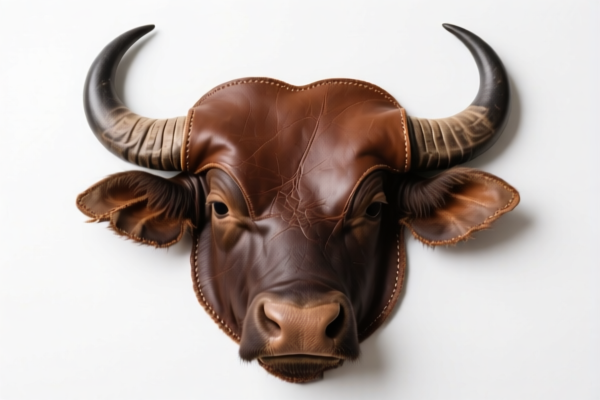
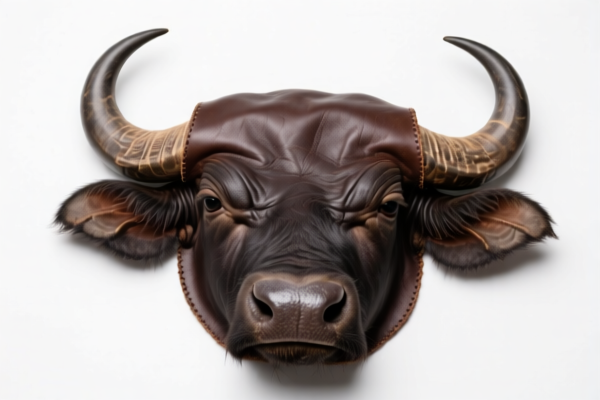
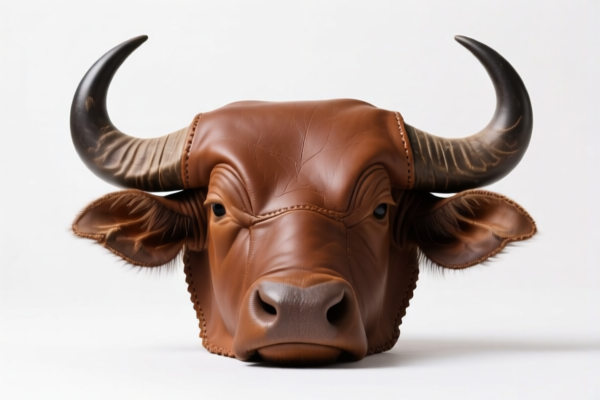
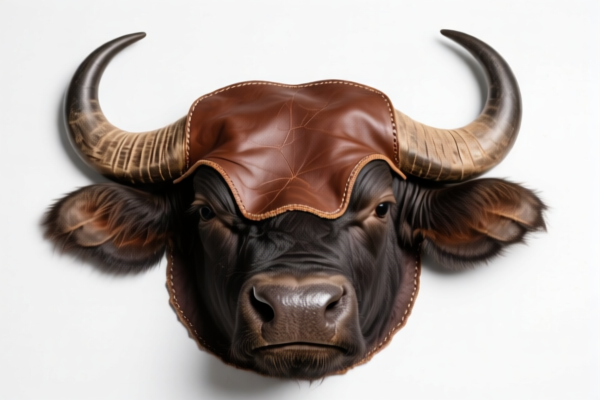
AI分析
🐂 Semi-Finished Buffalo Leather for Car Interiors
🌐 HS Code Reference & Customs Clearance Guide | 2026 Latest Tariff Analysis | Professional-Level Entry Strategy
📌 I. Product Definition & Classification: Do You Really Understand "Semi-Finished Buffalo Leather"?
Buffalo leather, a durable and textured natural material, is widely used in high-end automotive interiors (seats, dashboards, door panels). In international trade, it is strictly categorized by its degree of processing. "Semi-finished" is a vague term in customs declarations; precise classification depends on whether the leather is tanned without fur or further processed/split.
Key Distinction Criteria:
- Tanned, Unfurred Leather (Raw Tanned State): If the leather is tanned but retains its natural surface without further splitting, coloring, or heavy finishing beyond basic tanning, it falls under Chapter 41, Heading 4104/4107.
- Split, Processed, or Further Finished Leather: If the hide has been split into layers, or significantly processed (e.g., corrected grain, specific automotive finishes), it may fall under Chapter 41, Heading 4113 or 4106.
⚠️ Critical Classification Point:
- If it is fully tanned, unfurred, and in its primary tanned state (even if destined for car interiors) → Look at 4104.11.30.60, 4107.11.40.00, or 4107.12.40.00.
- If it is split leather (splits from the grain layer) or further processed for automotive use → Look at 4113.90.30.00 or 4106.91.00.00.
📦 II. HS Code Classification Details (2026 Latest Tariff Authoritative Mapping)
Based strictly on the provided data, here are the precise HS Codes for semi-finished buffalo horse leather for car interiors:
| HS Code | Product Description | Application Scenario | Tax Rate (Total) |
|---|---|---|---|
4104.11.30.60 |
Tanned buffalo or horse leather, without fur, used for car interiors | Basic tanned leather, suitable for further automotive processing | 12.4% |
4107.11.40.00 |
Tanned buffalo or horse leather, without fur, further processed, used for car interiors | Processed to meet specific classification requirements for automotive use | 12.5% |
4107.12.40.00 |
Tanned buffalo or horse leather, in a processed state meeting classification requirements | Standard tanned leather meeting specific trade criteria | 12.5% |
4113.90.30.00 |
Buffalo split leather for car interiors, classified as other animal leather and further processed | Split leather, heavily processed, specific automotive grade | 38.3% |
4106.91.00.00 |
Buffalo split leather, meeting characteristics of tanned or partially tanned leather | Split hides, ready for further manufacturing, specific tanning status | 38.3% |
🔍 Key Reminder:
- Codes 4104 & 4107: Represent tanned, unfurred leather. These are considered "semi-finished" in the sense that they are ready for cutting and sewing but are not yet "leather goods." The tax burden is significantly lower (~12.5%).
- Codes 4113 & 4106: Represent split leather or further processed leather. If your "semi-finished" product involves splitting the hide or has undergone significant surface correction, it falls here. The tax burden is high (38.3%).
💰 III. 2026 Latest Tariff Rate Breakdown (Including Additional Taxes & Policy Surcharges)
✅ Applicable Country: United States (US)
✅ Origin: China (CN)
✅ Effective Date: Including imports after November 10, 2025
🎯 1. 4104.11.30.60 / 4107.11.40.00 / 4107.12.40.00 —— Tanned Buffalo/Horse Leather (Unfurred)
| Item | Detail |
|---|---|
| Base Tariff | 2.4% - 2.5% (ad valorem) |
| Section 301 Additional Tariff | 0.0% (Not applicable to these specific subheadings based on provided data) |
| Section 122 Tariff | 10% (Specific surcharge for these leather categories) |
| Total Tariff Rate | 12.4% - 12.5% |
| Tax Calculation | CIF Value × 12.4% (or 12.5%) |
| De Minimis Eligibility | ❌ No (Not eligible for low-value exemption) |
| Legal Basis | Base rate + Section 122 surcharge |
📌 Explanation:
- The 12.4% / 12.5% total rate is composed of a low base duty (~2.5%) plus a 10% Section 122 surcharge.
- Crucially, there is NO Section 301 (25%) tariff applied to these specific codes in the provided data. This makes them significantly more competitive than split leathers.
- "Section 122 Tariff 10%": This is a specific additional duty applied to certain leather products from China.
🎯 2. 4113.90.30.00 / 4106.91.00.00 —— Buffalo Split Leather / Further Processed Leather
| Item | Detail |
|---|---|
| Base Tariff | 3.3% (ad valorem) |
| Section 301 Additional Tariff | 25.0% |
| Section 122 Tariff | 10% |
| Total Tariff Rate | 38.3% |
| Tax Calculation | CIF Value × 38.3% |
| De Minimis Eligibility | ❌ No |
| Legal Basis | Base rate + Section 301 (25%) + Section 122 (10%) |
📌 Explanation:
- Section 301 (25%): This is the standard punitive tariff on many Chinese imports. It does apply to split leather and further processed leather.
- Section 122 (10%): This additional surcharge also applies.
- Total 38.3%: This is a high-cost classification. If your product can be classified under 4104/4107 instead of 4113/4106, you save ~26% in duties.
🛠️ IV. Customs Clearance Practical Advice (Combat Pitfall Avoidance Guide)
✅ 1. Preparation Checklist (Mandatory Documents)
| Document | Required | Notes |
|---|---|---|
| ✅ Product Specifications | ✔️ | Must detail tanning method, split status, thickness, and final use (automotive). |
| ✅ Photos of Leather | ✔️ | Show surface texture, grain side, and flesh side to prove it is not split (if claiming 4104/4107). |
| ✅ Commercial Invoice | ✔️ | Clearly state "Buffalo Leather, Tanned, Unfurred, For Car Interior Use." Avoid vague terms like "Raw Skin." |
| ✅ Bill of Lading | ✔️ | Match invoice details exactly. |
| ✅ Certificate of Origin | ✔️ | Required to prove Chinese origin for Section 122/301 applicability. |
| ✅ Processing Details | ✔️ | If using 4107, provide evidence of "further processing" to justify the code. |
✅ 2. Declaration Strategy (Key Principles)
🔥 “Clarify Processing State, Avoid ‘Split’, Save 26% Duty!”
| Scenario | Correct Declaration | Wrong Approach |
|---|---|---|
| Tanned, Unfurred, Full Grain | 4104.11.30.60 or 4107.11.40.00 |
Declaring as "Split Leather" → 38.3% |
| Split Leather (Flesh Side Separated) | 4113.90.30.00 or 4106.91.00.00 |
Declaring as "Full Grain" → Classification Error & Penalty |
| Leather with Automotive-Specific Finish | 4107.12.40.00 |
Declaring as generic raw leather → May be reclassified |
| Leather Samples | Still Declare Properly | Declaring as "Free Samples" → Still taxable if value exceeds thresholds |
✅ 3. Special Situations
| Situation | Handling Advice |
|---|---|
| "Semi-Finished" Ambiguity | If the leather is tanned but not yet colored/finished for cars, still declare as tanned leather (4104/4107). Do not guess; provide tanning certificates. |
| Split vs. Full Grain | This is the #1 risk. If the hide has been split into layers, it must go to 4113/4106. If it is one piece, it may be 4104/4107. Provide microscopic photos if challenged. |
| Mixed Shipments | If a container has both full grain and split leather, declare separately. Mixing can lead to audit of the entire shipment. |
🌍 V. Cost Comparison & Market Insight (2026)
| HS Code Category | Total Tariff | Cost Impact | Strategy |
|---|---|---|---|
| 4104.11.30.60 / 4107 Series | 12.4% - 12.5% | Low | Prefer this if the leather is not split. It is significantly cheaper. |
| 4113.90.30.00 / 4106 Series | 38.3% | High | Inevitable if split. Factor into pricing. |
📌 Conclusion:
- Classification is Key: The difference between "Tanned Unfurred Leather" (12.5%) and "Split/Further Processed Leather" (38.3%) is 26 percentage points.
- Documentation is Critical: You must prove the processing state (tanned vs. split) with technical data sheets and photos.
- Section 122 is Universal: Both categories incur the 10% Section 122 surcharge, but only the split leather incurs the 25% Section 301 tariff.
📌 VI. Common Mistakes & Pitfall Guide (Blood & Tears Lessons)
❌ Mistake 1: Calling it "Leather Goods" or "Car Parts"
👉 Consequence: Misclassification. Car interiors (finished goods) have different codes. Raw leather must be declared as raw material.
❌ Mistake 2: Ignoring the "Split" status
👉 Consequence: Declaring split leather as 4104/4107 to save tax. Customs will inspect, find splits, and charge back taxes + penalties.
❌ Mistake 3: Vague Description "Buffalo Leather"
👉 Consequence: Customs will use their best judgment, likely defaulting to the higher tariff code (38.3%) or causing delays.
✅ Correct Practice:
"Buffalo Leather, Tanned, Without Fur, For Automotive Interiors, HS Code 4104.11.30.60"
OR
"Buffalo Split Leather, Tanned, For Automotive Seats, HS Code 4113.90.30.00"
🎯 VII. Conclusion: Professional Declaration, Cost Control, Efficiency!
🎯 Remember the Motto:
🔹 "Full Grain 12.5%, Split 38.3%, Declare Correctly, Save Big Money!"
🔹 "HS Code Determines Tax, 26% Difference is Real, Wrong Code Means Penalty!"
📌 Pro Tip:
If your buffalo leather is full grain and tanned, insist on the 4104.11.30.60 / 4107 codes. Provide clear photos showing no splitting lines. If it is split, prepare for the 38.3% rate and factor it into your cost model.
📣 Immediate Action:
📞 Consult a licensed customs broker.
📸 Provide high-resolution photos of the leather surface and cross-section.
🚀 Accurate classification saves your profit margin!
✨ Professional Clearance Starts with Precise Classification!
💼 Every cent of your cost deserves to be calculated precisely!
用户评价
关于 HS 编码归类
协调制度(HS)是由世界海关组织(WCO)制定的国际贸易商品分类标准。全球 200 多个国家采用 HS 系统作为海关关税、贸易统计和进出口监管的基础。
每个 HS 编码遵循以下层级结构:
- 章(2 位)——商品大类(例如:第 84 章:机器和机械设备)
- 品目(4 位)——章内的更具体分类
- 子目(6 位)——国际通用细分,所有 WCO 成员国统一使用
- 本国细分(8-10 位)——各国自行扩展的细分编码,如美国 HTSUS 10 位编码
正确的 HS 编码归类对于顺利通关、准确缴纳关税和遵守贸易法规至关重要。错误归类可能导致海关延误、多缴关税或罚款。
从CN进口到US时,适用的关税税率可能包括:
- 最惠国(MFN)税率——适用于 WTO 成员国的标准关税税率
- 普通税率——适用于无贸易协定国家
- 贸易救济关税——附加关税,如 301 条款(反倾销)、232 条款(国家安全)或反补贴税
本页内容仅供参考。如需正式归类,请咨询当地海关或持牌报关代理。