semi finished buffalo leather car interior
CN → US| HS Code | Tariff Rate | Origin | Destination | Doc |
|---|---|---|---|---|
| 4104113060 | 12.4% | CN | US | Official Doc |
| 4107114000 | 12.5% | CN | US | Official Doc |
| 4107124000 | 12.5% | CN | US | Official Doc |
| 4113903000 | 38.3% | CN | US | Official Doc |
| 4106910000 | 38.3% | CN | US | Official Doc |
Product Images

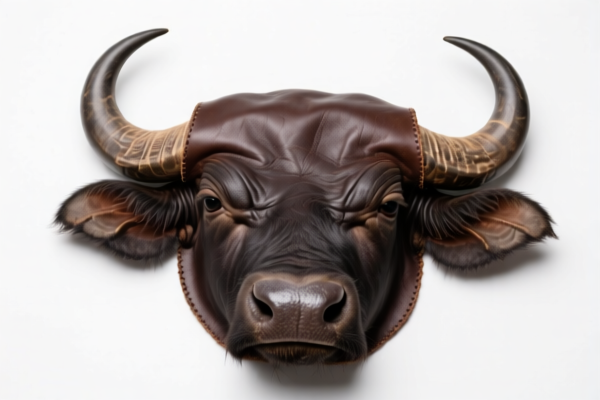

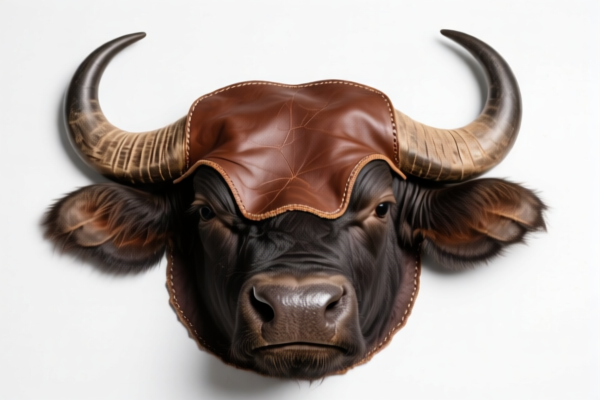
AI Analysis
🐂 Semi-Finished Buffalo Leather for Car Interiors
🌐 HS Code Reference & Customs Clearance Guide | 2026 Latest Tariff Analysis | Professional-Level Entry Strategy
📌 I. Product Definition & Classification: Do You Really Understand "Semi-Finished Buffalo Leather"?
Buffalo leather, a durable and textured natural material, is widely used in high-end automotive interiors (seats, dashboards, door panels). In international trade, it is strictly categorized by its degree of processing. "Semi-finished" is a vague term in customs declarations; precise classification depends on whether the leather is tanned without fur or further processed/split.
Key Distinction Criteria:
- Tanned, Unfurred Leather (Raw Tanned State): If the leather is tanned but retains its natural surface without further splitting, coloring, or heavy finishing beyond basic tanning, it falls under Chapter 41, Heading 4104/4107.
- Split, Processed, or Further Finished Leather: If the hide has been split into layers, or significantly processed (e.g., corrected grain, specific automotive finishes), it may fall under Chapter 41, Heading 4113 or 4106.
⚠️ Critical Classification Point:
- If it is fully tanned, unfurred, and in its primary tanned state (even if destined for car interiors) → Look at 4104.11.30.60, 4107.11.40.00, or 4107.12.40.00.
- If it is split leather (splits from the grain layer) or further processed for automotive use → Look at 4113.90.30.00 or 4106.91.00.00.
📦 II. HS Code Classification Details (2026 Latest Tariff Authoritative Mapping)
Based strictly on the provided data, here are the precise HS Codes for semi-finished buffalo horse leather for car interiors:
| HS Code | Product Description | Application Scenario | Tax Rate (Total) |
|---|---|---|---|
4104.11.30.60 |
Tanned buffalo or horse leather, without fur, used for car interiors | Basic tanned leather, suitable for further automotive processing | 12.4% |
4107.11.40.00 |
Tanned buffalo or horse leather, without fur, further processed, used for car interiors | Processed to meet specific classification requirements for automotive use | 12.5% |
4107.12.40.00 |
Tanned buffalo or horse leather, in a processed state meeting classification requirements | Standard tanned leather meeting specific trade criteria | 12.5% |
4113.90.30.00 |
Buffalo split leather for car interiors, classified as other animal leather and further processed | Split leather, heavily processed, specific automotive grade | 38.3% |
4106.91.00.00 |
Buffalo split leather, meeting characteristics of tanned or partially tanned leather | Split hides, ready for further manufacturing, specific tanning status | 38.3% |
🔍 Key Reminder:
- Codes 4104 & 4107: Represent tanned, unfurred leather. These are considered "semi-finished" in the sense that they are ready for cutting and sewing but are not yet "leather goods." The tax burden is significantly lower (~12.5%).
- Codes 4113 & 4106: Represent split leather or further processed leather. If your "semi-finished" product involves splitting the hide or has undergone significant surface correction, it falls here. The tax burden is high (38.3%).
💰 III. 2026 Latest Tariff Rate Breakdown (Including Additional Taxes & Policy Surcharges)
✅ Applicable Country: United States (US)
✅ Origin: China (CN)
✅ Effective Date: Including imports after November 10, 2025
🎯 1. 4104.11.30.60 / 4107.11.40.00 / 4107.12.40.00 —— Tanned Buffalo/Horse Leather (Unfurred)
| Item | Detail |
|---|---|
| Base Tariff | 2.4% - 2.5% (ad valorem) |
| Section 301 Additional Tariff | 0.0% (Not applicable to these specific subheadings based on provided data) |
| Section 122 Tariff | 10% (Specific surcharge for these leather categories) |
| Total Tariff Rate | 12.4% - 12.5% |
| Tax Calculation | CIF Value × 12.4% (or 12.5%) |
| De Minimis Eligibility | ❌ No (Not eligible for low-value exemption) |
| Legal Basis | Base rate + Section 122 surcharge |
📌 Explanation:
- The 12.4% / 12.5% total rate is composed of a low base duty (~2.5%) plus a 10% Section 122 surcharge.
- Crucially, there is NO Section 301 (25%) tariff applied to these specific codes in the provided data. This makes them significantly more competitive than split leathers.
- "Section 122 Tariff 10%": This is a specific additional duty applied to certain leather products from China.
🎯 2. 4113.90.30.00 / 4106.91.00.00 —— Buffalo Split Leather / Further Processed Leather
| Item | Detail |
|---|---|
| Base Tariff | 3.3% (ad valorem) |
| Section 301 Additional Tariff | 25.0% |
| Section 122 Tariff | 10% |
| Total Tariff Rate | 38.3% |
| Tax Calculation | CIF Value × 38.3% |
| De Minimis Eligibility | ❌ No |
| Legal Basis | Base rate + Section 301 (25%) + Section 122 (10%) |
📌 Explanation:
- Section 301 (25%): This is the standard punitive tariff on many Chinese imports. It does apply to split leather and further processed leather.
- Section 122 (10%): This additional surcharge also applies.
- Total 38.3%: This is a high-cost classification. If your product can be classified under 4104/4107 instead of 4113/4106, you save ~26% in duties.
🛠️ IV. Customs Clearance Practical Advice (Combat Pitfall Avoidance Guide)
✅ 1. Preparation Checklist (Mandatory Documents)
| Document | Required | Notes |
|---|---|---|
| ✅ Product Specifications | ✔️ | Must detail tanning method, split status, thickness, and final use (automotive). |
| ✅ Photos of Leather | ✔️ | Show surface texture, grain side, and flesh side to prove it is not split (if claiming 4104/4107). |
| ✅ Commercial Invoice | ✔️ | Clearly state "Buffalo Leather, Tanned, Unfurred, For Car Interior Use." Avoid vague terms like "Raw Skin." |
| ✅ Bill of Lading | ✔️ | Match invoice details exactly. |
| ✅ Certificate of Origin | ✔️ | Required to prove Chinese origin for Section 122/301 applicability. |
| ✅ Processing Details | ✔️ | If using 4107, provide evidence of "further processing" to justify the code. |
✅ 2. Declaration Strategy (Key Principles)
🔥 “Clarify Processing State, Avoid ‘Split’, Save 26% Duty!”
| Scenario | Correct Declaration | Wrong Approach |
|---|---|---|
| Tanned, Unfurred, Full Grain | 4104.11.30.60 or 4107.11.40.00 |
Declaring as "Split Leather" → 38.3% |
| Split Leather (Flesh Side Separated) | 4113.90.30.00 or 4106.91.00.00 |
Declaring as "Full Grain" → Classification Error & Penalty |
| Leather with Automotive-Specific Finish | 4107.12.40.00 |
Declaring as generic raw leather → May be reclassified |
| Leather Samples | Still Declare Properly | Declaring as "Free Samples" → Still taxable if value exceeds thresholds |
✅ 3. Special Situations
| Situation | Handling Advice |
|---|---|
| "Semi-Finished" Ambiguity | If the leather is tanned but not yet colored/finished for cars, still declare as tanned leather (4104/4107). Do not guess; provide tanning certificates. |
| Split vs. Full Grain | This is the #1 risk. If the hide has been split into layers, it must go to 4113/4106. If it is one piece, it may be 4104/4107. Provide microscopic photos if challenged. |
| Mixed Shipments | If a container has both full grain and split leather, declare separately. Mixing can lead to audit of the entire shipment. |
🌍 V. Cost Comparison & Market Insight (2026)
| HS Code Category | Total Tariff | Cost Impact | Strategy |
|---|---|---|---|
| 4104.11.30.60 / 4107 Series | 12.4% - 12.5% | Low | Prefer this if the leather is not split. It is significantly cheaper. |
| 4113.90.30.00 / 4106 Series | 38.3% | High | Inevitable if split. Factor into pricing. |
📌 Conclusion:
- Classification is Key: The difference between "Tanned Unfurred Leather" (12.5%) and "Split/Further Processed Leather" (38.3%) is 26 percentage points.
- Documentation is Critical: You must prove the processing state (tanned vs. split) with technical data sheets and photos.
- Section 122 is Universal: Both categories incur the 10% Section 122 surcharge, but only the split leather incurs the 25% Section 301 tariff.
📌 VI. Common Mistakes & Pitfall Guide (Blood & Tears Lessons)
❌ Mistake 1: Calling it "Leather Goods" or "Car Parts"
👉 Consequence: Misclassification. Car interiors (finished goods) have different codes. Raw leather must be declared as raw material.
❌ Mistake 2: Ignoring the "Split" status
👉 Consequence: Declaring split leather as 4104/4107 to save tax. Customs will inspect, find splits, and charge back taxes + penalties.
❌ Mistake 3: Vague Description "Buffalo Leather"
👉 Consequence: Customs will use their best judgment, likely defaulting to the higher tariff code (38.3%) or causing delays.
✅ Correct Practice:
"Buffalo Leather, Tanned, Without Fur, For Automotive Interiors, HS Code 4104.11.30.60"
OR
"Buffalo Split Leather, Tanned, For Automotive Seats, HS Code 4113.90.30.00"
🎯 VII. Conclusion: Professional Declaration, Cost Control, Efficiency!
🎯 Remember the Motto:
🔹 "Full Grain 12.5%, Split 38.3%, Declare Correctly, Save Big Money!"
🔹 "HS Code Determines Tax, 26% Difference is Real, Wrong Code Means Penalty!"
📌 Pro Tip:
If your buffalo leather is full grain and tanned, insist on the 4104.11.30.60 / 4107 codes. Provide clear photos showing no splitting lines. If it is split, prepare for the 38.3% rate and factor it into your cost model.
📣 Immediate Action:
📞 Consult a licensed customs broker.
📸 Provide high-resolution photos of the leather surface and cross-section.
🚀 Accurate classification saves your profit margin!
✨ Professional Clearance Starts with Precise Classification!
💼 Every cent of your cost deserves to be calculated precisely!
Customer Reviews
About HS Code Classification
The Harmonized System (HS) is an internationally standardized nomenclature developed by the World Customs Organization (WCO) to classify traded products. Over 200 countries use the HS system as the basis for customs tariffs, trade statistics, and import/export regulations.
Each HS code follows a hierarchical structure:
- Chapter (2 digits) — Broad category of goods (e.g., Chapter 84: Machinery and Mechanical Appliances)
- Heading (4 digits) — More specific grouping within the chapter
- Subheading (6 digits) — Internationally standardized breakdown, used by all WCO member countries
- National subdivisions (8-10 digits) — Country-specific extensions for further classification, such as US HTSUS 10-digit codes
Correct HS code classification is essential for smooth customs clearance, accurate duty payment, and compliance with trade regulations. Misclassification can lead to customs delays, overpayment of duties, or penalties.
When importing from CN to US, the applicable tariff rates may include:
- Most-Favored-Nation (MFN) rate — The standard duty rate applied to WTO members
- General rate — Applied to countries without trade agreements
- Trade remedy duties — Additional tariffs such as Section 301 (anti-dumping), Section 232 (national security), or countervailing duties
The information provided on this page is for reference purposes only. For official classification, please consult with your local customs authority or a licensed customs broker.